Maui Snorkeling Destinations Compared: Molokini, Turtle Town, Coral Gardens, West Maui, and Lānaʻi
July 10th, 2026
| Maui Snorkeling
Written by Maui Snorkeling, operating tours to Molokini Crater, Turtle Town, and Coral Gardens from Māʻalaea Harbor since 1985. Tours are led by USCG-licensed captains aboard a USCG-inspected passenger vessel.
Last updated August 31, 2026
Quick Answer
The best Maui snorkeling destination depends on the experience you want. Choose Molokini Crater for an iconic, boat-only offshore adventure. Choose Turtle Town when seeing Hawaiian green sea turtle habitat is a top priority, though wildlife sightings are never guaranteed. Choose Coral Gardens for a reef-focused trip that can fit a shorter afternoon schedule. Choose the West Maui Resort Coast when convenience near Kāʻanapali, Nāpili, or Kapalua matters most. Choose Lānaʻi when you want a neighboring-island experience and are comfortable with a larger travel commitment.
For most first-time Maui visitors who can swim independently, a morning trip that plans to combine Molokini Crater and Turtle Town offers the most complete single-tour experience because it pairs an iconic offshore destination with a South Maui reef stop. Exact destinations still depend on ocean and weather conditions.
Main takeaways:
Best Iconic Offshore Destination: Molokini Crater offers a memorable volcanic-islet setting and is accessible by boat only
Best Turtle-Focused Choice: Turtle Town is a broad South Maui reef area associated with honu habitat, not one guaranteed turtle-viewing point
Best Shorter Reef Experience: Coral Gardens can be a strong fit for an afternoon boat tour when conditions allow
Best Resort-Area Convenience: West Maui offers several shore and boat options near popular hotel areas, but each site has different access and hazards
Best Neighbor-Island Experience: Lānaʻi adds a separate-island adventure, along with more travel time and operator-dependent routes
Most Important Planning Tip: Treat every destination as a planned route, not a promise. Wind, swell, visibility, safety, and captain judgment can change the day’s itinerary
Choosing a Maui snorkel tour can feel confusing because the destination names sound like they describe the same kind of day. They don’t. Molokini is an offshore crater. Turtle Town is a broad South Maui reef area. Coral Gardens is a named reef experience along Maui’s leeward coast. West Maui includes several different bays and reef systems. Lānaʻi is a separate island.
That means the smartest question isn’t simply, “Which place is best?” A better question is, “Which destination, trip format, and time commitment fit the people traveling with me?”
This guide compares five major Maui snorkeling destinations visitors encounter while researching tours: Molokini Crater, Turtle Town, Coral Gardens, West Maui, and Lānaʻi. For a comparison of Maui Snorkeling’s bookable morning, afternoon, and private options, visit our Maui Snorkeling Tours comparison page. To choose by swimming ability, age, energy level, or group needs, use our guide to the Best Maui Snorkel Tour For Your Group.
Maui Snorkeling Destinations At A Glance
Start here to compare the five Maui snorkeling destinations categories by access, trip style, main appeal, and the trade-off visitors should understand before booking.
Destination
Best For
Access And Typical Format
Key Trade-Off
Molokini CraterIconic offshore experience
Visitors who want a boat-only volcanic crater, deep-water entry, reef fish, and the classic Maui offshore experience.
Boat access only. Most visitors choose a morning half-day tour that may pair Molokini with a second snorkel stop.
It requires a channel crossing, has no beach entry, and may be replaced with another site when wind, swell, or visibility makes the crater a poor choice.
Turtle TownHonu habitat and South Maui reef
Travelers interested in lava reef, tropical fish, and the possibility of seeing Hawaiian green sea turtles from a respectful distance.
Often visited by boat as a second stop. Some areas associated with Turtle Town can also be approached from shore, including Māluaka Beach when conditions are suitable.
Turtle Town is a broad area rather than one exact site. The captain may select a different section, and turtle sightings are never guaranteed.
Coral GardensLeeward reef experience
Visitors who want a reef-focused trip, colorful fish, lava formations, and a shorter afternoon option.
Primarily a boat-access experience. It is commonly researched as an afternoon route from Māʻalaea Harbor.
The exact reef section and route depend on the day. Coral Gardens should not be treated as a guaranteed fixed stop.
West Maui Resort CoastKāʻanapali to Honolua
Guests staying near Kāʻanapali, Nāpili, Kapalua, or Honolua who value resort-area convenience and shore-access choices.
Shore or boat, depending on the bay and operator. West Maui includes several separate destinations rather than one snorkel site.
Parking, entry difficulty, currents, surge, crowds, and seasonal swell vary significantly from one beach or bay to another.
LānaʻiNeighbor-island adventure
Visitors who want a separate-island experience and are comfortable making snorkeling a larger part of the day.
A longer boat excursion from Maui or a separate visit to Lānaʻi with shore snorkeling at an appropriate beach such as Hulopoʻe Bay.
It requires more travel time, and boat routes vary by operator. Lānaʻi is not a Maui Snorkeling public-tour destination.
Important: Destination names describe a planned experience, not a guaranteed route. Exact stops, water time, wildlife, and visibility depend on the operator, vessel, departure harbor, weather, ocean conditions, and captain’s safety assessment.
The Important Difference Between A Snorkel Destination And A Snorkel Tour
A destination is the place you hope to visit. A tour is the complete experience that gets you there. The tour includes the departure harbor, boat ride, trip length, water entry, crew support, food, shade, restrooms, flotation, and the plan for changing conditions.
Two tours can advertise the same destination and still feel completely different. One may be a longer morning trip with two planned stops. Another may be a smaller boat with less time aboard. A third may be a private charter designed around one group. That is why choosing only by the destination name can lead to the wrong fit.
Before booking, compare the experience around the destination. A famous reef doesn’t automatically make a tour suitable for a nervous swimmer, a guest with limited mobility, a young child, or someone who gets seasick. Our group-matching guide helps you evaluate those needs separately.
Where These Snorkeling Destinations Are
These Maui snorkeling destinations are spread across different parts of Maui County, and they should not be plotted as five identical pins:
Molokini Crater: An offshore islet in the ʻAlalākeiki Channel, about three miles from Maui’s southwestern coast
Turtle Town: A broad South Maui reef area commonly associated with Makena and Māluaka
Coral Gardens: A named reef experience along Maui’s leeward coastline, commonly reached by boat
West Maui Resort Coast: A region that includes separate areas around Kāʻanapali, Kahekili, Nāpili, Kapalua, and Honolua
Lānaʻi: A separate island west of Maui, reached by boat or air before any independent shore-snorkeling plan
A map is useful for understanding distance and geography, but it should never imply a guaranteed route or a safe swimming path. Captains select boat routes based on current conditions, while shore snorkelers must evaluate the exact beach and entry on the day they visit.
Molokini Crater: Best For An Iconic Offshore Snorkel
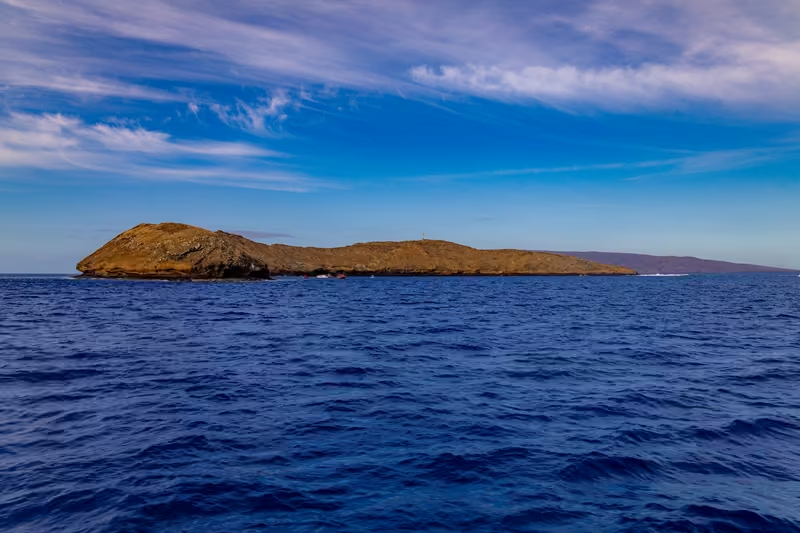
Molokini is the easiest destination on this list to define. It's a crescent-shaped volcanic islet located offshore from South Maui, and Hawaiʻi’s Division of Aquatic Resources states that access is by boat only. The surrounding waters are part of the Molokini Shoal Marine Life Conservation District.
The experience begins before anyone enters the water. You leave Maui behind, cross open water, and watch the crater grow larger on the horizon. For many first-time visitors, that sense of traveling to a distinct offshore landmark is a major part of the appeal.
Why Choose Molokini?
Choose Molokini when your group wants a structured boat trip, an offshore setting, deep-water snorkeling, and the chance to explore reef habitat away from a beach entry. It's especially appealing to travelers who have pictured the crater as part of their Maui vacation and don’t want to leave the island wondering what the experience was like.
Molokini is also a natural starting point for a two-stop morning. Maui Snorkeling’s current morning tour aims to visit Molokini first and a second site, often Turtle Town, when ocean and weather conditions allow.
What Are The Main Trade-Offs?
Molokini requires a boat ride and a deep-water entry. There is no sandy beach where you can gradually walk into the ocean. Guests should be comfortable swimming independently, floating face-down, following crew instructions, and returning to the boat in open water.
The crater is also not guaranteed every day. Wind, swell, visibility, or other operational conditions may lead a captain to choose a different location. That flexibility is part of responsible trip planning, not a sign that the tour has failed.
Choose Molokini when: The offshore crater is one of your Maui priorities, your group is comfortable with a morning boat trip, and the people entering the water can meet the tour’s swimming requirements.
Consider another option when: Your group wants a beach entry, has very limited time, strongly dislikes boat travel, or includes someone who isn’t ready for independent swimming in deep water.
Turtle Town: Best For Honu Habitat And A Second Snorkel Stop
Turtle Town sounds like one exact cove, but it is better understood as a nickname for a broader South Maui reef area. Different operators may use the name for different sections of reef near Makena, Māluaka, and surrounding waters.
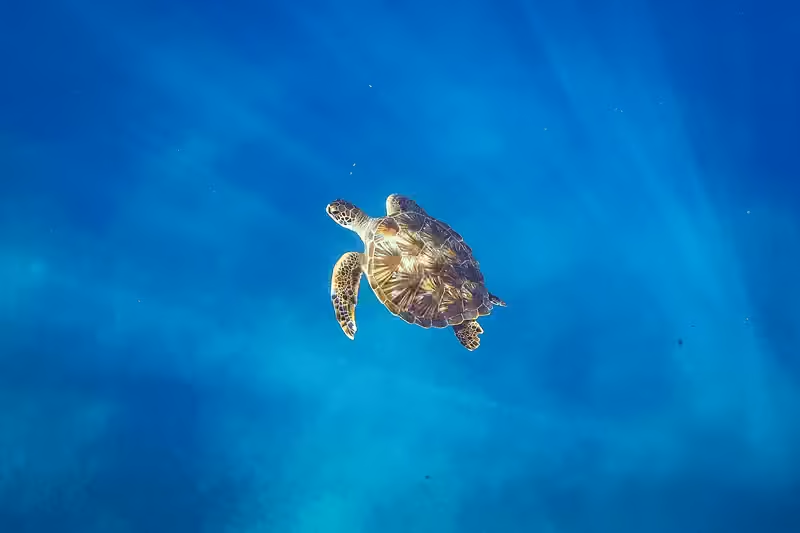
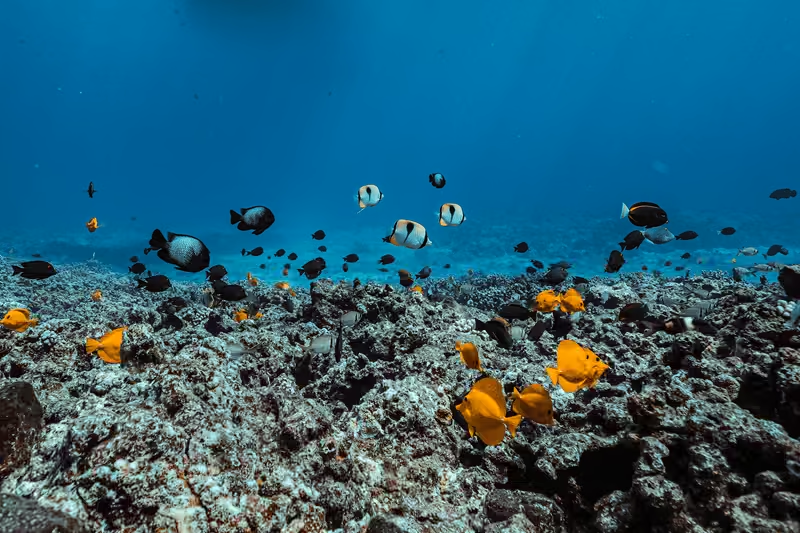
The attraction is the habitat. Lava formations, reef, algae, and underwater cleaning areas can support Hawaiian green sea turtles, locally called honu. You may also see reef fish, sea urchins, eels, and other marine life. No animal sighting is guaranteed, and the best experience comes from watching quietly without changing the animal’s path.
Why Choose Turtle Town?
Choose Turtle Town when your group is especially interested in turtle habitat and likes the idea of pairing two different environments in one morning. Molokini offers the offshore crater setting, while Turtle Town offers a South Maui reef experience closer to the island.
It can also appeal to visitors comparing boat snorkeling with shore snorkeling. A guided boat may reach a captain-selected section of the reef, while confident shore snorkelers sometimes use Māluaka Beach as an access point when conditions are calm and appropriate.
What Are The Main Trade-Offs?
The broad use of the name can create unrealistic expectations. A map pin, tour description, and beach guide may all use “Turtle Town” while referring to different entries or reef sections. Ask an operator how the name is used, whether the stop is planned or conditional, and how guests enter the water.
Also remember that the destination name doesn’t guarantee turtles. Wildlife moves freely. The ethical goal is to visit suitable habitat, give every animal space, and enjoy whatever the reef offers that day.
Choose Turtle Town when: Honu habitat is a major interest, you want a reef stop that can complement Molokini, and you understand that the exact site and wildlife vary.
Consider another option when: Your decision depends on a guaranteed turtle encounter, or you expect one universally agreed-upon “Turtle Town” location.
Coral Gardens: Best For A Shorter Reef-Focused Trip
Coral Gardens is commonly researched by visitors who want colorful reef scenery without committing to the full morning Molokini schedule. It's a boat-oriented reef experience along Maui’s leeward coast and can be a strong fit for an afternoon route when wind, swell, visibility, and safety line up.
The appeal is different from Molokini. Instead of traveling to an offshore crater, guests remain closer to Maui’s coastline and explore reef and lava structure selected for the conditions of the day. The ride, scenery, and water time can feel more relaxed, especially for travelers who prefer a later start.
Why Choose Coral Gardens?
Choose Coral Gardens when you want a shorter reef experience, a later check-in, and a tour that is easier to fit around breakfast, a slow morning, or another vacation activity. Maui Snorkeling’s current afternoon trip is three hours and generally visits Coral Gardens or another suitable nearby reef chosen by the captain.
It may also be appealing to families or first-time tour guests who prefer less total time aboard. That doesn’t make the water automatically safe or suitable for every beginner. Swimming ability, comfort in deep water, and same-day conditions still matter.
What Are The Main Trade-Offs?
Coral Gardens is not one guaranteed mooring that every boat uses in every condition. The captain may select another reef when that creates a safer or clearer trip. Visitors should focus on the reef-focused experience rather than treating one name as the only acceptable outcome.
Coral Gardens is also geographically connected to Maui’s leeward coastline, but it is separated from the “West Maui Resort Coast” category in this guide because visitors usually research it as a named boat-tour destination. The West Maui category below focuses on the Kāʻanapali, Nāpili, Kapalua, and Honolua side of the visitor experience.
Choose Coral Gardens when: You want a shorter afternoon tour, reef scenery, a later start, and a route that can adapt to the day’s conditions.
Consider another option when: Molokini is your must-do destination, or you want a full morning with two planned snorkel stops.
West Maui Resort Coast: Best For Convenience Near Your Hotel
“West Maui snorkeling” is not one destination. It can refer to shore snorkeling at Black Rock, Kahekili Beach Park, Nāpili Bay, Kapalua Bay, or Honolua Bay. It can also refer to a boat route along the coast. These experiences have different parking, entry points, facilities, hazards, and seasonal patterns.
The biggest advantage is convenience. A traveler staying near Kāʻanapali or Kapalua may be able to reach a beach early, inspect the water, enjoy a short snorkel, and return to the hotel without crossing the island. That flexibility can be perfect for a relaxed vacation day.
Why Choose West Maui?
Choose West Maui when location matters as much as the destination. It's a practical starting point for visitors who want shore access near resort areas, prefer to keep the day flexible, or want to combine snorkeling with a beach day.
West Maui also offers variety. Kahekili Beach Park has a sandy entry and reef close to shore. Kapalua and Nāpili are scenic bays. Black Rock combines a resort beach with a lava point. Honolua can be spectacular in calm conditions but is more sensitive to swell and seasonal surf.
What Are The Main Trade-Offs?
Convenience can make a beach look easier than it is. Resort-area services don’t remove current, surge, shorebreak, crowds, long swims, or changing visibility. Winter north and west swells can affect several West Maui locations, while afternoon wind can make the surface less comfortable.
Parking and facilities also vary. Never assume that one guide to “West Maui snorkeling” applies equally to every bay. Choose a specific location, review its access, and inspect the ocean in person before entering.
Choose West Maui when: You are staying nearby, want a flexible shore or coastal experience, and are willing to choose the exact bay according to current conditions and swimming ability.
Consider another option when: You want a guided boat-only destination such as Molokini, need gear and crew support, or don’t feel comfortable evaluating shore conditions yourself.
Lānaʻi: Best For A Neighbor-Island Snorkeling Experience
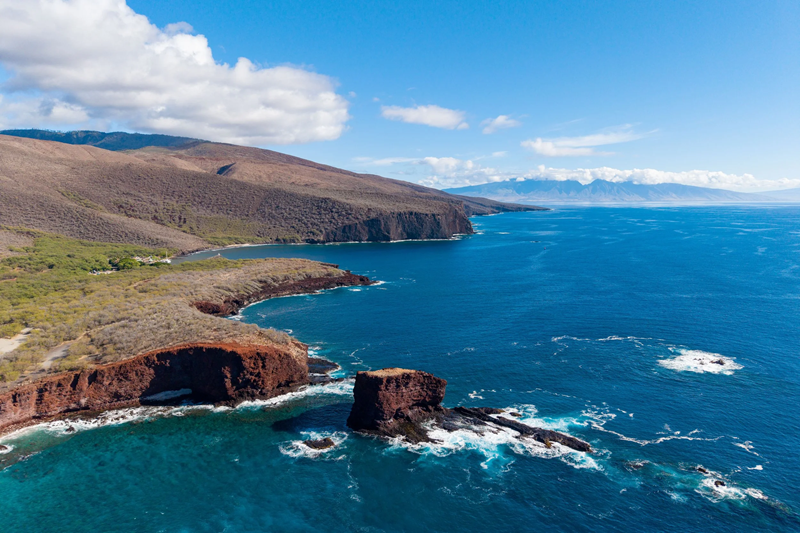
Lānaʻi changes the scale of the decision because it's a separate island, not another reef stop off Maui’s beach. A Lānaʻi snorkeling day can mean joining a longer boat excursion from Maui, or traveling to Lānaʻi and planning shore snorkeling independently.
For independent visitors, Hulopoʻe Bay is one of the best-known snorkeling areas on the island. Hawaiʻi’s Division of Aquatic Resources identifies Mānele and Hulopoʻe as adjacent bays within a Marine Life Conservation District and notes that Hulopoʻe is about a 10 to 15 minute walk from Mānele Harbor. GoHawaii lists public beach-park amenities and cautions that winter surf and current can increase.
Why Choose Lānaʻi?
Choose Lānaʻi when the neighboring-island experience is part of the attraction. The coastline, channel crossing, schedule, and sense of leaving Maui for the day make it different from a standard local reef stop.
It can be a good match for repeat Maui visitors, travelers who enjoy longer boat days, or guests who want to build an island visit around more than snorkeling. Ask exactly what the operator means by a “Lānaʻi snorkel tour,” because the route, site, vessel, time aboard, and water entry can vary.
What Are The Main Trade-Offs?
The larger travel commitment is the main consideration. A longer crossing can matter to anyone concerned about motion sickness, young children, fatigue, or fitting other plans into the day. The advertised island name also doesn’t guarantee one exact bay or reef.
Lānaʻi should not be described as automatically clearer, quieter, more pristine, or more likely to produce a dolphin sighting. Those claims depend on the day, the site, and the operator. Compare the actual itinerary rather than the broad destination label.
Maui Snorkeling Tours don't travel to Lānaʻi. Our public trips focus on Molokini Crater, Turtle Town, Coral Gardens, and other captain-selected Maui reef locations when conditions require a change.
Choose Lānaʻi when: A neighboring-island adventure is worth the additional time, and your group is comfortable with the operator’s exact boat, schedule, route, and entry method.
Consider another option when: You want a shorter trip, need the simplest logistics, or have Molokini and South Maui reefs at the top of your list.
Which Snorkeling Destination Fits Your Maui Vacation?
Use this decision table to match your main priority with a sensible starting point. The final choice should still account for swimming ability and same-day conditions.
Your Priority
Start With
Why It Fits
What To Confirm
Iconic Offshore CraterClassic Maui boat day
Molokini Crater
It delivers the distinct volcanic-islet setting that many visitors picture when planning a Maui snorkel tour.
Deep-water comfort, trip length, departure time, second-stop plan, and route-change policy.
Turtle HabitatHonu interest
Turtle Town
The South Maui reef area is associated with honu habitat and often complements an offshore Molokini stop.
The operator’s definition of Turtle Town, entry method, and the fact that wildlife isn’t guaranteed.
Shorter Reef TripLater vacation schedule
Coral Gardens
It can support a reef-focused afternoon experience without requiring a full morning on the water.
Current duration, planned reef area, food, gear, water entry, and alternate-site policy.
Resort ConvenienceStay near Kāʻanapali or Kapalua
West Maui Resort Coast
Several distinct shore locations can be close to popular accommodations and easy to combine with a beach day.
The exact beach, parking, entry, facilities, swell exposure, current, and lifeguard status.
Neighbor-Island DayLarger adventure
Lānaʻi
The island crossing and separate coastline make snorkeling part of a broader destination experience.
Departure point, total travel time, exact site, meals, entry method, return time, and cancellation policy.
Two Distinct StopsVariety in one morning
Molokini Plus Turtle Town
The planned route combines an offshore crater with a South Maui reef when conditions allow.
Whether two stops are planned, how much water time is typical, and what happens if the route changes.
Mixed-Ability GroupDifferent comfort levels
The Tour And Vessel, Not The Destination
Crew support, swimming requirements, shade, seating, restrooms, entry method, and time aboard may matter more than the reef name.
The least confident participant’s ability, mobility, stamina, and comfort with the planned entry.
Planning tip: When two people in the same group want different destinations, choose the trip that works for the least confident swimmer first. A flexible, comfortable group usually enjoys the day more than a group that forces one famous location.
What Maui Snorkeling Currently Offers
Maui Snorkeling operates morning, afternoon, and private trips from Māʻalaea Harbor. The morning tour plans for Molokini and a second stop, often Turtle Town; the afternoon tour generally heads to Coral Gardens or another suitable reef; and private charters reserve the boat for one group. Every route depends on ocean conditions and the captain’s safety assessment.
Compare Maui Snorkeling tours for current schedules, inclusions, pricing, availability, and help choosing the best format for your group.
How Ocean Conditions Can Change The Plan
The best choice among Maui snorkeling destinations can change from day to day. A location that looks perfect in vacation photos may be windy, murky, surgy, or difficult to enter when you arrive. That is why experienced captains and careful shore snorkelers stay flexible.
Boat crews consider wind, swell, visibility, current, sea state, mooring availability, passenger ability, and safe entry and exit. Shore snorkelers should look for breaking waves, strong surface movement, brown or cloudy water, difficult exits, posted warnings, and signs that swimmers are struggling.
Morning is often the most favorable general window, but “morning” is not a safety guarantee. Afternoon tours can still find enjoyable protected reef conditions, while some mornings are unsuitable for a planned route. The right choice is the location that fits the actual ocean, not the location with the most famous name.
Boat snorkeling is the practical choice for Molokini and the usual format for Coral Gardens. It can also provide access to captain-selected sections of Turtle Town, West Maui reefs, and Lānaʻi coastline. A guided boat trip adds gear, crew support, a safety briefing, and an itinerary built around the day’s marine conditions.
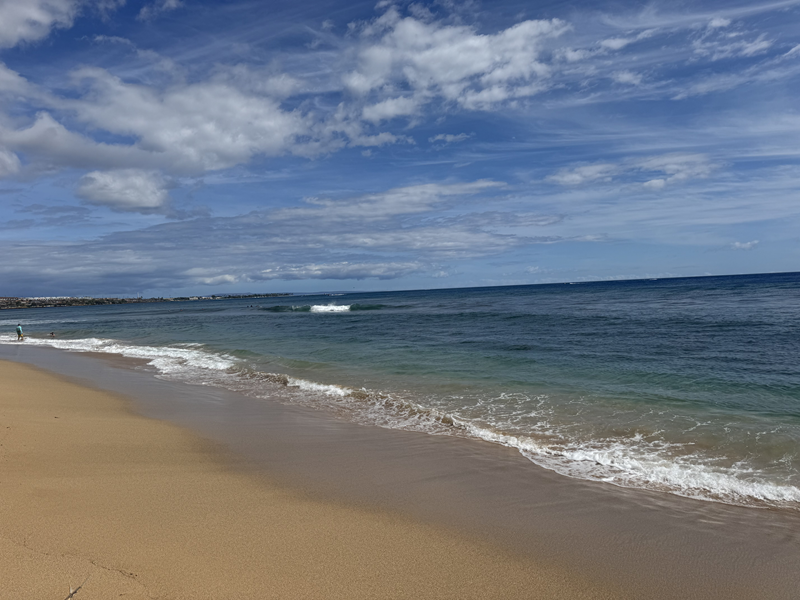
Shore snorkeling gives you more schedule flexibility and can be convenient near West Maui resorts, Māluaka Beach, or Hulopoʻe Bay. The trade-off is that you must evaluate the exact entry, current conditions, your return route, parking, and facilities yourself.
Neither format is automatically better. The right choice depends on your swimming ability, comfort, schedule, desired destination, and willingness to manage shore logistics. See our complete guide to Boat vs Beach Snorkeling in Maui for a deeper comparison.
Marine Life Etiquette At Every Destination
The wildlife belongs to the reef, not the itinerary. Watch quietly, keep your fins and hands away from coral, never stand on the reef, and don’t touch, chase, surround, ride, or feed marine animals.
NOAA recommends staying at least 10 feet away from Hawaiian sea turtles on land and in the water. If a turtle changes direction because of you, you are too close. Give it more room and use your camera’s zoom.
Federal rules also prohibit swimming with, approaching, or remaining within 50 yards of Hawaiian spinner dolphins. A responsible Lānaʻi or Maui boat experience should observe wildlife without chasing it or placing swimmers in its path.
Follow the crew’s instructions, secure loose items, use sun-protective clothing, and leave shells, coral, rocks, and marine life where you find them. A great snorkel day should leave the reef looking exactly as it did before you arrived.
Ready to snorkel Maui?
Snag your spot on a Maui Snorkeling Tour! Make your ocean day easy with snorkel gear, food, crew support, and simple online booking.
Best visibility: Morning Tour at Molokini Crater & Turtle Town
Neither destination is universally better. Molokini is best for visitors who want an iconic offshore crater and a boat-only experience. Turtle Town is best for visitors interested in South Maui reef habitat and the possibility of seeing honu. Many morning tours pair the two when conditions allow, which lets guests experience both settings.
The destination name alone doesn’t determine beginner suitability. Coral Gardens may fit someone who prefers a shorter afternoon trip, while Molokini may offer an organized morning experience with more time and crew support. The guest must still be able to swim independently, remain calm in deep water, and follow instructions. Compare the vessel, entry, conditions, and swimming rules before choosing.
It's uncommon for one standard public trip to visit all three because the destinations, timing, and best conditions differ. Maui Snorkeling’s morning trip aims for Molokini and Turtle Town, while the afternoon trip generally aims for Coral Gardens or another suitable reef. Every route remains conditional.
West Maui can be the most convenient choice when your hotel is in Kāʻanapali, Nāpili, or Kapalua. You may spend less time driving and can inspect a shore location early. Convenience doesn’t make every beach safe, so choose the exact bay according to swell, wind, entry, current, and your swimming ability.
It can be worth it when the separate-island experience is part of your vacation goal, and your group enjoys longer boat days. It may not be the best fit when you want simple logistics, have limited time, or are sensitive to motion. Review the operator’s exact route instead of assuming every Lānaʻi trip is the same.
A responsible captain selects the safest suitable route available under the operator’s policies. That may mean changing the order, using an alternate reef, reducing an activity, returning early, or canceling. Review the company’s route and cancellation language before booking so the flexibility doesn’t come as a surprise.
Yes. Hawaiʻi’s Division of Aquatic Resources states that Molokini access is by boat only. Visitors should book with an authorized commercial operator and should never attempt to reach the crater independently.
The best family choice depends on the children’s swimming ability, adult supervision, trip length, motion sensitivity, and comfort with deep-water entry. Some families prefer the complete morning Molokini and Turtle Town plan. Others enjoy the shorter afternoon Coral Gardens format. Start with the least confident participant and use our tour guide for families and different swimmer types.
Final Recommendation: Choose The Experience, Not Just The Name
Each of these Maui snorkeling destinations fits a different kind of vacation. Choose Molokini for the iconic offshore crater. Choose Turtle Town for South Maui honu habitat and a complementary reef stop. Choose Coral Gardens for a shorter, reef-focused afternoon. Choose West Maui for resort-area convenience and flexible shore options. Choose Lānaʻi for a neighboring-island adventure that deserves more of the day.
Then look beyond the destination. Match the schedule, boat, water entry, swimming requirements, facilities, route policy, and travel commitment to your group. The best Maui snorkel tour is the one your group can enjoy comfortably while the captain or shore plan remains flexible enough to respect the ocean.
When snorkeling is only one part of your vacation, compare it with Maui’s other major activities in our guide to the Best Maui Tours and Excursions.
Sources & Updates
Use these official and first-party resources to confirm current tour details, marine-protected-area rules, island access, ocean conditions, snorkeling safety, and wildlife-viewing guidance before your trip.