How Deep Is Snorkeling in Maui? What Beginners Should Know
November 10th, 2026
| Maui SnorkelingSnorkeling Safety
Written by Maui Snorkeling, operating tours to Molokini Crater, Turtle Town, and Coral Gardens from Māʻalaea Harbor since 1985. Tours are led by USCG-licensed captains aboard a USCG-inspected passenger vessel.
Last updated November 10, 2026
Quick Answer
How deep is snorkeling? Most recreational snorkeling happens at the surface, with your face in the water and the snorkel opening above it. The ocean floor may be a few feet or several dozen feet below. Water depth at Molokini varies by location, with shallow reef areas and deeper water within the cove. You don’t need to reach the bottom. Swimming ability, ocean conditions, and comfort in deep water matter more than a single depth measurement.
Main takeaways:
Snorkeling Position: Most snorkelers stay at the surface rather than diving underwater to reach the reef.
Bottom Depth: The seafloor may be a few feet or several dozen feet below the snorkeler.
Molokini Depth: Depth varies across the crater. DLNR describes a reef in less than 30 feet of water near the northwestern point, with deeper water elsewhere.
Standing Isn't Required: Be comfortable floating without relying on the bottom, and never stand on coral.
Underwater Diving: Once the snorkel opening goes underwater, it no longer provides fresh air for breathing.
Flotation: Appropriate flotation can reduce effort but doesn't replace swimming ability, water comfort, or ocean awareness.
Safety: Water depth alone can't tell you whether your group can snorkel safely at a particular Maui location.
Clear blue water can make a reef look close enough to touch, even when the bottom is far beyond reach. For a first-time snorkeler, that can raise an understandable question: how deep is snorkeling in Maui?
The reassuring distinction is that snorkeling is primarily a surface activity. You can watch fish above shallow sand, a reef ledge, or deeper water without descending. The depth below you and your position in the water aren't the same thing.
You can view Maui’s coral reefs and reef fish from the surface. You may also see sea turtles, depending on the location and conditions.
Here's how those ideas fit together, what to expect at Molokini, and how to choose an outing around your swimming ability rather than a number of feet.
How Deep Is Snorkeling?
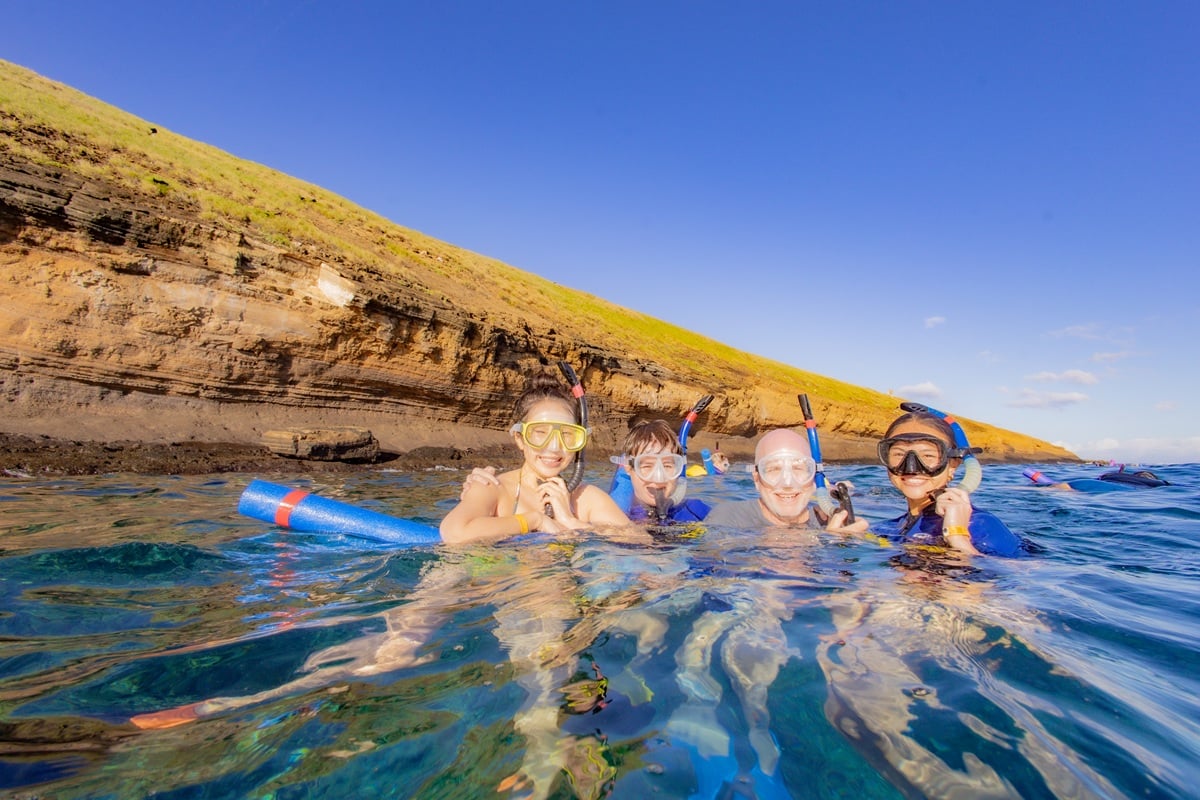
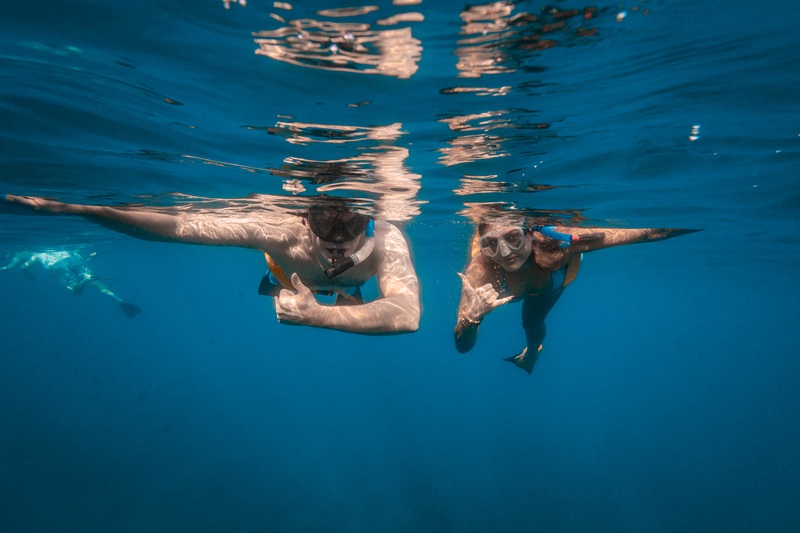
There isn't one standard snorkeling depth. During ordinary surface snorkeling, your face sits slightly beneath the water while the opening at the top of your snorkel stays in the air. That position lets you look down and breathe without repeatedly lifting your head.
When someone describes a snorkeling spot as deep, they're usually talking about the distance to the seafloor, not how far underwater your body needs to go. The bottom might be a few feet below you or several dozen feet down. You're still watching from the surface.
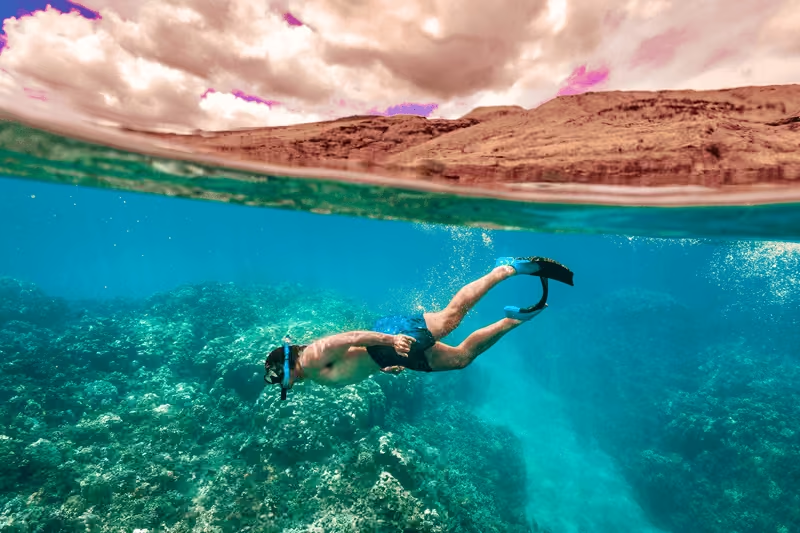
Think of the reef as the scenery below, not a destination you have to reach. As the bottom slopes away, your viewing distance may increase, but that doesn't require you to follow it downward. Diving below the surface is a separate activity with different preparation and risks.
A useful question is therefore, “What will the entry, viewing area, and return feel like?” Visibility, reef layout, waves, current, and your comfort affect the experience alongside depth. A shallower setting doesn't necessarily offer the better view or the easier swim.
Snorkeling Position Versus Water Depth
The distance beneath your fins isn't the same as the depth at which you're breathing. These distinctions make trip descriptions easier to understand.
Term
What It Means
Practical Takeaway
Surface Snorkeling
Your face is in the water while the snorkel's opening stays above the surface.
You can look down at the reef without diving or holding your breath.
Bottom Depth
The distance from the surface to the sand, rock, or reef beneath you.
It varies by location. Seeing the bottom doesn't mean you can stand on it or reach it.
Molokini Example
Water depth varies. DLNR describes a shallow reef in less than 30 feet of water near Molokini’s northwestern point, with deeper water elsewhere.
Expect boat access and no standing area. Exact depth varies, and deeper water is nearby.
Breath-Hold Diving
Descending below the surface while holding your breath instead of breathing through a snorkel.
This is a separate activity requiring training and dedicated supervision, not a step beginners need to add.
Note: A depth estimate describes the setting, not a diving target or safety cutoff. Follow the crew's designated snorkeling area.
Do You Need To Touch The Bottom While Snorkeling?
No. You don't need to touch the bottom to snorkel, and you shouldn't rely on standing to rest. A comfortable horizontal position helps conserve energy and keeps your fins away from the reef. The aim is to watch the underwater scene, not walk across it.
Coral is a living habitat, even when it looks solid enough to stand on. Contact can damage it and injure you. Rocky shallows also leave less room between your feet and hard surfaces, particularly when waves or surge move you around.
Plan breaks before you're tired. Use suitable flotation as instructed, signal your buddy or crew when you need help, and return to the boat or an appropriate sandy shore exit. Don't choose a coral head as a convenient seat or handhold.
On a boat outing, expect to be unable to stand. Make sure that feels manageable before booking, rather than counting on finding a shallow patch once you've entered.
How Deep Is Snorkeling In Maui?
Maui has no single snorkeling water depth. Shorelines, reef shelves, channels, and offshore sites create different settings. Compare how you'll enter, stay within the snorkeling area, and exit, rather than treating a beach name as a depth guarantee.
Shore Snorkeling
Some beaches have gradual sandy entries, with relatively shallow water near land. Beyond that entry, a reef shelf may give way to a channel or a sudden drop. The route back can also involve crossing the same breaking waves you entered through.
A popular beach isn't automatically shallow or suitable. Independent shore snorkeling requires ocean-swimming experience, a capable buddy, and an assessment of surf, current, rocks, and the return route. Choose a lifeguarded location and ask about the actual conditions.
Boat Snorkeling
Boat trips commonly begin in water too deep to stand. Guests float face-down, explore within the crew's designated area, and return using the vessel's ladder or steps.
Ask about entry and reboarding before booking, especially when someone has mobility or endurance concerns. Gear fitting, instructions, and flotation can support the outing, but a boat trip isn't a swimming lesson. You still need swimming ability, deep-water comfort, and enough energy to get back.
How Deep Is The Water At Molokini?
Water depth at Molokini varies by location.Hawaiʻi’s Division of Aquatic Resources describes a shallow reef in less than 30 feet of water near the northwestern point, while the cove slopes to about 100 feet before dropping off. These figures describe parts of the crater, not a depth promised for your trip. The mooring, reef position, and exact swimming area make a difference.
There's no gradual beach entry or shallow practice area where guests can stand. The experience starts from the boat, with the reef below and your breathing position at the surface.
Clear visibility can make the bottom look surprisingly close. Keep that visual impression separate from your plan: you're there to observe the reef, not reach it. Ask the crew where to stay and how to return aboard.
Molokini's outer back wall drops into much deeper water and isn't a standard beginner snorkeling area. Don't treat it as an extension of the designated inner-crater swim.
Our Molokini snorkeling guide covers the setting and conditions in more detail. The captain may select another reef, so booking a Molokini trip doesn't guarantee that destination or a particular depth.
Can You Breathe Underwater Through A Snorkel?
Not when the snorkel's opening is underwater. You can breathe with your face submerged while the tube's top remains above the surface. That's different from breathing while your entire body and snorkel are below it.
A standard open snorkel tube can fill with water when submerged. Some dry-top snorkels have a valve designed to close and limit water entry, but a closed valve doesn't supply fresh air. A person diving down must hold their breath until back at the surface; the snorkel isn't an underwater air supply.
Scuba diving uses different equipment and requires its own training. Don't extend a snorkel or improvise a hose to try to breathe deeper.
For a beginner outing, learn how your actual equipment works before entering. Ask the crew about keeping the opening clear and what to do if water enters. You don't need to take the tube underwater to enjoy the reef.
A mask that covers your full face doesn't provide an underwater air supply. Full-face snorkel masks aren't permitted on our tours; we provide a standard mask and snorkel.
How Deep Can You Dive While Snorkeling?
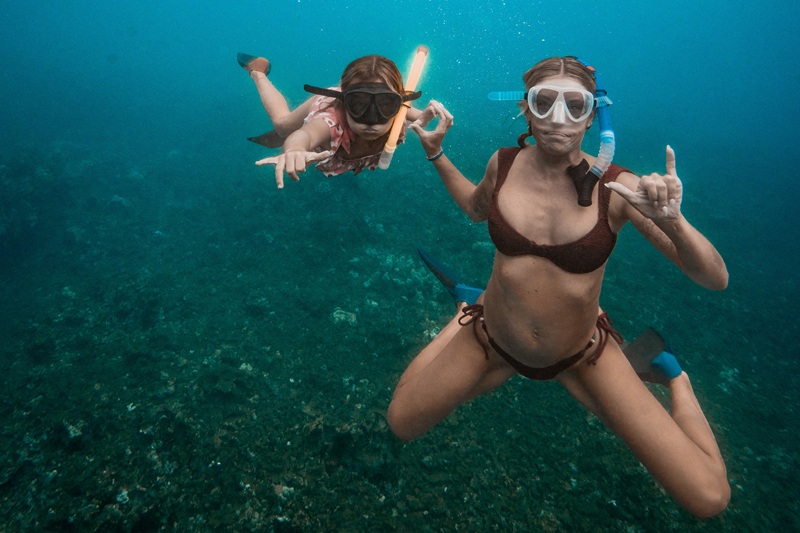
Descending below the surface while holding your breath is breath-hold diving, not ordinary surface snorkeling. You may hear it called skin diving or free diving, often written as freediving. It isn't a required step in a snorkel tour, and it doesn't make a surface-only outing less worthwhile.
Water pressure increases as you descend, affecting the air spaces in your ears and mask. This is another reason underwater diving requires separate preparation and training.
There's no universal safe depth or breath-hold time. Training, supervision, health, exertion, and conditions all matter. Low oxygen can cause a blackout, sometimes without a reliable feeling of distress beforehand.
Never practice breath-hold diving alone. Proper freediving requires training and a capable, trained buddy dedicated to supervising you, not someone looking at fish nearby.
Don't hyperventilate before going underwater. Repeated deep or rapid breathing can suppress the urge to breathe while oxygen continues to fall.
Don't compete over depth or time. Someone else's breath-hold isn't a target for your own.
Return before distress, but don't rely on discomfort as a warning. Feeling fine doesn't guarantee that oxygen levels are adequate.
Divers Alert Network and the American Red Cross warn against hyperventilation before underwater breath-holding. To explore freediving, arrange qualified instruction separately. Don't turn a casual snorkeling session into an improvised depth challenge, or assume a crew briefing supplies freediving training and supervision.
Is Shallow Water Always Safer For Snorkeling?
No. Being close to the bottom doesn't remove the ocean's movement. Waves breaking in shallow water can knock a person down, while sharp rocks and living coral leave little room for a misplaced foot or fin.
A shallow reef can have repeated surge, with water moving back and forth across the same surfaces. Channels may carry current toward deeper water, and breaking waves can stir sand until it's hard to see obstacles. A short swim can still have a difficult exit.
Deeper water brings different considerations. You can't rely on standing, and the visible distance beneath you may feel unsettling. You need to remain comfortable floating, swimming, and managing your equipment without the bottom's support.
This isn't an argument that deep water is automatically safer either. The right comparison is the whole outing: conditions, entry, exit, assistance, and the abilities of everyone participating.
Our Maui snorkeling visibility guide explains why a clear view and suitable conditions aren't interchangeable. Murky water is a reason to skip snorkeling, not move farther out searching for a better view.
Choosing A Comfortable Snorkeling Depth
Start with an honest question: can you stay comfortable face-down in water where you can't stand? Being new to snorkeling equipment isn't the same as being new to swimming. Choose around your actual ocean experience, not the depth your friends prefer.
Practice with the mask and snorkel before the outing, ideally in a supervised pool. Before entering the ocean, check the fit, listen to the briefing, identify your buddy, and ask about the planned exit. Tell the crew early about anxiety, limited endurance, or equipment concerns.
Use appropriate flotation when offered, and follow instructions. Stay in the designated area, keep the boat or shore exit in sight, and leave enough energy to return. Never stand on coral or follow wildlife beyond your planned route.
Review our Maui snorkel conditions guide and speak with lifeguards or crew. If breathing, anxiety, fatigue, or changing conditions become uncomfortable, signal for help and leave the water safely rather than pushing through.
Anyone unsure about swimming ability should read Snorkeling in Maui for non-swimmers and contact us before booking. Flotation and crew support don't replace swimming ability or guarantee that entering is appropriate.
FAQs
There's no single average that describes every snorkeling outing. Most people stay at the surface, breathing through a snorkel whose opening remains in the air. The bottom can be a few feet or much farther below. Ask about the actual site's entry, water depth, and return arrangements rather than relying on an average.
Water depth varies across Molokini. Hawaiʻi’s Division of Aquatic Resources describes a reef in less than 30 feet of water near the northwestern point, with deeper water elsewhere in the cove. The exact depth varies by mooring and swimming area. You remain at the surface; these figures aren't recommended diving depths. Expect boat access rather than a gradual beach entry or a place to stand.
A first-time snorkeler who can swim independently and feels comfortable face-down in deep water may be suited to an appropriate outing with instruction and support. Being new to snorkeling isn't the same as being unable to swim. Discuss concerns before booking, follow crew instructions, and don't enter when you feel unable to manage.
No. Snorkeling is normally done while floating, not standing. You should be comfortable without using the bottom for support, especially on a boat trip. Never stand on coral. For a break, use suitable flotation as instructed, ask for help, or return to the boat or an appropriate sandy shore exit.
You can breathe with your face in the water only while the snorkel's opening stays above the surface. Once that opening is submerged, an ordinary tube can fill, while a dry-top valve may close. Neither provides an underwater air supply. Diving down involves breath-holding, not continued breathing through the snorkel.
Not automatically. Shallow water may contain breaking waves, sharp rocks, coral, strong surge, or channels carrying current. Deeper water requires comfort without standing and its own conditions assessment. Consider swimming ability, visibility, entry and exit, and available support together rather than choosing a location only because the bottom seems close.
Maui Snorkeling guests should be comfortable floating face-down in deep water. Flotation and crew support don't replace swimming ability or guarantee that snorkeling is appropriate for everyone. Anyone who can't swim independently should contact the team before booking and discuss remaining aboard rather than assuming equipment makes ocean entry suitable. Independent shore snorkeling requires ocean-swimming ability.
Ready to snorkel Maui?
Snag your spot on a Maui Snorkeling Tour! Make your ocean day easy with snorkel gear, food, crew support, and simple online booking.
5-Hr Morning Adventure: Molokini Crater Snorkeling Tour
3-Hr Afternoon Reef Trip: Maui Afternoon Snorkeling Tour
You don't have to reach the ocean floor to have a memorable Maui snorkel. Watching the reef from above is the experience, not a beginner version you need to graduate from.
Choose an outing that matches your swimming comfort, understand the entry and return, and let the depth below remain part of the scenery. The goal is a rewarding view, not a new depth record.
Sources & Updates
Depth estimates describe the setting beneath surface snorkelers, not a recommended diving depth or safety cutoff. Confirm current conditions and follow lifeguard or crew instructions. Breath-hold diving requires separate training and supervision.