How Maui Snorkeling Chooses the Day’s Snorkel Destination
July 17th, 2026
| Maui Snorkeling
Written by Maui Snorkeling, operating tours to Molokini Crater, Turtle Town, and Coral Gardens from Māʻalaea Harbor since 1985. Tours are led by USCG-licensed captains aboard a USCG-inspected passenger vessel.
Last updated August 26, 2026
Quick Answer
Maui Snorkeling captains don't choose the day's destination from a fixed calendar or one weather app. They combine marine forecasts with what they observe on the water, then evaluate wind, swell, current, visibility, water quality, vessel traffic, safe entry and exit, available snorkeling time, and the abilities of the guests aboard. Molokini Crater may be the morning plan, but Turtle Town, Coral Gardens, or another suitable reef may provide a safer and more enjoyable experience when conditions change.
Main takeaways:
The Route Is Conditional: A planned destination is never more important than safe vessel operation and suitable snorkeling conditions
Forecasts Start The Process: Wind, swell, marine advisories, rain, and expected changes help the crew build a primary plan and backup options
Actual Water Makes The Final Call: Conditions observed after leaving Māʻalaea Harbor can differ from a forecast or shoreline view
Guest Ability Matters: The captain considers the swimmers aboard, but flotation and a different reef don't make ocean entry appropriate for a non-swimmer
Entry And Exit Matter: A beautiful reef isn't a good stop when boat movement, current, or boarding conditions make getting in and out difficult
Wildlife Isn't Guaranteed: Reports of turtles, dolphins, whales, or other animals never override safety, regulations, or responsible viewing practices
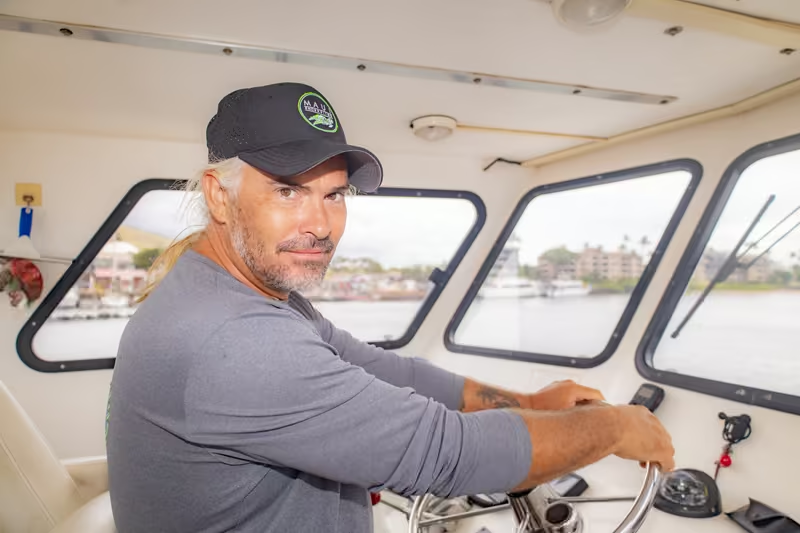
The Captain Has The Final Say: The route may change before departure, during the boat ride, or after arriving at a planned stop
You booked a Maui snorkel tour, set an early alarm, and pictured Molokini rising from the blue water. Then the crew announces that the route may change. Is that a bad sign?
Usually, it means the captain is doing exactly what a responsible captain should do.
Maui's ocean is always moving. Wind can build, a swell can wrap around an island, visibility can drop after rain or wave action, and a location that looked comfortable from shore can feel very different from the deck of a boat. The goal isn't to force one famous destination. The goal is to choose the best practical snorkeling experience for the guests, vessel, schedule, and conditions that actually exist that day.
This guide explains the general factors that influence destination selection aboard Maui snorkel tours, including Maui Snorkeling's morning Molokini trip, afternoon reef trip, and private charters. It isn't a live marine forecast or a public operating manual. Guests should always follow the captain and crew's instructions during the trip.
What Maui Snorkel Captains Check Before Choosing A Destination
A destination decision comes from several conditions working together. One favorable factor, such as clear water, doesn't cancel a problem such as strong current or difficult boarding.
Decision Factor
What The Crew Evaluates
How It May Affect The Route
WindDirection, speed, and forecast trend
How wind may affect surface chop, spray, guest comfort, vessel handling, visibility, and the return trip.
The captain may leave earlier, use a more protected reef, shorten a crossing, or avoid an exposed destination.
SwellHeight, direction, and period
Whether incoming swell may reach the planned reef, wrap around a point, create surge, or make the boat move more at the stop.
A reef that is protected from one swell direction may be avoided when another swell direction reaches it.
Sea State And CurrentWater movement around the boat
How hard guests may need to swim, whether they can stay near the vessel, and how comfortably they can return to the boarding area.
The captain may select a calmer site even when another location has clear water or a famous name.
VisibilityClarity above the reef
Water color, suspended sediment, recent wave action, rain, runoff, and whether guests can clearly see the reef and other swimmers.
The boat may move to a clearer reef or skip in-water activity when visibility is unsuitable.
Water QualityRain, runoff, and advisories
Recent heavy rain, brown or murky water, public advisories, and local conditions near runoff areas.
A coastal location may be avoided even when the surface looks relatively calm.
Entry And ExitGetting guests safely in and out
Boat movement, water depth, current near the boarding area, use of swim steps or ladders, and the effort required to reboard.
A visually beautiful location may be rejected when boarding conditions aren't suitable for the guests aboard.
Guest AbilitySwimming, mobility, and comfort
The overall experience level, confidence, age range, mobility, fatigue, motion sensitivity, and number of participating swimmers.
The captain may favor a calmer, more manageable site, but every in-water guest must still meet the tour's swimming requirements.
Moorings And Vessel TrafficLegal and practical access
Available authorized access, boat congestion, spacing, and whether the vessel can operate without crowding another boat or reef area.
The captain may use another approved area rather than wait, crowd a site, or reduce useful snorkeling time.
Trip TimingTravel time and usable water time
Distance, expected ride conditions, the planned second stop, food service, guest energy, and the safe return to Māʻalaea Harbor.
A closer protected reef may create more enjoyable water time than spending the trip pushing toward an unsuitable location.
Wildlife And Reef ProtectionResponsible observation
Protected-area rules, wildlife-viewing distances, animal behavior, and the need to avoid chasing or crowding marine life.
A wildlife report may add interest, but it doesn't justify an unsafe route or disturbance of an animal.
Important: Captains evaluate the combined picture. A destination can have light wind but unsuitable swell, clear water but strong current, or calm water but poor water quality.
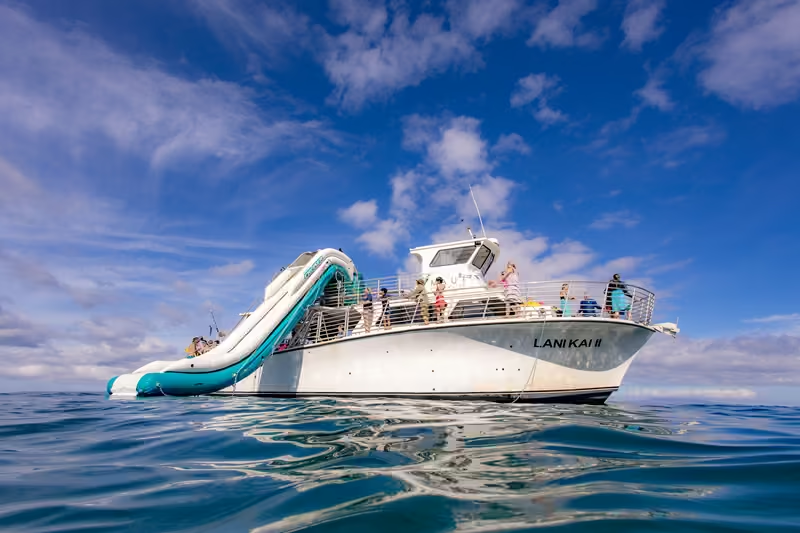
The Decision Starts Before The Lani Kai II Leaves Māʻalaea Harbor
The day's destination decision begins before guests step aboard the Lani Kai II. The captain and crew can review official marine forecasts, active advisories, expected wind and swell, recent rain, and the way conditions are forecast to change during the trip.
That final detail matters. A morning can begin comfortably while stronger trade winds are expected later. The outbound ride may look manageable, but the captain also needs to think about the snorkeling stop, the second destination, and the ride back to Māʻalaea Harbor.
The crew also prepares around the group that is actually booked. A public morning tour, a shorter afternoon trip, and a private charter can have different schedules and guest needs. A private charter may include preferences to discuss, but those preferences still sit below weather, ocean conditions, regulations, and the captain's authority.
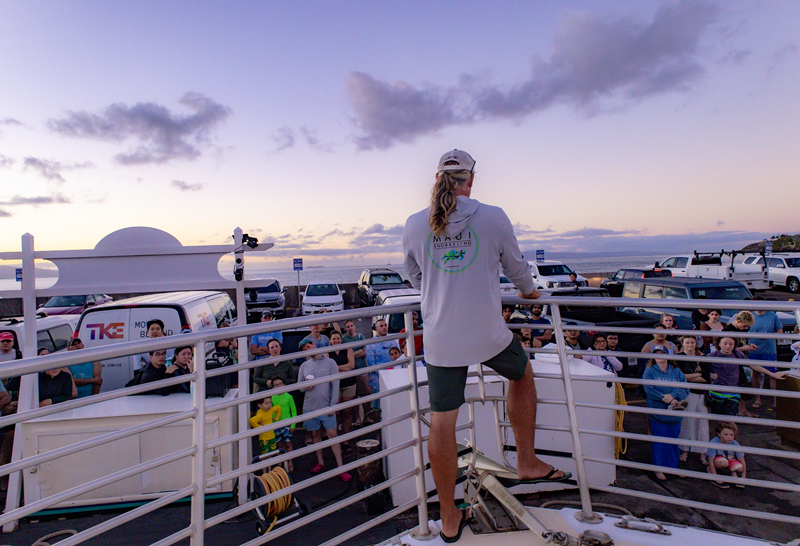
Before departure, guests receive gear fitting and a safety briefing. This gives the crew another opportunity to understand who is entering the water, who may remain aboard, and who needs additional instruction. The destination isn't chosen by a popularity contest. It's chosen around the full operating picture.
Forecasts Build The Plan, But The Actual Water Makes The Final Call
Weather forecasts are essential, but they describe a broad area and an expected pattern. Maui's mountains, channels, points, bays, and leeward coastlines can create very different conditions within a relatively short distance.
A forecast may support a primary plan for Molokini, Turtle Town, or Coral Gardens. Once the boat is underway, the captain can compare that plan with the real sea state. The crew may observe more surface chop than expected, a swell reaching a reef from an angle, reduced visibility, or a smoother protected area nearby.
This is one reason a route can change after departure. The captain isn't ignoring the forecast. The captain is adding better, more local information to it.
Visitors sometimes look across a calm harbor and assume the entire route will be calm. The open channel and offshore destinations can feel different from the slip. The opposite can also happen. A breezy resort area doesn't necessarily describe conditions at every protected reef.
How Wind Changes A Maui Snorkel Route
Wind is one of the most noticeable factors for guests because it changes the surface of the water. As wind increases, the ocean may become choppier, the ride may feel wetter or bumpier, and breathing through a snorkel can feel more tiring when waves move around your face.
Direction matters as much as the number. A coastline, crater wall, or section of reef may offer protection from one wind direction and less protection from another. Captains look for a site where the vessel can operate safely and guests can enter, snorkel, and return without fighting uncomfortable surface movement.
Morning trips are popular partly because winds are often lighter earlier in the day. That doesn't mean every morning is calm, and it doesn't make every afternoon unsuitable. It means the captain uses the expected daily pattern as one piece of the plan.
Swell is organized wave energy traveling across the ocean. Captains consider its height, direction, and period because a swell can reach some coastlines while leaving others more protected.
A reef can look sheltered from the wind but still experience surge from swell. Water may lift and lower the boat, move swimmers across a shallow reef, or make boarding less comfortable. A different destination on the same island may have a better angle and a smoother entry.
The period is also part of the picture. Two swells with the same reported height can behave differently when the time between waves changes. Guests don't need to become marine forecasters, but this explains why a captain can't make a destination decision from wave height alone.
Clear Water Doesn't Automatically Mean Easy Water
Clear blue water looks inviting, but visibility isn't the same as swimming comfort. Current can make it harder to stay near the boat, maintain a relaxed breathing rhythm, or return to the boarding area.
The captain and crew consider how the water is moving around the vessel and reef. A location may be enjoyable for confident ocean swimmers but too demanding for the group aboard that day. The crew may choose another site with more manageable water movement, even when both locations look beautiful in photos.
Flotation helps support a swimmer, but it doesn't replace swimming ability. Guests should be able to swim independently, remain calm while floating face-down, follow instructions, and make their way back to the boat. A route change can't turn a non-swimmer into a safe ocean participant.
Visibility affects both enjoyment and awareness. Clear water makes it easier to see the reef, other snorkelers, the boat, and the route back. Murky water can hide rocks, reef structure, changing depth, and marine life.
Visibility can drop because of wind, swell, stirred sediment, rain, or runoff. Water quality adds another concern after heavy rain, especially around stream mouths and drainage areas. A location can appear calm while brown or cloudy water makes snorkeling a poor choice.
Hawaiʻi's Department of Health monitors recreational water and issues advisories when warranted. The crew can consider official information along with what is visible at the destination. Guests planning a beach snorkel should do the same.
A snorkel stop isn't judged only by what lies beneath the surface. Guests have to get into the water and back aboard.
The captain considers boat movement, water depth, current near the vessel, and the effort required to use the swim steps or ladder. The crew also considers whether snorkelers can remain in the intended area without drifting too far from the boat.
This matters for every guest, but it becomes especially important for first-time snorkelers, children, older adults, anyone with limited mobility, and anyone who tires quickly. A slightly less famous reef with a calmer boarding area can create a much better vacation memory.
The Lani Kai II's waterslide is an onboard bonus, not a destination-selection priority. It's used only at eligible stops when conditions allow, and it isn't used at Molokini Crater. Safe vessel operation and snorkeling conditions come first.
How The Guests Aboard Affect The Decision
Captains operate the same boat through changing conditions, but the guest group changes every trip. One day may include many experienced ocean swimmers. Another may include young families, nervous first-timers, older adults, or guests who plan to enjoy the boat without entering the water.
The captain doesn't need every guest to be an expert. Maui Snorkeling provides gear fitting, flotation options, instruction, and crew support. Still, everyone entering the ocean should meet the tour's swimming requirements and feel capable of participating without panic.
A mixed-ability group may benefit from a location with calmer surface conditions and a more comfortable return to the boat. A private charter may give the group more control over timing and onboard experience, but it doesn't remove the captain's authority or change the ocean.
The least confident participating swimmer is often a better planning guide than the strongest swimmer. A route that keeps the group comfortable usually produces more smiles, more usable water time, and less pressure.
Why Moorings And Vessel Traffic Matter
Popular Maui snorkeling areas can attract several commercial vessels. Molokini is a regulated Marine Life Conservation District, and commercial in-water activity requires the appropriate authorization. Day-use mooring and operating rules help protect the reef and organize vessel access.
A captain may consider whether authorized access is practical, how much traffic is present, and whether the vessel can use the area without crowding another boat or reducing the quality of the stop. The exact operational decision depends on the site and current rules.
Chasing one crowded location can also consume time that guests could spend snorkeling somewhere suitable. A thoughtful route balances the destination goal with legal access, spacing, and the amount of enjoyable water time available.
Travel Time Is Part Of The Snorkeling Experience
Guests usually think of travel time as the ride between the harbor and reef. Captains see it as part of the full itinerary.
The route must account for departure, changing sea conditions, gear and safety preparation, the first stop, a possible second stop, meals, boarding, and a safe return. A longer push toward an unsuitable destination can reduce water time and create a rougher ride without improving the experience.
Maui Snorkeling's morning tour currently aims for Molokini Crater and a second stop, often Turtle Town, when conditions allow. The shorter afternoon tour generally heads toward Coral Gardens or another suitable nearby reef. Private-charter routes depend on the selected time, conditions, safety, and captain approval.
A report of turtles, dolphins, whales, or another exciting animal can make any ocean day feel more promising. It should never become the reason to force a poor route.
Wildlife is free to move, and sightings aren't guaranteed. Boats and swimmers must also follow applicable viewing rules. NOAA recommends giving sea turtles at least 10 feet of space, and federal law prohibits swimming with, approaching, or remaining within 50 yards of Hawaiian spinner dolphins.
The crew may point out wildlife encountered naturally during the trip, but a responsible tour doesn't chase, crowd, surround, or cut off an animal. The destination decision begins with safe conditions and legal, respectful operation.
The Captain's Destination Decision, Step By Step
The exact process can vary by day, but a responsible destination decision generally follows this sequence.
Step
What Happens
Why It Matters
1. Build A Primary PlanBefore the trip
The crew starts with the tour's planned destination, schedule, vessel needs, and expected guest experience.
The trip has a clear goal while leaving room for responsible changes.
2. Review Official InformationForecasts and advisories
The captain considers marine forecasts, wind, swell, weather, rain, advisories, and expected changes during the operating window.
Conditions later in the trip can matter as much as conditions at departure.
3. Prepare Backup OptionsMore than one workable route
The captain considers protected reefs or alternate destinations that may fit the forecast and trip schedule.
A prepared alternate reduces pressure to force the primary destination.
4. Evaluate The GroupAbility and participation
The crew observes the group, answers questions, provides the safety briefing, and identifies guests who may need additional support.
The destination must work for the actual people aboard, not an imaginary average guest.
5. Observe The Real OceanAfter leaving the harbor
The captain compares the forecast with actual wind, sea state, visibility, swell, current, and traffic along the route.
On-water observations provide more local information than a broad forecast alone.
6. Select The Best Practical SitePrimary or alternate
The captain chooses the site that best balances safety, entry and exit, swimming conditions, reef experience, legal access, and usable time.
The most famous destination isn't always the best destination that day.
7. Keep MonitoringDuring the stop
The crew watches swimmers, boat movement, visibility, current, weather, and changes around the site.
A safe arrival doesn't guarantee that conditions will remain unchanged.
8. Change The Plan When NeededCaptain's final authority
The captain may reposition, move to another reef, adjust an activity, return early, or cancel under the company's policies.
Flexibility protects guests, crew, vessel, wildlife, and the reef.
Guest perspective: A destination change can feel disappointing for a moment, but it often protects the parts of the trip that matter most: comfortable water, useful snorkeling time, and a safe return.
Ready to snorkel Maui?
Snag your spot on a Maui Snorkeling Tour! Make your ocean day easy with snorkel gear, food, crew support, and simple online booking.
Best visibility: Morning Tour at Molokini Crater & Turtle Town
These examples show how a captain may respond when one part of the day's operating picture changes. They are illustrative, not live forecasts or promises about a specific trip.
Situation
Why It Matters
Possible Captain Response
Channel Wind BuildsMolokini morning plan
The crater may be reachable, but the ride, surface conditions, or return could become less comfortable.
Use the most suitable protected option available or select a Maui reef that provides a better overall trip.
Clear Water, Strong CurrentGood view, poor swimming fit
Guests may struggle to remain near the boat or return comfortably.
Move to a site with more manageable water movement, even when visibility is excellent.
Reduced Coastal VisibilityRain, runoff, or wave action
Murky water reduces awareness and can indicate a water-quality concern.
Avoid the affected area and look for clearer, suitable water elsewhere.
Boat Movement At The StopEntry and boarding concern
Guests may have difficulty using swim steps or a ladder safely and comfortably.
Reposition when permitted or choose a location with a steadier boarding area.
Heavy Site TrafficCrowding or limited access
Waiting or crowding can reduce water time and put pressure on the site.
Choose another approved destination that offers more space and a smoother schedule.
Beginner-Heavy GroupMore support needed
Surface movement and difficult boarding can use up confidence and energy quickly.
Favor manageable conditions while maintaining the same independent-swimming requirements.
Wildlife Report ElsewhereExciting but unpredictable
Animals may move before the boat arrives, and the reported area may not be suitable.
Continue with the safest practical route and observe wildlife only when encountered responsibly.
How The Process Applies To Molokini Crater
Molokini is Maui Snorkeling's planned morning highlight. It's an offshore Marine Life Conservation District reached by boat, so the route includes open-water travel and a deep-water entry.
The captain considers the channel, wind trend, swell, conditions inside the crater, available legal access, vessel traffic, and the return. Molokini's crescent shape can offer protection depending on the direction of wind and swell, but the crater isn't protected from every condition.
Reaching Molokini isn't the only test. The site also needs to provide a suitable stop once the boat arrives. Guests need to enter and exit comfortably, stay within the supervised area, and have enough usable time to enjoy the reef.
When the crater isn't the best practical choice, the captain may select another reef. That decision can protect the second stop, preserve water time, and prevent the trip from becoming a long, uncomfortable chase for one name.
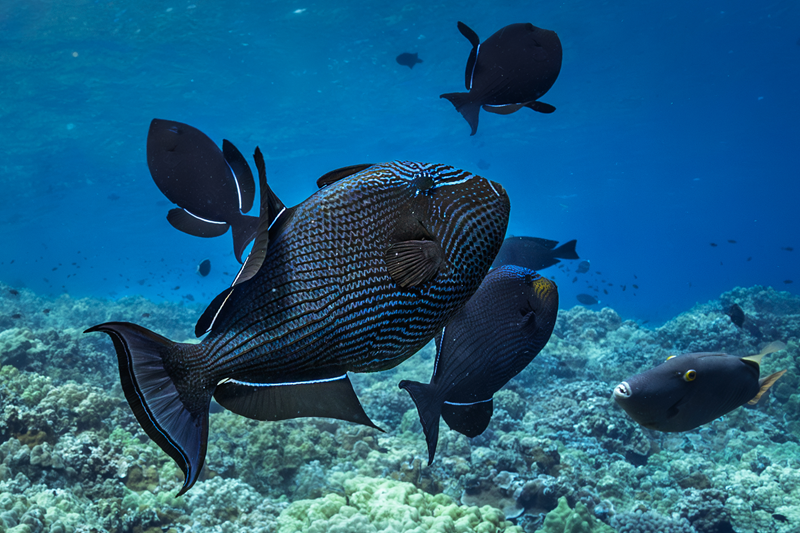
Turtle Town is a broad South Maui reef area rather than one exact point. It's often planned as the second stop after Molokini, which gives guests a different setting closer to Maui.
The captain considers which section of reef provides the best combination of water movement, visibility, access, boat positioning, and useful time. A turtle sighting is never guaranteed, and the crew doesn't select an unsuitable location simply because turtles were recently reported there.
Turtle Town can be a strong second stop when the route, conditions, and schedule line up. On another day, a different reef may create a better experience.
Coral Gardens is the primary named destination associated with Maui Snorkeling's afternoon trip. The shorter schedule and typical afternoon wind pattern make protection, travel time, and water comfort especially important.
The captain may head toward Coral Gardens or another nearby reef depending on weather, ocean conditions, visibility, and safety. On a suitable afternoon, a closer leeward reef can provide colorful marine life and a relaxed vacation rhythm without requiring the longer morning route.
On rare days, conditions may support an afternoon visit to Molokini, but that should be treated as an exception rather than a promise. The planned experience is a flexible reef-focused afternoon.
What Guests Should Expect When The Destination Changes
A route change may be announced before departure, during the ride, or after the captain evaluates the planned site. The crew should explain the change as clearly as practical, but the captain may need to make a timely decision without turning it into a group debate.
Guests can expect the crew to focus on the best available experience within the company's route, safety, and cancellation policies. The alternate site may have a different reef shape, wildlife mix, water entry, or travel time. It can still be an excellent Maui snorkeling day.
The most helpful response is flexibility. Listen to the safety briefing, ask practical questions, and judge the trip by the full experience rather than one destination name. The crew can't control the ocean, but it can respond to it.
How Guests Can Help The Crew Make The Day Go Smoothly
Arrive On Time: Late departures reduce the operating window and can affect available water time
Share Important Information: Tell the crew about swimming concerns, motion sensitivity, mobility limits, or plans to remain aboard
Listen To The Safety Briefing: Entry, flotation, boundaries, signals, and return procedures can vary by stop
Be Honest About Swimming Ability: A vacation isn't the place to discover that deep water causes panic
Stay Near The Designated Area: Follow crew directions and don't explore beyond the supervised zone
Return When Asked: A prompt return helps the crew respond to changing conditions and protect the trip schedule
Respect Route Changes: Pressuring the crew to force a destination doesn't change wind, swell, current, visibility, or regulations
Keep Wildlife Wild: Don't chase animals, block their path, touch coral, stand on reef, or feed fish
What This Means When Booking A Maui Snorkel Tour
Read destination wording carefully. Look for phrases such as “when conditions allow,” “planned stop,” “captain-selected reef,” or “route may change.” Those phrases aren't loopholes. They're an honest description of ocean travel.
Compare more than the reef name. Review the trip length, departure time, vessel, water entry, swimming rules, crew support, food, shade, restrooms, and route-change policy. A tour that clearly explains flexibility gives you useful information before the day begins.
FAQs About How Maui Snorkel Captains Choose A Destination
No. Molokini may be the planned destination for a morning tour, but the captain can choose another suitable reef when weather, ocean conditions, visibility, legal access, safety, or the trip schedule make the crater a poor choice.
Yes. Forecasts can differ from actual conditions, and the captain may receive better information after observing the sea state, wind, swell, visibility, current, and traffic along the route.
Winds are often lighter earlier in the day, which can improve ride comfort and surface conditions. Morning isn't a guarantee, so the captain still evaluates the complete forecast and actual water.
No. Clear water can still have strong current, swell, surge, difficult boarding, or other concerns. Visibility is only one part of the decision.
Guests can share preferences, especially on a private charter, but the captain retains final authority. A request can't override weather, ocean conditions, regulations, vessel safety, or the abilities of the group.
The captain may consider calmer surface conditions and manageable entry and exit. Every guest entering the ocean must still be able to swim independently, remain calm in deep water, and follow crew instructions. Flotation and crew support don't make in-water participation appropriate for a non-swimmer.
The captain may modify activities, return early, or cancel under the company's policies. The exact response depends on when conditions change and what safe alternatives remain available.
Wildlife reports may be interesting, but animals move freely, and sightings aren't guaranteed. Safety, regulations, responsible viewing, and practical operating conditions come first.
The vessel's captain makes the final route and activity decision, with input from forecasts, observations, crew, operating requirements, and the conditions encountered during the trip.
Final Thoughts: The Best Destination Is The One That Works That Day
Molokini, Turtle Town, Coral Gardens, and Maui's other reefs can all create memorable snorkeling experiences. None of them is the best choice in every combination of wind, swell, current, visibility, water quality, traffic, guest ability, and timing.
A responsible captain starts with a plan, prepares alternatives, watches the real ocean, and changes course when the evidence says another option is better. That flexibility isn't something to fear. It's one of the most valuable parts of choosing a guided Maui snorkel tour.
Sources & Updates
Use these official and first-party resources to confirm current Maui Snorkeling routes, marine forecasts, public advisories, protected-area rules, snorkeling safety, water quality, and wildlife-viewing guidance before your trip.
Update note: This article explains general destination-selection factors and isn't a live ocean forecast. Tour routes, operating procedures, regulations, advisories, and conditions can change. Confirm the current tour page and official resources before departure.