How To Breathe While Snorkeling: A Beginner’s Maui Guide
November 17th, 2026
| Maui SnorkelingSnorkeling Safety
Written by Maui Snorkeling, operating tours to Molokini Crater, Turtle Town, and Coral Gardens from Māʻalaea Harbor since 1985. Tours are led by USCG-licensed captains aboard a USCG-inspected passenger vessel.
Last updated November 17, 2026
Quick Answer
To breathe while snorkeling, keep the snorkel opening above water and breathe steadily in and out through your mouth. Use a relaxed jaw and comfortable breaths rather than rapid, shallow panting or exaggerated inhalations. Practice with a traditional mask and separate snorkel before your ocean outing. If water blocks the tube or breathing becomes uncomfortable, stop, get support, raise your mouth above water, and remove the mouthpiece. Signal for help early.
Main takeaways:
Surface Air: A snorkel supplies air only while its opening is above water and unobstructed.
Mouth Breathing: With a separate mask and snorkel, breathe through the mouthpiece, not the covered nose.
Practice: Learn equipment use and water clearing in a supervised pool before trying them offshore.
Water Entry: Don't inhale through a flooded tube; regain direct access to air and ask for assistance.
Clearing: A short exhalation can clear a standard snorkel, but follow your instructor and equipment instructions.
Warning Signs: Stop for breathlessness, repeated coughing, dizziness, weakness, or panic rather than assuming you need more practice.
Support: Stay with your buddy and remember that flotation and crew assistance don't replace swimming ability.
The first time you put your face in the water, breathing through a tube can feel less familiar than the swimming itself. Then a fish crosses the reef, your attention shifts, and you understand what all that preparation was for: a view you can enjoy without lifting your head after every breath.
Learning how to breathe while snorkeling starts with relaxed mouth breathing at the surface, properly fitted equipment, and practice before the ocean outing. It also means knowing when to stop rather than trying to breathe through a problem.
This guide covers a traditional mask with a separate snorkel, including water clearing, first-time nerves, and asking for help. Full-face designs need separate consideration and aren't permitted on Maui Snorkeling tours.
How Breathing Through A Snorkel Works
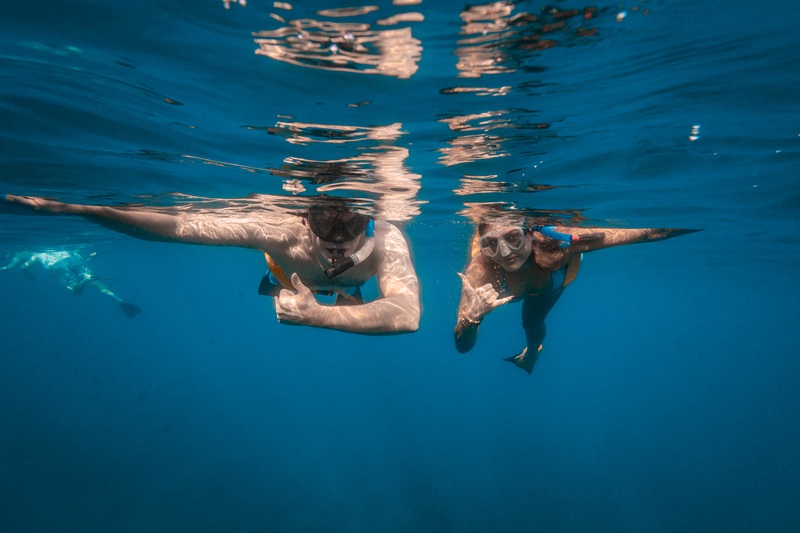
A snorkel connects your mouth to the air above the water. With your face down and the tube's opening above the surface, you inhale and exhale through your mouth. The separate mask covers your eyes and nose; it doesn't supply air.
Keep your head in a comfortable, neutral position, looking down and slightly ahead. Tucking your chin sharply or turning your head can dip the opening underwater. Ask the crew to check the tube's position instead of twisting it repeatedly while swimming.
A splash guard reduces water entering from above. A dry-top valve closes when submerged to limit flooding, but it doesn't provide air while closed. A purge valve near the mouthpiece helps water leave. These features do different jobs, and none replaces learning how your particular snorkel works.
Use Slow, Relaxed Mouth Breathing
Start while you're seated safely out of the water. Rest your teeth lightly on the mouthpiece's bite tabs, close your lips around it, and relax your jaw. You shouldn't need to clamp down hard or stretch your lips to keep a seal.
Aim for steady, comfortable breaths in and out through your mouth. Let each exhalation finish naturally rather than taking rapid, shallow sips of air. Don't force huge breaths, empty your lungs aggressively, or hold your breath between cycles.
“Slow” doesn't mean ignoring your need for air or following a rigid count. If breathing feels restricted, stop using the snorkel and get it checked. Don't try to overcome increased effort by pulling harder through the tube.
Once you're in suitable water, keep your movement unhurried. Float and use gentle kicks rather than racing between coral heads. There's often plenty to notice in a small area, and you don't have to chase a fish to have a memorable swim.
Practice Before Entering The Ocean
A supervised pool session is a better place to meet your equipment than your first deep-water entry. Choose a pool that permits snorkeling gear, with a capable buddy or instructor present. Begin where you can comfortably stand or use the pool edge for support.
Try the mask and mouthpiece on land first. Then, with supervision and support, lower your face into the water while the snorkel opening stays above it. Practice breathing without swimming anywhere. Lift your face when you need a break rather than turning the exercise into an endurance test.
Next, rehearse getting your mouth above water, removing the mouthpiece, and asking for help. Have an instructor demonstrate water clearing and watch you practice with that snorkel. Learning the sequence is more useful than guessing from a diagram once you're offshore.
Pool familiarity doesn't replace ocean-swimming ability or prepare you for every wave and current. Our Maui snorkeling for beginners guide covers the wider preparation. Tell the crew what you've practiced and what still feels unfamiliar.
What To Do When Water Enters Your Snorkel
A wave, a dipped tube, or a loose mouthpiece seal can let water in. A gurgle is a reason to pause, not take a bigger breath through the water.
If you're uncomfortable, stop snorkeling, establish support, get your mouth clear of the surface, and remove the mouthpiece so you can breathe fresh air directly. Signal your buddy or crew immediately if you need help staying afloat or returning. Don't struggle to tread water while trying to repair equipment.
Once supported and breathing comfortably, drain the snorkel and have the fit checked. Repeated flooding may involve equipment positioning, a faulty valve, or conditions that aren't suitable. Don't keep repeating the same uncomfortable swim.
Water inside the mask is a separate issue. Our leaking-mask guide covers seal problems; blowing through the snorkel won't empty a separate mask.
How To Clear A Standard Snorkel
The blast method uses a short, firm exhalation to push water out. Learn it with an instructor in a controlled setting. It's a skill for a calm, supported snorkeler, not the first response to choking or breathlessness.
Get stable at the surface. Keep the snorkel opening above water and use the support your instructor provides.
Blow out through the mouthpiece. Seal your lips and give a short, firm exhalation. If you need air first, lift your face clear, remove the mouthpiece, and breathe normally before trying. Never inhale through a water-filled tube to prepare.
Check the next breath carefully. After clearing, inhale slowly and cautiously rather than gulping, because a little water may remain.
Stop if it hasn't cleared. With your mouth above water, remove the mouthpiece, drain it, and ask for help instead of exhausting yourself with repeated attempts.
A purge valve gives water another outlet, but the exact procedure depends on the design. Follow its instructions. Don't test a dry-top valve by deliberately submerging it and trying to breathe.
Snorkeling Breathing Problems: What To Do
Start with support and access to air, not a guess about the cause. Get assistance whenever you can't manage comfortably.
What You Notice
Immediate Response
Next Step
Uncomfortable Mouthpiece Before Entry
Remove it and explain where it pulls, pinches, or strains your jaw.
Ask the crew to adjust the position or check another suitable mouthpiece before entering.
Water Or Gurgling In The Tube
Pause. If uncomfortable, get support, raise your mouth clear of water, and remove the mouthpiece.
Drain and check the snorkel. Use a clearing technique only when you've learned it and can manage calmly.
Airflow Feels Blocked Or Restricted
Don't inhale harder. Get your mouth above water, remove the mouthpiece, and signal for assistance.
Have the equipment checked out of the water. Ongoing breathing difficulty also needs medical attention.
Rising Anxiety Or Rapid Breathing
Stop the activity, use support, get your face clear, and tell your buddy or crew.
Arrange a safe exit. Don't assume shortness of breath is only nerves or force yourself to continue.
Unusual Breathlessness, Coughing, Dizziness, Or Weakness
Stop snorkeling and get help leaving the water.
Unexplained breathlessness or persistent coughing needs prompt medical assessment, even after improvement.
Severe Symptoms Or Trouble Staying Conscious
Alert the crew or lifeguard immediately and have someone call 911.
Treat severe breathing difficulty, chest pain, fainting, confusion, or pink or bloody froth as an emergency.
Note: This isn't a diagnostic checklist. Don't delay asking for help while trying to decide which row fits.
Managing First-Time Nerves And Rapid Breathing
The sound of your own breathing, a covered nose, and a mouthpiece can feel unfamiliar. Give yourself time to get used to those sensations before adding swimming, waves, and a camera.
Tell the crew plainly: “I haven't breathed through a snorkel before,” or “I'd like another equipment check.” No one will penalize you for asking questions.
If anxiety builds in the water, stop the activity, get support, raise your face, and breathe without the mouthpiece. Signal for assistance and arrange a safe exit. Don't force yourself to stay face-down until the feeling passes.
Never assume breathlessness is only anxiety. Equipment problems, exertion, water inhalation, and medical conditions can also affect breathing. Slow-breathing advice isn't treatment for unexplained symptoms. Don't hyperventilate or use breath-holding exercises to push through discomfort.
Remaining aboard is an acceptable choice. A reef outing should leave room for comfort, not pressure you to match someone else's pace.
Signs You Should Stop Snorkeling
Stop, signal, and get help exiting if you have unusual shortness of breath, repeated coughing, wheezing, chest discomfort, dizziness, headache, confusion, sudden weakness, or escalating panic. You don't need to identify the cause before asking for assistance.
Some serious breathing problems can develop without inhaling seawater. Immersion pulmonary edema, for example, involves fluid entering the lungs from the body's circulation. Don't diagnose yourself in the water or assume that removing the snorkel solves every problem.
Severe or persistent breathing difficulty, chest pain, fainting, confusion, or pink or bloody froth requires emergency help. Alert the crew or lifeguard and have someone call 911. Don't attempt a strenuous swim back unaided. Sudden unexplained breathlessness or persistent coughing needs prompt medical assessment even if you feel better after exiting; don't re-enter.
Before your trip, discuss health conditions that affect breathing or exercise tolerance with a clinician. This guide teaches general preparation, not personal medical clearance.
Why A Longer Snorkel Can't Supply Air At Depth
Extending a snorkel doesn't turn it into scuba equipment. As you go deeper, water pressure outside increases while air drawn from the surface stays at atmospheric pressure. A longer tube also adds space where exhaled air can remain and be breathed again.
Don't modify the tube or attach a hose to experiment with breathing deeper. Once an ordinary snorkel's opening is submerged, it can flood, or its dry-top valve can close. Neither situation provides fresh air.
For the difference between your position, the bottom's depth, and breath-hold diving, read How Deep Is Snorkeling. You can enjoy the reef from the surface without adding a diving challenge.
Full-Face Snorkel Mask Considerations
Recreational full-face snorkel masks cover the mouth, eyes, and nose. They use internal channels and valves, so the mouthpiece-clearing steps above don't apply.
Researchers have raised concerns about rebreathing exhaled air, including increased carbon dioxide and reduced oxygen, in tests of some designs. A controlled study doesn't prove every model behaves the same or explain every snorkeling incident. Fit, airflow, and the ability to remove a mask promptly all deserve attention.
Full-face snorkel masks aren't allowed on Maui Snorkeling tours. We supply traditional mask-and-snorkel equipment. Our full-face mask guide explains the policy and design differences.
Changing mask styles isn't a substitute for learning the equipment, swimming ability, or medical advice about breathing concerns. Neither style supplies air when its snorkel inlet is underwater.
When To Signal Your Buddy Or Crew
Ask for help at the first sign you need it, not after you're exhausted. Before entry, learn the crew's signals for a problem, assistance, and returning aboard. Stay close enough to your buddy to communicate rather than assuming someone will notice from a distance.
Signal for a blocked tube, repeated flooding, a mask you can't manage, fatigue, anxiety, or any breathing symptom. Use the distress signal taught in the briefing and call for help when you can do so with your airway clear. Don't give an “OK” signal just to reassure others when you're struggling.
Follow instructions for flotation and an assisted return. Don't stand on coral or grab the reef while sorting out your equipment. Check our Maui snorkel conditions guide before the outing, and keep the plan within your swimming ability.
Flotation can reduce effort, but it doesn't replace swimming ability. Maui Snorkeling guests should feel comfortable floating face-down in deep water; contact us before booking if you're unsure.
FAQs
With a traditional mask and separate snorkel, inhale and exhale through your mouth. The mask encloses your nose and doesn't connect it to fresh air. Keep your lips comfortably sealed around the mouthpiece and your jaw relaxed. Have the fit checked if maintaining that seal feels difficult.
Not during ordinary surface snorkeling with a clear tube opening above water. You breathe continuously through the mouthpiece. Submerging the opening cuts off fresh air, even with a dry-top design. Diving below the surface is a separate breath-hold activity, not a skill you need to add to enjoy snorkeling.
The tube adds resistance and space that contains exhaled air, while fit, water, exertion, and nerves can also affect the experience. Don't assume difficult breathing is normal. Get your mouth clear of the water, remove the mouthpiece, signal for help, and have the equipment and any ongoing symptoms assessed.
Don't keep trying until you're out of breath. With support and your mouth clear of the water, remove the mouthpiece and breathe directly. Drain the tube and ask for assistance. Repeated flooding or restricted airflow needs attention before another swim, not harder inhalation or repeated forceful blowing.
No. Its valve is intended to limit water entry when the top submerges; closing the opening also stops fresh air entering. A dry snorkel isn't scuba equipment. If it blocks your breathing, get your mouth above water, remove the mouthpiece, and alert your buddy or crew.
You don't need to load up on air for surface snorkeling. Use comfortable, unforced breaths and keep breathing normally. Repeated rapid or unusually deep breathing isn't a preparation shortcut. Don't use hyperventilation or breath-hold challenges to build confidence, and stop rather than trying to breathe through distress.
Don't treat a different mask as a cure for anxiety or difficult breathing. Full-face designs have different airflow, clearing, and removal considerations, and research has identified concerns with some models. Maui Snorkeling doesn't allow them aboard and provides traditional equipment. Discuss your comfort and support needs before entering.
Signal as soon as equipment trouble, fatigue, anxiety, or breathing discomfort makes you need assistance. Stop snorkeling for unexplained breathlessness, repeated coughing, dizziness, or weakness. Severe or persistent symptoms require urgent medical help. There's no need to finish a route or solve the problem yourself before asking.
Ready to snorkel Maui?
Snag your spot on a Maui Snorkeling Tour! Make your ocean day easy with snorkel gear, food, crew support, and simple online booking.
5-Hr Morning Adventure: Molokini Crater Snorkeling Tour
3-Hr Afternoon Reef Trip: Maui Afternoon Snorkeling Tour
Final Thoughts: Get Comfortable, Then Enjoy The View
Breathing through a snorkel should let you notice the reef, not feel like something you have to fight. Start with a comfortable fit, practice in a controlled setting, and learn to pause and ask for help.
Sources & Updates
These sources cover traditional snorkel use, equipment differences, and warning symptoms. Practice with qualified supervision and follow your specific equipment instructions. Breathing difficulty needs attention, not an assumption that it's anxiety.
Equipment And Fit:PADI
explains mouthpieces, tube design, and valves.