Boat Vs. Beach Snorkeling In Maui: Pros, Cons, And How to Choose
June 11th, 2020
| Maui Snorkeling
Written by Maui Snorkeling, operating tours to Molokini Crater, Turtle Town, and Coral Gardens from Māʻalaea Harbor since 1985. Tours are led by USCG-licensed captains aboard a USCG-inspected passenger vessel.
Last updated September 30, 2026
Quick Answer
Boat vs. beach snorkeling in Maui comes down to the kind
of day you'd like. A boat tour offers crew guidance and can take you to
offshore reefs such as Molokini. Beach snorkeling gives you more flexibility
and usually costs less. You don't have to choose just one: a boat adventure
and a relaxed beach day can both be part of your Maui vacation.
Main takeaways:
Choose A Boat Tour For: Crew guidance, gear help, and a
planned outing. Included amenities and destinations depend on the tour.
Choose The Beach For: Flexible timing, a lower-cost
outing, and time on the sand. Choose an entry and ocean conditions
that fit your ability.
For First-Time Snorkelers: Crew support can help you
get started, but you'll still need to swim independently and feel
comfortable in deep ocean water.
For Seasickness: Shore snorkeling skips the boat ride,
although waves and water movement can still cause discomfort.
Before You Snorkel: Check ocean conditions and
water-quality advisories, follow posted warnings or crew instructions,
and snorkel with a buddy.
Factor
Boat Snorkeling
Beach Snorkeling
Access
Can reach offshore reefs such as Molokini.
Explore reefs from suitable public beach and shoreline access points.
Support
Our tours include gear fitting, a briefing, and crew support.
Inclusions vary between operators.
Usually self-guided, so you'll arrange your gear, buddy, entry,
and exit.
Water Entry And Exit
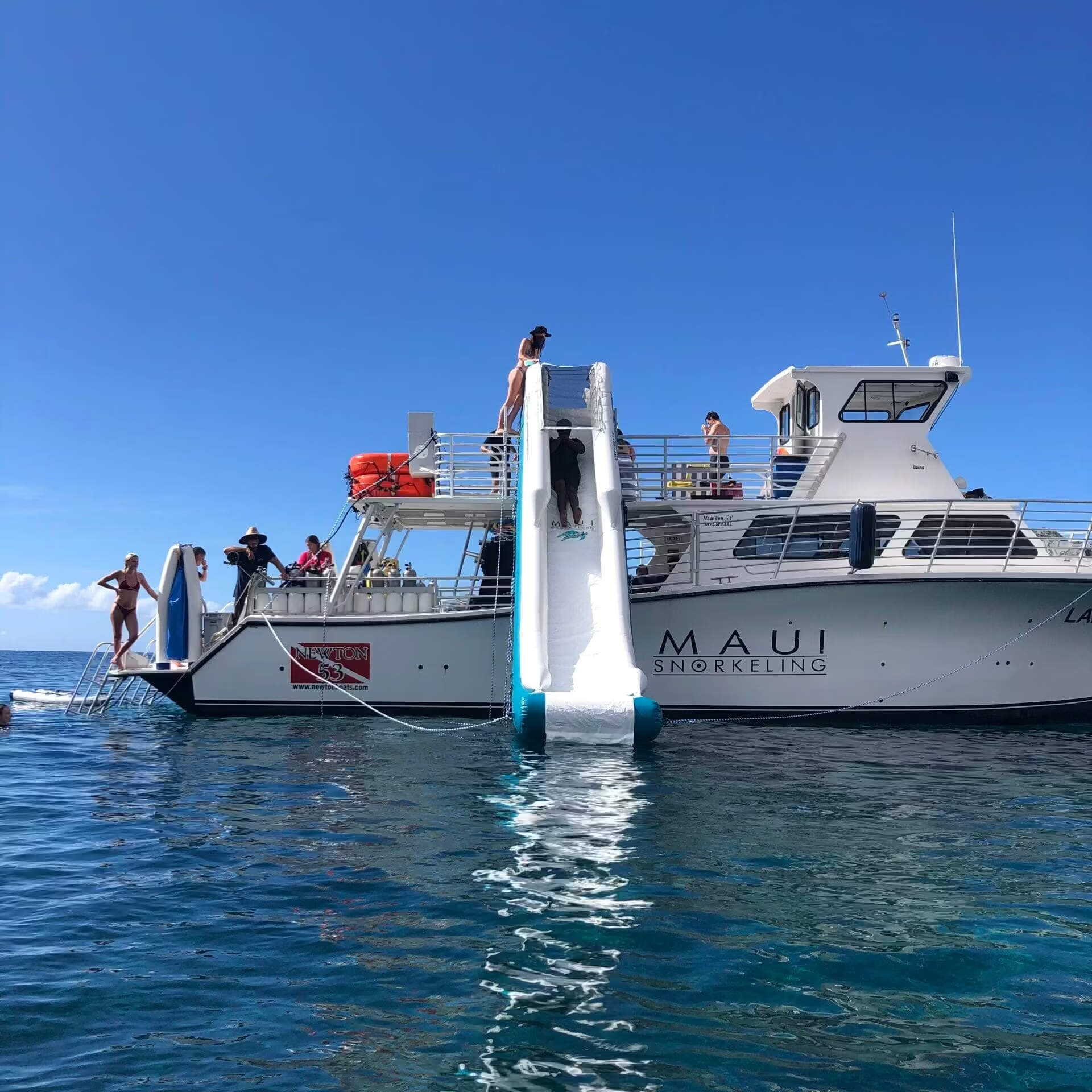
Entry setups vary by vessel. On our Lani Kai II, you use swim steps
or a ladder and need to reboard safely.
Enter and exit along the shoreline, where sand, rocks, shorebreak,
and footing vary by beach.
Comfort And Facilities
Our Lani Kai II has shaded seating and two onboard restrooms.
Amenities vary between operators.
Restrooms, showers, shade, and nearby food depend on the beach
you choose.
Schedule
Set check-in and departure times, with a planned return time.
Choose when to start and how long to stay, as conditions allow.
Cost
Usually higher, with gear, meals, and crew support included on our
morning and afternoon tours.
Usually lower, especially if you already have gear. Budget for
rentals, transportation, and any parking or entrance fees.
Seasickness
Boat movement can cause seasickness for some guests.
No boat ride, although waves and water movement can still
cause discomfort.
Choosing The Snorkel Spot
The captain selects stops to suit the day's conditions and
your tour's itinerary.
You'll choose the beach and check the entry, exit, and current
conditions before getting in.
Boat and beach snorkeling can both work well in Maui. The better choice depends on the exact site or tour, your swimming ability, budget, tolerance for boat motion, and current ocean and water-quality conditions.
When A Maui Boat Snorkel Tour Is The Better Choice
A boat tour is often the better fit when offshore access, a structured plan, and crew support matter more than schedule flexibility or price.
Boat Snorkeling Pros
Offshore access: A boat trip can take you to Molokini, which isn’t accessible from Maui’s beaches.
Structured support: Tours can include a safety briefing, gear, flotation, food, and crew assistance. Confirm the exact inclusions.
Planned site selection: The captain chooses from the tour’s authorized sites based on safety, weather, and operating conditions.
Simpler logistics: The operator provides the vessel, itinerary, and check-in instructions.
Boat Snorkeling Cons
Boat motion: Seasickness is possible, and prevention options should be discussed with a healthcare professional when needed.
Fixed timing: Check-in, departure, water time, and return follow the booked trip.
Conditions can change the itinerary: A named destination is not guaranteed when safety or weather requires another plan.
Higher price: You are paying for the vessel, crew, fuel, and listed inclusions.
Best For
Visitors who want an offshore itinerary
Travelers who value a briefing, gear help, and crew support
Groups comfortable with the tour’s current swimming, age, mobility, and boarding requirements
People willing to follow a fixed schedule and conditions-dependent itinerary
When Beach Snorkeling Is The Better Choice
Shore snorkeling gives you control over timing and cost, but you are responsible for choosing the beach, reading the conditions, planning the entry and exit, and bringing appropriate gear.
Beach (Shore) Snorkeling Pros
Flexible timing: You can shorten, postpone, or skip the snorkel without changing a tour reservation.
Usually lower cost: Renting or owning gear can cover more than one beach day.
No boat ride: This removes the boat-motion trigger for travelers prone to seasickness.
Easy to combine with a beach day: You can remain on shore if the entry or conditions do not fit your group.
Beach (Shore) Snorkeling Cons
You make the safety decisions: Wind, swell, water quality, visibility, currents, shorebreak, and runoff must all be checked.
Entry and exit vary: Sand can simplify footing, but shorebreak or current can still make a sandy entry unsafe. Rocky entries add slip, surge, and cut hazards.
Less immediate support: There may be no crew, flotation, briefing, or gear help. Choose a lifeguarded beach when possible and always use a buddy.
Parking and facilities vary: Popular areas can fill early, and not every entry has showers, restrooms, shade, or lifeguards.
Best For
Travelers who want flexibility and understand how to evaluate the exact beach
Groups prepared to postpone when conditions do not fit their swimming ability
People who want to avoid a boat ride because of seasickness
Visitors adding optional shore snorkeling to a trip that already includes a guided tour
Boat Vs. Beach Snorkeling Cost And Time
Compare the whole outing, including gear, transportation, parking, and time
before and after snorkeling. The boat prices below are for Maui Snorkeling's
public tours. For a closer look at the value, read
Is a Maui Snorkel Tour Worth It?
Advertised adult price: $118.
Includes standard snorkel gear, flotation, lunch, and drinks.
Transportation and gratuity aren't included.
Check in at 12:30 p.m.; depart at
1 p.m. and return around 4 p.m.
Arrive 20–30 minutes before check-in to park and walk to Slip 64 at
Maʻalaea Harbor. Parking is $1 per hour; allow about $4–$5.
Approximately 4.5–6 hours, depending on where you're
staying, traffic, parking, and disembarking.
Beach Snorkeling
Bring your own gear or budget for a rental set. Prices vary by shop,
equipment, and rental length. Add any parking or entrance fees for
your chosen beach, along with transportation.
Allow time for gear pickup and fitting, travel, parking, checking
conditions, and returning rentals. Pickup, fitting, and return may
add roughly 30–60 minutes.
Approximately 1.5–3 hours with gear ready and a nearby
beach, or 3–5 hours with rental pickup, return, or
longer travel.
Price and timing note: Rates can change, so confirm your final
booking total before reserving. Our three-hour and five-hour tours run from
departure to return, including boat travel, briefings, meals, and snorkeling
stops, not continuous time in the water. Door-to-door figures are planning
estimates and vary with lodging location, traffic, parking, rental
arrangements, and ocean conditions.
Where Maui Boat Tours Can Take You
Our 5-hour Molokini Crater Snorkeling Tour visits Molokini, then Turtle Town or another reef. Prefer a shorter outing with a later start? Our 3-hour Afternoon Snorkeling Tour usually visits Coral Gardens or another nearby reef. Your captain chooses the stops based on the day’s ocean conditions.
Shore snorkeling lets you pair reef time with a beach day. Ulua Beach is a South Maui option near Wailea, while Airport Beach offers shore access in North Kāʻanapali. Bring or rent your gear, choose conditions and an entry you can manage comfortably, and leave time to relax on the sand afterward.
Think about your group, budget, and how much time you'd like to spend on the
water. This guide can help you choose where to start.
Traveler Situation
Better Starting Option
Why It Fits
First-Time Snorkelers
A boat tour with gear fitting and crew support
A briefing and gear help can make your first snorkel feel more
manageable. You'll still need to swim independently and feel
comfortable face-down in deep water; flotation doesn't replace
those skills.
Families
A tour with amenities and requirements that suit your group
Included gear, meals, and onboard restrooms can simplify family
planning. Check age, swimming, boarding, and adult-supervision
requirements, and confirm what's included.
Budget Travelers
Shore snorkeling when conditions fit
Using your own gear or renting for several days can keep costs down.
Include transportation, parking, and any entrance fees when comparing
the total.
Motion-Sensitive Guests
Shore snorkeling at a suitable beach
You'll skip the boat ride, although waves and water movement can
still cause discomfort. Choose conditions and an entry you can
comfortably manage.
People With Limited Time
Nearby shore snorkeling with gear ready
There's no fixed departure or return, so you can fit in a shorter
outing. Allow time to check conditions, enter and exit, and rinse
off afterward.
Visitors Without A Rental Car
A walkable beach or a boat tour with transportation arranged
A suitable beach near your lodging may be simplest. For our boat
tours, arrange round-trip travel to Maʻalaea Harbor; transportation
isn't included.
Note: Use these suggestions as a starting point, then check
the tour's participation requirements or your chosen beach's current conditions.
How To Choose On The Day You Go
Maui conditions can change quickly. Make decisions based on current, site-specific information rather than the time of day or what other swimmers appear to be doing.
Check official conditions: Review wind, swell, surf, and marine forecasts before leaving.
Assess the entry and exit: Look for shorebreak, surge, slippery rocks, and currents. Our guide to how north swell affects snorkeling in Maui explains how seasonal swell can change a familiar beach.
Use lifeguards and posted warnings: Choose a lifeguarded beach when possible and ask about the safest entry, exit, and current hazards.
Match the plan to your group: A sandy entry helps with footing but does not make rough, windy, or murky water safe.
Use a buddy: Never snorkel alone. Stay close enough to notice and respond if your buddy needs help.
If conditions are questionable, skip snorkeling. A different beach is not automatically safer, so repeat the same checks before changing locations.
What To Bring (Boat Or Beach)
For our morning and afternoon boat tours: We provide standard snorkel gear, flotation, food, drinks, and mineral sunscreen. Wear your swimsuit and bring a towel, a dry layer for afterward, sunglasses, and any personal medication you may need. A waterproof phone case is handy for photos and protecting your phone from splashes.
For shore snorkeling: Bring or rent a well-fitting mask and snorkel, fins suited to the entry, and flotation when appropriate. Also bring drinking water, a rash guard, mineral sunscreen made with zinc oxide or titanium dioxide, and any personal medication you may need. Flotation provides support but does not replace swimming ability.
Stay off the coral: Enjoy the reef without standing on it, touching it, or kicking it with your fins. Give yourself enough room to float above the living reef.
Let wildlife set the pace: Watch without touching, chasing, feeding, crowding, or blocking an animal’s path. A little patience makes the encounter better for everyone.
During winter, you may see humpback whales while traveling to or from a boat snorkel site. A sighting is not guaranteed, and the vessel must follow federal approach-distance rules.
Make Room for a Maui Snorkel Adventure
Reef views, ocean breezes, and a little adventure belong on your Maui itinerary. Join our Molokini Crater Snorkeling Tour for a morning on the water, or choose our Afternoon Snorkeling Tour for a shorter outing with a later start.
Planning something for your whole group? Explore our Private Snorkel Charters for an outing just for your party.
FAQs
Neither option is always better. Choose a boat tour for crew guidance, included gear, and offshore access. Choose beach snorkeling for flexibility and lower cost when you can evaluate the exact entry, water quality, surf, and current conditions. Many visitors combine one guided boat trip with optional shore snorkeling on a calm day.
If you’re new to snorkeling but already swim independently and feel comfortable floating face-down in deep ocean water, a boat tour can be a helpful introduction. Our crew provides a briefing, gear fitting, and support as you get started. Flotation can reduce effort, but it doesn’t replace swimming ability. Shore snorkeling takes more independent planning, including choosing conditions and an entry and exit you can manage.
Shore snorkeling avoids the boat ride, so it removes that motion trigger, but it is not automatically the safer choice. If you book a tour, ask about vessel type and trip length, choose food and hydration carefully, and discuss motion-sickness medication with a healthcare professional if needed.
Yes. Molokini is offshore, so there isn’t a beach entry from Maui. Most visitors go on a snorkeling tour or private charter. The captain may adjust the itinerary to suit the day’s weather and ocean conditions.
Yes, sea turtles may be seen at some Maui reefs and bays, but no sighting is guaranteed. Stay at least 10 feet away, do not chase, touch, feed, crowd, or block a turtle, and never stand on coral to get closer.
Mornings are often calmer and less windy, but time of day is not a safety guarantee. Check the exact site’s current wind, swell, surf, water quality, visibility, posted warnings, and lifeguard guidance before entering.
Final Thoughts
You don’t have to choose just one. A boat tour can be a highlight of your trip, while shore snorkeling gives you more flexibility on a suitable beach day. Choose experiences that fit your swimming ability, budget, and schedule, and leave room to simply enjoy Maui.
Sources & Updates
Whether you're heading out by boat or from shore, these official resources
can help you check conditions and plan your Maui snorkel day.