Maui South Swell Guide: What It Means For Snorkeling And Beach Days
September 1st, 2026
| Snorkeling Safety
Written by Maui Snorkeling, operating tours to Molokini Crater, Turtle Town, and Coral Gardens from Māʻalaea Harbor since 1985. Tours are led by USCG-licensed captains aboard a USCG-inspected passenger vessel.
Last updated October 13, 2026
Quick Answer
A Maui south swell is wave energy arriving mainly from the south or southwest, often after storms far away in the Southern Hemisphere. It can increase surf, shorebreak, surge, currents, and suspended sand along south-facing shores even when Maui is sunny and local winds are light. Check the National Weather Service marine and surf forecasts, then compare them with posted warnings, lifeguard guidance, and the water in front of you. A forecast is never personal safety clearance.
Main takeaways:
Common Season: South swells are most frequent during Maui’s general May through October summer surf season
Most Exposed Areas: South and southwest-facing shores, including parts of Kīhei, Wailea, Mākena, and the coastline farther south
Clear Sky Warning: Swell can arrive from a distant storm even when there’s no rain or strong wind at your beach
Period Matters: Longer-period swell can carry substantial energy and create stronger breaking waves than its offshore height may suggest
Shore Snorkeling: Skip the water when shorebreak, surge, currents, poor visibility, or a difficult entry and exit are present
Boat Snorkeling: A captain may choose another reef, adjust the route, delay departure, or cancel when conditions require it
Best Rule: Use forecasts to identify possible hazards, not to convince yourself that entering the ocean is safe
A Maui beach can have blue skies, bright sunshine, and barely enough wind to move a palm leaf, yet still have powerful waves breaking along the shoreline.
That’s because local weather and ocean swell aren’t the same thing.
A Maui south swell may begin with a storm thousands of miles away. The storm’s waves travel across the Pacific, gradually organizing into smoother swell before reaching Hawaiʻi’s south-facing shores. By the time that energy reaches Maui, the original storm may be nowhere near the islands.
South swell can change shorebreak, reef surge, currents, beach width, water clarity, and the safety of entering or exiting the ocean. It can affect swimming, snorkeling, paddleboarding, kayaking, shoreline photography, and even a beach day where nobody intended to go deeper than their ankles.
This guide explains what a south swell is, which Maui shores it may affect, how to read the forecast without getting overconfident, and when the best decision is to stay completely out of the water.
Use this quick comparison to understand what a Maui south swell can change and how each signal should affect your beach or snorkeling plan.
Topic
What It Means
Visitor Takeaway
South Swell
Organized wave energy arriving mainly from the south or southwest after traveling away from the weather system that created it.
Local sunshine and light wind don’t prove the ocean is calm.
Common Season
Larger south-shore swells occur most frequently during the general May through October summer season.
Check the current forecast every day rather than assuming summer shores are calm.
Most Exposed Shores
South and southwest-facing coastlines generally receive the most direct energy, although swell may wrap into other exposed areas.
Be especially cautious around Kīhei, Wailea, Mākena, and the coastline farther south.
Swell Height
The height listed in a coastal waters forecast may describe offshore swell rather than the breaking wave face at a specific beach.
Don’t use one height number as an automatic go or no-go threshold.
Wave Period
The time in seconds between wave crests. Longer-period swell generally carries more energy and can create stronger nearshore effects.
Always read height, period, and direction together.
Shorebreak
Waves may break directly onto a steep beach with enough force to cause serious injuries in shallow water.
Stay out when dangerous shorebreak is present or posted.
Reef Surge
Incoming waves create repeated back-and-forth movement across shallow reef, rocks, and cove entrances.
Skip snorkeling when the water repeatedly pushes or pulls you out of position.
Strong Currents
Breaking surf may strengthen rip currents, alongshore movement, and flow through reef channels.
Currents may not be visible. Ask a lifeguard and obey every warning.
Visibility
Wave action may stir sand, sediment, bubbles, algae, and debris into the water.
Don’t snorkel when you can’t clearly see the reef, bottom, buddy, and return route.
Shore Snorkeling
The entry and exit may become more hazardous even when water farther offshore appears calmer.
No safe entry and exit means no snorkel.
Boat Snorkeling
A captain may have flexibility to select another reef, but swell can still affect the ride, current, visibility, and boarding.
Expect route changes when conditions require them, and never assume a destination is guaranteed.
Forecast Limit
Regional forecasts can’t account for every beach, wave set, swimmer, or last-minute change.
A forecast is planning information, not personal safety clearance.
Note: Surf can vary significantly between nearby beaches, and occasional waves may exceed the forecast range. Check the actual shoreline, posted warnings, and lifeguard guidance before entering.
What Is A South Swell?
A swell is a group of waves that has traveled beyond the area where the wind originally generated it. Swell waves usually appear smoother, more organized, and more evenly spaced than short, locally generated wind waves.
A south swell approaches Maui from a generally southern direction. A south-southwest or southwest swell arrives from a slightly different angle, which can change which headlands, bays, reefs, and beaches receive the most energy.
Large Maui south swells often begin with powerful storms in the Southern Hemisphere. Those storms can transfer energy into the ocean long before the waves reach Hawaiʻi.
This explains one of the most confusing parts of ocean planning: the storm that created the waves doesn’t need to be visible from Maui.
You may have:
Clear skies
Very little local wind
No rain near the beach
A smooth-looking ocean between wave sets
Powerful surf arriving from a distant weather system
The correct question isn’t only, “What’s the weather doing here?” It’s also, “What wave energy is traveling toward this shoreline?”
When Are South Swells Most Common In Maui?
South swells are most common during Hawaiʻi’s summer surf season from May through October. This is winter in the Southern Hemisphere, when distant storms can generate wave energy that travels north toward Hawaiʻi.
That doesn’t mean every summer day has a south swell, and it doesn’t mean south-facing shores are automatically calm during the rest of the year.
Ocean conditions may include several wave systems at once, such as:
A long-period south swell
A smaller southwest swell
Shorter-period trade-wind waves
Local wind chop
Background swell from another direction
These systems can overlap, strengthen, fade, or reach different shores at different times. Don’t use the calendar as a substitute for checking the current forecast.
Which Maui Shores Can Be Affected?
South and southwest-facing Maui shorelines usually receive the most direct south swell energy.
That may include exposed portions of the coast near:
Māʻalaea
North and South Kīhei
Wailea
Mākena
ʻĀhihi-Kīnaʻu
Keoneʻōʻio and La Perouse Bay
Some south or southwest swell energy may also wrap into exposed sections of West Maui or reach southeast-facing shores. How much energy reaches a particular beach depends on the exact swell direction, wave period, nearby islands, headlands, reef structure, and underwater shape of the coastline.
Two beaches only a short drive apart can look completely different. One may have waves breaking across an outer reef while another has heavy shorebreak directly on the sand. A protected-looking cove may have less visible surf but stronger surge moving through its entrance or around its reef edges.
This is why a regional forecast can’t tell you exactly what every beach will look like. It identifies the broader pattern, but you must make the final decision at the specific shoreline.
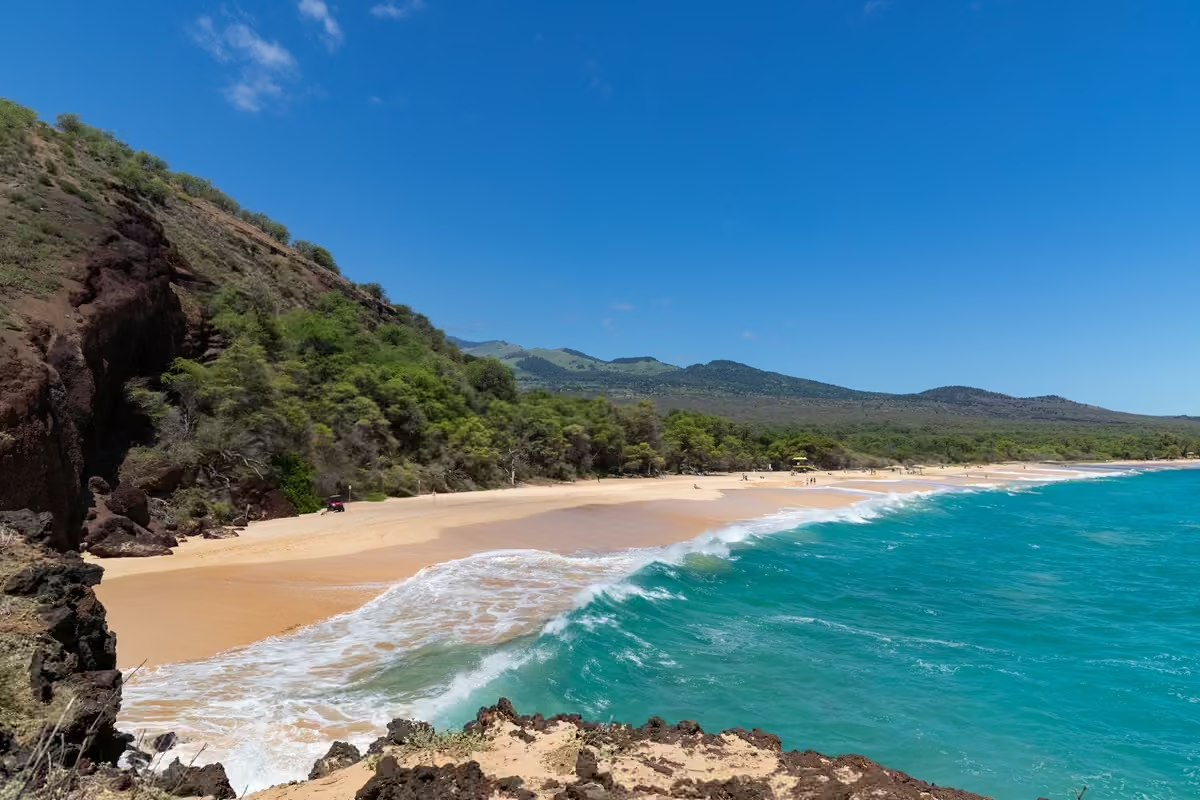
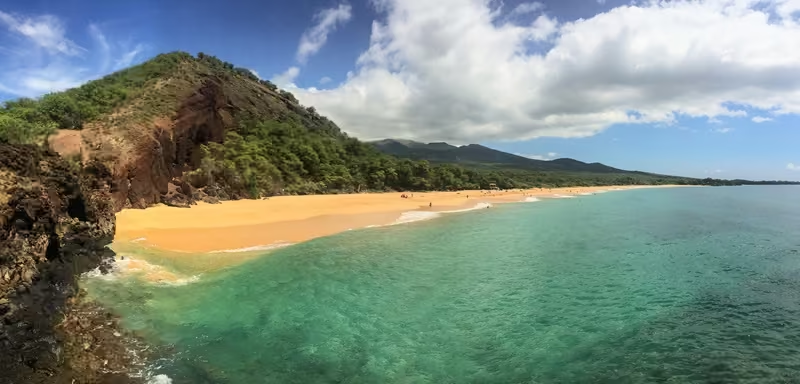
At Big Beach, for example, a steep sandy shoreline can create dangerous shorebreak. At Makena Landing, swell may show up differently through reef surge, water movement, and entry conditions. Neither beach should be judged by the other beach’s forecast, photo, or parking lot.
Why A Sunny, Windless Day Can Still Have Rough Water
Wind waves and swell are related, but they aren’t identical.
Wind waves are generated when wind acts on nearby ocean. They’re often shorter, steeper, less organized, and associated with visible chop.
Swell has traveled away from the weather system that created it. It can arrive under clear skies and light local winds.
A windless beach can therefore have a smooth surface between sets while larger swell waves continue moving beneath it. When that energy reaches shallow water, the waves slow, grow steeper, and eventually break.
Longer-period swell can be especially misleading. The waves may be spaced farther apart, creating quiet pauses that make the shoreline appear calmer than it really is.
A five-minute lull doesn’t prove the swell is over. Larger sets may arrive after a long quiet period, and the biggest waves aren’t required to appear one after another.
Never use blue sky, light wind, or a temporary lull as your only reason to enter.
How South Swell Changes Shorebreak, Surge, Currents, And Visibility
A south swell doesn’t affect every beach in the same way. The result depends on how incoming energy interacts with the beach, reef, rocks, and ocean floor.
Shorebreak
Shorebreak happens when waves break directly onto the beach instead of breaking farther offshore.
At a steep sandy shoreline, a south swell can produce powerful waves that rise quickly and collapse close to shore. These waves can knock people down and drive them into hard sand, rocks, or coral.
Shallow water isn’t automatically safe. Dangerous shorebreak can cause serious head, neck, and back injuries even when someone is standing in shallow water.
Stay out when dangerous shorebreak warnings are posted. Keep children well beyond the reach of incoming waves and don’t sit in the wet-sand zone simply because the previous several waves stopped lower on the beach.
Reef Surge
Surge is the back-and-forth movement created as wave energy passes through shallow water and reef structure.
A snorkeler may feel pushed toward the reef as one wave arrives, then pulled away as the water moves back. The movement may repeat with every swell wave.
Surge can make it difficult to:
Hold a comfortable position
Stay away from coral
Photograph marine life without drifting
Keep track of a buddy
Exit through a rocky or shallow area
If the ocean is repeatedly moving you farther than you intend, conditions aren’t calm enough for relaxed snorkeling.
Strong Currents
Breaking waves move water toward shore. That water eventually has to move away or along the coastline, which can strengthen rip currents, alongshore currents, channels, and movement around reef openings.
Strong currents aren’t always easy to see. You may notice:
Foam or debris moving steadily in one direction
A darker or more turbulent channel between breaking waves
Swimmers making little progress
Your body drifting despite light kicking
Water pulling through a reef opening
Don’t enter when strong-current signs are posted or when a lifeguard warns that current is active. Flotation can help an eligible swimmer conserve energy, but it doesn’t make strong current appropriate for snorkeling.
Learn how wave-driven currents can carry water offshore in our Maui rip currents guide, including possible visual clues and NWS escape guidance.
Reduced Visibility
South swell can stir sand, sediment, algae, and debris from the bottom. Breaking waves may fill the water with bubbles and suspended particles, reducing the distance you can see.
Poor visibility creates more than a disappointing snorkel. It can hide:
Shallow coral
Rocks
Sudden depth changes
Surge channels
Your buddy
The safest route back to shore
If you can’t see the reef, bottom, nearby swimmers, or your return route clearly, don’t snorkel.
Why Entry And Exit Matter More Than The View Offshore
A snorkel spot isn’t suitable unless you can enter and exit safely.
Visitors sometimes look past the shoreline and focus on calm-looking water farther offshore. The difficult part may be the first and final 30 feet.
South swell can turn the entry and exit into a zone of:
Breaking waves
Moving rocks
Shallow coral
Backwash
Strong surge
Cloudy water
Rapid depth changes
Remember that you’ll be more tired when you return. An entry that feels manageable at the beginning may become much harder after swimming.
Before going in, identify the exact route you’ll use to return. If you can’t clearly describe how you’ll exit, don’t enter.
How To Read A Maui Swell Forecast Without Becoming Overconfident
Start with the National Weather Service Honolulu marine page. It links to the statewide surf forecast, coastal waters forecasts, marine advisories, forecast graphics, buoy information, and marine observations.
Use the forecast to understand the pattern, not to give yourself permission to enter the ocean.
Check Swell Direction
Direction tells you where the swell is coming from.
A south swell approaches from the south. A southwest swell approaches from the southwest. A small change in direction may expose one beach more directly while placing another partly behind a headland, neighboring island, or reef.
Don’t treat “south swell” as though every South Maui beach receives identical waves.
Check Swell Height
Make sure you understand which number you’re reading.
A coastal waters forecast may describe offshore swell height. A surf forecast describes expected breaking surf along a particular shore orientation. Those numbers aren’t interchangeable.
An offshore swell height doesn’t tell you exactly how large the wave face will be at your beach. Breaking surf depends on period, direction, reef structure, beach slope, water depth, island blocking, and other local features.
Longer-period waves generally travel faster, extend deeper beneath the surface, and carry more energy than shorter-period waves of a similar height. Don’t read height without period, because two swell systems with the same reported height may behave very differently.
Check The Trend
Look for words such as:
Arriving
Building
Peaking
Holding
Declining
A swell that’s still building may produce stronger conditions later. A declining forecast doesn’t mean every beach becomes calm immediately.
Reefs and beaches may continue receiving larger sets while the broader swell slowly fades.
Check For Multiple Wave Systems
Maui may have a south swell and short-period trade-wind waves at the same time. One system may affect the shoreline while another makes the boat ride or surface conditions choppy.
Looking at only the largest number can cause you to miss a second wave group that affects your exact destination.
Check The Surf Forecast And Advisories
The statewide surf forecast provides estimated breaking surf by island and shore orientation. It may also discuss swell timing and whether surf is expected to approach advisory levels.
Forecast ranges aren’t maximum possible wave sizes. Larger sets can arrive outside the most common range, and individual beaches can differ significantly.
Finally, check for active high-surf advisories, warnings, marine weather messages, and posted beach closures.
A forecast describes broad ocean conditions, not your swimming ability, health, comfort level, or last-minute changes at one beach. Use it to identify potential hazards, then make the final decision using posted warnings, lifeguard guidance, actual water movement, visibility, entry and exit conditions, and your group’s abilities.
Can You Still Have A Beach Day During A South Swell?
Sometimes, yes. A south swell may make swimming or snorkeling unsuitable while still allowing a dry beach visit at an open, lifeguarded park.
However, a dry beach day still requires awareness.
Set chairs, towels, and children well above the wet-sand line.
Stay away from rocks, ledges, cliffs, tide pools, and blowholes exposed to waves.
Don’t turn your back on the ocean while taking photos.
Keep children within reach near the shoreline.
Follow closures and lifeguard instructions.
Move farther back if waves begin reaching higher on the beach.
Don’t wade simply because you decided not to swim.
Strong shorebreak can knock down people standing in shallow water. A large set can also travel farther up the beach than the smaller waves that came before it.
A boat tour may provide more flexibility than shore snorkeling, but it isn’t a loophole around ocean conditions.
Shore Snorkeling
Shore snorkelers are committed to one beach and one entry route. A south swell may create:
Difficult shorebreak
Surge over shallow reef
Strong currents
Reduced visibility
An unsafe return to the beach
If that shoreline is unsuitable, the responsible choice is to stay out or move to a genuinely safer option after independently checking the new location.
Boat Snorkeling
A licensed captain can review the marine forecast, observe actual conditions after leaving the harbor, and compare available reefs.
That flexibility may let the captain choose a location with better protection, clearer water, safer entry and exit, or a more comfortable ride. It doesn’t guarantee that a suitable site will be available.
South swell can still affect:
The boat ride
Anchoring or mooring conditions
Current at the snorkel site
Visibility
Boat movement
Water entry and boarding
The number of practical destinations
The route may change before departure, during the trip, or after the captain sees the planned location. The trip may also be delayed or canceled if safe, suitable conditions aren’t available.
If you already booked a boat tour, don’t assume it’s canceled and fail to arrive. Check your messages and follow the operator’s instructions.
A Five-Minute Go-Or-No-Go Checklist
Spend five full minutes deciding before taking equipment out of the car or walking into the water.
Minute 1: Check The Forecast
Open the National Weather Service marine and surf pages.
Look for south or southwest swell.
Check height, period, direction, and whether the swell is building or declining.
Look for high-surf advisories, warnings, or marine weather messages.
Minute 2: Check Local Warnings
Read every sign and flag at the beach.
Ask the lifeguard about shorebreak, current, and the safest open area.
Check current water-quality advisories after rain.
Obey no-swimming signs and water closures.
Minutes 3 And 4: Watch The Water
Watch several complete wave sets.
Look for long pauses followed by larger waves.
Notice where waves are breaking.
Watch foam and debris for signs of current.
Look for surge moving across the reef.
Check whether the water is clear enough to see the bottom and entry route.
Notice whether people are struggling or being pushed alongshore.
Minute 5: Assess Your Group And Exit
Can every person who plans to enter swim independently?
Is everyone calm and comfortable in deep water?
Can you identify a safe entry and return route?
Is your buddy capable of helping in an emergency?
Would you still choose this beach if snorkeling weren’t already on the itinerary?
Make The Decision
Go: No active warnings affect the beach, the water is calm and clear, entry and exit are manageable, the lifeguard has no concerns, and every swimmer meets the ability requirements.
Switch: The planned beach is exposed or questionable, but another lifeguarded beach may have better verified conditions. Check the new location from the beginning rather than assuming it’s safe.
No-Go: A warning or closure is active, shorebreak is strong, current or surge is visible, water is murky, the exit is uncertain, or anyone in the group is uncomfortable.
This checklist helps organize a decision. It doesn’t guarantee that ocean recreation is risk-free.
When To Skip The Ocean Entirely
Skip swimming, snorkeling, paddleboarding, kayaking, and exposed shoreline activity when a closure or warning is active, lifeguards advise staying out, dangerous shorebreak or strong current is present, water is brown or murky, waves are washing over rocks or paths, severe weather is nearby, or you can’t identify a safe entry and exit.
Stay out when anyone in your group is tired, ill, anxious, dehydrated, uncomfortable in the conditions, or unable to swim independently. If several Maui coasts are affected, choose a land-based activity instead of driving from beach to beach looking for one acceptable patch of water.
What To Do When South Maui Is Too Rough
A south swell doesn’t always affect every Maui shoreline equally. Another coast may have smaller surf, but it may also have trade-wind chop, north swell, current, rain, or other hazards.
Before changing beaches:
Check the forecast for the new shore orientation.
Check current beach warnings.
Choose a lifeguarded location when possible.
Repeat the full water assessment after arriving.
Be willing to make it a dry beach day.
Don’t assume that driving north, west, or east automatically solves the problem. A different coast is only a better option when its own current conditions are appropriate.
If the broader ocean picture isn’t working, choose shopping, a museum, local food, a farm tour, or another activity from our Maui Rainy Day Activities Guide.
How Maui Snorkeling Captains Use South Swell Information
South swell is one part of a larger operating decision.
A captain may consider:
Swell height, direction, and period
Whether the swell is arriving, building, peaking, or declining
Local wind and expected wind changes
Current and water movement
Visibility and recent rain
Boat movement at the site
Safe passenger entry and boarding
Vessel traffic
Available snorkeling time
The swimming abilities of the guests aboard
One favorable factor doesn’t cancel an unfavorable one. Clear water may still have strong current. Light wind may still come with long-period swell. A famous destination may still have an unsuitable entry or exit.
The forecast starts the planning process. The actual water determines whether the planned destination still works.
Ready to snorkel Maui?
Snag your spot on a Maui Snorkeling Tour! Make your ocean day easy with snorkel gear, food, crew support, and simple online booking.
Best visibility: Morning Tour at Molokini Crater & Turtle Town
A south swell is organized wave energy approaching mainly from the south or southwest. It may have traveled thousands of miles from a distant weather system before reaching Maui’s south-facing shores.
South swells are most common during Hawaiʻi’s general summer surf season from May through October, when Southern Hemisphere storms can send wave energy north. They can still occur outside that period, so always check the current forecast.
Yes. Swell height is only one factor. Wave period, direction, beach slope, reef structure, current, tide, and entry conditions can turn a modest-looking forecast into powerful shorebreak or surge at a particular beach.
No single swell height provides automatic safety clearance. A two-foot long-period swell may behave differently from a two-foot short-period swell, and local beaches can amplify or block the energy differently. Check actual conditions and lifeguard guidance.
No. A south swell may arrive from a distant storm while local skies are clear and winds are light. Wind affects surface chop, but it doesn’t remove swell traveling into the shoreline.
Yes. A cove may have smaller visible waves but still experience surge, current, poor visibility, or difficult movement through its entrance. Protected-looking water isn’t automatically suitable for snorkeling.
Possibly, because wave conditions are localized. However, another coast may be affected by trade-wind waves, north swell, current, or rain. Check the forecast and actual conditions for the new beach instead of assuming it’s safe.
Not automatically. Captains evaluate swell, wind, current, visibility, boarding conditions, and alternate reefs. A route may change, or a trip may be delayed or canceled when no suitable option is available. Follow the operator’s instructions.
Don’t use a fixed number of hours as an automatic all-clear. Wait until current forecasts, warnings, shorebreak, currents, visibility, entry conditions, and lifeguard guidance are appropriate at the exact beach you plan to use.
Final Thoughts On Maui South Swell
When a Maui south swell makes the ocean look rough, murky, fast-moving, or beyond your comfort level, stay out. Maui will still have reefs, beaches, and blue water tomorrow, and a missed snorkel is always better than an ocean emergency.
Sources & Updates
Use these official resources to check current Maui swell direction, height, period, surf forecasts, marine advisories, beach hazards, shorebreak, snorkeling safety, and water-quality notices before entering the ocean.

.jpg)