Quick Answer
Maui rip currents are concentrated flows that carry water away from shore through breaking waves. They don't pull swimmers underwater, but fighting them can cause exhaustion. If caught, stay calm. Swim alongshore out of the current if able, then angle toward shore away from it. If you can't escape or reach shore, float or tread water and call or wave for help. For shore snorkeling, choose lifeguarded beaches and check conditions.
Main takeaways:
-
Different Hazards: Rip currents, tidal currents, longshore currents, and wave backwash aren't interchangeable terms for the same water movement.
-
Possible Clues: Watch for gaps between breakers, contrasting water, or foam moving offshore, but clues may be absent.
-
Before Entry: Check forecasts, warning signs, lifeguard advice, your swimming ability, and the entire entry and return route.
-
If Caught: Don't exhaust yourself swimming straight toward shore against the flow; move alongshore to escape if able.
-
Need Assistance: Float or calmly tread water, face shore, and call or wave for help when you can't escape.
-
Helping Someone: Alert a lifeguard or call 911; throw flotation from safety instead of attempting an untrained swimming rescue.
-
Snorkeling Gear: Fins and flotation don't make strong currents suitable; stay with your buddy and follow crew instructions.
The calmest-looking gap between breaking waves isn't always the best place to enter the ocean. Sometimes, it's where water is flowing back out. Knowing that before you put on your fins can change how you read a Maui beach.
Maui rip currents are one reason to check more than the view before swimming or snorkeling. You don't need to become an ocean scientist, but understanding the warning clues, choosing lifeguarded shore access, and knowing how to respond can help you make better decisions.
This guide explains what rip currents are, how they differ from other water movement, and what the National Weather Service recommends if you're caught. The goal is an enjoyable reef outing with a plan, not a test of how hard you can swim.
What Is A Rip Current?
A rip current is a concentrated flow of water moving away from shore through the area where waves break. It can carry someone beyond the breaking waves, and its strength and path can change.
It isn't a force that sucks swimmers downward. The danger is being carried away and becoming exhausted while trying to get back. Waves and difficulty staying afloat can still lead to drowning, so “not pulling you under” doesn't mean harmless.
Also, not every current around Maui is a rip current. Wind-driven, tidal, and other flows can move snorkelers along a reef or away from a boat. Don't assume one beach-escape diagram explains every offshore situation.
Rip Current Versus Undertow, Tide, And Longshore Current
People often mix these terms up when talking about the beach. The distinction matters because a wave washing around your ankles, a current moving down the beach, and a rip carrying water offshore aren't the same process.
“Undertow” is especially imprecise. NWS notes that it doesn't have an agreed definition and is often used incorrectly for rip currents. Water washing back down a beach can knock a wader off balance, but that doesn't make it a rip current pulling someone beneath the surface.
Breaking waves push water shoreward. When waves break more strongly in one area than another, the resulting differences in water level can drive water along the beach and then offshore through a concentrated channel.
Gaps in sandbars can help focus that flow. Rocky headlands, reef formations, piers, and jetties can also influence where it occurs. Not every rip depends on a permanent channel: some develop briefly as waves and currents interact.
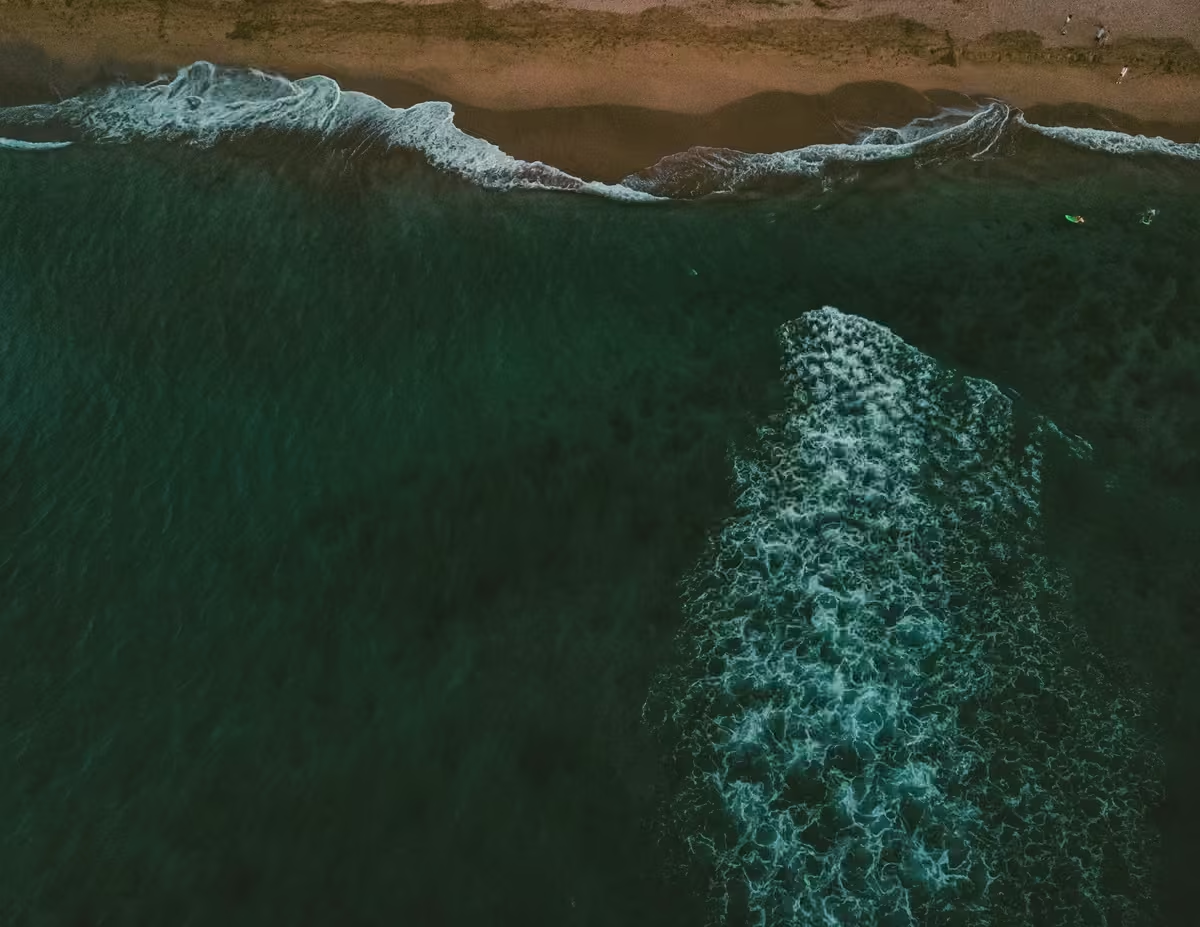
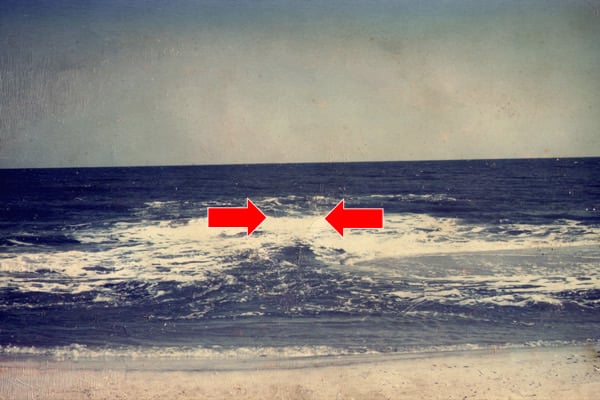
That's why a quiet-looking opening between breakers deserves attention rather than an automatic “this looks easier.” That quieter-looking opening may be where water flows back offshore through the surf zone, so fewer breaking waves don’t automatically mean an easier entry.
Possible Visual Clues, And Why You Might Miss Them
From a secure place on land, look for differences across the water rather than searching for one perfect textbook pattern. Possible clues include:
- A gap between breakers: A darker or seemingly calmer strip bordered by breaking waves and whitewater.
- Water moving offshore: Foam, seaweed, or floating debris traveling away from the beach.
- A different surface texture: A narrow area of choppy, disturbed water compared with its surroundings.
- A change in color: Sediment or deeper water creating a contrasting patch or channel.
Some, all, or none of these clues may be visible. A color difference alone doesn't identify a rip, and clear water doesn't prove there's no current. Spotting one from the beach can be harder than recognizing it in an overhead photo.
Watch for changing movement, but don't use a fixed observation time as an all-clear. You don't need to confirm a rip scientifically before deciding the water isn't right for your group.
Do Maui Rip Currents Only Happen During Big Swells?
No. Large surf deserves caution, but rip currents can occur with smaller breaking waves and pleasant weather. Some flows near structures or rocky boundaries can develop when the surf doesn't look dramatic.
Maui's swell patterns change which shorelines receive wave energy. Our Maui North Swell Guide and Maui South Swell Guide explain those differences. Neither winter on one coast nor summer on another creates a dependable current-free season.
Tides can influence how waves interact with the bottom, but there isn't a universally safe tide for snorkeling. Check the specific location instead of basing your decision on high tide, low tide, or a small wave number.
How Current Hazards Differ Around Maui
Checking Maui ocean conditions means looking at the beach you plan to visit. These local examples show how rip currents, shorebreak, and other hazards can affect different parts of the island.
Baldwin Beach Park: North Shore
At Baldwin Beach Park, high surf can create strong rip currents and forceful waves breaking close to shore. The sandy bottom also deepens quickly, so swimmers can find themselves beyond standing depth.
Before entering, ask the on-duty lifeguard about currents and the section of beach you’re considering. Review Baldwin Beach Park’s conditions and hazard information as part of your planning.
D.T. Fleming Beach: West Maui
D.T. Fleming Beach fronts Honokahua Bay, where high surf can generate rip currents across the beach, particularly during winter. Waves breaking over the sandbar can also produce powerful shorebreak and backwash.
That combination matters when choosing an entry and planning your return. Ask the lifeguard whether swimming or snorkeling is appropriate that day, and check D.T. Fleming’s beach information before your visit.
Big Beach: South Maui
Big Beach at Mākena State Park has a steep shoreline, and the park’s listed hazards include heavy shorebreak and strong currents. Your assessment should include conditions at the water’s edge and farther offshore.
Ask a lifeguard about entry, exit, and current conditions before you put on your gear. Review Mākena State Park’s beach conditions and hazards when planning your outing.
Where To Check Maui Beach Conditions
Start with the Maui beach conditions page and select the beach you’re considering. It brings together beach-specific information, hazard ratings, and available alerts. Pair that with the NWS Honolulu marine and surf forecasts to see which shorelines the incoming swell affects.
Check the update time whenever one is provided. Online reports may lag behind changing conditions, so read posted warnings and speak with an on-duty lifeguard when you arrive.
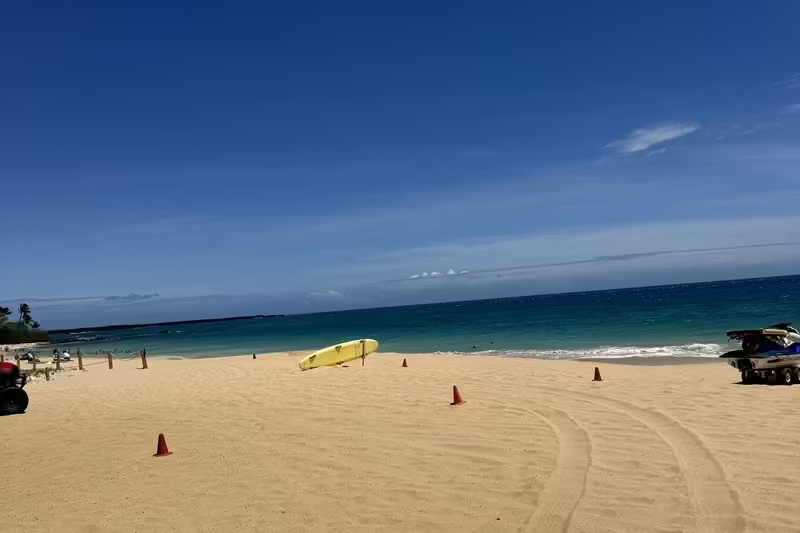
For shore outings, use Hawaiʻi Ocean Safety’s lifeguarded-beach directory to plan access to local advice. Lifeguard coverage doesn’t make every beach suitable for snorkeling. If the conditions or return route are uncertain, keep the gear packed.
Checks Before Entering The Water
Start With The Forecast And Local Advice
Use the NWS Honolulu marine page to review surf information for Maui, affected shore directions, and active alerts. Check when the forecast was issued and whether conditions are expected to change during your visit.
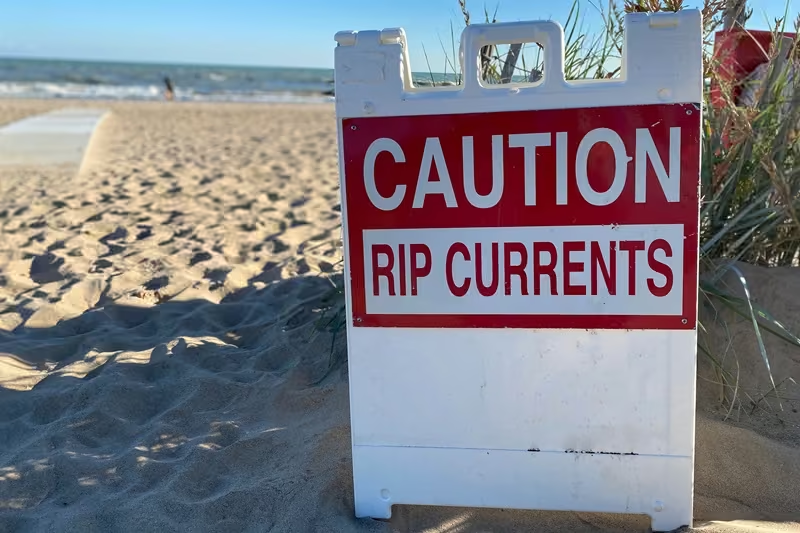
For a shore outing, choose a beach with an on-duty lifeguard and ask specifically about snorkeling, currents, and the entry you're considering. Lifeguard presence provides support, not a promise that entering is appropriate. Our Maui beach warning signs guide explains the notices you may encounter.
Look At The Whole Route
Assess the entry, the area you plan to explore, and the return. Forceful shorebreak, movement around rocks, murky water, or an uncertain exit are reasons to leave your equipment packed. Don't use other swimmers as evidence that your route is manageable.
A beach that worked yesterday needs another assessment today. Our Maui Snorkel Conditions Guide brings the planning checks together. Forecasts help identify concerns; they aren't personal safety clearance.
Make A Buddy And Help Plan
Agree on where you'll stay together, how you'll signal a problem, and when you'll finish. For a beach visit, know the beach name and access location, and keep a phone available with someone ashore. Notice any rescue-flotation station without assuming every beach has one.
Have this conversation before the masks go on. It's much easier to agree on a plan while everyone can hear each other.
What To Do If You're Caught In A Rip Current
A warning sign may be swimming toward shore without making progress and getting tired. Don't turn that into an all-out race against the current. The following follows the National Weather Service's rip-current survival guidance, with its additional floating and signaling advice.
- Stay calm and conserve energy. Stop trying to overpower the offshore flow. Signal for help early if you don't think you can reach shore.
- If you're able to swim out, move along the shoreline. Swim parallel to the beach to avoid the current's pull, rather than swimming directly toward land against it.
- After you're free of the current, return at an angle. Swim toward shore while moving away from the current, rather than back through the same flow.
- If you can't escape, float or calmly tread water. Face shore and call or wave for help. Don't keep exhausting yourself with unsuccessful swimming.
You don't need to complete an exhausting escape attempt before asking for assistance. These are response options, not a guarantee that every current has the same shape or an easy exit. Follow lifeguard instructions when help arrives.
How To Help Without Becoming Another Victim
Seeing someone carried away can trigger an immediate urge to swim after them. The priority is getting help and flotation to the person without putting another swimmer in danger.
Alert the lifeguard. If no lifeguard is available, call 911 and describe the beach, access point, and person's location. When others are present, have one person keep watching the swimmer while another calls.
From a secure position, throw an available flotation device, such as a life ring or life jacket, if you can do so without entering hazardous water. A floating cooler can also provide something to hold. Don't attempt a swimming rescue on your own.
Call out simple instructions: don't fight the current, float if unable to escape, and follow the shoreline to get out if able. Avoid a crowd shouting conflicting directions. Fins or a float don't make an untrained rescue safe.
Snorkeling-Specific Precautions
Look Up From The Reef
A fish can hold your attention while your position changes. Check your buddy, your location relative to shore, and your planned exit regularly. On a boat trip, know where the boat and designated swimming area are, and follow the briefing.
Don't extend the route because another coral head looks interesting. Keep enough energy for the return and speak up when staying in position starts to feel difficult. No photograph is worth ignoring a developing problem.
Use Equipment As Support, Not Permission
A properly fitted mask and fins reduce equipment distractions. Our guide to how snorkel fins should fit explains the checks to make before entering.
Appropriate flotation can help you conserve energy, but it won't cancel a current or replace your ability to swim. Don't enter questionable water because you've rented fins or brought a float. Never stand on coral or grab the reef to hold your position.
Know What Crew Support Does And Doesn't Mean
Maui Snorkeling's public tours include gear, flotation options, instruction, and crew support. Anyone entering still needs to swim independently and feel comfortable in deep water. Tell the crew about concerns before you board, and signal promptly if anything changes.
Read how our captains choose the destination and the factors behind route decisions. A boat can provide a different setup from a shore entry, but it doesn't guarantee current-free water.
If you're struggling near a boat, get the crew's attention and follow its instructions. Don't automatically apply a beach's parallel-to-shore escape pattern to a different offshore current or swim away from assistance trying to locate a shoreline.
When To Stay Out
Skip snorkeling when strong-current warnings, high-surf alerts affecting your shore, closures, rough water, or poor visibility are present. Stay out when the entry or return is uncertain, anyone feels unwell, or the outing exceeds your swimming comfort.
Changing beaches means checking a new location, not assuming the hazard disappeared. Sometimes the best choice is a walk well beyond wave wash, lunch with an ocean view, or saving the snorkel gear for another suitable day.
Final Thoughts On Maui Rip Currents
The best preparation happens before the first swim: understand the difference between inviting-looking water and suitable conditions, ask a lifeguard, and make a buddy plan.
Remember the response without treating it as a reason to take chances: don't fight the flow, escape alongshore if able, and float and signal when you can't. Choose conditions that let the reef be the highlight, not the struggle to get back.