Maui Snorkeling Visibility: What Makes The Water Clear Or Murky?
October 27th, 2026
| Maui SnorkelingSnorkeling Safety
Written by Maui Snorkeling, operating tours to Molokini Crater, Turtle Town, and Coral Gardens from Māʻalaea Harbor since 1985. Tours are led by USCG-licensed captains aboard a USCG-inspected passenger vessel.
Last updated October 27, 2026
Quick Answer
Maui snorkeling visibility varies by location and changes with wind, swell, rainfall, and suspended sediment. Calm mornings after full daylight can offer clearer views when wind and waves are light, but no time or location guarantees clear water. Check current advisories and conditions at your exact entry point. Skip murky or runoff-affected water; clear water alone doesn’t mean snorkeling is safe.
Main takeaways:
Timing: Morning may bring lighter wind, but dawn, dusk, swell, and runoff still require caution.
Water Movement: Wind, waves, swell, shorebreak, and swimmers' fins can lift sand and sediment into the water.
Rain: Runoff can reduce clarity and carry contaminants; check advisories even when the water isn't brown.
Tides: High or low tide alone can't predict underwater visibility or confirm that currents are weak.
Before Entry: Assess the exact shoreline and ask a lifeguard; don't swim out to test conditions.
Safety: Shore snorkeling requires experienced ocean swimmers, buddies, and suitable conditions beyond a clear-looking view.
On a clear snorkeling day, you can follow a fish across the reef instead of losing it in a haze. Coral shapes stand out, your buddy is easy to spot, and there's more to enjoy without moving closer. That view is part of Maui's appeal, but it isn't a permanent feature of any beach.
Maui snorkeling visibility changes with wind, waves, runoff, and what's suspended in the water. A shoreline that looked clear one morning may turn cloudy later, while a nearby reef responds differently to the same weather.
This guide explains what improves or reduces underwater clarity, how shore and boat settings differ, and what you can assess before entering. It isn't today's forecast or a ranking of beaches by guaranteed visibility. The goal is a better view of the reef, not a reason to push through murky water.
What Does Snorkeling Visibility Mean?
Visibility is how far you can see clearly through the water. It affects whether you can distinguish a fish's markings, follow the reef's outline, or keep your buddy in view.
Cloudiness caused by particles scattering light is called turbidity. Sand, fine sediment, microscopic algae, and organic material can contribute. Surface glare and bubbles from breaking waves also interrupt your view, but they're different from a persistent haze throughout the water.
A fogged mask creates another kind of blur. You can address equipment problems; a better mask won't clear a cloudy ocean.
How Clear Is the Water for Snorkeling in Maui?
There's no dependable islandwide visibility number. Visibility varies by beach, sandy entry, and offshore reef, and yesterday's clear-water photo doesn't reflect today's conditions.
Molokini is known for clear offshore water, but wind, swell, current, and the snorkeling area you choose still matter. The clearest water in Maui for snorkeling isn't a permanent title held by one location.
What Affects Maui Snorkeling Visibility?
Several factors can overlap. Wind may roughen the surface while waves lift sediment, and glare makes it harder to judge what's underneath.
A rough surface can interrupt the view without proving that the entire water column is cloudy. Equally, smooth water can contain suspended sediment. Look at both the surface and what you can distinguish beneath it, rather than choosing a beach only because the ocean looks blue from the road.
Maui Visibility Factors At A Glance
Compare possible causes of a poor view. Several can occur together, and appearance alone doesn't establish water quality.
Factor
How It May Affect Visibility
What Visitors May Notice
Wind
Adds chop, bubbles, and shifting surface reflections.
Textured water, whitecaps, and interrupted views.
Swell And Waves
Stir sand, sediment, algae, and debris.
Breakers, repeated surge, and nearshore cloudiness.
Rain And Runoff
Carry soil, debris, and possible contaminants.
Discolored plumes or cloudy water; contamination isn't always visible.
Sandy Bottom
Clouds when waves, fins, or feet disturb it.
Localized clouds of suspended sand.
Reef Or Lava Bottom
May have less loose sand; surge and bubbles still occur.
Visible reef beneath rough or surging water.
Plankton And Organic Matter
Scatter light and reduce clarity.
Haze without obvious suspended sand.
Sun Angle And Glare
Change how well you see through the surface.
Bright reflections despite potentially clear water below.
Mask Condition
Fog, scratches, or leaks interrupt your view.
Blur or water inside the mask rather than outside it.
Note: These are possible explanations, not entry permission. Equipment can't fix genuinely murky water.
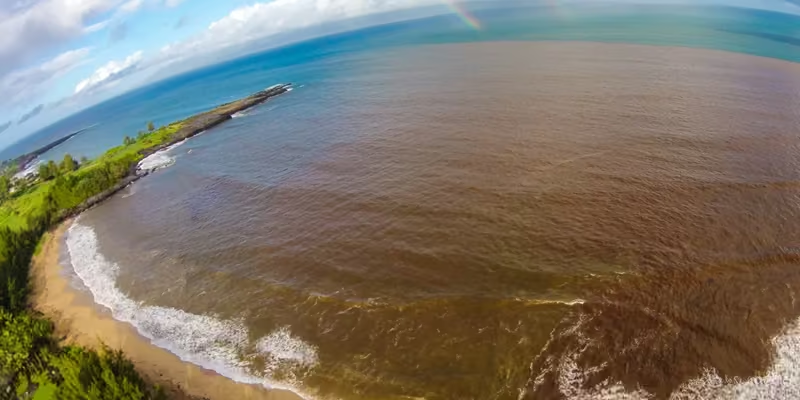
Example of brown nearshore water. This photo does not show current conditions. Photo Credit: Kihei Community Association
Is Morning The Best Time For Maui Snorkeling Visibility?
Morning often offers a useful starting point because wind and chop may be lighter before daytime winds strengthen. Wait until full daylight, and avoid snorkeling at dawn or dusk.
Early timing doesn't remove overnight swell, runoff, currents, or shorebreak. Some mornings are unsuitable from the start. Afternoon snorkeling can still work at a captain-selected protected reef when conditions allow.
Stay out of brown, cloudy, murky, or runoff-affected water. Check Hawaiʻi Department of Health advisories even when the water isn't dark brown. Clearer-looking water doesn't cancel a warning, and no warning isn't proof of clean water.
Don't use a fixed countdown after rain as permission to enter. Follow current guidance and wait for suitable water quality and ocean conditions. Our Maui Brown Water Advisory guide covers post-rain decisions in more detail.
Does Tide Affect Snorkeling Visibility?
Tide changes water depth and how waves interact with the shoreline, reef, and sandy bottom. Its effect on clarity depends on location and other conditions.
Neither high nor low tide automatically brings clearer water. Tide height doesn't confirm weak current either. Wind, swell, shorebreak, and runoff may matter more. Use our Best Tide For Snorkeling In Maui guide for the fuller explanation.
Maui Snorkeling Visibility By Location
Compare how offshore reefs, South Maui snorkeling areas, and West Maui bays
respond to changing conditions. No location guarantees clear water every day.
Snorkeling Location
What Can Affect Visibility
What Visitors Should Know
Molokini Crater
Its offshore setting separates it from direct beach runoff and sandy
shore entries. Wind, swell, currents, and the selected snorkeling area
still affect conditions.
Molokini is known for clear water, but visibility and suitable
conditions aren't guaranteed. The captain may choose another
destination.
South Maui And Turtle Town
South or southwest swell, afternoon wind, disturbed sand, and runoff
can reduce clarity around the reef.
Turtle Town covers a broader reef area. Visibility can differ between
stops and shore entries on the same day.
Coral Gardens
Coastal shelter may reduce exposure to some wind directions, while
swell, currents, and changing weather can still affect clarity.
A protected location doesn't guarantee clear or calm water. The
specific snorkeling stop needs its own assessment.
West Maui Bays
North or northwest swell, shorebreak, runoff, changing wind, and
swimmers disturbing shallow sand can cloud the water.
A sheltered appearance or favorable season doesn't confirm today's
visibility. Check the exact bay, entry, and current warnings.
Note: Visibility varies throughout the day. Clear water alone
doesn't establish safe snorkeling conditions. Follow current advisories,
posted warnings, and lifeguard or crew instructions.
South or southwest swell can affect South Maui reefs and shore entries. Our Maui South Swell Guide explains what to consider.
Why A Snorkel Tour May Change Locations Even When The Water Looks Clear
Underwater visibility is one part of choosing a snorkeling destination. Clear water can still have strong currents, uncomfortable surface movement, or difficult boarding conditions.
For Maui Snorkeling tours, the planned route depends on that day's conditions. Molokini may be the morning destination, but the captain can select another suitable reef after assessing the water. A location’s reputation for clear views doesn’t guarantee a suitable stop.
For guests, the practical takeaway is flexibility: a destination change considers the full snorkeling experience, including entering the water and returning to the boat. Read more about how Maui Snorkeling chooses the day’s destination.
Look at the exact entry. From a secure place ashore, watch several sets for churned sand, cloudy plumes, unusual discoloration, foam, or debris.
Assess what you can see. Look for a defined shallow bottom, visible swimmers, and an identifiable return route. Glare and distance may conceal the deeper reef. Ask an on-duty lifeguard about local conditions.
Stay out when uncertain. Don't enter to test visibility or swim farther offshore to find clearer water.
A clear patch beside the beach doesn't establish conditions along the whole route. On a boat, follow the crew's assessment and designated snorkeling area.
When Poor Visibility Becomes A Safety Problem
Murky water can hide rocks, coral, depth changes, surge channels, marine animals, and other swimmers. It can make it harder to track your buddy and find your way back, especially when rough water or runoff is also present.
Clear water doesn't eliminate currents, larger wave sets, difficult exits, water-quality advisories, or swimming limitations. A beautiful view is one consideration, not permission to enter.
For independent shore snorkeling, be an experienced ocean swimmer and use the buddy system. If visibility deteriorates during a swim, alert your buddy or crew and arrange a safe return rather than continuing to explore.
Mask Clarity Versus Water Clarity
Before entry, check for fog inside the lenses, scratches, and a poor seal. Hair or sunscreen at the skirt can interfere with fit; leaking water is different from suspended sediment outside the mask.
Correct equipment problems ashore or with crew assistance. Don't assume every blurry view is fog, and don't treat anti-fog solution as a fix for genuinely murky water.
Maui Snorkeling Visibility Checklist
Before a shore snorkel, ask:
Can you distinguish the shallow bottom and nearby swimmers where visible from shore?
Is the entry free from strong shorebreak and repeated surge?
Are wind and surface chop manageable?
Is there any runoff, cloudy water, or unusual discoloration?
Have you checked current beach warnings and water-quality advisories?
Can everyone identify a manageable entry and return route?
Is everyone an experienced ocean swimmer with a buddy?
Does the whole outing remain comfortably within the group's ability?
Any doubt calls for a shore-based activity or another day, not a trial swim.
Ready to snorkel Maui?
Snag your spot on a Maui Snorkeling Tour! Make your ocean day easy with snorkel gear, food, crew support, and simple online booking.
5-Hr Morning Adventure: Molokini Crater Snorkeling Tour
3-Hr Afternoon Reef Trip: Maui Afternoon Snorkeling Tour
Maui can offer clear views of fish and reef, but there's no dependable islandwide visibility distance. Nearby locations can differ, and clarity changes with wind, waves, rain, and suspended material. Assess your actual entry rather than relying on a photograph or yesterday's report.
Morning after full daylight is often a useful starting point because wind and chop may be lighter. It doesn't remove swell or runoff. Avoid dawn and dusk. A captain-selected reef can still suit an afternoon outing when conditions allow.
A light shower doesn't necessarily cloud the ocean, but heavy rainfall can send sediment, debris, and contaminants through streams and drains. Rain inland can affect a sunny coastline. Check current advisories and stay out of cloudy or runoff-affected water.
Don't use a fixed waiting period as an automatic all-clear. Follow Hawaiʻi DOH's current advice and wait until advisories, visible water quality, and ocean conditions are appropriate. Stay out while runoff, murkiness, or relevant warnings persist, even if the rain has stopped.
Neither is automatically better. Tide changes depth and how waves interact with sand, rock, and reef, so effects vary by location. Wind, swell, sediment, and runoff may matter more. A tide prediction doesn't confirm weak currents or suitable snorkeling conditions.
Molokini is known for clear offshore water, away from direct beach runoff and sandy shore entries. It doesn't hold a guaranteed daily ranking. Wind, swell, currents, and the selected area still matter, and the captain may choose another destination.
Skip snorkeling in murky water. Poor visibility can conceal rocks, coral, depth changes, and other swimmers, making the return harder to assess. Runoff may add water-quality concerns. Don't enter to investigate or swim farther offshore hoping to find a clearer patch.
Forecasts and beach reports help identify likely conditions, but there isn't an official live underwater visibility measurement for every Maui beach. Check timestamps, water-quality advisories, and local warnings, then assess the exact location and ask a lifeguard before entering.
Final Thoughts On Maui Snorkeling Visibility
Clear water makes the reef easier to appreciate, but Maui snorkeling visibility belongs to the day's conditions, not a fixed season or number of feet. Understand what's affecting the view, check the exact location, and leave room to change plans. When conditions line up, you'll have more attention for the fish and less reason to wonder what you can't see.
Sources & Updates
This is an evergreen clarity guide, not a live visibility report. Check report dates, water-quality notices, posted warnings, and conditions at your exact location before entering.
Turbidity:USGS
explains suspended material and light scattering.
Water Clarity:EPA
describes particles, algae, and environmental influences.