Written by
Maui Snorkeling, operating tours to Molokini Crater, Turtle Town, and Coral Gardens from Māʻalaea Harbor since 1985. Tours are led by USCG-licensed captains aboard a
USCG-inspected passenger vessel.
Quick Answer
There isn’t one best tide for snorkeling in Maui that works at every beach. A mid to high tide may provide more clearance over shallow reef or rocks at some locations, but a tide chart only predicts water level. It doesn’t tell you when currents will be weakest. Wind, swell, shorebreak, visibility, posted warnings, and the entry and exit matter more when deciding whether to snorkel.
Main Takeaways:
- Tide’s role: Tide changes water depth, but it isn’t a safety rating
- Possible depth advantage: Mid to high tide may provide more clearance over shallow reef and rocks at some locations
- Current caution: An ordinary tide chart can’t confirm slack water or weak current
- Check first: Look at wind, swell, shorebreak, visibility, posted warnings, and your entry and exit
- Swimming requirement: Shore snorkeling is for experienced ocean swimmers who can swim independently and should always go with a buddy
- Boat snorkeling: Professional crews consider wind, swell, current, visibility, and the day’s route, not tide height alone
If you’ve ever stood on the sand wondering, “Should I snorkel now or wait for the tide?” you’re not alone. The tide is worth checking because it can change the depth over reefs and rocks, which may affect an entry or exit. But tide height isn’t a safety rating, and it doesn’t tell you when the current will be weakest.
This guide explains how to use Maui tide predictions as one planning tool while also checking wind, swell, shorebreak, visibility, posted warnings, and your group’s swimming ability.
Why Tides Matter For Maui Snorkeling
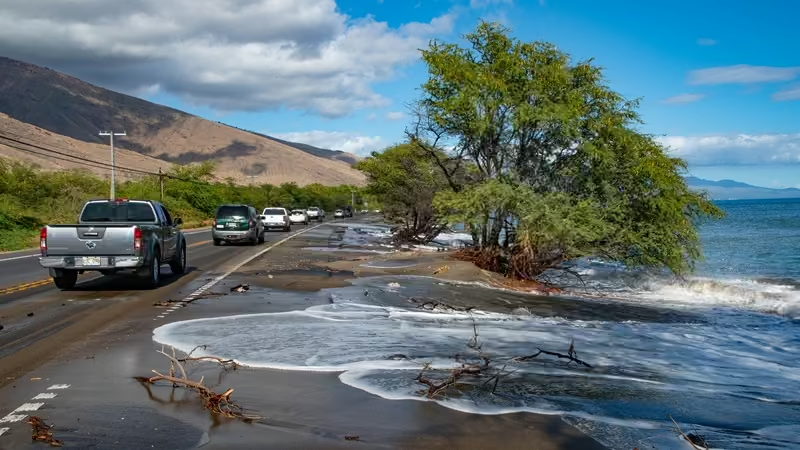
Tides change water depth. At shallow reef or rocky entries, even a modest change can affect how much clearance you have over coral, rocks, and reef ledges.
Because every shoreline is shaped differently, the same tide height can feel very different from one Maui beach to another. Wind, swell direction, waves, and the shape of the bay can have a much greater effect on what you experience in the water.
For help putting tide predictions together with wind, swell, and visibility, visit our Maui Snorkel Conditions guide.
High Tide vs Low Tide: What Changes For Snorkelers
When people ask about the best tide for snorkeling in Maui, they’re usually trying to understand how water depth may affect the reef, shoreline, and entry. Here’s what high and low tide can change, along with what they can’t tell you.
High Tide Pros And Cons
- More depth at some reefs: Higher water may provide additional clearance over shallow coral, rocks, or reef ledges.
- Entry effects vary: More water may cover rocks, but it can also bring waves or surge closer to shore at some entries.
- It doesn’t confirm weak current: High tide and slack water aren’t automatically the same thing.
- Conditions still decide: Strong wind, swell, shorebreak, or murky water can make a high-tide snorkel a poor choice.
Low Tide Pros And Cons
- Less reef clearance: Shallow coral, rocks, and reef ledges may be closer to the surface.
- More exposed hazards: Rocky areas may become harder to enter or exit without making contact.
- Protect the reef: If there isn’t enough depth to float comfortably without touching coral or the bottom, choose another location or wait for different conditions.
Why a Tide Chart Can’t Confirm Slack Water
A tide chart predicts the vertical rise and fall of water. Slack water describes a tidal current slowing near zero before changing direction. Slack water timing varies by location and may not match high or low tide.
Unless you have a location-specific current prediction, don’t label a high or low tide as “slack.” Use the tide prediction to see how the water level may change during your visit, then check the local conditions before entering.
How Tide Can Affect Different Snorkel Entries
Easy Sandy Bay Entries
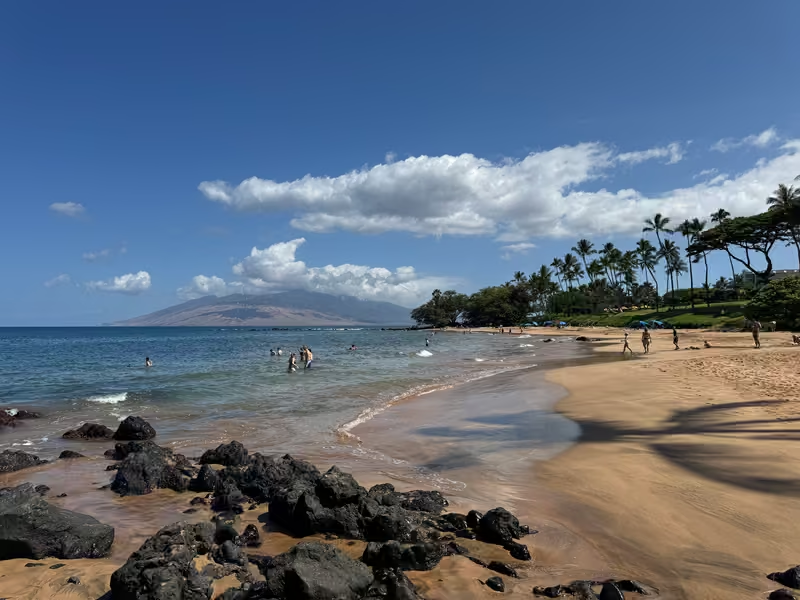
At a protected sandy entry, tide height may be less important than wind, swell, shorebreak, and visibility. Comfortable water depth can make an entry feel easier, but no single tide works for every sandy bay. Watch the water before entering and ask a lifeguard when one is available.
Rocky Lava Entries
Tide height changes how much rock is exposed, but higher water doesn’t automatically make a rocky entry safer. It can also bring waves or surge closer to shore. If the entry looks slippery, rough, or difficult to exit, choose another location.
Shallow Reef Flats
Lower water can reduce clearance over coral and rocks. If you can’t float comfortably without touching the reef, don’t continue across it. Never stand on coral, and choose a deeper or sandier entry instead.
Tidepool Exploring
For tidepool viewing, lower tide may reveal more shoreline habitat. Go during daylight and only when the ocean is calm. Stay away from wet, wave-washed rocks, never turn your back on the ocean, and skip the area completely when surf is elevated.
How Tide Fits Into a Molokini Boat Tour
A Molokini boat tour changes how you reach the reef. Instead of choosing a shoreline entry, you’ll board the boat and enter with guidance from the crew.
Tide is still part of the picture. Our captain considers wind, swell, current, visibility, and the conditions at each snorkeling location when planning the route. Exact stops can change with the day’s ocean conditions.
Not sure which trip fits your crew? Start with Best Time To Snorkel Maui, then pick your ideal day.
How To Read a Maui Tide Prediction
Checking the tide doesn’t need to be complicated. Here’s how to turn the numbers into useful beach-day planning:
- Choose the right location. Open NOAA Tide Predictions and choose a prediction location near the Maui coast you’re visiting. Don’t assume one location represents every beach on the island.
- Check the date and local time. Confirm you’re looking at your visit date, with times shown in Hawaiʻi local time. Check whether heights are listed in feet or meters.
- Look at your whole visit. Notice whether the water level will rise or fall between your arrival and departure. The shoreline may look different when you’re ready to leave.
- Understand the height. A prediction of 2 feet doesn’t mean the water at your beach will be 2 feet deep. It describes the water level relative to the chart’s reference level, not the depth over a particular patch of reef.
How Tide May Affect Popular Maui Snorkel Areas
Tide height can change reef clearance and shoreline depth, but it can’t tell you whether the current is weak or the water is safe. Use this table to understand possible tide effects, then check the complete conditions before entering.
| Maui Snorkel Area |
How Tide May Affect It |
What Matters More |
Planning Note |
| Ulua Beach and Mokapu Beach |
Lower water may reduce clearance near reef edges. Higher water adds depth, but it doesn’t guarantee calm conditions. |
Wind, afternoon chop, visibility, and the condition of the sandy entry. |
Look at the water first and skip snorkeling if the entry is rough or visibility is poor. |
| Kapalua Bay |
Water level changes the depth near the bay’s rocky sides, but high or low tide doesn’t predict current strength. |
North and northwest swell, shorebreak, visibility, and the entry and exit. |
Choose a calm, clear day and watch the bay for several minutes before entering. |
| Napili Bay |
Tide changes shoreline depth, but higher water doesn’t eliminate shorebreak or rough surf. |
Swell direction, breaking waves, visibility, and your ability to exit comfortably. |
Don’t snorkel if waves are breaking firmly along the entry or the water looks murky. |
| Honolua Bay |
Water level changes how much rock is exposed at the shoreline, but tide doesn’t outweigh swell. |
North and northwest swell, surge, visibility, and the rocky entry. |
Favor calm conditions and avoid snorkeling when swell is entering the bay. |
| South Maui Turtle Town Area |
Turtle Town isn’t one fixed shore entry. Tide effects vary by the specific site and whether you arrive from shore or by boat. |
The exact location, wind, swell, visibility, entry, and professional crew guidance on boat trips. |
Boat guests should follow the crew. Shore snorkelers should use a named access point with a clearly manageable exit. |
| Molokini Crater |
Tide is one part of current and route planning, but a tide chart alone doesn’t predict local current. |
Wind, swell, visibility, current, and the captain’s route decision. |
Follow the captain and crew’s instructions based on the conditions observed that day. |
Note: This table isn’t a go or no-go recommendation. Tide predictions show expected water level, not complete ocean conditions. Shore snorkelers should be experienced ocean swimmers, go with a buddy, and stay out when the water is rough, murky, or difficult to enter.
What Matters More Than Tide In Maui?
The best tide for snorkeling in Maui won’t make unsafe water safe. Before getting in, check these conditions first:
- Swimming ability: Shore snorkeling is for experienced ocean swimmers who can swim and exit independently.
- Buddy: Never snorkel alone.
- Posted warnings: Check the current hazard rating when available, read warning signs, and ask a lifeguard.
- Swell and shorebreak: Don’t snorkel when waves are breaking hard into the bay or across your entry.
- Wind: Strong wind can create chop, reduce visibility, and make the return swim tiring.
- Water clarity: Stay out of brown, cloudy, or murky water.
- Entry and exit: Choose a location only when you can clearly identify and comfortably use both.
- Personal comfort: If you don’t feel comfortable with the conditions, enjoy a shore-based activity and save snorkeling for another day.
Conclusion
Finding the best tide for snorkeling in Maui starts with your chosen location, not one perfect number on a chart. Use the prediction to understand changing water levels, then let beach conditions guide your plans.
Keep your day flexible. If the ocean isn’t cooperating, a coastal walk, scenic stop, or leisurely lunch can still make it a memorable Maui morning. Save the snorkeling for a better opportunity.
Sources & Updates
Use these trusted resources to check Maui tide predictions, understand the difference between tides and currents, and review snorkeling safety, water quality, and marine conditions before entering the ocean.