
Written by the Maui Snorkeling team, operating Molokini and Turtle Town tours out of Maʻalaea Harbor since 1985. We spend more days in these waters than on land!
Last updated: December 2025
Quick Answer: The long skinny fish snorkelers most often see in Maui are needlefish (near the surface), trumpetfish (hovering near reefs, often vertical), and bluespotted cornetfish (near reefs with a tail filament).
👉 Want to identify more reef species? Check out our Maui Tropical Fish Guide (photos + where to see them).
If you’ve ever gone snorkeling in Maui and thought, “What was that long, skinny fish?” — you’re not alone!
Guests regularly ask our crew about three look-alike reef fish that often get confused:
- Needlefish
- Trumpetfish
- Cornetfish
While they may all be long and narrow, each one behaves differently, lives in different parts of the reef, and has unique features that make identification easy once you know what to look for.
Let’s break it down 👇
Quick Comparison Guide (Snorkeler Friendly)
| Fish | Hawaiian Name | Where They Swim | Key Identifier |
|---|---|---|---|
| Needlefish | ʻaha | Near surface | Sharp beak, fast swimmer |
| Trumpetfish | nūnū | Near reef | Vertical posture, camouflage |
| Cornetfish | nūnū peke | Over reef slopes / sand near reef | Tail filament, longest body |
See These Fish on a Maui Snorkeling Tour
Needlefish, trumpetfish, and cornetfish are commonly spotted on Maui Snorkeling tours, especially during calm ocean conditions. Our experienced guides help guests identify reef fish while snorkeling safely and respectfully. Tours include multiple reef stops, snorkeling gear, and knowledgeable crew members who love sharing Maui’s marine life.
Planning a crater day? Read our Molokini Crater Guide (rules, visibility, marine life) before you go.
Needlefish: The Fast Cruisers Near the Surface
Needlefish (ʻaha) (family Belonidae) are most often spotted near the surface, especially in calm, clear water.
How To Identify Needlefish
- Extremely long, thin bodies
- Sharp, beak-like jaws
- Usually seen swimming horizontally
- Often move quickly and in small groups
- Upper jaw extends into that sharp beak shape
Behavior
Needlefish are fast, agile predators. They hunt smaller fish by:
- Cruising calmly near the surface
- Suddenly accelerating to strike prey
- Traveling solo or in loose groups
They rely heavily on speed rather than camouflage.
Needlefish Love:
- Reef flats
- Shallow bays
- Open water near snorkeling areas
Where You’re Most Likely to Spot ʻaha on Maui:
- Turtle Town (Maluaka Beach): cruising just below the surface, especially when the water is calm.
- Molokini Crater: look near the surface inside the crater on calm days (and sometimes during the crossing).
- Reef flats + shallow bays (leeward side): anywhere you have protected water and a clean surface line to scan.
Snorkel conditions that make sightings easier: A glassy surface (low wind chop) makes ʻaha much easier to see because they swim near the surface from nearshore to open ocean. Check out our Maui Snorkel Conditions guide to learn more about what to look for.
You’ll frequently spot them cruising just below the surface on Maui snorkeling tours. On calm days, you can spot them cruising near the surface around Turtle Town (Maluaka Beach).
🔎 Good to know: Needlefishes are generally not aggressive and usually keep their distance, but like many surface fish, they can startle and jump out of the water—especially at night around lights. Give them space and avoid shining lights at the surface.
Trumpetfish: The Masters of Camouflage
Trumpetfish (nūnū) (Aulostomus chinensis) are stealthy reef hunters that rely on camouflage and patience.
How To Identify Trumpetfish
- Long body with a tube-shaped snout
- Often seen hovering vertically
- Blend in with coral, rocks, or sea fans
- Move slowly and deliberately
Behavior
Trumpetfish are ambush predators and rely on deception rather than speed.
They often:
- Hover vertically, head down
- Hide beside coral, rocks, or sea fans
- Follow larger fish to blend in
- Slowly creep toward prey before striking
Because of this, many snorkelers don’t notice trumpetfish at all — even when they’re very close.
Trumpetfish Prefer:
- Coral heads
- Reef edges
- Slopes and ledges
Where You’re Most Likely to Spot nūnū on Maui:
- Coral Gardens: along reef edges and around coral heads (watch for the vertical “hover”).
- Molokini Crater: near rocky/coral structure and under ledges where they can hang motionless.
- Turtle Town: around coral fingers/sea fans where their camouflage really works.
Snorkel conditions that make sightings easier: They’re easiest to spot in clear, shallow water when you move slowly and scan rocky/coral reef structure (including vertical shapes), not just open water.
Once you spot one, you’ll start seeing them everywhere — they’re hiding in plain sight! On Maui, reef edges at Coral Gardens are a great place to look for trumpetfish hovering near coral heads.
👉 Fun Fact: Trumpetfish can change color to better blend in with their environment, making them one of the reef’s best camouflage artists. While you’re scanning for trumpetfish, you’ll often notice parrotfish (uhu) grazing nearby.
Cornetfish: The Longest of Them All
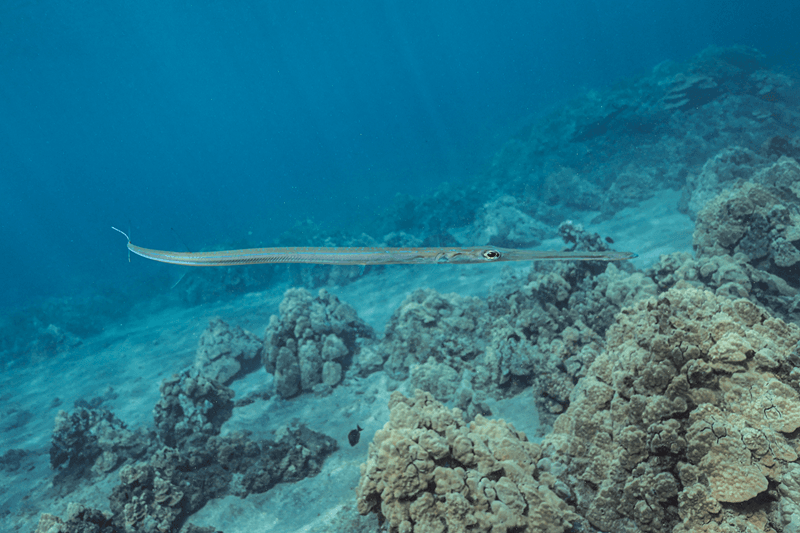
Cornetfish (nūnū peke) (Fistularia commersonii) are the easiest to identify once you know one key feature. The bluespotted cornetfish is recognized as one of the longest reef fish, according to bluespotted cornetfish species data.
How To Identify Cornetfish
- Extremely long and rigid body (often around 3 feet, occasionally over 4 feet)
- Tubular snout with a tiny mouth
- Thin trailing filament off the tail (big giveaway!)
- Slow, smooth swimming style
Behavior
Cornetfish are slow, deliberate hunters. Instead of speed or camouflage, they rely on:
- Patience
- Stealth
- Smooth, effortless gliding
They often swim just above the reef, scanning for small fish.
Cornetfish are Commonly Seen:
- Gliding over reef slopes
- Near coral heads
- Along drop-offs
Where You’re Most Likely to Spot nūnū peke on Maui:
- Molokini Crater (reef slopes/drop-offs): gliding just above the bottom along the crater wall.
- Coral Gardens: over sandy patches right next to the reef (a classic ambush zone).
- Turtle Town: along reef edges and coral heads — look for the tail filament trailing behind.
Snorkel conditions that make sightings easier: Cornetfish are easiest to find on calmer days (they avoid heavy surge) when you can scan both the reef slope and the sand adjacent to the reef.
They’re often solitary and sometimes follow larger fish to ambush prey. Keep an eye on crevices near coral heads, too; you might spot moray eels in Maui tucked into the reef.
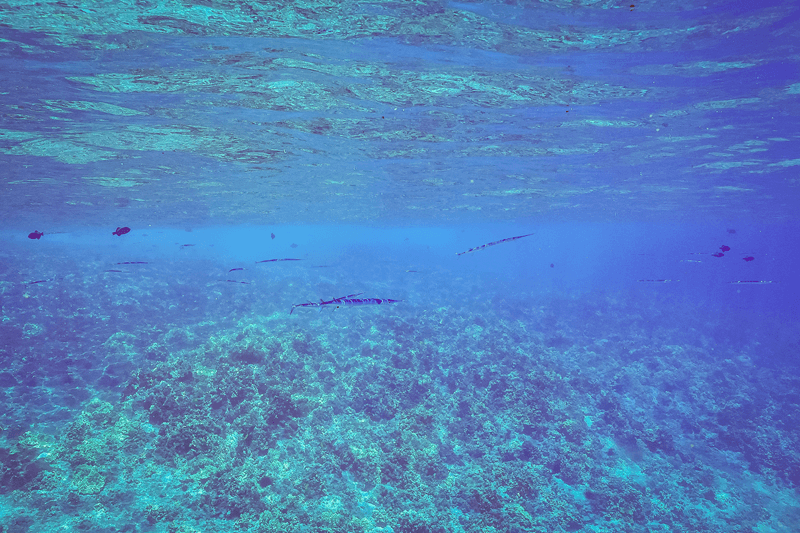
Needlefish in Maui
Why Snorkelers See These Fish So Often in Maui
Maui’s clear water, healthy reef systems, and calm snorkeling conditions make it an ideal habitat for all three species.
On Maui Snorkeling tours, guests frequently encounter:
- Needlefish cruising overhead
- Trumpetfish hovering near coral
- Cornetfish gliding silently along the reef
Each one plays an important role in the reef ecosystem by helping control smaller fish populations.
Respectful Snorkeling Reminder
When you see these fish:
- Keep a respectful distance
- Avoid sudden movements
- Never try to touch or chase marine life
Observing quietly gives you the best chance to watch their natural behavior. New to snorkeling? Start with our Maui Snorkeling for Beginners guide (safety + reef etiquette).
Experience Maui’s Reef Life Up Close
One of the best parts of snorkeling in Maui is learning to recognize reef fish you’ll see again and again. The more you snorkel, the more familiar — and magical — the underwater world becomes.
Whether it’s a lightning-fast needlefish or a slow-gliding cornetfish, Maui’s reefs are full of surprises.
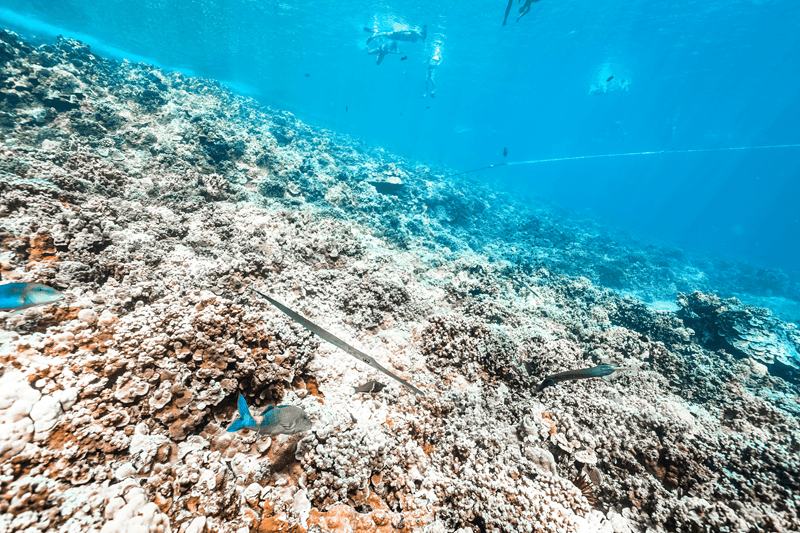
Bluespotted Cornetfish and Trumpetfish in Maui
FAQs: Long Skinny Fish in Maui
Are needlefish dangerous to snorkelers in Maui?
Needlefish (ʻaha) are not aggressive toward snorkelers and usually keep their distance. The main risk is at night around bright lights, when ʻaha can be attracted to the surface and may jump—so avoid shining lights on the water, don’t splash, and give them space.
What is the long fish with a string on its tail in Maui?
That fish is a cornetfish. The thin trailing filament on its tail is the easiest way to identify it.
Why do trumpetfish swim vertically?
Trumpetfish swim vertically to camouflage themselves against coral and rocks, helping them ambush small prey without being noticed.
Where are you most likely to see needlefish in Maui?
Needlefish are commonly seen near the surface in calm, clear water over reef flats and shallow bays. For a complete list of reefs and boat-only sites, visit our Best Places to Snorkel in Maui (2025) guide.
Are trumpetfish and cornetfish the same thing?
No. While they look similar, cornetfish are much longer and have a tail filament, while trumpetfish are shorter and often hover vertically near reefs.
Can you see these fish on snorkeling tours in Maui?
Yes. Needlefish, trumpetfish, and cornetfish are frequently spotted on Maui snorkeling tours, especially during good visibility conditions.

Bluespotted Cornetfish in Maui

Trumpetfish in Maui
Sources
- DLNR “Fishing in Hawai‘i” (ʻaha / night-light safety note).
- NOAA Hawaiian local names list (Nunu / Nunu Peke).
- Waikīkī Aquarium trumpetfish page (nūnū; “stickfish” nickname).
- FishBase cornetfish entry for max size.


