Written by
Maui Snorkeling, operating tours to Molokini Crater, Turtle Town, and Coral Gardens from Māʻalaea Harbor since 1985. Tours are led by USCG-licensed captains aboard a
USCG-inspected passenger vessel.
Quick Answer: Box jellyfish are more likely to reach Hawaiʻi’s south and leeward shores about 8 to 10 days after the full moon. Use the current watch windows below to identify times when extra awareness may be helpful, then make swimming and snorkeling decisions based on that day’s local conditions.
Planning aid, not a Maui forecast. These dates come from the Waikīkī Aquarium’s Oʻahu-based calendar and do not predict conditions at a specific Maui beach. A listed date does not confirm that box jellyfish will be present, and an unlisted date does not mean a beach is jellyfish-free.
Before entering the water, check current Maui beach conditions, obey posted signs, and ask a lifeguard when one is present. Stay out of the water if jellyfish have been sighted.
Calendar dates and source links last verified August 7, 2026. This verification does not confirm current beach conditions.
Key Planning Notes:
-
Calendar Dates:
See the 2026 watch windows and
2027 watch windows, each with a direct link to the official source calendar.
-
Maui Context:
Be especially alert along south and leeward shores, but remember that conditions vary by beach and day.
-
Check Before You Swim:
Review current Maui conditions and safety resources, then confirm conditions with a lifeguard when available.
-
If Jellyfish Are Present:
Don't enter the affected water, even if the date is outside a listed watch window.
Check Maui Conditions Now
Calendar dates are only a planning aid. Before entering the water, check current local conditions and speak with a lifeguard when one is present.
These resources report different types of ocean and beach conditions. None should be treated as a guaranteed live box jellyfish tracker.
Planning a snorkel trip to Maui in 2026-2027? One of the most common questions travelers ask is: “When are box jellyfish in Maui?”
This guide breaks down the 2026-2027 high-probability dates, explains why they appear after the full moon, and, most importantly, what it actually means for snorkeling in Maui. Read ahead for more information on the Maui box jellyfish.
Should you Book a Guided Maui Snorkeling Tour During Jellyfish Dates?
If your trip falls during a higher-probability window, a guided boat tour can help reduce uncertainty. Crews monitor daily conditions and choose the safest, clearest available snorkel locations.
👉 Book A Maui Snorkeling Tour And Let The Experts Handle The Conditions
Why Do Box Jellyfish Show Up After The Full Moon?
The timing isn’t random.
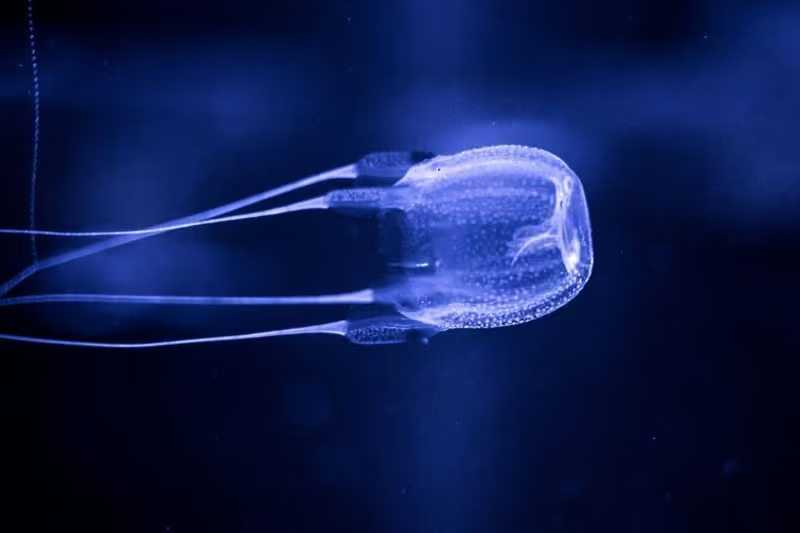
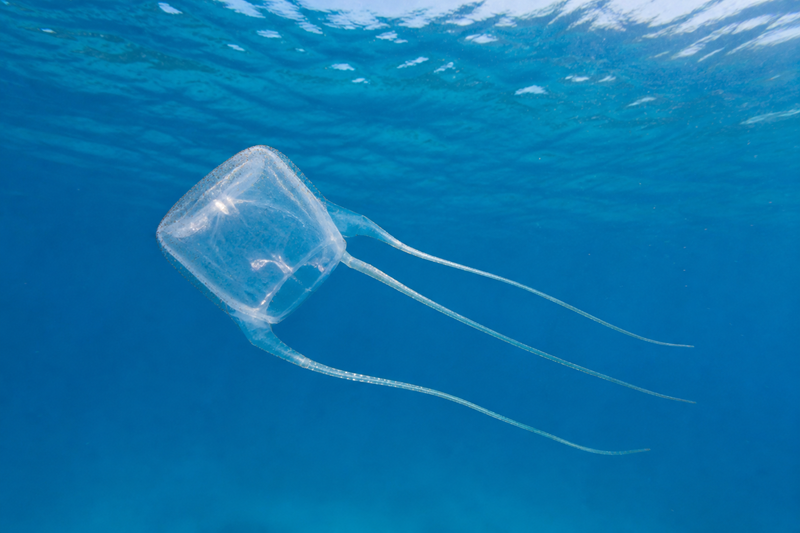
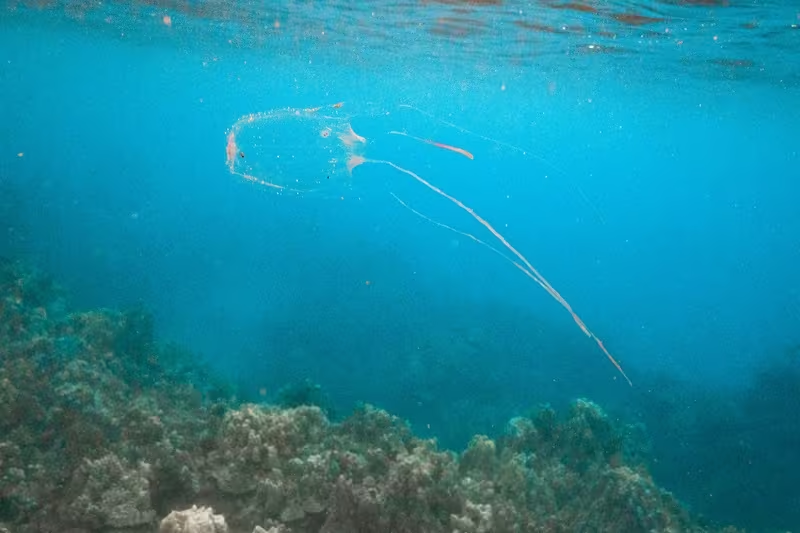
Research and long-term observation in Hawaiʻi show that box jellyfish tend to appear about 8-10 days after the full moon. University of Hawaiʻi researchers have studied this lunar timing and found it relates to a predictable “darkness window” that cues Hawaiian box jellyfish to migrate shoreward to spawn.
This recurring lunar pattern can help identify times for added awareness, but the calendar does not predict conditions at a specific Maui beach.
However:
- The calendar is informational.
- Weather and currents influence arrival.
- It’s not an exact prediction tool.
That’s why lifeguard guidance and beach warnings always take priority over any calendar. View below the Maui box jellyfish predictions.
Box jellyfish are more commonly reported along south and leeward shores.
On Maui, that can include:
- South Maui (Kīhei, Wailea, Mākena)
- Other leeward-facing beaches, depending on currents
They are less frequently reported on exposed north shores during trade wind conditions, but ocean dynamics change daily.
If you’re shore snorkeling in South Maui:
- Check if your beach is in a high-probability window.
- Look for posted warning signs.
- Choose beaches with lifeguards when possible.
- Ask a lifeguard before entering the water.
To find lifeguarded beaches on Maui (towers and hours), use Hawaiʻi Ocean Safety’s official list.
If you’re booking a guided snorkel tour, crews evaluate:
- Wind direction
- Currents
- Water clarity
- Marine conditions
That flexibility often allows tours to operate safely, even during jellyfish windows, by choosing the most suitable location.
Is it Safe to Snorkel in Maui During Jellyfish Dates?
Here’s the practical takeaway:
Most visitors snorkel in Maui year-round without incident.
During high-probability windows:
- Stay aware.
- Avoid unguarded beaches if conditions seem questionable.
- Follow posted advisories.
- Consider guided boat tours for added safety oversight.
For day‑of updates at lifeguarded beaches (hazard ratings and alerts), check HawaiiBeachSafety.com and still confirm with a lifeguard on arrival.
And remember: jellyfish are a natural part of Hawaiʻi’s ocean ecosystem. Awareness is smart, but panic is unnecessary.
If you want to understand how to evaluate ocean safety in general, check out our Maui Snorkel Conditions 101 guide for wind, waves, and hazard tips.
What Should you do if you Get Stung by a Box Jellyfish?
If you suspect a box jellyfish sting:
- Exit the water safely.
- Alert a lifeguard immediately (if present).
- Don't rub the area.
- Follow official first-aid guidance.
- Seek medical attention if symptoms are severe.
Note: University of Hawaiʻi researchers have shown that some commonly recommended “home” treatments can worsen certain box jellyfish stings. When in doubt, get help from a lifeguard. Severe reactions are uncommon, but some stings can be painful and require evaluation.
When in doubt, get help from trained professionals.
Is the Maui Box Jellyfish Calendar Guaranteed?
It’s important to understand:
- The calendar shows estimated higher-risk days.
- Jellyfish can appear outside the listed dates.
- Many high-probability days pass with little or no activity.
- Local conditions matter more than the calendar alone.
Awareness + flexibility = smart planning.
Book a Maui Snorkeling Tour with Daily Ocean Conditions Checked
Understanding the Maui box jellyfish watch windows can help you plan, but current conditions, posted warnings, and lifeguard guidance should determine whether you enter the water.
If you’d rather let experienced captains choose the day’s best conditions:
- Snorkel Coral Gardens
- Lunch and snorkeling gear included
- Relaxed afternoon adventure
👉 Reserve Your Maui Snorkeling Tour Today And Let Us Monitor The Ocean For You
Sources & Updates: Before you swim or snorkel, confirm current jellyfish timing, beach warnings, water quality, and ocean conditions using the official resources below.