Moray Eels In Maui: Safety Tips, Species, And Where to See Them
March 31st, 2025
| Marine Life
Written by Maui Snorkeling, operating tours to Molokini Crater, Turtle Town, and Coral Gardens from Māʻalaea Harbor since 1985. Tours are led by USCG-licensed captains aboard a USCG-inspected passenger vessel.
Last updated October 16, 2026
Quick Answer
Moray eels in Maui, known as puhi in Hawaiʻi, are reef fish often seen with their heads peeking from lava cracks, coral crevices, and rocky ledges. They generally avoid people, but their powerful jaws can inflict serious bites. Watch from a distance, never touch or feed them, and keep your hands and feet away from reef holes.
Main takeaways:
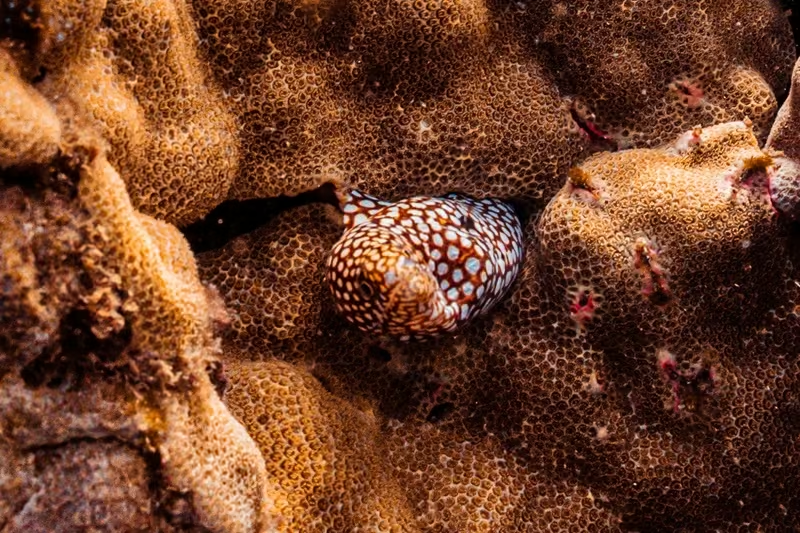
What you may see: A patterned head emerging from a shaded reef opening, with most of the eel’s body hidden
How to spot one: Move slowly and scan reef crevices from a distance without approaching caves, reaching under ledges, or touching coral
Safety rule: Don’t touch, feed, chase, or corner morays. Give a swimming eel room to pass.
Open mouths: Rhythmic mouth movements usually help a moray breathe. An open mouth isn’t an invitation to approach.
Where to look: Reef habitat around Molokini, Turtle Town, Coral Gardens, and Maui shore sites such as Maluaka, Ulua, and Kapalua Bay may shelter morays, but sightings aren’t guaranteed
Conditions come first: Choose a site suited to your swimming ability and current conditions. Don’t enter rough or murky water, or swim farther out just to find an eel.
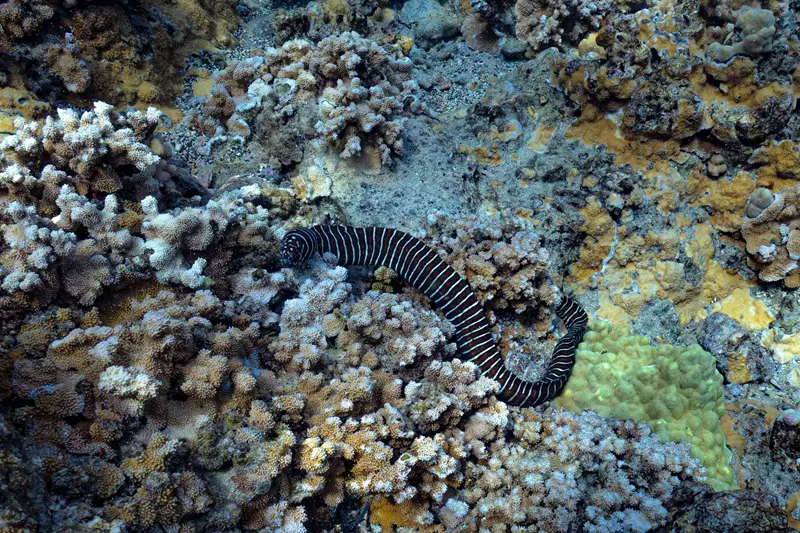
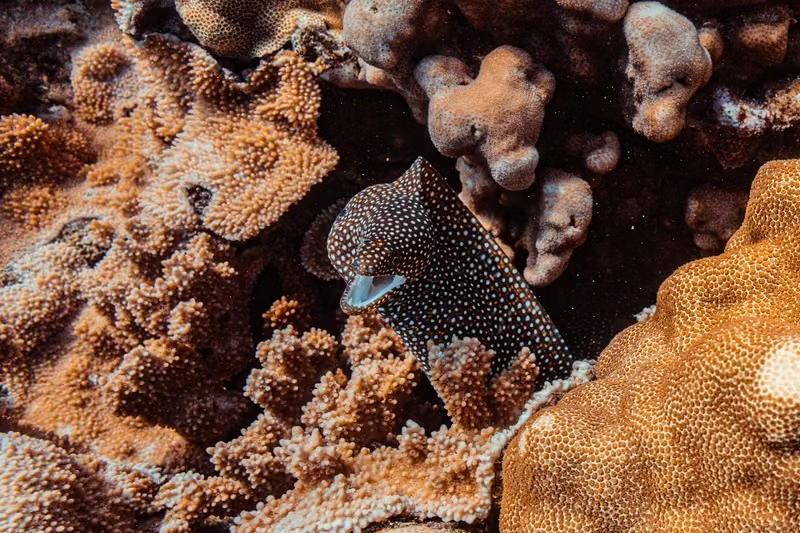
A spotted head peeking from a reef crack may be your first glimpse of a moray eel in Maui. Called puhi in Hawaiʻi, these fish come in striking patterns, from the zebra moray’s narrow bands to the whitemouth moray’s pale spots. Their unusual jaws, strong sense of smell, and ability to move through tight crevices make them fascinating reef residents to watch without disturbing.
What Is a Moray Eel?
A moray eel is a long-bodied reef fish in the family Muraenidae. Many spend daylight hours sheltered in lava cracks, coral crevices, and rocky ledges. They use a keen sense of smell to find prey, and many species become more active at dusk or at night.
Morays are fish, not snakes. Rhythmic mouth movements usually help them breathe, but an open mouth alone does not tell you whether an eel is relaxed or defensive. Morays generally avoid people, but they can bite; reaching near their shelter, touching, cornering, or feeding them increases the risk.
Where to See Moray Eels in Maui: Shore and Boat Snorkel Sites
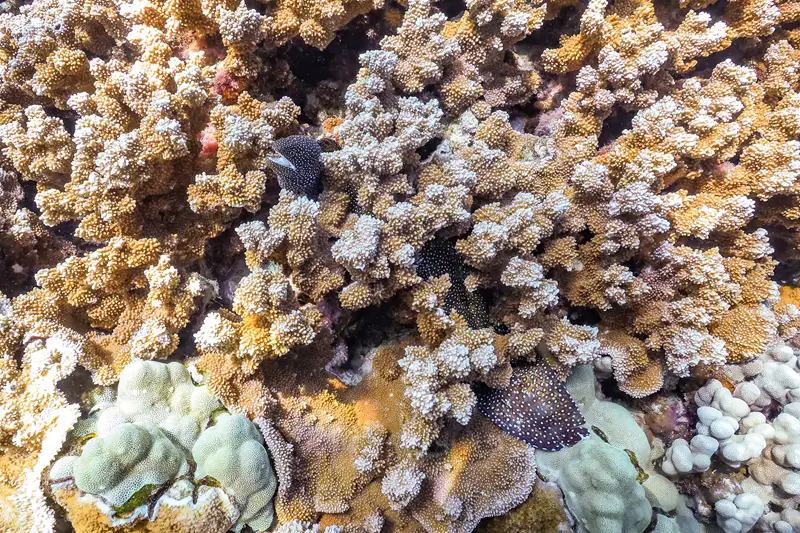
Moray eels shelter in reef crevices, lava cracks, and rocky ledges around Maui. You may notice a patterned head emerging from a shaded opening while the rest of the eel stays hidden.
Choose a snorkeling site based on your swimming ability, entry and exit conditions, swell, currents, and visibility. Morning doesn’t guarantee suitable conditions, and you'll never be guaranteed an eel sighting.
Watch the reef’s rocky pockets and coral crevices from the surface. A moray’s spotted head may stand out against the surrounding reef. Follow the crew’s designated snorkeling area rather than swimming toward deeper ledges or drop-offs to search for wildlife.
The South Maui reefs commonly called Turtle Town include lava formations and rocky seams that provide shelter for morays as well as other reef animals. Scan these openings without approaching caves or swimming beneath overhangs. Boat stops depend on the captain’s assessment of conditions.
Look for shaded crevices among coral formations and rocky reef structure. Coral Gardens may be included on a conditions-based boat itinerary, but it isn’t an automatically suitable alternative when another location is rough. Follow crew instructions and leave space between yourself and the reef.
Shore Snorkel Sites for Moray Eels
These locations have reef habitat where morays may shelter. Their inclusion isn’t a recommendation to enter the water on any particular day.
Maluaka is a shore-access option in the Turtle Town area. When conditions are suitable, watch the rocky reef bordering sandy areas for a head peeking from a crevice. Don’t follow reef structure farther offshore just to search for an eel.
Rocky ledges and reef openings provide potential moray habitat. Assess the entry and exit before entering, and leave plenty of room around rocks. Skip snorkeling if surge, surf, or poor visibility makes the area unsuitable.
Scan shaded openings along the reef where rock and coral meet sand. Stay above the reef; don't stand on coral or reach into holes. Choose your route and turnaround point before entering rather than following wildlife beyond your comfort level.
Black Rock, Kāʻanapali
The lava formation has crevices where morays may hide, but currents and surge around the point require particular caution. Don’t swim around the point or approach exposed ledges to find an eel. If conditions are unsuitable, stay out rather than assuming a nearby bay will be better.
The bay's rocky sides offer reef openings you can scan from a distance. Swell can still affect the bay, so don’t assume its shape guarantees calm water. Avoid scrambling over rocks or getting close to shallow reef where waves could push you against it.
How to Watch Without Disturbing Morays
Observe from a distance: Scan shaded openings without putting your face, hands, or feet near a crevice.
Let the eel move freely: Don’t chase, corner, feed, or block it.
Don’t follow it into shelter: If it retreats, give it room.
Keep the reef untouched: Maintain clearance with your body and fins, and never lift rocks or disturb coral to find wildlife.
Are Moray Eels Dangerous to Snorkelers in Maui?
Moray eels generally avoid people, but they can inflict serious bites. Reaching into reef holes, approaching their shelter too closely, and feeding them can increase the risk. Observe without touching, keep your hands and feet away from crevices, and give a swimming eel room to pass.
How to snorkel around morays:
Look, don’t touch: Never reach into crevices or under ledges.
Give them space: Don’t block the eel’s shelter or swimming path.
Don’t feed wildlife: Feeding can change behavior and bring eels toward hands.
If an eel retreats: Don’t follow it into shelter. Give it more room.
Why Moray Eels Look Like They’re Smiling
A moray opening and closing its mouth is usually pumping water over its gills to breathe. This can look like a toothy smile, especially when the eel’s head is all you can see. A wider gape can also be defensive, so don’t use an open mouth as a reason to approach.
Moray Eel Anatomy and Life Cycle
Moray Eel Fins: How They Swim Without Pectoral Fins
Morays lack pectoral and pelvic fins. In the species compared below, the dorsal, tail, and anal fins form a continuous fin edge. Side-to-side body movements propel them through the water and help them move through narrow reef passages.
Moray Eel Head and Teeth
Teeth vary with diet. Fish-eating morays have sharp, backward-curving teeth that grip prey such as fish and octopus. Snowflake and zebra morays have blunter, crushing teeth suited to hard-shelled animals such as crabs. Both types have powerful jaws.
Pharyngeal Jaws: The Moray Eel’s Second Jaw Explained
Many fish have pharyngeal jaws in their throat. Morays are unusual because these jaws can move forward into the mouth, grip captured prey, and pull it back toward the esophagus. This helps them swallow food without relying on strong suction.
Moray Eel Skin and Protective Mucus
Morays have scaleless skin covered by protective mucus. Their smooth bodies and lack of paired fins help them move through the reef’s tight spaces. Watch without touching; the mucus layer is part of the animal’s natural protection.
How Young Moray Eels Reach the Reef
Morays begin life as transparent, ribbon-like larvae called leptocephali. Unlike adults sheltered in reef crevices, these larvae live in the open ocean before developing into juveniles and settling into reef habitat. Their drifting larval stage helps explain how some moray species occur across widely separated islands.
Moray Eels in Maui: Species Comparison
Compare six moray species found in Hawaiian waters by their markings,
reef habitat, and maximum reported length. They aren’t equally common
or equally easy to spot, and most sightings reveal only part of the eel.
Large adults have leopard-like spotting behind the head and a dark patch around the gill opening
Reef holes and ledges; juveniles can also occupy shallow reef flats
About 9 ft 10 in (300 cm)
Note: Lengths are approximate published maximums for each
species across its range, not typical sizes or expected Maui sightings.
Scientific names link to FishBase species references. Observe morays
without touching or feeding them, and keep hands and feet away from
reef holes.
Giant Moray (Java Moray)
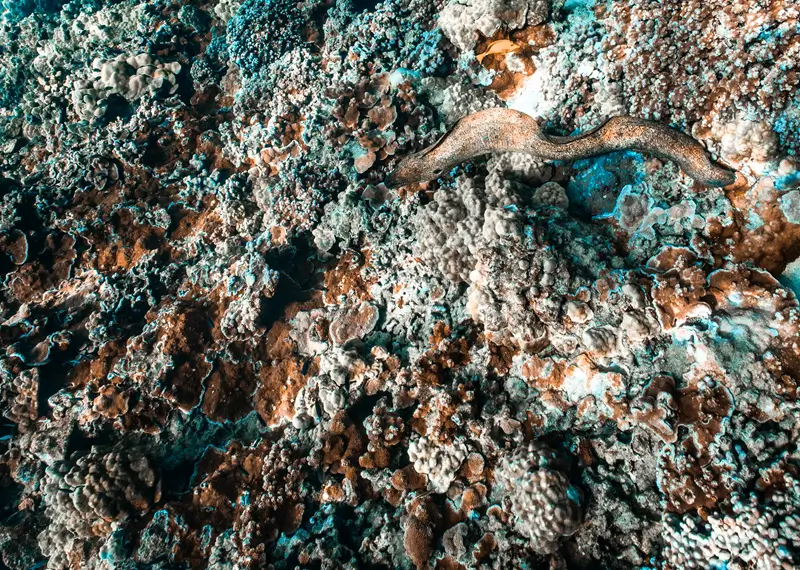
The giant moray, also called the Java moray, is one of the largest morays, with a reported maximum length of about 10 feet. Adults shelter in reef holes and ledges, while juveniles can also occupy shallow reef flats. Its size alone is not enough for identification; look for leopard-like spots behind the head and a dark patch around the gill opening.
Size: The maximum is not the usual size of every individual.
Habitat: Reef holes and ledges, rather than a single required depth.
Viewing: Observe from your existing snorkeling route without approaching caves or drop-offs.
Zebra Moray Eel
This eel is a real Maui showstopper. It has bold black-and-white bands (like a zebra) and a thick, sturdy body that usually remains tucked into reef crevices and holes. If you spot one while snorkeling, you’ll often see just its patterned head peeking out from the rocks.
Quick Facts:
Zebra morays are uncommon and secretive. Maximum reported length is about five feet, although many individuals are smaller.
They're built more for crushing than slicing; many prefer hard-shelled prey like crabs.
Their crushing teeth and powerful jaws are suited to hard-shelled prey. Give them space and never reach into reef holes.
Whitemouth Moray Eel
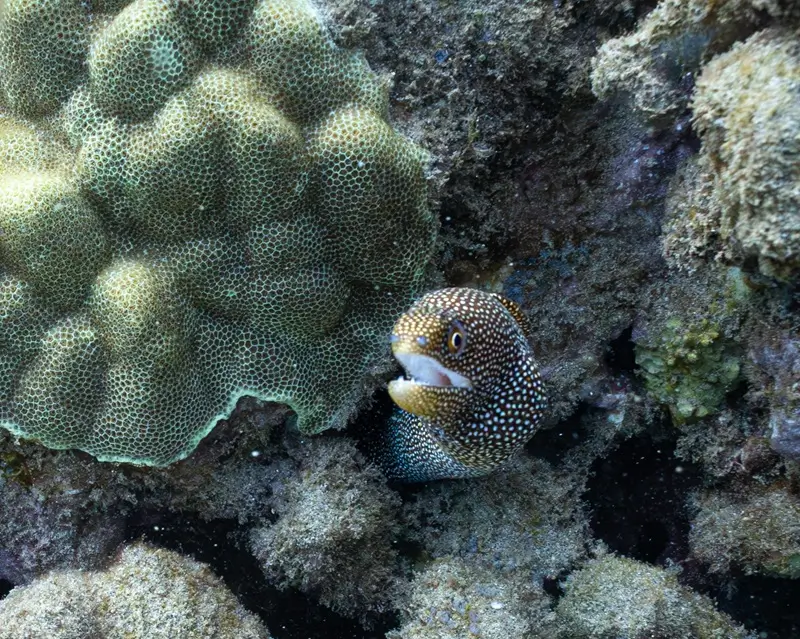
The whitemouth moray is one of the moray eels that snorkelers are most likely to notice around Maui reefs. Its easiest ID clue is the bright white inside of its mouth, which stands out when the eel opens and closes its jaws to breathe.
You’ll usually see just the head peeking from a coral head, lava crack, or reef crevice. It can look intense at first, but this behavior is normal and usually isn’t a sign of aggression.
Quick Facts:
Often seen resting in shallow reef crevices
Easy to identify by the white inside of its mouth
Usually shy when left alone
Yellow-Margined Moray Eel
The yellow-margined moray is a large reef moray with yellow or orange edging along parts of its fins. It often rests with its head sticking out from a hole, crevice, or reef ledge during the day.
This species can grow much larger than many snorkelers expect, so give it space if you spot one. Like other morays, it’s best viewed without touching, feeding, or reaching near its shelter.
Quick Facts:
Can reach nearly 8 feet in length
Often hides in reef holes and ledges during the day
Uses a strong sense of smell to hunt, especially in low light
Snowflake Moray Eel
The snowflake moray has a pale body marked with black starburst blotches and yellow details. Its blunt snout and patterned head can help distinguish it from the small-spotted whitemouth moray.
Diet: Mainly crustaceans, especially crabs, crushed with strong jaws.
Habitat: Rocky shallows, reef flats, and crevices between rocks and coral.
Viewing: Snowflake morays can bite. Don’t touch or feed them, even if they appear calm.
Undulated Moray Eel
The undulated moray often has a yellowish head and irregular brown markings outlined by pale, wavy borders. Its pattern helps it blend into rocks, rubble, and shaded reef structure. Snorkelers may spot it tucked into holes on reef flats, lagoons, and seaward reefs.
Its patterned body makes it easy to miss at first glance, so move slowly and scan shaded openings along the reef. If the eel pulls back into its shelter, don’t follow it. Give it more room.
Quick Facts:
Look for a yellowish head and pale-bordered, wavy markings
Often found around rocks, rubble, and reef holes
Best viewed slowly and calmly from a distance
Moray Eels on Maui Reefs: Diets, Predators, and Their Role
Moray eels are reef predators whose diets vary by species. Many hunt at dusk or at night, although some also forage during daylight. Reef cracks and ledges provide shelter, but seeing a moray alone does not establish the reef’s overall health.
Role: predator that feeds on fish or invertebrates, depending on the species
Where they fit: predator, and occasionally prey for larger hunters
Snorkel takeaway: scan reef edges and shaded cracks (not the open sand)
Moray Eel Diet
Morays use their sense of smell to locate food. Fish-eating species take prey such as reef fish and octopus, while snowflake and zebra morays specialize in hard-shelled animals.
Common prey: small fish, crabs, shrimp, octopus, and squid
When they hunt: mostly dusk/night (but they’ll take an easy daytime opportunity)
How they hunt: hunt from cover or search reef crevices, depending on the species and opportunity
What Eats Moray Eels?
Adult morays have few predators, but they can be eaten by larger hunters, especially when a moray is out in the open or when juveniles are still small.
Main natural predators: sharks and other large predatory fish
Juveniles: more vulnerable than full-grown morays
Human impacts: reef damage, lost fishing gear/line, and feeding wildlife can increase injury risk and change behavior
Snorkeler tip: if you see a moray swimming out in the open during the day, don’t chase it or crowd it; hover calmly and give it space to find shelter.
Moray Eel Myths vs Facts
Moray eels look intense, so they collect rumors fast. Here’s the quick reality check and what snorkelers often hear versus what’s actually true on Maui reefs.
Myth: Morays “attack” snorkelers. Fact: They generally avoid people, but they can bite. Approaching their shelter, handling, and feeding increase the risk.
Myth: An open mouth means a moray is angry. Fact: It’s usually breathing (water needs to flow over the gills).
Myth: Morays chase swimmers. Fact: Most retreat deeper into their hiding spot or stay put.
Myth: Feeding morays is harmless. Fact: Feeding trains them to approach hands, increasing the risk of bites.
Myth: If it looks calm, it’s okay to touch. Fact: Touching can stress or injure wildlife and expose people to bites.
Moray Eels and Cleaner Shrimp/Fish
Moray eels sometimes visit “cleaning stations,” where cleaner shrimp or cleaner fish pick off parasites and dead skin. You may see a moray hold still with its mouth open while cleaners work. This is normal reef behavior, not aggression.
What you might notice: the eel staying very still while small shrimp/fish move around its head
Why it matters: cleaning helps keep the eel healthy and reduces irritation
Snorkeler tip: hover calmly, don’t crowd the crevice, and let the behavior happen naturally
Other Eels You Might See Snorkeling in Maui
Morays aren’t the only eels you might notice in Maui. Other groups you may read about or occasionally see include snake eels (sand burrowers) and garden eels (colonies that sway in the current). Here’s how to recognize them quickly.
Snake Eels in Maui: How to Spot Them
Snake eels are built for the sand. Instead of living in reef holes like morays, they spend a lot of time buried in sandy flats with only the head or snout showing. Look for them on sandy patches next to reef or rubble, especially in calm, clear conditions.
What you’ll see: a small head poking out of sand (often motionless)
Common tip-off: They vanish fast if you rush them. Hover calmly, and watch.
Snorkeler rule: never dig or poke the sand to “find” one
Conger Eels & Garden Eels in Maui
Conger eels may also shelter around rocky reefs and ledges, and some are more active in low light. Garden eels are a type of conger that live in colonies in sandy areas with current. They rise from burrows to grab drifting plankton and retract when you get close, but if you stop and hover, they often reappear.
Conger viewing clue: more open-water swimming near reef structure
Garden eel viewing clue: “field” of thin eels swaying above the sand
Reality check: garden eels are often deeper than typical snorkel depths, so treat them as a bonus sighting
Protecting Moray Eels and Their Reef Habitat
Morays rely on reef shelter and the surrounding food web. Coral damage, polluted runoff, and lost fishing gear can affect the habitat they share with other reef animals.
Keep off the reef: Leave clearance beneath your body and fins.
Prevent litter: Secure belongings and take your trash with you.
Ready to Explore Maui’s Underwater World?
Experience Maui’s ocean environment aboard the Lani Kai II. We’ll provide snorkel gear, food, and friendly crew support, so you can focus on the adventure!
Tours depart from Maʻalaea Harbor. Routes, snorkel sites, and marine life sightings vary with ocean conditions.
FAQs
Moray eels generally avoid people, but they can inflict serious bites. Reaching into reef holes, approaching their shelter too closely, touching, cornering, and feeding them can increase the risk. Watch from a distance and keep your hands and feet away from crevices.
Stay calm and watch from a distance without touching, feeding, or blocking the eel. Give a swimming eel room to pass. If it retreats into the reef, don’t follow it into its shelter.
Rhythmic mouth movements usually pump water over a moray’s gills to help it breathe. A wider gape can also be defensive, so an open mouth alone does not tell you whether the eel is relaxed. Keep your distance rather than approaching to investigate.
Species covered in this guide include whitemouth, yellow-margined, snowflake, zebra, undulated, and giant morays. They aren’t equally common or easy to spot. Compare markings rather than size alone, and remember that a snorkel sighting may reveal only the head.
Yes. Moray bites can cause deep wounds and infection and may damage underlying tissue. If bitten, leave the water, alert the crew or a lifeguard, and seek prompt medical attention. Don’t dismiss an injury because the eel was small.
Final Thoughts on Moray Eels in Maui
A glimpse of a spotted head or a striped body can reveal a reef resident you might otherwise miss. Look for the markings, notice how the eel uses its shelter, and let it carry on without interference.
Choose suitable snorkeling conditions first, give wildlife room, and enjoy whatever the reef reveals. For help recognizing other fish, explore our Maui Fish Identification Guide.
Sources & Updates
Use these resources to learn about moray eel identification, feeding behavior, anatomy, and responsible reef viewing. Before snorkeling, check current ocean conditions, water quality advisories, and safety guidance.