Slaughterhouse Beach Guide: Mokulēʻia Bay, Parking, And Snorkeling
October 9th, 2026
| Areas & Town Guides
Written by Maui Snorkeling, operating tours to Molokini Crater, Turtle Town, and Coral Gardens from Māʻalaea Harbor since 1985. Tours are led by USCG-licensed captains aboard a USCG-inspected passenger vessel.
Last updated October 9, 2026
Quick Answer
Slaughterhouse Beach is the sandy beach at Mokulēʻia Bay on Maui's northwest coast. A stairway leads down from limited highway-side parking to a beach framed by rocky headlands. Come for coastal scenery and consider snorkeling only in calm, clear conditions with ocean-swimming experience. The bay is part of a Marine Life Conservation District, but it isn't lifeguarded. Winter high surf makes it unsuitable for planned snorkeling.
Main takeaways:
Name: Slaughterhouse Beach is the beach at Mokulēʻia Bay; its nickname comes from a former slaughterhouse.
Parking: Spaces are limited; local guides report paid parking, so check posted terms rather than assuming it's free.
Access: Expect stairs, carry a manageable beach bag, and save energy for the climb back up.
Facilities: No lifeguards or showers; portable toilets have been reported near the stairs, but availability isn't confirmed.
Reef Rules: Leave marine life, coral, and sand in place; this isn't a fishing or collecting stop.
Ocean Conditions: Avoid winter waters and skip entry whenever surf, currents, visibility, or your return route cause concern.
Slaughterhouse Beach in Maui has a name you'll remember and a setting worth slowing down for. At Mokulēʻia Bay, a stairway leads down to a sandy beach framed by rocky headlands. Bring a towel, pack your camera, and leave time to enjoy more than a quick photo stop.
The nickname comes from the former Honolua Ranch slaughterhouse on the cliffs above the bay. You'll also see this destination called Mokuleia Bay or Mokuleia Beach without Hawaiian diacritics. Whatever name brought you here, the appeal is the same: a scenic stretch of coast that rewards a little preparation.
The important distinction is between visiting the beach and entering the ocean. Mokulēʻia can offer reef views in genuinely calm conditions, but it's an unguarded, stair-access beach with serious seasonal surf. Here's how to plan around its appeal and its limitations.
Slaughterhouse Beach At A Glance
Start with the practical details, then choose the kind of visit that suits your group and the day's conditions.
Planning Detail
What To Know
Other Names
Slaughterhouse Beach, Mokuleia Bay, and Mokuleia Beach
Location
Northwest Maui near Kapalua, immediately southwest of Honolua Bay
Parking
Limited highway-side parking. Local guides report paid parking; check current signs and terms.
Beach Access
Long stairway down the coastal slope; not a step-free approach
Facilities
No public showers. Portable toilets are reported near the stairs, but availability isn't confirmed. Bring drinking water.
Lifeguards
No stationed lifeguards
Underwater Habitat
Mostly sandy bottom, with boulders, lava formations, and coral near the bay's sides
Snorkeling
Calm, clear conditions only, with ocean-swimming experience and a buddy
Seasonal Caution
DLNR advises avoiding winter waters. Fall swell and rough conditions in any season also require a different plan.
Conservation Rules
Marine Life Conservation District restrictions prohibit ordinary recreational fishing and taking or damaging protected natural resources.
Note: Conservation protection isn't swimming protection. Check the actual shoreline, access notices, and your group's abilities.
Where Is Slaughterhouse Beach In Maui?
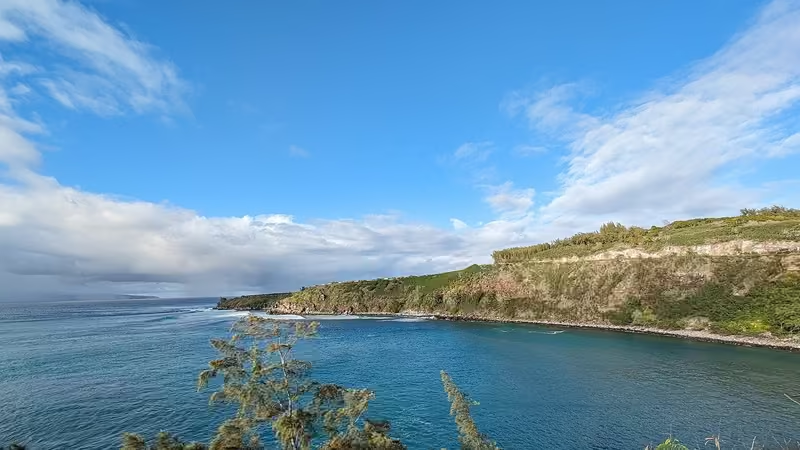
Mokulēʻia Bay sits on Maui's northwest coast, just beyond Kapalua and immediately southwest of Honolua Bay. Follow Honoapiʻilani Highway, Route 30, toward Honolua. The beach-access area is alongside the highway between mile markers 32 and 33.
Open the Slaughterhouse Beach map before you drive to help you locate the area. Once you arrive, follow posted parking and beach-access signs. Parking is above the bay alongside the highway, so you'll reach the beach on foot rather than driving down to the sand.
From the highway-side parking area, the established stairway descends the coastal slope toward the beach. Keep your beach setup light: a backpack with water, snacks, and a towel is easier to manage than a cooler and several chairs. Everything you carry down has to come back up.
Give this stop some breathing room in your West Maui itinerary. Allow time to find legal parking and descend without rushing, especially if you're visiting with children or carrying snorkeling gear.
Slaughterhouse Beach Parking: What To Know
Parking is alongside the highway above the bay, not in a large beachfront lot. Space is limited, and finding parking is part of the visit. Arriving earlier may give you more options, but it doesn't reserve a space.
Don't assume the roadside parking is free. Local access guides describe paid parking managed through PARKLINQ. This guide doesn't quote a rate because the current location-specific checkout total hasn't been independently confirmed.
Read the signs at the exact space you're using. Check payment instructions, time limits, resident-validation requirements, and whether any pass applies to that location. Use the PARKLINQ website to check available parking information rather than copying a price from an older travel post.
Don't block gates, driveways, traffic lanes, or the stair access. When the available legal spaces are full, change the plan instead of improvising a roadside spot. Keep valuables out of the car, and allow time to return before any posted parking limit expires.
Our Maui Beach Parking Guide explains why arrangements at one beach shouldn't be applied to every other stop.
The main access follows a long stairway down the coastal slope. That descent is part of the beach's character, but remember that you have to carry everything you bring down back up.
Choose secure footwear for the approach, leave your hands available for the railing, and take your time on damp or sandy steps. Carry fins rather than wearing them on the stairs. Don't bypass the established route by scrambling down the cliff.
This isn't a step-free beach approach. A stroller or wheeled beach wagon won't turn the stairway into an easy trip, and anyone with mobility limitations should choose a location with access that meets their needs.
A backpack and a towel are easier to manage here than a bulky beach setup. Before descending, check whether everyone in your group is comfortable with both the walk down and the return climb.
Facilities: Plan A Self-Sufficient Beach Stop
Mokulēʻia isn't a full-service beach park. There are no stationed lifeguards or public showers. Bring your drinking water, food, sun protection, and whatever you need for a comfortable visit.
Restroom planning needs a qualification: the official district profile lists no facilities, while local access reports describe portable toilets near the top of the stairs. Their availability and condition aren't confirmed here. Don't plan around a permanent restroom building or an assured bathroom stop on the sand.
Take a bathroom break before arriving, especially with children. Pack a bag for rubbish, and keep your supplies light enough to carry back up the hill. A towel picnic makes more sense than expecting tables, a pavilion, or somewhere to buy lunch.
What The Beach Is Like
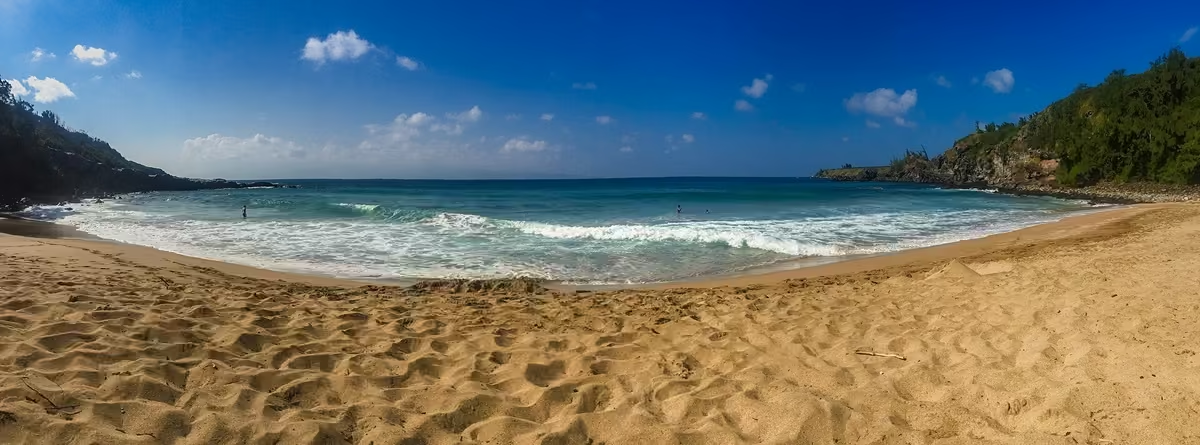
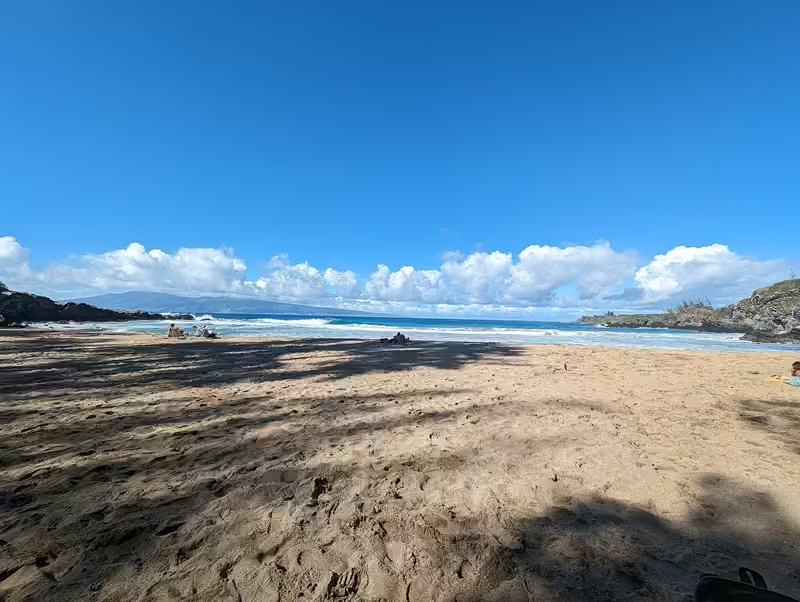
Slaughterhouse Beach has a different appeal from neighboring Honolua Bay. Instead of Honolua's rocky shoreline, you'll find a sandy cove framed by rocky headlands and steep, green coastal slopes. That contrast makes Mokulēʻia an inviting place to enjoy the scenery, even when snorkeling isn't part of your plan.
The cliffs and trees can shade parts of the beach early and late in the day, while changing sunlight brings out different colors in the water and surrounding greenery. Shade shifts throughout the day, so bring sun protection rather than relying on a particular spot to stay shaded.
For a simple beach visit, spread out a towel on dry sand, enjoy a snack, and take in the view across the bay. The sandy shoreline gives you somewhere to relax between looking out toward the headlands and photographing the coast. How much usable sand you'll find depends on the surf, so the beach won't look exactly the same on every visit.
Before settling in, watch how far the waves reach. Choose a spot beyond wave wash and keep clear of unstable-looking cliff sections. The dedicated snorkeling and winter-surf sections below explain what to consider before entering the water.
Slaughterhouse Beach Snorkeling: Calm Conditions Only
Consider Mokulēʻia Bay snorkeling only in calm, clear conditions and with ocean-swimming experience. We don't recommend it for learning to swim, testing your comfort in open water, or teaching a nervous child to snorkel.
The summer months often bring gentler surf than winter, making this a more promising season for experienced snorkelers when the water is calm and clear.
Where The Reef Habitat Is
The bay's bottom is mostly sand. From the beach facing the ocean, the right-hand point has large submerged boulders, while lava fingers extend along the left-hand point. Coral grows around both areas.
These are habitat descriptions, not instructions to swim around a headland. Give shallow reef and rocks plenty of clearance, and keep your outing within a comfortable return to the same beach. For this visitor guide, we don't recommend swimming between Mokulēʻia and Honolua.
The interest comes from noticing how fish use the underwater landscape. Look at the water above the reef and along its edges, without moving closer than your control and visibility allow. Our Maui Coral Reefs Guide explains more about the habitat beneath your mask.
Check The Return Before The First Kick
Watch several sets of waves, identify a manageable entry and exit, and discuss the plan with your buddy. A lull isn't proof that you've seen the largest set. Skip the swim when breaking waves, surge, currents, or poor visibility make any part uncertain.
Fit your equipment before entering and turn back before fatigue becomes a problem. Flotation can support a capable swimmer, but it doesn't replace independent swimming ability. Don't swim farther out to escape cloudy water or follow a fish toward the next bay.
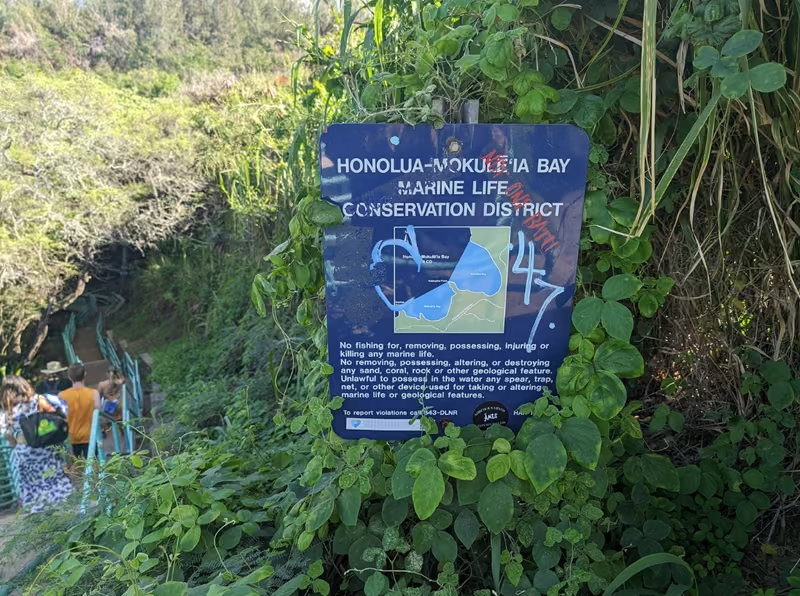
Mokulēʻia Bay is part of the Honolua–Mokulēʻia Bay Marine Life Conservation District, alongside neighboring Honolua Bay. The designation protects marine life and habitat; it doesn't mean the bay has lifeguards or sheltered water.
For an ordinary snorkeling visit, the important restrictions are straightforward:
No fishing or collecting marine life: Don't catch, spear, injure, or remove fish or other marine life, including eggs.
Leave natural material in place: Don't take or alter sand, coral, or other geological features or specimens.
Leave collecting equipment behind: Devices used to take marine life or alter geological features are restricted in the water, subject to the rule's specific exceptions.
The district's official rules explain the limited exceptions and permit provisions. An introduced fish isn't an invitation to try to remove it during a snorkeling visit.
Alongside those legal restrictions, practice reef-friendly viewing: don't feed fish, stand on coral, or reach into holes. For sea turtles, NOAA recommends at least 10 feet of space in the water and on land. A sighting is a bonus, never a promise or a reason to crowd an animal.
Fall And Winter Surf: When To Stay Out
Hawaiʻi DLNR advises avoiding the waters here during winter, when high surf is common. Treat that as a central part of planning, not a footnote beneath a beautiful summer photograph.
Fall can bring North Pacific swell back before the main winter season. Waves can reach the bay even under blue skies, and a headland doesn't block every swell direction. Our Maui North Swell Guide explains direction, wave period, and wrapping swell.
Forceful shorebreak can knock people down and cause serious head, neck, or spinal injuries. Wading in shallow water isn't a safe substitute when waves are breaking hard onto the sand. Watching surfers or bodyboarders also doesn't establish that snorkeling is appropriate.
Stay out during high-surf alerts affecting the shore, closures, or visibly rough conditions. Keep back from wave wash even when you're only taking photos. An early arrival doesn't cancel swell, and summer isn't an automatic green light either.
What To Check Before Your Visit
Before driving, review the NWS Honolulu marine and surf forecasts, including the affected shore directions and forecast times. Check whether swell is building during your planned visit, not just what the morning looks like.
After heavy rain, review water-quality advisories and avoid brown or runoff-affected water. Don't assume the water has recovered just because the clouds have cleared. Our Maui Snorkel Conditions Guide brings surf, wind, visibility, and water quality together.
At the access, check signs and restrictions before heading down. Assess the actual beach again before entering. No forecast number or app color can confirm that the entry suits your group.
Is Mokulēʻia Bay Good For Families?
It can suit a family that enjoys a simple beach visit and can comfortably manage the stairs. Pack for a shorter outing, let children help choose a spot on the sand, and plan to stay dry from the start.
For children's swimming or a first ocean experience, we'd favor a staffed beach and a conversation with the lifeguard. At any beach, assign an adult to watch children actively near the water without phone distractions. Sand, toys, and sunshine don't remove the need to keep clear of wave wash.
Alternatives With More Support Or Easier Planning
D.T. Fleming For Facilities And Lifeguard Advice
Nearby D.T. Fleming Park has restrooms, showers, picnic space, and lifeguard services. That makes it worth considering for a beach day with more support, especially when your group needs basic facilities.
It can also have strong surf. Visit during staffed hours, ask about conditions, and enjoy the park rather than entering when the water is unsuitable. More facilities don't automatically mean calmer swimming.
Kapalua Bay For A Different Beach Setup
Our Kapalua Bay guide covers another nearby sandy bay and its access considerations. It isn't lifeguarded and can receive winter swell, so compare the day's conditions rather than assuming a short drive fixes the problem. Honolua isn't a winter workaround either.
A Crew-Supported Boat Outing
To make reef time a planned part of your trip, consider an outing with equipment fitting, meals, and crew support. Maui Snorkeling's public tours depart from Maʻalaea Harbor, not Mokulēʻia, and aren't tours of this bay.
The morning option runs five hours; the afternoon option runs three. Read how our captains choose the destination for the route decisions behind each trip. Anyone entering must swim independently, and we may still change or cancel a tour if conditions change.
When the ocean calls for a full break, choose a land-based activity instead. Our Maui rainy-day activities guide has ideas that work just as well when it's sunny but the surf is rough.
Yes. Slaughterhouse Beach is the sandy beach at Mokulēʻia Bay on Maui. The nickname comes from a former slaughterhouse above the bay. Honolua is a separate neighboring bay, although both belong to the same Marine Life Conservation District.
Don't assume so. Local access guides now report paid parking near the beach entrance, but this guide doesn't confirm a current checkout total. Read the signs for your exact space and verify fees, time limits, and any resident-validation requirements.
Access involves a long stairway down the coastal slope. The official district profile doesn't give a step count, so this guide doesn't promise one. Plan for the climb back and choose another beach when stairs won't suit your group.
There are no public showers. The official profile lists no facilities, while local reports describe portable toilets near the stairs. Their availability isn't confirmed here. Use a restroom before arriving and don't expect permanent bathroom facilities on the beach.
It isn't our first choice for a first ocean snorkel. There's no stationed lifeguard, and the entry can develop shorebreak, surge, and currents. Choose an outing that matches your swimming ability, with appropriate instruction and support, rather than relying on a calm-looking photo.
DLNR advises avoiding the waters during winter, when high surf is common. Don't plan a winter snorkel here or treat a quiet gap between waves as clearance. Keep any shoreline visit well away from wave wash and follow closures.
This guide doesn't recommend an inter-bay swim. It adds distance and takes you around a headland, away from your original beach entry. Visit Honolua separately by its land access and assess conditions there rather than making it an underwater extension.
Ordinary recreational fishing, taking or injuring marine life, and taking or altering coral, sand, or geological specimens are prohibited within the district. The rules include limited exceptions and permit provisions. For a snorkeling visit, observe the habitat and leave it undisturbed.
Start with a lifeguarded location such as nearby D.T. Fleming for current advice, not an assumption of calmer water. It can also have high surf. When suitable ocean conditions aren't available, choose a land-based activity instead of trying another unguarded entry.
Ready to snorkel Maui?
Snag your spot on a Maui Snorkeling Tour! Make your ocean day easy with snorkel gear, food, crew support, and simple online booking.
5-Hr Morning Adventure: Molokini Crater Snorkeling Tour
3-Hr Afternoon Reef Trip: Maui Afternoon Snorkeling Tour
Mokulēʻia Bay is worth knowing for its sandy shoreline, rocky scenery, and protected reef habitat. It's a place to visit thoughtfully, with a light beach bag and room to change the plan.
Come prepared for the stairs and limited services, check the ocean before committing to snorkeling, and leave the bay's marine life undisturbed. Some visits will be about the reef; others will be about the view. Choose the version that fits the day, rather than forcing the day to fit your itinerary.
Sources & Updates
Check access, parking terms, and ocean conditions before visiting. Portable toilets are reported by local guides, not confirmed by the official facilities listing. No current parking price is quoted.