Written by Maui Snorkeling, operating tours to Molokini Crater, Turtle Town, and Coral Gardens from Māʻalaea Harbor since 1985. Tours are led by USCG-licensed captains aboard a USCG-inspected passenger vessel.
Last updated October 20, 2026
Quick Answer
Maui coral reefs include nearshore fringing reefs and coral communities growing on volcanic rock. Well-known reef areas include Olowalu, Honolua Bay, Molokini, ʻĀhihi-Kīnaʻu, and Kahekili. Coral is made up of living animals, not just the hard skeletons you see. Learning to recognize rounded, branching, and textured colonies makes reef viewing more interesting without needing to get closer or touch anything.
Main takeaways:
What builds the reef: Tiny animals called coral polyps produce hard skeletons that contribute to reef structure over time.
Corals to recognize: Lobe, rice, cauliflower, and finger coral have different shapes and surface textures.
Well-known reef areas: Olowalu, Honolua Bay, Molokini, ʻĀhihi-Kīnaʻu, and Kahekili offer different settings, access options, and protections.
Timing and conditions: Mornings often have lighter winds, but swell, currents, visibility, and water quality determine whether snorkeling is suitable.
Bleaching: Pale or white coral may be stressed, but bleaching does not automatically mean the coral is dead.
Protect living coral: Keep your body, fins, and equipment clear of the reef. Don’t touch, stand on, break, or collect coral.
Ever wondered what lies beneath Maui’s turquoise water? Maui’s coral reefs are living ecosystems built by tiny coral polyps, and they create the underwater habitat that makes snorkeling here so unforgettable.
These reefs shelter fish, invertebrates, and other marine life while also shaping the reef scenery that visitors come to Maui to see. Below, you’ll find a simple guide to the reef types found in Hawaiʻi, the common corals snorkelers may notice on Maui, and some of the island’s best-known places to see living reef habitat.
If you’re choosing a snorkel site for a specific day, use our Best Places to Snorkel in Maui guide for more practical beach and conditions advice.
What Maui’s Coral Reefs Are Like
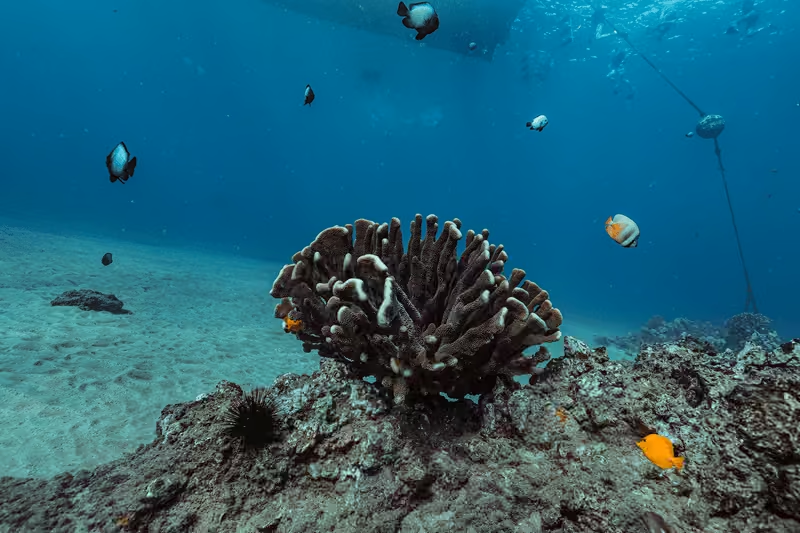
Maui’s coral reefs are a big part of what makes snorkeling here so memorable. Colorful coral formations, rocky ledges, and hidden crevices create an underwater world filled with marine life. These reefs also help protect portions of Maui’s shoreline by reducing wave energy.
Look closely around coral heads and rocky areas, and you’ll often spot colorful fish darting between formations. Wrasses are especially fun to watch as they search for food and explore the reef. Our Hawaiian Wrasse Fish Guide introduces six species you might recognize while snorkeling in Maui.
Reef crevices and overhangs also provide shelter for Hawaiian spiny lobsters and other nocturnal animals during the day. You might even encounter roi, a blue-spotted grouper introduced to Hawaiʻi. Our Peacock Grouper in Maui Guide explains how to identify this reef predator and its impact on native reef fish.
Like reefs around the world, Maui’s reefs face challenges from warming waters, coral bleaching, runoff, and physical damage. Protecting these underwater habitats through conservation efforts, cleaner water, and responsible snorkeling helps preserve the incredible marine life that makes Maui’s reefs so special.
Coral is an animal, not a plant
A coral head is usually a colony of tiny animals called polyps. Reef-building polyps produce hard calcium carbonate skeletons, covered by a thin layer of living tissue. As colonies grow, their skeletons contribute to the reef’s structure.
Many shallow-water corals also contain microscopic algae called zooxanthellae. These algae use sunlight to make food and supply energy to their coral hosts. This relationship helps explain why sunlight and water conditions matter so much to coral growth.
Reef types and coral colonies
Fringing reefs: Reefs that grow outward close to shore.
Patch reefs: Separate areas of reef surrounded by sand or other bottom habitat. An individual coral head is a colony, not necessarily an entire patch reef.
Barrier reefs: Reefs separated from the shoreline by a lagoon.
Atolls: Ring-shaped reefs surrounding lagoons. Examples occur in the Northwestern Hawaiian Islands; Maui itself is not an atoll.
Around Maui, snorkelers encounter living coral growing among older reef framework, volcanic rock, and sand. Coral cover varies within each location, so a familiar snorkeling spot won’t necessarily have continuous coral or suitable conditions throughout.
Common Coral Species You May See in Maui
Rounded mounds, knobby branches, and textured plates are useful clues
when looking at Maui coral reefs. Compare these four Hawaiian corals
by their growth forms and surface details. Shape is a starting point,
not a guarantee of species identification.
Coral
What to look for
Identification notes
Lobe coral
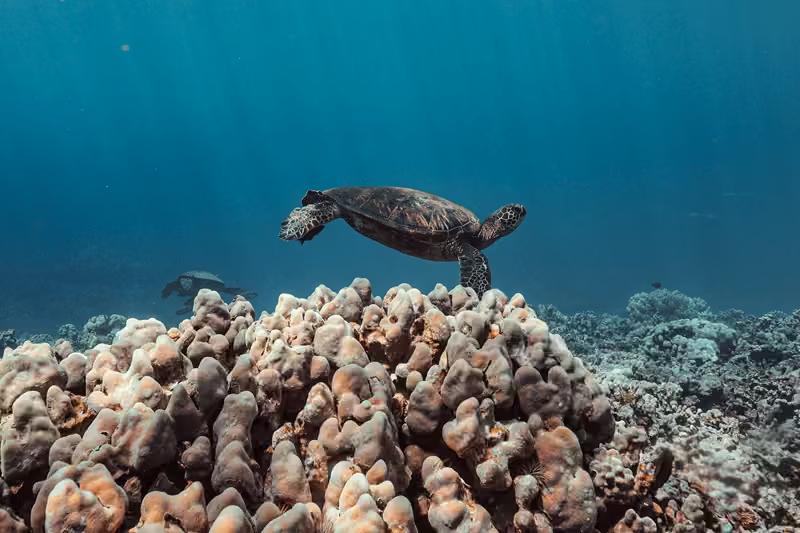
Porites lobata
Rounded, boulder-like mounds or low encrusting colonies.
The surface looks relatively even compared with the
pronounced bumps of rice coral.
Growth forms vary. Living colonies can be brown,
yellowish-green, or other muted colors.
Rice coral
Montipora capitata
A textured surface with small, raised projections.
Colonies may form plates, branches, or encrusting patches.
Surface texture is more useful than overall shape because
this coral has several growth forms.
Cauliflower coral
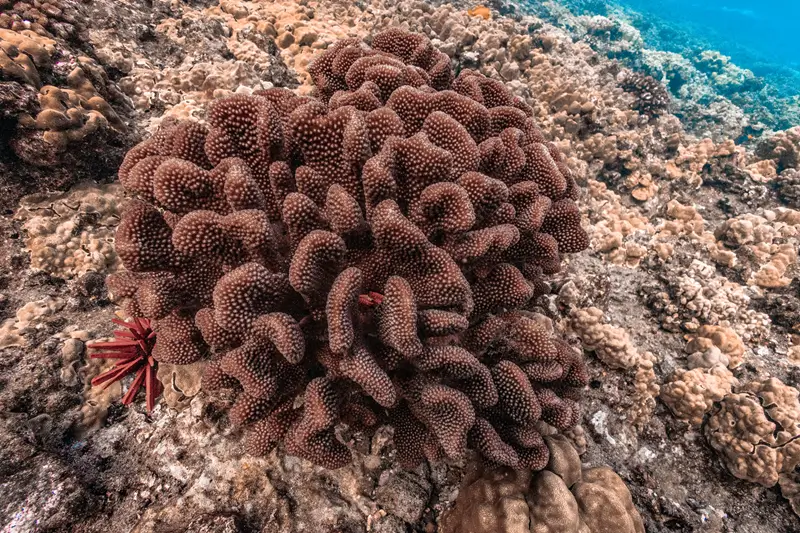
Pocillopora meandrina
Compact, bushy heads with stout, bluntly branching
structures covered in prominent bumps.
The knobby branching pattern resembles cauliflower.
Other related corals can look similar.
Finger coral
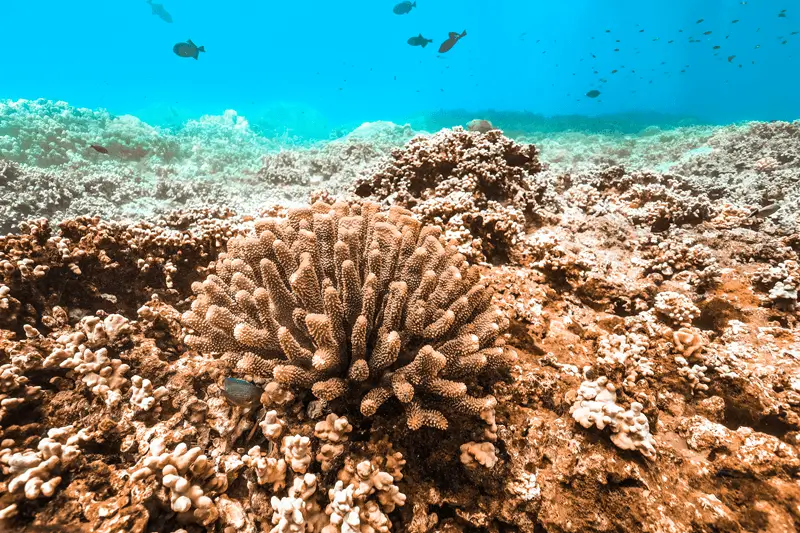
Porites compressa
Upright, finger-like branches that may grow together
into dense groups.
Often associated with wave-protected habitat.
Branching alone does not distinguish it from every
other coral.
Note: Coral appearance varies with growth conditions,
lighting, and viewing distance. Compare shape and surface texture
without approaching closely or touching the colony. Species details:
Hawaiʻi DLNR: Common Hawaiian Corals and Coral Protection Rules.
Best Places To See Living Coral Reefs On Maui
Maui’s reef areas differ in coral growth, depth, exposure, and access. Choose a location based on current conditions and your ocean-swimming experience, not its reputation alone. Morning may bring lighter winds, but swell, visibility, and water quality still matter.
Olowalu: A Broad Fringing Reef
Olowalu’s reef stretches along West Maui, combining shallow reef flats, coral formations, and sandy openings. It’s a place to appreciate the reef as a landscape rather than focusing only on individual fish. USGS reef mapping shows how coral cover and underwater structure vary across the area.
Planning note: Shallow water can leave little clearance above coral. Don’t walk across the reef or squeeze through gaps where your body or fins could make contact. If you can’t enter, swim, and exit without disturbing the reef, skip that route.
Honolua Bay: Coral Along the Bay’s Sides
Honolua Bay has coral growth along its rocky sides, contrasting with the sandy channel through the middle. It’s part of the Honolua-Mokulēʻia Marine Life Conservation District, which protects marine life and reef features.
Planning note: Conservation protection doesn’t mean protection from rough water. Winter surf and stream runoff can make snorkeling unsuitable. Assess the rocky entry and exit, and don’t swim farther out simply to escape murky water. Check DLNR’s Honolua Bay guidance before visiting.
Molokini: Coral in an Offshore Volcanic Setting
Molokini’s submerged crater includes coral colonies, volcanic boulders, and sandy patches. Its offshore setting offers a different reef-viewing experience from Maui’s shore-access sites. Access is by boat, and the snorkeling area depends on conditions and crew guidance. DLNR’s Molokini overview explains the habitat and protections.
Planning note: Expect deep-water snorkeling rather than a beach entry. Guests should feel comfortable floating face-down in deep water. Follow crew instructions. Wind and swell may change the itinerary or prevent a Molokini stop.
ʻĀhihi-Kīnaʻu protects marine habitat alongside South Maui’s volcanic coastline. Coral grows among lava formations, creating a varied underwater landscape rather than a continuous carpet of coral.
Planning note: Use designated open access areas and check the official reserve information and activity map. Don’t treat the entire coastline as an unrestricted snorkeling route. Rocky entries require careful assessment of footing, surge, and your exit.
Kahekili: Reef Habitat and Algae Grazers
Kahekili’s nearshore reef offers a chance to notice the relationship between coral and grazing animals. The surrounding herbivore fisheries management area protects certain fish and sea urchins that help control algae competing with coral. See DLNR’s Kahekili information for the area’s boundaries and rules.
Planning note: Convenient beach access doesn’t guarantee suitable snorkeling. Check surf, visibility, and entry and exit conditions. Observe grazing fish without feeding or following them into shallow coral.
Coral bleaching happens when stressed corals lose the microscopic algae living in their tissues. Without those algae, coral loses an important source of energy and may appear pale or white. Unusually warm water is a major cause, although other environmental stresses can also trigger bleaching.
Bleached coral is not necessarily dead. Some colonies recover when conditions improve, while prolonged or severe stress can cause death. Never touch or scrape coral to investigate its condition.
Runoff can carry sediment and pollutants onto reefs, while physical contact can damage living coral tissue or break branches. Keeping equipment clear of coral and preventing trash and pollutants from reaching the ocean helps reduce avoidable pressure on reef habitat.
How To Enjoy Maui’s Reefs Responsibly
Maui’s reefs are beautiful, fragile, and much more rewarding when you move gently through them. A few simple habits protect the coral, give wildlife space, and make for a better day in the water.
Cover up first: A rash guard or sun shirt is great for long snorkel sessions. If you use sunscreen, choose mineral sunscreen.
Keep clearance: Leave room beneath your body and fins. Don’t stand on coral or rest equipment on it.
Give wildlife space: Turtles, seals, dolphins, and whales should be observed respectfully, never chased, crowded, or fed.
Let conditions make the call: If the water looks rough, murky, or uncomfortable, skip the snorkel and enjoy the beach instead.
Follow posted rules: Some reef areas have special access, wildlife, or fishing protections, so always check signs before entering the water.
Secure loose gear: Keep camera straps, equipment, and other belongings from dragging across coral.
Planning to snorkel? Our Best Places to Snorkel in Maui guide can help you choose the right spot for the day. For official reef rules, wildlife guidance, and current advisories, use the Sources & Updates section below.
Ready to snorkel Maui?
Snag your spot on a Maui Snorkeling Tour! Make your ocean day easy with snorkel gear, food, crew support, and simple online booking.
5-Hr Morning Adventure: Molokini Crater Snorkeling Tour
3-Hr Afternoon Reef Trip: Maui Afternoon Snorkeling Tour
Maui has nearshore fringing reefs and coral communities growing on volcanic rock. Separate patches of reef can occur among sandy areas. An individual coral head is a colony, not necessarily an entire patch reef.
Coral is an animal. Most familiar reef-building colonies contain many tiny animals called polyps that produce hard skeletons. Microscopic algae living in their tissues use sunlight to make food and supply energy to the coral.
Well-known reef areas include Olowalu, Honolua Bay, Molokini, ʻĀhihi-Kīnaʻu, and Kahekili. They differ in access, depth, exposure, and protections. Choose a site that matches your ocean-swimming experience and current conditions rather than relying on its reputation.
Mornings often have lighter winds and less surface chop, which can make reef viewing more comfortable. Suitable conditions are never guaranteed. Check swell, currents, visibility, water quality, and your entry and exit before snorkeling.
No. Some Maui reefs can be reached from shore when access and ocean conditions are suitable. Independent shore snorkeling requires swimming ability and comfort in open water. Molokini requires boat access. For our tours, you should be at ease floating on your front over deep water and follow crew instructions.
Not necessarily. Bleached coral has lost much of the microscopic algae living in its tissues but may still be alive. Some colonies recover if conditions improve, while prolonged stress can cause death. Color alone does not establish a coral colony’s condition.
Don’t touch, stand on, break, or collect coral. Its hard skeleton can have a delicate layer of living tissue on the surface, and contact can cause damage. Keep your body, fins, and equipment clear of the reef, and leave loose coral pieces in place.
Appreciate Maui’s living reefs
Look beyond the fish, and you’ll notice the variety coral brings to a reef: rounded mounds, textured surfaces, and branches sheltering smaller animals. Recognizing a few shapes can make a familiar snorkeling spot more interesting.
Choose suitable conditions, stay off the bottom, and leave the reef undisturbed.
Sources & Updates
Use these resources to learn about coral biology, identification, bleaching, and reef protection. Before snorkeling, check current access rules, ocean conditions, water quality advisories, and safety guidance.