
Written by the Maui Snorkeling team, operating Molokini and Turtle Town tours out of Maʻalaea Harbor since 1985. We spend more days in these waters than on land!
Last updated: December 2025
When people think of Maui, Hawaii, their minds often drift to pristine beaches, lush tropical landscapes, and the mesmerizing humpback whales that visit the Hawaiian island’s waters. However, Maui’s underwater world holds many more secrets. Among the most fascinating are the sea urchins, small spiky creatures that play a crucial role in the island’s marine ecosystem.
Unlike the graceful whales that steal the spotlight, sea urchins might seem unassuming at first glance. But beneath their prickly exterior lies a surprising diversity of species, each with unique adaptations and ecological contributions. From the rock-boring urchins that meticulously carve their homes in coral reefs to the venomous long-spined urchins that warn predators with their striking appearance, Maui’s sea urchins are anything but ordinary. Let’s dive into the world of Maui’s sea urchins and uncover their significance and beauty.
👉 Planning a snorkel day around Maui? Start with our Best Time to Snorkel Maui (Month-by-Month), compare Morning vs Afternoon Snorkeling Maui, and use our Maui Snorkel Conditions guide to check wind, swell, and visibility before you go.
👉 If you’re new to the ocean (or snorkeling with kids), read Maui Snorkeling for Beginners and pick a calm, protected bay from our Best Places to Snorkel in Maui guide.
The World Beneath the Waves
Maui’s coastline is a mosaic of vibrant coral reefs, packed with life and color. Sea urchins are integral to these underwater communities. These spiny echinoderms are not just passive residents of the reef; they are vital to maintaining the health and balance of the marine environment.
Like underwater gardeners, sea urchins graze on algae that can smother corals, preventing them from receiving sunlight and nutrients necessary for growth. Their constant munching helps to keep the coral clean and healthy, allowing the reefs to flourish and provide a vital habitat for countless other marine creatures. This grazing process is crucial for maintaining the delicate balance of the reef ecosystem.
Where You’ll See Sea Urchins in Maui (Tide Pools, Reef Flats & Rocky Entries)
In Maui, sea urchins show up anywhere the reef gives them shade and protection—think cracks, holes, under-ledges, and rocky “benches” where waves break, and water stays moving.
- Quick guide: You’ll see the most urchins by slowly scanning crevices and ledges—not the open sand.
- Best visibility: Calm, clear mornings help you see into holes—use our Maui Snorkel Conditions checklist before you go.
- Golden rule: Look (and photograph) from a respectful distance—don’t touch the reef, and don’t put hands or feet into holes.
1) Reef cracks, ledges, and coral heads (the “most likely” snorkel zone)
This is the classic sea-urchin habitat: shaded crevices along lava fingers, under small overhangs, and around coral heads where there’s protection from waves and predators.
- How to spot: Slow down, hover, and look from the side into cracks and pockets. You’ll often notice a dark round body with spines radiating out from a hole.
- Depth: Common in shallow-to-moderate snorkeling depths—especially wherever reef structure creates shade.
- Conditions: Clear water makes a huge difference (less surge = easier spotting).
- Safety tip: Never “steady” yourself by grabbing rock or coral—practice neutral buoyancy and keep fins up behind you.
2) Tide pools and rocky shoreline entries (where most accidental stings happen)
Urchins love rocky edges and tide pools because wave action brings oxygen and food. It’s also where most people get spined—stepping or slipping onto a hidden urchin during entry/exit.
- How to spot: Before stepping, scan shaded rock cracks and wet edges (especially in surge zones). If you see spines, choose a different step—or a sandy entry instead.
- Depth: Very shallow—often right where people wade in.
- Conditions: Avoid rocky entries on days with noticeable surge or swell.
- Safety tip: Enter/exit from sand whenever possible. If you expect a rocky entry, bring reef shoes (see our Maui Snorkeling Packing List).
3) Shallow reef flats in protected bays (small pockets + rubble zones)
In calmer bays, you may spot smaller urchins scattered along reef flats—often tucked near the base of rocks, coral rubble, or the reef edge where coral meets sand.
- How to spot: Check the reef edge and the “transition line” where coral meets sand—urchins often sit right at that boundary.
- Depth: Shallow, especially inside protected coves.
- Conditions: Best when the surface is calm and the sun angle lets you see into pockets (early is usually easier).
- Safety tip: Don’t stand to rest—float on your back over sand if you need a break.
Examples: common places snorkelers notice sea urchins
- South Maui: Reef crevices around Maluaka Beach (Turtle Town) are classic “scan-the-cracks” structure.
- West Maui: Protected bays like Napili Bay are great for slow, calm snorkeling when conditions cooperate.
- Northwest Maui (seasonal): On calm summer days, Honolua Bay is a prime reef-structure zone where you’ll want to watch your spacing and avoid touching rocks/coral.
- Boat snorkeling: You can also spot urchins around reef structure at Molokini, Turtle Town, and Coral Gardens—especially along ledges and shaded pockets.
- If you want a full shore-vs-boat shortlist, see our master list: Best Places to Snorkel in Maui.
Want the Hawaiian name context? “Wana” typically refers to Hawaiʻi’s long-spined urchins (Waikīkī Aquarium: Wana (Long-Spined Urchins)), while rock‑boring urchins (“ʻina”) live in holes they grind into rock (Waikīkī Aquarium: Rock‑Boring Urchin).
Next up: scroll to the “Wana Stings” section below for avoidance tips and what to do if you get spined.
Wana (Sea Urchin) Stings in Maui: How to Avoid Them + What to Do
Wana—Hawaiian sea urchins—are common on Maui’s reefs, especially in rocky or shallow areas. Most stings happen when someone accidentally steps on one, so knowing how to avoid them (and what to do if it happens) is an important part of snorkeling safely in Hawaiʻi.
How to Avoid Wana Stings
Wana usually hide in reef cracks, tide pools, and rocky areas, especially where waves break. Wearing reef shoes, moving slowly, and avoiding standing or walking on rocks significantly reduces the risk. When snorkeling, maintain good buoyancy and never touch or brace yourself on the reef.
- Want a simple rules-of-the-reef checklist? See our Top 10 Things You Should Never Do When Snorkeling in Maui (safety + etiquette).
- Shore tip: If you’re walking anywhere near rocky entries or tide pools, our Maui Snorkeling Packing List covers water shoes, basics, and what to bring for a safer entry/exit.
- Picking a calmer location reduces rushed footing—use our Best Places to Snorkel in Maui list and choose the bay with the gentlest conditions that day.
What to Do If You Step on a Wana
If you’re stung, carefully rinse the area with clean water and do not dig deeply into the skin to remove spines. Soaking the affected area in hot (not scalding) water can help relieve pain, and vinegar is sometimes used to help with surface fragments of the spine. Some spines may be challenging to remove and can break off under the skin.
- For Hawaii-specific guidance, review the Hawaiʻi DLNR Division of Aquatic Resources MLCD Safety Tips (includes sea urchin punctures).
- For dive-medicine style first aid and warning signs, see Divers Alert Network (DAN): Sea Urchins.
- Curious what “wana” means and how it’s used? Here’s the Wehewehe Hawaiian Dictionary entry for wana.
When to Seek Medical Care
You should seek medical attention if spines are embedded near a joint, if pain or swelling worsens, or if there are signs of infection, such as redness, warmth, or pus. A medical professional may be needed to remove deeper spines and reduce the risk of complications safely.
👉 Important Disclaimer: This information is for educational purposes only and is not medical advice. If you experience severe pain, signs of infection, difficulty removing spines, or symptoms involving joints or mobility, seek care from a qualified medical professional.
View the world beneath the waves with our morning or afternoon tours!
Varieties of Sea Urchins in Maui
In the waters around Maui, you can find several species of sea urchins, each with its unique characteristics and roles, here are a few:
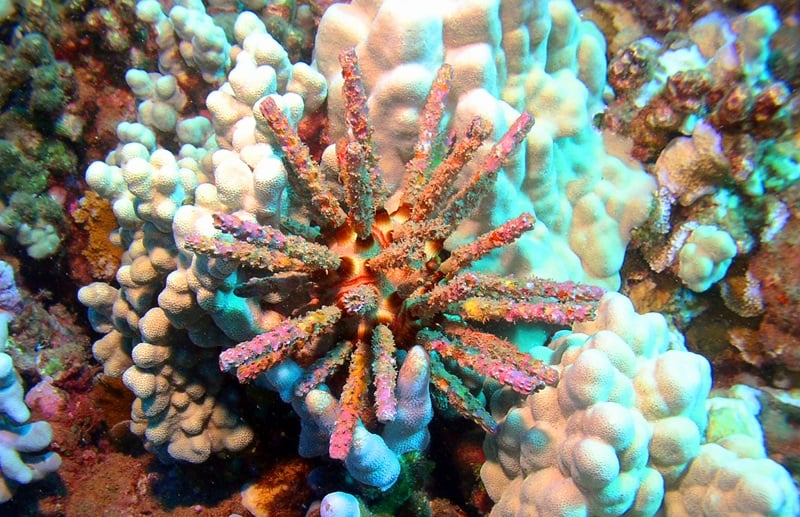
1. Slate Pencil Urchin (Heterocentrotus mammillatus)
Also known as ‘uku’ula’ula in Hawaiian and for its thick, blunt spines, the slate pencil urchin is a common sight in Maui’s shallow reefs. These spines, often a striking red or purple, can be used by the locals as natural pencils or writing tools, hence the name. Despite their robust appearance, these urchins are gentle grazers, feeding on algae and helping to prevent algal overgrowth on coral reefs. Their unique body shape and grazing habits make them keystone species in the reef ecosystem, playing a vital role in its health and resilience.
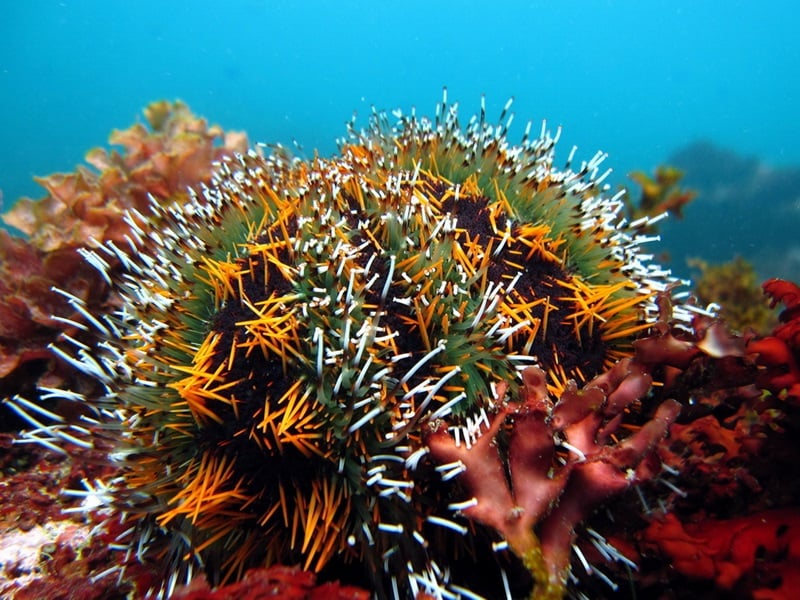
2. Collector Urchin (Tripneustes gratilla)
This species is recognizable by its shorter, denser spines and the way it carries debris, shells, and seaweed on its body for camouflage, this urchin is a master of disguise. Collector urchins graze on algae just like their slate pencil cousins, but they also utilize their prickly backs as mobile gardens.
By collecting debris and algae on their bodies, they create a microhabitat for other organisms and further diversify the reef ecosystem. More importantly, their constant grazing helps control overall algae populations, ensuring that corals receive enough sunlight to thrive. In essence, these urchins are both gardeners and living billboards, advertising the health of the reef through their vibrant activity.
3. Banded Sea Urchin (Echinothrix calamaris)
Also known as double-spined urchin, this sea urchin features two distinct sets of spines, making it a true standout. The first set consists of short, slender, closed spines that range in color from yellow to dark brown and can deliver a painful sting – a surprising feature for a grazer! The second set includes longer thicker spines that are often banded with light and dark colors, though they can sometimes be entirely dark or white, and can reach lengths of 10 to 15 cm. Despite its potential prick, this dazzling display serves a purpose.
The banded sea urchin is a nocturnal feeder and during the day, it hides in crevices and under ledges, relying on its camouflage to blend in. However, come nightfall, this spiky marvel emerges to graze on algae, contributing significantly to the overall health of the reef ecosystem. Its unique feeding habits and dual spiny defense system make the banded sea urchin a captivating example of the remarkable adaptations found within Maui’s underwater world.
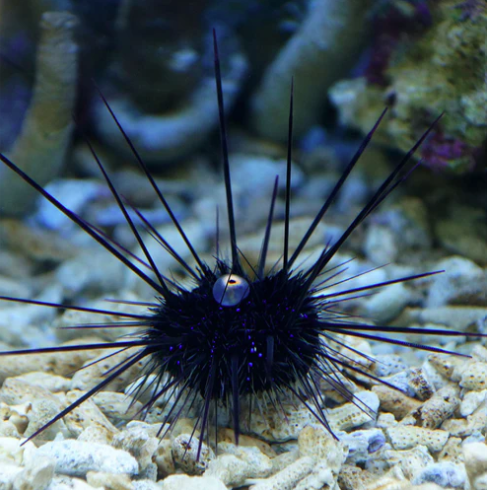
4. Long-Spined Urchin (Diadema paucispinum)
While most Maui urchins contribute to the reef’s health, the Long-Spined Urchin occupies a different niche. Known as Wana in Hawaiian, this aptly named species is the most dangerous sea urchin on Maui. Its long, venomous spines can deliver a painful puncture and even trigger allergic reactions. Despite their intimidating appearance, Long-Spined Urchins typically grow to only 10 inches in diameter and are most commonly found in tide pools and shallow reefs. Here, they feed in a broader diet than their algae-grazing cousins, consuming not just algae but also small invertebrates.
While they should be admired from a safe distance by divers and snorkelers, Long-Spined Urchins still play a role in the reef ecosystem. Their presence helps to maintain a balance between algae and other food sources for various reef creatures. However, their potent sting serves as a crucial reminder to appreciate Maui’s underwater wonders with respect and caution.
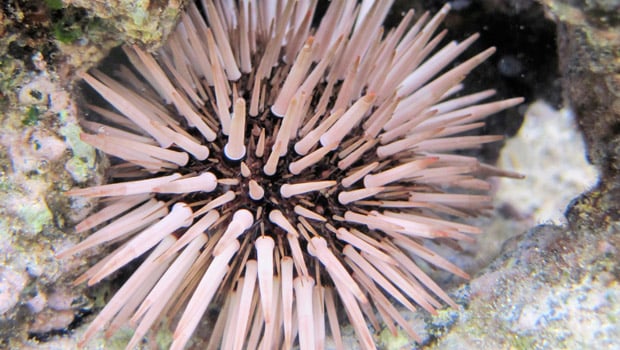
5. Rock Boring Urchin (Echinometra mathaei)
Known for being a homebody with sharp tools, uses its teeth, called Aristotle’s lantern, to scrape and grind away at rock, creating a cozy dwelling. This boring allows them to find shelter from predators and the strong waves in their usual habitat of tide pools, shallow reefs, and rocky benches. As nocturnal feeders, they venture out at night to graze on algae growing on the rocks around their burrows.
Their spines, though shorter and thicker than those of some other urchins, still offer protection. Rock Boring Urchins come in two colors: a pinkish-reddish hue known as ‘ina ula’ and a whitish color called ‘ina kea’ in Hawaiian.
Sometimes, small goby fish share the urchin’s burrow for protection. Their burrowing contributes to coral reef erosion, a natural process that can become problematic when urchin populations increase due to a lack of predators. Additionally, they have tiny tube feet with suckers on the ends that help them move around and capture food particles.


Ecological Importance
Sea urchins in Maui are essential for the reef’s health, acting as both custodians and contributors. By grazing on algae, they prevent these fast-growing plants from smothering corals, allowing the corals to grow and provide habitat for countless marine species. Imagine them as underwater landscapers, meticulously manicuring the reef to allow sunlight to penetrate and nourish the coral polyps.
This sunlight fuels the symbiotic algae living within the coral, providing them with the energy they need to build their calcium carbonate skeletons, the very foundation of the reef ecosystem. Without the urchins’ constant grazing, algae would take over, choking the corals and hindering their growth. This delicate balance is crucial for the biodiversity and resilience of the reef, ensuring a thriving underwater metropolis for countless marine species.
Furthermore, sea urchins themselves become vital players in the intricate web of life within the reef. They serve as a food source for various predators, including triggerfish, pufferfish, and even certain types of crabs. These predators, in turn, maintain healthy populations of urchins, preventing them from overgrazing the algae.
This predator-prey dynamic ensures a balanced ecosystem. Additionally, some species of shrimp have a symbiotic relationship with sea urchins, cleaning debris and parasites from their spiny bodies in exchange for food scraps. In essence, sea urchins are woven into the very fabric of the reef, playing a vital role in maintaining its health and supporting the diverse populations that call it home.
Conservation and Challenges
Despite their ecological importance, sea urchins face several threats. Overfishing of their natural predators, like triggerfish and certain types of eels, can disrupt the delicate balance in the reef ecosystem. With fewer predators keeping urchin populations in check, these spiny grazers can erupt in numbers, leading to overgrazing and the creation of barren zones on the reef.
Pollution from land runoff can also harm sea urchins. Excess nutrients from fertilizers can trigger harmful algal blooms, while other pollutants can weaken their immune systems and hinder their ability to reproduce. Perhaps the most significant long-term threat comes from climate change. Ocean acidification, caused by the absorption of atmospheric carbon dioxide, dissolves calcium carbonate, the very building block of coral skeletons and sea urchin tests (shells).
This weakens their bodies and makes it harder for them to survive and reproduce.
In Maui, conservation efforts are underway to protect these vital creatures and their habitats. Marine protected areas (MPAs) are designated zones where fishing and other human activities are restricted or prohibited. This allows sea urchin populations to recover naturally and maintain a healthy balance with other reef inhabitants.
👉 Learn more about protected reef rules and marine-managed areas in Hawaiʻi: Hawaiʻi Marine Life Conservation Districts (DLNR).
👉 More on why herbivores matter for reef health (including sea urchins): NOAA Fisheries—Restoring Natural Grazing Processes Can Help Coral Reefs.
Sustainable tourism practices, such as avoiding direct contact with the reef and educating visitors about the importance of sea urchins, further contribute to their conservation. By working together, researchers, conservationists, and the tourism industry can ensure that these spiky marvels continue to play their essential role in the vibrant tapestry of Maui’s underwater world.
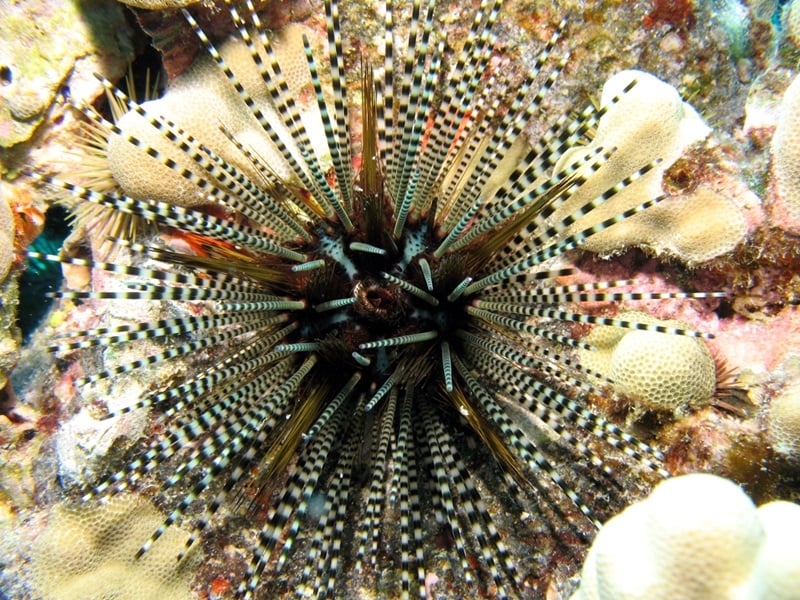
Photo courtesy of reefguide.org
How to Experience Maui’s Sea Urchins
For those interested in observing sea urchins in their natural habitat, snorkeling and diving excursions offer the perfect opportunity to witness these fascinating creatures firsthand. Our Maui Snorkeling Tours are committed to eco-friendly practices, ensuring that your underwater adventure has minimal impact on the marine environment.
5-Hour Molokini Crater Snorkeling Tour
Calling all snorkel enthusiasts! This snorkeling tour offers the perfect opportunity to explore the underwater wonders of Molokini Crater, a crescent-shaped island known for its stunning coral reefs and crystal-clear waters. But that’s not all! Depending on weather conditions, you’ll also get a chance to snorkel at a second location, either the vibrant Coral Gardens or the fascinating Turtle Town, where you might encounter majestic Hawaiian green sea turtles in their natural habitat.
This tour is ideal for those who want to experience the best of Maui’s snorkeling in ideal weather. Don’t miss your chance to explore Maui’s sea urchins and other vibrant marine life and create unforgettable memories!
3-Hour Maui Afternoon Snorkeling Tour
Tired of crowded snorkeling spots? Snorkel Maui with this unique afternoon tour offering a chance to explore the vibrant underwater world of Maui with fewer people around. Join this unique afternoon tour to explore the lively underwater world with fewer people during the morning rush! We focus on snorkeling at the stunning Coral Gardens or the fascinating Turtle Town.
On rare occasions, when weather conditions are perfect, we might even take you to the iconic Molokini Crater! But even there, you’ll experience it with a smaller group for a more relaxing and intimate underwater adventure.
This snorkel tour in Maui is ideal for those who prefer a less crowded, more personalized snorkeling experience. Escape the morning rush and discover the beauty of Maui’s underwater world at your own pace!
Here’s what’s included in both tours:
• Top-notch Snorkeling Gear: We provide everything you need for a comfortable and safe underwater adventure, including silicone optical masks, snorkels, and fins. Full-face masks are not allowed for safety reasons.
• Reef-Safe Sunscreen: Protect yourself from the sun while protecting the delicate coral reefs. We only use reef-safe sunscreen on our tours.
• Optional Assistance: Need a little extra help staying afloat? We offer flotation belts, boogie boards, swimming noodles, and life vests to ensure everyone feels comfortable in the water.
• Whale Watching Bonus (January-March): Keep your eyes peeled on the boat ride to and from the snorkel sites! During whale season (January-March), you might be lucky enough to spot magnificent humpback whales migrating through Maui’s waters.
• Waterslide Fun (Weather Permitting): Add a touch of thrill to your adventure with a thrilling ride down our 25-foot fast water slide (available when weather conditions allow and location permits).
What to Bring:
• Towel
• Alcoholic drinks are BYOB. We do not serve alcohol. You may consume it at the conclusion of in-water activities.
It’s important to remember that while admiring these underwater wonders is encouraged, physical contact should always be avoided. Sea urchins are delicate creatures, and their spines can easily break off and become embedded in skin, causing irritation and potential infection.
Some species, like the Long-Spined Urchin that we mentioned, have venomous spines that can deliver a painful sting and even trigger allergic reactions. By maintaining a safe distance and following the guidance of our crew, you can ensure a safe and enjoyable experience for yourself and minimize any disturbance to the marine environment.
Maui Snorkeling Tours
Snorkel Maui and dive into adventure with our morning or afternoon snorkeling excursions!
Conclusion: Maui Sea Urchins
Sea urchins may not be the first thing that comes to mind when you think of Maui, but these spiky wonders are essential to the island’s marine life. By understanding and appreciating their role, we can help conserve them and ensure Maui’s reefs remain vibrant and healthy for generations to come. So next time you find yourself on the beautiful shores of Maui, take a moment to think about the incredible world beneath the waves and the tiny, spiny guardians that help keep it in balance
Plan Your Snorkel
- Molokini Snorkeling guide
- Best Time to Snorkel Maui
- Morning vs Afternoon Snorkeling Maui
- Book Morning Molokini Tour
- Book Afternoon Coral Gardens Tour
References:
Waikiki Aquarium – Photo of Rock Boring Sea Urchin
Wikipedia – Photo of Collector Sea Urchin
Aquarium Care Center – Photo of Long-Spined Sea Urchin
Reefguide.org – Photo of Banded Sea Urchin
Ocean Project Maui – Photo of Slate Pencil Urchin
Sources & Further Reading (facts + safety):
- Waikīkī Aquarium: Wana (long-spined sea urchins)
- Waikīkī Aquarium: Rock-boring Urchin
- Hawaiʻi DLNR DAR: MLCD Safety Tips (includes sea urchin punctures)
- Divers Alert Network (DAN): Sea Urchins
- Wehewehe Hawaiian Dictionary: wana
- NOAA Fisheries: Restoring Natural Grazing Processes Can Help Coral Reefs


