Written by
Maui Snorkeling, operating tours to Molokini Crater, Turtle Town, and Coral Gardens from Māʻalaea Harbor since 1985. Tours are led by USCG-licensed captains aboard a
USCG-inspected passenger vessel.
Quick Answer
The main things you should never do when snorkeling in Maui include touching wildlife or coral, snorkeling alone, ignoring ocean conditions, and pushing beyond your swimming ability. A little preparation, comfortable gear, and respect for the reef can help you make the most of your snorkel day.
10 things to avoid:
- Touch, ride, chase, or crowd marine life, or stand on coral.
- Throw trash, food scraps, or drinks into the ocean.
- Feed fish, turtles, whales, or other wildlife.
- Rush, overexert yourself, or lose track of your buddy.
- Enter the water unless you’re an experienced ocean swimmer who can swim independently.
- Use non-mineral sunscreen on Maui without a prescription.
- Land on or climb Molokini Crater.
- Use a full-face snorkel mask on our Lani Kai II tours.
- Drink alcohol before all in-water activities are finished.
- Ignore ocean conditions, lose track of your surroundings, or keep snorkeling if you feel unwell.
Wondering what you shouldn’t do while snorkeling in Maui? A little preparation goes a long way toward helping you feel relaxed in the water while protecting the reef and marine life you’ve come to see.
With that in mind, here are the top 10 things you should never do while snorkeling at Molokini Crater or other snorkeling locations around Maui.
Top 10 Things You Should Never Do When Snorkeling in Maui
1. Never Make Contact With Any Marine Life At Any Time
Spotting a Hawaiian green sea turtle, or honu, can be a highlight of your snorkel day. Enjoy watching without touching, chasing, crowding, or blocking its path. NOAA recommends staying at least 10 feet away, both in the water and on land. Give wildlife room to carry on naturally.
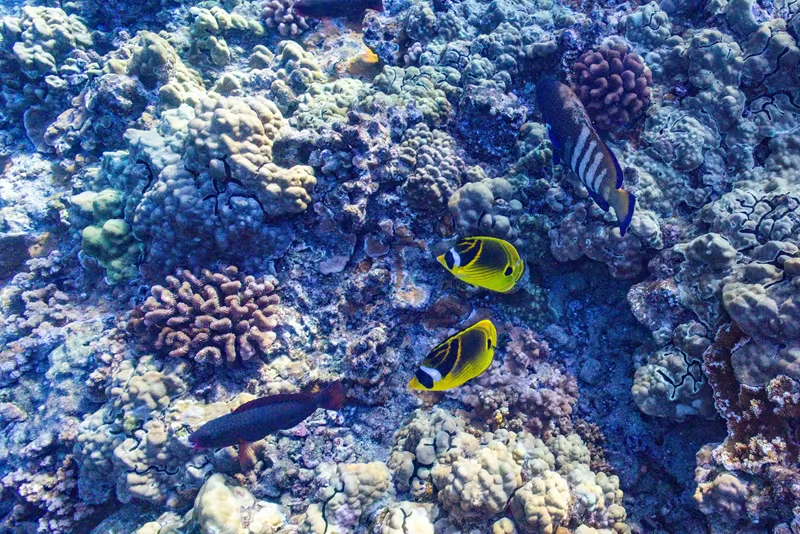
And never stand on or grab the coral. Coral reefs are living animals, and even a single kick or step can break or kill them. Keep your fins up, float horizontally, and avoid touching the reef with your hands or feet.
2. Never Throw Anything Into The Water
Keep wrappers, cups, food scraps, and other waste out of the ocean. “Biodegradable” doesn’t mean something belongs in the water. Secure loose items before the boat gets moving, use the onboard bins, and take everything home with you when snorkeling from shore.
3. Don't Feed Marine Wildlife
Let the reef provide the menu. Don’t offer bread, snacks, or other food to fish, turtles, or marine mammals to bring them closer for a photo. Feeding can change wildlife behavior, and feeding marine life is prohibited at Molokini. Enjoy watching animals find their own food instead.
4. Don’t Rush - Swim Smoothly
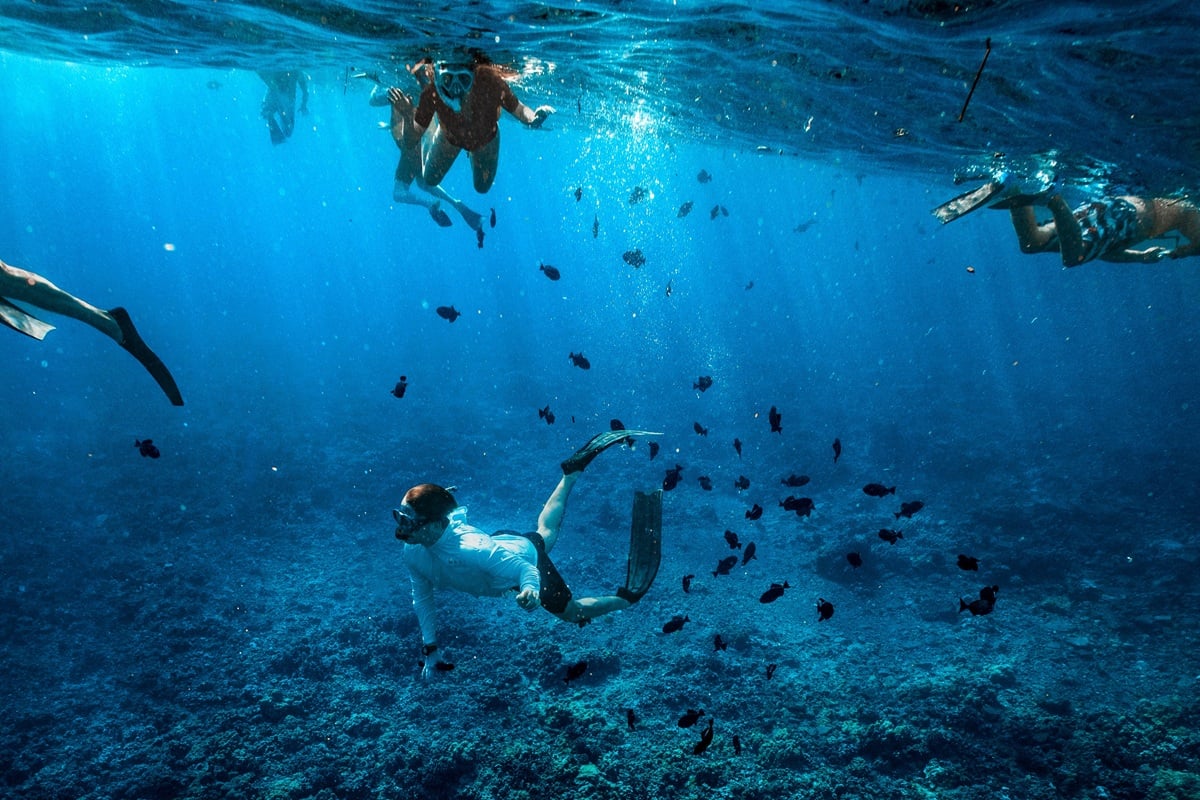
Take your time and use gentle, steady kicks. You’re here to enjoy the reef, not cover as much distance as possible. Stay close to your buddy, even on a guided tour, and head back before you feel tired.
Comfortable swimming in the ocean but new to snorkel gear? Our Maui Snorkeling for Beginners guide explains what to expect.
Before entering, check the wind, swell, water quality, and posted warnings. Our Maui Snorkel Conditions guide brings those planning resources together. Skip snorkeling when the water is rough, murky, or unsuitable for your ability.
5. Don’t Snorkel Unless You’re an Experienced Ocean Swimmer
Snorkeling may look effortless, but it still requires real swimming ability, especially in the open ocean. Before entering the water, you should be able to swim independently, control your breathing, and remain calm in water over your head.
Conditions at Molokini, Turtle Town, and Maui’s shore snorkeling locations can include wind, waves, currents, and deep water, even when the surface looks inviting. Always check current conditions and listen to your captain, crew, or lifeguard.
Our crew is happy to help with gear, answer questions, and provide flotation for additional support, but flotation and crew assistance don’t replace swimming ability. If you’re not an experienced ocean swimmer, there’s no pressure to enter the water. You can still enjoy the boat ride, Maui’s beautiful scenery, and time on deck.
6. Don’t Use Non-Mineral Sunscreen on Maui
For your Maui beach bag, choose mineral sunscreen with zinc oxide and/or titanium dioxide as the only active ingredients. Maui County prohibits the sale, distribution, and use of non-mineral sunscreen without a prescription. “Reef-safe” and “reef-friendly” aren’t regulated labels, so check the ingredients.
We provide mineral sunscreen aboard the Lani Kai II. Just ask the crew if you need some. A rash guard and time in the shade can also help protect you from the sun. Our Maui sunscreen guide explains what to look for.
7. Don’t Climb On Molokini Crater
Molokini Crater is more than a beautiful backdrop. Its waters are protected as a Marine Life Conservation District, and the islet itself is a state seabird sanctuary. Visitors aren’t allowed to land on or climb the crater. Enjoy the view from the boat and follow your crew’s directions as you explore the reef.
8. Don’t Bring a Full-Face Snorkel Mask for Our Tours
Full-face snorkel masks aren’t allowed on our Lani Kai II tours. We provide standard masks, snorkels, and fins, and our crew can help check the fit before you enter the water.
Let us know if your mask leaks or your snorkel feels uncomfortable. Getting your gear sorted before you start makes it easier to focus on the reef.
9. Don’t Drink Alcohol Before Entering The Water
You’re welcome to bring your own alcoholic beverages aboard, but no glass, please. Wait until the crew confirms all in-water activities are finished, including snorkeling and any waterslide time, then enjoy your drink responsibly. Don’t return to the water after drinking.
10. Don’t Lose Track Of Your Surroundings
It’s easy to get caught up watching a colorful fish or a passing honu. Check your position regularly, stay near your buddy, and keep the boat or your planned exit in sight. Turtle sightings at Turtle Town are a possibility, never a guarantee.
If you become unusually short of breath, dizzy, or suddenly exhausted, stop snorkeling and signal your buddy or crew immediately. Keep your face out of the water, remove the snorkel from your mouth, and use available flotation while getting help to exit. Don’t try to push through or swim back alone.
Sudden or unexplained breathing difficulty needs prompt medical assessment, even if you start to feel better. Call 911 for severe or ongoing breathing trouble, chest pain, or fainting. Don’t return to the water.
Final Thoughts: Top 10 Things You Should Never Do When Snorkeling In Maui
A little care goes a long way on a Maui snorkel day. Give wildlife room, look after the reef, and follow your crew’s guidance so you can focus on enjoying the experience. Whether you visit Molokini, Turtle Town, or Coral Gardens, mahalo for helping care for Maui’s ocean.
Curious about sharks? Our Sharks in Maui guide puts encounters and ocean awareness into perspective.