Written by
Maui Snorkeling, operating tours to Molokini Crater, Turtle Town, and Coral Gardens from Māʻalaea Harbor since 1985. Tours are led by USCG-licensed captains aboard a
USCG-inspected passenger vessel.
Quick Answer
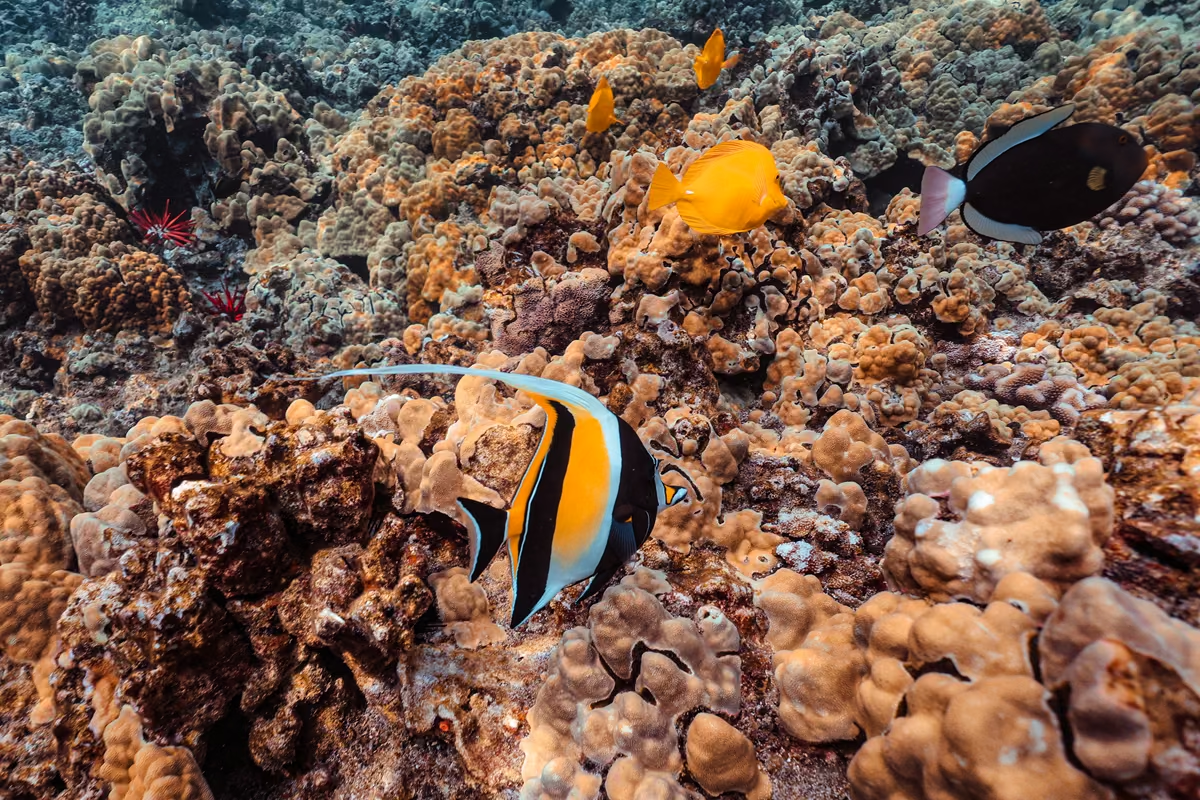
Moorish idol fish in Maui, called kihikihi in Hawaiʻi, have a tall, flattened body with black, white, and yellow markings and a long white dorsal streamer. For a more confident identification, look for the black tail and orange-to-yellow saddle across the projecting snout. These details help distinguish them from similar bannerfish. You may see Moorish idols picking food from rocky or coral reef surfaces, alone, in pairs, or in groups.
Main takeaways:
-
Hawaiian name: Kihikihi; the scientific name is Zanclus cornutus.
-
Best identification clues: Combine the striped body and dorsal streamer with the black tail and orange-to-yellow snout marking.
-
Common lookalike: Schooling bannerfish also have a dorsal streamer, but their tail is yellow and their jaw is pale.
-
Where to look: Watch rocky and coral reef surfaces along your normal snorkeling route. Don’t swim toward deeper ledges or drop-offs to search for fish.
-
What they eat: Sponges, algae, and other small organisms picked from reef surfaces and crevices.
-
Viewing tip: Observe without chasing, feeding, or touching fish, and keep your body and fins clear of coral. Sightings aren’t guaranteed.
The Moorish idol fish in Maui is one of the easiest reef fish to recognize. In Hawaiʻi, it’s called kihikihi, and snorkelers often notice it by its black, white, and yellow bands, tall flat body, and long trailing dorsal streamer.
This guide explains how to identify a Moorish idol, where you’re most likely to see one while snorkeling in Maui, what it eats, and how to watch reef fish without disturbing the reef.
Moorish Idol Quick Facts
Get to know kihikihi, from its distinctive black tail and
trailing dorsal fin to its reef-feeding habits and wide
natural range.
| Topic |
Details |
| Common name |
Moorish idol |
| Hawaiian name |
Kihikihi |
| Scientific name |
Zanclus cornutus
|
| Fish family |
Zanclidae. The Moorish idol is the family’s only
living species.
|
| Reported maximum size |
About 9 inches (23 cm) in total length, as reported
by FishBase
|
| Best identification clues |
Tall, flattened body with black, white, and yellow
markings; a long white dorsal streamer; a black tail;
and an orange-to-yellow saddle across the projecting snout
|
| Native range |
Indo-Pacific and tropical eastern Pacific.
Native to Hawaiʻi, but not found only in Hawaiʻi.
|
| Reef habitat |
Rocky and coral reefs, reef flats, and lagoons.
Its habitat is not limited to pristine coral or
clear water.
|
| Social behavior |
May be seen alone, in pairs, or in groups;
larger schools also occur
|
| What it eats |
Sponges, algae, and other small organisms picked
from reef surfaces and crevices
|
| Common lookalike |
Schooling bannerfish. Compare the Moorish idol’s
black tail and orange-to-yellow snout marking
with the bannerfish’s yellow tail and pale jaw.
|
Note: The size listed is an approximate
published maximum, not the expected size of every Maui
sighting. Compare several identification features rather
than relying on the dorsal streamer alone.
References:
Waikīkī Aquarium: Moorish Idol
and
FishBase: Zanclus cornutus.
Meet The Moorish Idol Fish
Although it resembles a butterflyfish, the Moorish idol belongs to its own family, Zanclidae, and is closely related to surgeonfish. Unlike tangs, it lacks the sharp, scalpel-like spine beside the tail.
Moorish idols are native to Hawaiʻi but aren’t Hawaiian endemics. Their natural range extends across the Indo-Pacific and into the tropical eastern Pacific.
In Hawaiʻi, the Moorish idol is called kihikihi. Learning common Hawaiian fish names can make snorkeling more meaningful because it helps you recognize the reef life you’re seeing in the water.
How To Identify A Moorish Idol
When snorkeling in Maui, look for these Moorish idol features:
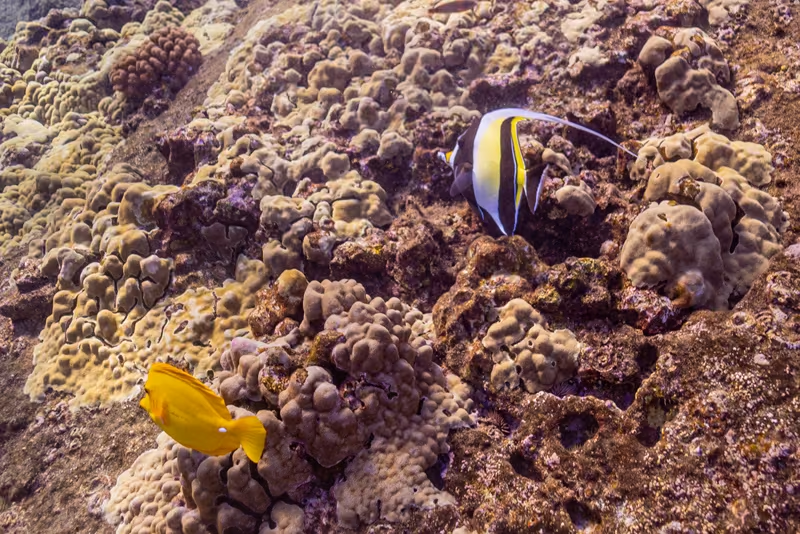
- Bold Black, White, And Yellow Bands: The high-contrast pattern is the easiest clue.
- Long Dorsal Streamer: A thin trailing fin extends from the top of the fish.
- Tall, Flat Body: Moorish idols look thin from the front and tall from the side.
- Tubular Snout: The slightly extended mouth helps them pick food from reef surfaces and crevices.
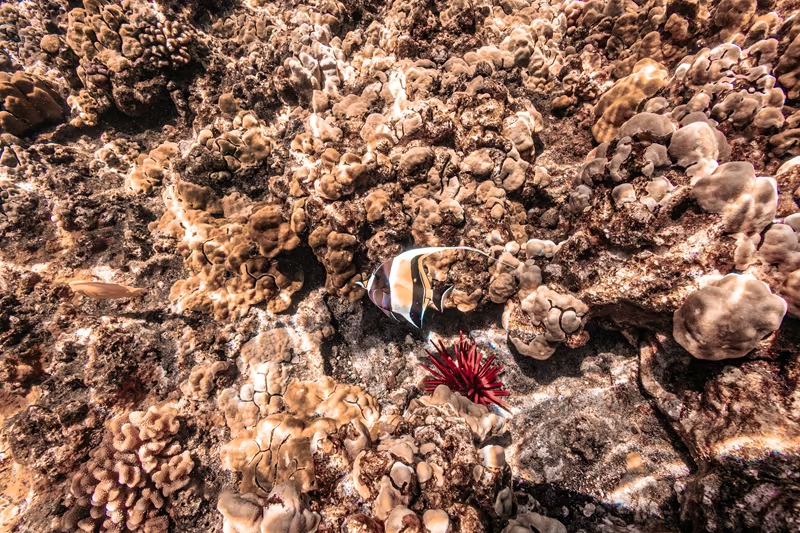
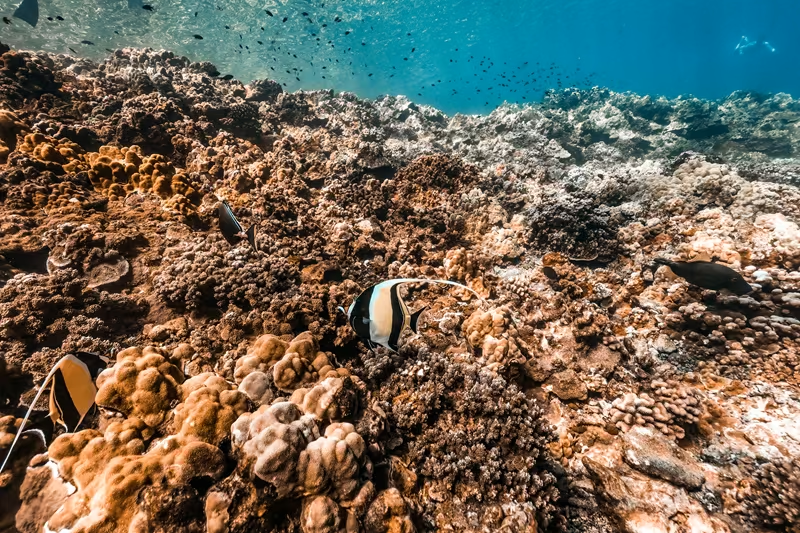
- Reef-Hugging Movement: They often swim close to coral, rock, and reef edges instead of staying over open sand.
- Black tail: Look beyond the striped body to the dark tail fin, an important clue when comparing similar bannerfish.
- Snout marking: Look for an orange-to-yellow saddle across the projecting snout.
Moorish Idol vs Bannerfish
A long dorsal streamer and striped body can make these fish easy
to confuse. This comparison focuses on the schooling bannerfish,
also called pennantfish or false Moorish idol. Start with the
tail color and snout markings rather than the streamer alone.
| Feature |
Moorish idol
Zanclus cornutus
|
Schooling bannerfish
Heniochus diphreutes
|
| Tail color |
Black tail, often outlined by a narrow pale edge
|
Yellow tail, with yellow also covering the rear portion
of the dorsal fin
|
| Snout and face |
Projecting snout with an orange-to-yellow saddle across
the upper jaw
|
Shorter snout and pale jaw, with dark snout markings
rather than an orange-to-yellow saddle
|
| Body pattern |
Tall, flattened body with broad black bands and
white-to-yellow areas
|
Silvery-white body with two broad, diagonal dark bands
and yellow rear fins
|
| Dorsal streamer |
Long, thin, trailing extension from the dorsal fin
|
Also has a long dorsal extension, so this feature
alone does not distinguish the fish
|
| Feeding behavior |
Often picks food from reef surfaces and crevices
|
Often feeds on plankton above the reef and may
gather in schools
|
| Fish family |
Zanclidae, the Moorish idol family
|
Chaetodontidae, the butterflyfish family
|
Note: Start with the tail and snout markings,
then compare body shape and behavior. Swimming position is a
supporting clue, not a definitive identification rule.
References:
Waikīkī Aquarium: Moorish Idol
and
Fishes of Australia: Schooling Bannerfish.
What Do Moorish Idols Eat?
Moorish idols use their projecting snout to pick food from reef surfaces and crevices. Their diet includes sponges, algae, and other small organisms growing on the reef. Watch for brief pauses as a fish investigates a surface, then moves to another feeding spot.
They may forage alone, in pairs, or in groups. Observing from a distance lets you watch this feeding behavior without interrupting it.
Where to see Moorish Idols While Snorkeling on Maui
Moorish idols occur around rocky and coral reef habitats in Hawaiʻi. On Maui, snorkelers may encounter them at Molokini, Coral Gardens, Honolua Bay, and other reef sites. Sightings vary, and seeing one doesn’t establish that the surrounding reef is healthy.
Watch reef surfaces from your normal snorkeling route rather than swimming toward deeper ledges or drop-offs to search for fish. Choose the site based on current conditions, not the possibility of a particular sighting.
If you want a Maui-wide list of snorkel zones, start with our Best Places To Snorkel In Maui guide.
A Quick Note About Aquariums
You will sometimes see Moorish idols listed in the aquarium trade, but they have a reputation for being extremely difficult to keep in captivity. Even official references note that they generally do not do well in home aquariums, largely because of their specialized diet and care needs.
Final Thoughts
A long dorsal streamer may catch your attention first, but the black tail and orange-to-yellow snout marking help confirm a Moorish idol. Once you recognize kihikihi, watch how it pauses to feed and moves between reef formations. Mahalo for reading!
👉 Give the fish room, keep clear of coral, and use our Maui Tropical Fish Guide to identify other reef residents.
Sources & Updates
Use these resources to learn about Moorish idol identification, feeding behavior, native range, and differences from schooling bannerfish. Before snorkeling, check current ocean conditions, water quality advisories, and safety guidance.