
Written by the Maui Snorkeling team, operating Molokini and Turtle Town tours out of Maʻalaea Harbor since 1985. We spend more days in these waters than on land!
Last updated: December 2025
To visit Maui responsibly in 2026, stay in legal, community‑minded accommodations, avoid disaster tourism in Lahaina, use mineral sunscreen and respect reefs and wildlife, support locally owned businesses, follow local etiquette, and understand Hawaiʻi’s new 2026 “green fee” that funds climate and wildfire resilience.
Maui remains one of the most beautiful places in the world, and 2026 is shaping up to be a big year for travel to Hawaiʻi. Alongside the excitement, you might wonder how to visit Maui responsibly and respectfully in 2026 and help drive a new wave of responsible tourism in Hawaiʻi. We are also hearing more about regenerative tourism—a growing movement highlighted by The Washington Post and Hawaii Public Radio — that encourages travelers not only to enjoy the islands but also to help protect them as the tourism industry evolves into a more community-focused model.
After the 2023 Lahaina fires, that tension got louder: Maui needs tourism to recover, but it also needs space, respect, and real support for local people and places. Hawaiʻi as a whole has been shifting away from “pack ’em in” tourism toward responsible tourism—travel that actually benefits communities and ecosystems instead of just trying to “do less harm.” The goal isn’t to preserve a status quo that wasn’t serving residents; it’s to build something healthier and more resilient.
Regenerative travel goes beyond “being respectful.” It means using your trip to support Maui’s recovery, cultural heritage, and long-term environmental health so the island stays vibrant for generations to come. That includes honoring cultural sites, choosing responsible tour operators, and spending at locally owned restaurants such as favorites on the north shore or even iconic places like Mama’s Fish House.
The good news? Responsible travel, and truly responsible tourism in Maui, isn’t hard. With a few simple choices, you can enjoy an unforgettable Maui vacation while giving back to the place you love.
If you’re planning a Maui trip in 2026, you’re part of that story.
This guide will walk you through practical, down‑to‑earth ways to visit Maui more responsibly this year:
- Staying in legal, community‑minded accommodations
- Using mineral sunscreen and being kind to reefs
- Respecting Lahaina and other sensitive sites
- Supporting local businesses and crews (including us)
- Finding meaningful ways to give back while you’re here
Is it OK to Visit Maui in 2026?
Yes — as long as you approach with respect, follow community guidance, avoid restricted areas in Lahaina, and spend thoughtfully with local businesses and tours that align with Maui’s regenerative tourism goals. Visitors who embrace principles like mālama maui help ensure the island remains a thriving living system rather than a resource to be consumed.
What “Regenerative Travel” Means in Hawaiʻi in 2026
“Regenerative tourism” isn’t just a buzzword here—it’s now written into Hawaiʻi’s long‑term planning. In 2024, Governor Josh Green signed a bill incorporating regenerative tourism frameworks into the Hawaiʻi State Planning Act, and the Hawaiʻi Tourism Authority has been openly discussing shifting from “sustainable” tourism to travel that actively gives back to the community and place.
A recent Washington Post feature on Hawaiʻi’s cultural tourism shift summed it up as:
- Cultural authenticity (Hawaiian culture led by Hawaiians and native Hawaiians)
- Environmental stewardship (treating beaches, reefs, and forests as living relatives, not props)
- Community benefit (more local ownership, less extraction)
In Hawaiian values, you’ll hear this as:
- Mālama – to care for, to protect
- Kuleana – responsibility
- Aloha – not just a greeting, but a way of being in relationship
So “responsible travel” here isn’t only about using a metal straw. It’s about asking, “Is my trip leaving Maui better than I found it?” That’s what responsible tourism in Maui looks like in practice.
The rest of this post is everything you can do, practically, to answer “yes.”
1. Stay in Legal, Respectful Maui Accommodations
Housing is one of the most significant pressure points on Maui right now. Hawaii Public Radio and local leaders have been blunt: wildfire recovery, a long‑running housing crisis, and the spread of short‑term rentals have left many workers and families squeezed.
When you pick where to stay, you’re making a huge impact.
How to choose more responsible lodging
- Book legal accommodations only.
Look for:- A visible Tax Map Key (TMK) or permit number in the listing
- Clear mention of TAT/GET taxes in your quote
- Listings on reputable platforms or directly with recognized properties
- Book legal accommodations only.
If something feels off (no permit, cash-only, unusual instructions about “don’t tell anyone you’re renting”), skip it.
- Prefer locally owned or locally managed places when you can.
Regenerative tourism aims to increase local business ownership and keep more of each tourism dollar in Hawaiʻi. - Avoid “party house” rentals in quiet residential neighborhoods.
Even if they’re legal, loud, late‑night rentals can really strain neighbor relationships.
Why Booking Legal Accommodations Matters
- It supports Maui County through proper lodging taxes.
- It helps reduce pressure on neighborhoods still recovering.
- It ensures your stay aligns with Hawaiʻi’s long-term sustainability goals.
For help choosing where on the island to base, check out:
Many visitors find that choosing a central location reduces the need for a rental car, which lowers traffic and emissions—another small win for sustainable travel on this Hawaiian island.

2. Respect Lahaina and Other Sensitive Maui Sites
Nearly two years after the August 2023 fires, Lahaina is still healing. Parts of West Maui have reopened to visitors, but the burn zone and surrounding neighborhoods remain deeply sensitive.
What Responsible Visitors Do in 2026
- Do not attempt “disaster tourism.” No drone shots of the burn zone, no driving through closed neighborhoods “just to see,” no selfies with ruins. If an area is closed or marked off, respect it.
- Obey all signs and barriers. Even if your map app tries to route you somewhere, physical signs win.
- Support open businesses and local communities nearby. Towns like Kīhei, Wailea, Pāʻia, Makawao, and Hāna are open and welcoming. Visiting these spots—and spending money in local shops and restaurants—is a meaningful way to support the broader island while Lahaina recovers.
- Visit respectfully when exploring places like Haleakala, a federally protected national park that requires extra care.
For more context and ideas:
3. Be Gentle on Maui’s Ocean: Reef-Safe Sunscreen, Reefs, & Wildlife
If you change only one habit in 2026, make it this one.
Use mineral sunscreen (Maui law now requires it)
Hawaiʻi banned the sale of sunscreens containing oxybenzone and octinoxate back in 2021.
Maui County then went a step further: as of October 1, 2022, the county banned the sale, distribution, and use of non‑mineral sunscreens, meaning your sunscreen must use zinc oxide and/or titanium dioxide as active ingredients.
To complicate it, investigations in 2025 found that a lot of products labeled “reef‑friendly” still contain chemicals that may harm coral. So you really do have to check your labels, not just the marketing.
Easiest way to get it right:
Read The 101 on Reef‑Safe Sunscreen on Maui before you pack or shop on the island.
Snorkel Like a Guest, Not an Owner
Our Eco‑Friendly Snorkeling in Maui guide gets into the details, but here are the basics:
- Don’t touch or stand on coral. Ever.
- Give turtles, dolphins, and other wildlife space. Let them approach you, not the other way around.
- Never feed fish or toss food in the water. It changes behavior and harms the reef.
- Use gear that keeps you relaxed and in control. If you’re new, read Maui Snorkeling for Beginners and consider joining a guided tour instead of improvising at a random rocky shoreline.
Every time you choose the reef‑friendly way to do something, you’re practicing regenerative travel in real time.
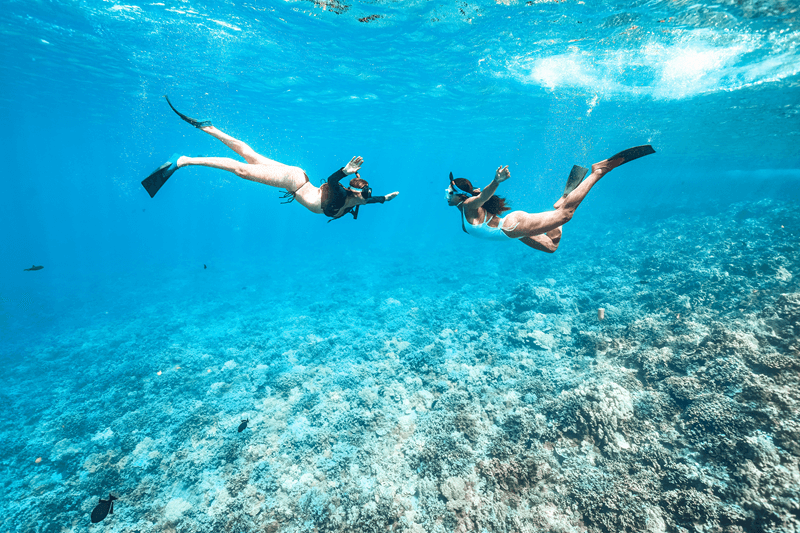
Our tours are reef-safe and support responsible tourism! Join our Molokini Crater Snorkeling Tour for a morning adventure or our Afternoon Snorkeling Tour!
4. Support Locally Owned Businesses and Maui-Based Tours
One of the most impactful things you can do is spend your money locally. Maui’s small businesses — restaurants, food trucks, local shops, and tour companies — keep more revenue on the island and directly support local families.
Why this Matters for Regenerative Travel
- Local businesses reinvest in the community.
- They hire Maui residents and contribute to cultural preservation.
- They practice environmental stewardship more consistently than large corporate operators.
Simple Ways to Put Your Money Where Your Values Are
- Book tours with locally rooted operators.
Companies that have been here for decades, employ local crews, and reinvest in the community (like us) keep more of your dollars on the island. - Seek out local restaurants, food trucks, & farm stands.
Use our guides like: Where To Find The Best Food Trucks on Maui - Tip fairly.
If you can afford to travel to Maui, tipping your servers, housekeepers, drivers, and crew is one of the most direct ways to support the people who make your trip work. - Be patient and kind.
Staffing shortages and housing stress are real. A little extra aloha when things are slow or imperfect goes a long way for folks still juggling their own recovery with serving visitors.
- Book tours with locally rooted operators.
5. Learn and Practice Local Etiquette (Travel with Aloha)
Responsible travel and responsible tourism here is as much about how you move as where you spend.
A Few Basics that Go a Long Way
- Learn a little ʻŌlelo Hawaiʻi (Hawaiian language).
Simple words like aloha (hello/love), mahalo (thank you), and mālama ʻāina (care for the land) mean more when you understand them. - Follow posted rules at beaches, trails, and cultural sites.
When a sign says “No Trespassing” or “Heiau — Sacred Site,” it means it. - Keep noise in check at night.
Many locals get up before dawn for work. Loud balconies and late‑night yelling carry. - Dress appropriately away from the beach.
Swimsuits alone are perfect at the shore, less so in grocery stores and small towns.
- Learn a little ʻŌlelo Hawaiʻi (Hawaiian language).
When you read our hiking or beach guides—like the Lahaina Pali Trail
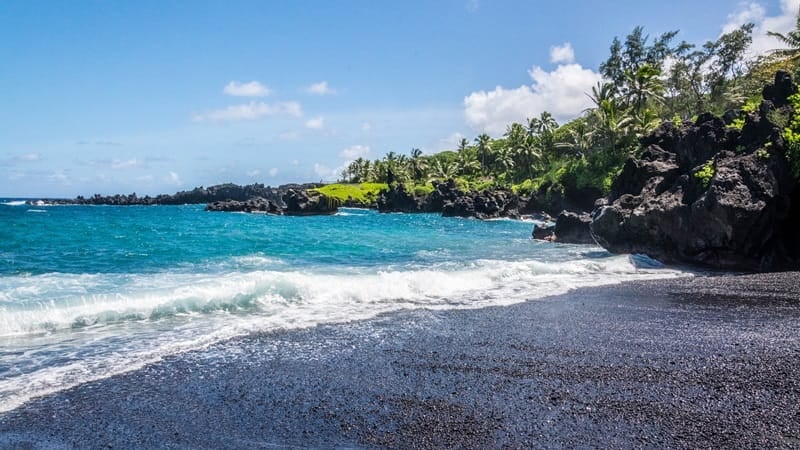
or Black Sand Beach at Waiʻānapanapa—you’ll notice we try to give both safety tips and cultural context. That’s exactly the mindset regenerative travel asks from visitors.
6. Consider Giving Back While You’re Here
Done thoughtfully, voluntourism—giving some time or money while you’re visiting—can be a powerful form of regenerative tourism on Maui.
Hawaiʻi Public Radio has profiled efforts such as Maui Cultural Lands and other community projects that invite visitors to help with reforestation, invasive species removal, and cultural site restoration, particularly after the fires.
Ideas that Fit a Vacation, Not a Full‑Time Job
- Join a beach cleanup if one is happening while you’re here.
- Look for half‑day volunteer workdays with organizations like Maui Cultural Lands or other local nonprofits (always book through official channels).
- Donate to vetted recovery and conservation funds (e.g., Maui Strong Fund, local land trusts) instead of random GoFundMe links.
The key is to ask:
“Am I helping in the way the community actually asked for help?”
Pair those efforts with choices like eco‑friendly snorkeling, mineral sunscreen, and supporting local businesses, and you’re well into regenerative territory.
7. Know Where Your Money Goes: The 2026 “Green Fee.”
If you’re planning responsible travel to Maui in 2026, you’ll probably notice a new line on your hotel or vacation rental bill. That’s Hawaiʻi’s statewide “Green Fee”—a small climate‑impact tax that ties visitor spending directly to caring for the islands.
What is Hawaiʻi’s 2026 “Green Fee”?
In 2025, Hawaiʻi passed the nation’s first statewide climate‑impact “Green Fee” on visitor stays by raising the state Transient Accommodations Tax (TAT) by 0.75 percentage points, from 10.25% to 11%. The increase takes effect on January 1, 2026, and a similar 11% tax will apply to cruise ship cabins later in the year, prorated for time spent in Hawaiian ports.
The Green Fee is designed to generate approximately $100 million annually, which state leaders say will help fund climate resilience, wildfire prevention, shoreline protection, and other environmental and infrastructure projects across the islands. In other words, it’s meant to connect Hawaiʻi tourism to long‑term climate and community health—exactly what responsible tourism is about.
How much will the Green Fee actually add to my bill?
The Green Fee is percentage‑based, so the actual dollar amount depends on your nightly rate:
- On a $300 per‑night room, the 0.75% Green Fee adds about **$2.25 per night**.
- On a $400 per‑night room, it’s about **$3.00 per night**.
That’s not nothing, especially on a more extended trip—but for most visitors it’s a small fraction of the total cost of flights, food, and activities. When you’re thinking in terms of responsible travel, it’s helpful to see it as a built‑in contribution to keeping Hawaiʻi’s beaches, reefs, and communities more resilient.
> Quick note: this isn’t tax or legal advice. Tax structures can change—always check your booking details for the latest numbers.
How the Green Fee fits into responsible tourism in Maui
If you care about responsible tourism in Maui, the Green Fee is one more way your visit can give back:
- It helps fund projects that address climate impacts like sea‑level rise, erosion, and stronger storms.
- It supports efforts to reduce wildfire risk, a huge concern after the 2023 Lahaina fires.
- It invests in the natural and cultural resources that make your trip memorable in the first place.
You’re not just paying for a bed; you’re helping fund the protections that keep Maui worth visiting for future generations.
Responsible Travel Tip: Budget Around the Green Fee
If you’re budget‑planning, layer this article with:
That guide breaks down realistic daily costs and where to save versus where to splurge, so you can account for the Green Fee and still practice responsible travel to Maui—without feeling like you have to cut out all the fun.

FAQs: Visiting Maui Responsibly in 2026
Is it OK to visit Maui in 2026 after the Lahaina fires?
Yes. Maui is welcoming visitors in 2026, and responsible travel is a big part of the island’s recovery. The fires were devastating, but tourism is still the backbone of the local economy. The key is to practice responsible tourism in Maui: respect closures around Lahaina, support local businesses, be patient with a community that’s still healing, and follow local guidance rather than treating this like a “normal” beach trip.
Is Lahaina open to visitors in 2026?
As of late 2025, much of West Maui is open, but fire‑impacted parts of Lahaina remain restricted or highly sensitive. Conditions can change, so before you fly, check the latest updates from Maui County and the Hawaiʻi Tourism Authority and read local guidance about where it’s appropriate to visit. Even in technically open areas, responsible travel means avoiding “disaster tourism” and focusing your time and spending on places and businesses that are prepared to host visitors.
How can I make my trip part of responsible tourism in Maui?
Think about where you stay, how you move, and where your money goes. Book legal accommodations, choose locally owned or locally rooted businesses and tours, use reef‑safe sunscreen, keep a respectful distance from wildlife, and learn basic cultural etiquette. If you can, add a small give‑back piece—like a beach cleanup, a volunteer workday with a local nonprofit, or a donation to a vetted recovery or conservation fund. All of that turns a regular vacation into genuinely responsible tourism in Hawaiʻi.
What does “regenerative tourism” mean compared to “responsible travel”?
Responsible travel usually means “do less harm”—don’t litter, don’t trespass, be polite. Regenerative tourism goes a step further: your trip actively helps restore what’s been damaged and supports what’s already healthy. On Maui, that can look like booking tours with companies that employ local crews and follow strict reef‑safe practices, joining restoration or cleanup days, and directing your spending toward businesses that keep more money in the local community.
What is Hawaiʻi’s 2026 “Green Fee,” and how does it affect my Maui budget?
Starting in 2026, Hawaiʻi is adding a small climate‑impact “Green Fee” to visitor accommodations by raising the state Transient Accommodations Tax (TAT) by 0.75 percentage points, from 10.25% to 11%, with a similar tax applied to cruise ship cabins later in the year. In real life, that’s just a few extra dollars per night on most hotel or vacation rental stays, but it can add up over a whole trip. The idea is that this fee will help fund climate resilience and environmental projects—like beach restoration and wildfire prevention—so it’s directly tied to responsible tourism in Hawaiʻi.
Is snorkeling in Maui still a responsible choice after the fires?
Yes—if you do it thoughtfully. The fires affected communities on land, not the offshore reefs where most Maui snorkeling happens. Choosing permitted, safety‑focused operators who follow reef‑safe guidelines (such as using mineral sunscreen, avoiding contact with coral, maintaining distance from wildlife, and avoiding overcrowded or unsafe entry points) makes your ocean time part of responsible travel rather than adding stress to fragile ecosystems. That’s the whole idea behind our eco‑friendly snorkel practices and onboard education.
Final Thoughts: Your Trip Matters More Than You Think
Coming to Maui in 2026 isn’t just a vacation—whether you mean it to be or not, your trip is part of the island’s next chapter.
By:
- Staying in legal, community‑minded places
- Treating the ocean and ʻāina (land) with care
- Respecting Lahaina’s grief and ongoing recovery
- Supporting local businesses and crews
- And looking for ways to give a little more than you take
…you’re helping move Maui toward the regenerative future many residents are working toward.
If you’re ready to add some ocean time to your responsible‑travel plan, and you’re looking for responsible tourism experiences in Maui, we’d love to have you on one of our tours—and we’re happy to answer any questions about how to make your time here as respectful and regenerative as possible.
And when you’re ready to experience Maui’s underwater world in the most respectful, sustainable way possible, we’d love to have you on board.
Book a Molokini Crater Snorkeling Tour or Afternoon Snorkeling Tour and enjoy Maui the right way — with care, gratitude, and aloha! 🤿


