Written by
Maui Snorkeling, operating tours to Molokini Crater, Turtle Town, and Coral Gardens from Māʻalaea Harbor since 1985. Tours are led by USCG-licensed captains aboard a
USCG-inspected passenger vessel.
Quick Answer: Eco-friendly snorkeling in Maui means enjoying the reef without harming it. In practice, that means using only mineral sunscreen in Maui County, staying well clear of sea turtles, dolphins, and whales, and keeping your fins, hands, and gear off coral.
Main Takeaways:
- Sunscreen: In Maui County, use mineral sunscreen only, ideally non-nanotized zinc oxide or titanium dioxide
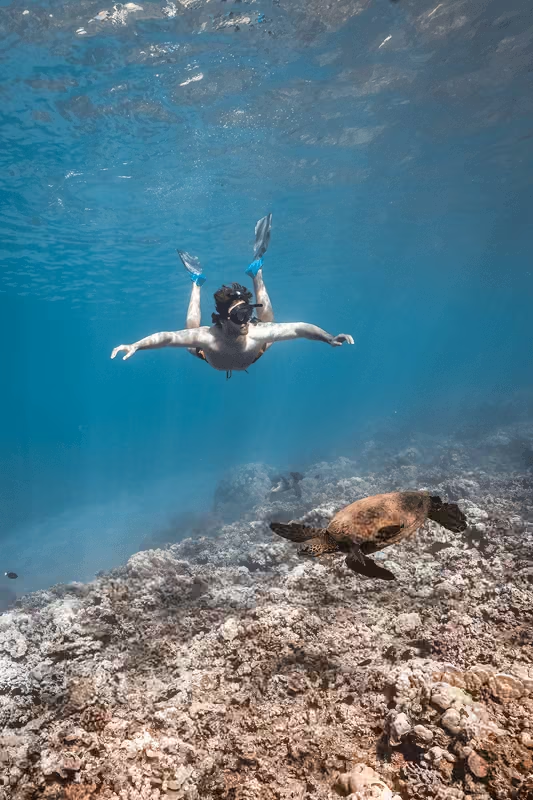
- Sea Turtles: Stay at least 10 feet away and never touch, chase, or block their path
- Dolphins & Whales: Stay at least 50 yards from dolphins and 100 yards from humpback whales
- Protect Coral: Never stand on, grab, or kick coral with your fins, hands, or gear
- Low-Impact Habits: Wear a rash guard, do not feed fish, and skip snorkeling when conditions are rough or visibility is poor
Eco-friendly snorkeling in Maui starts with a few simple rules: use mineral sunscreen, give marine life plenty of space, and keep your fins, hands, and gear off coral. The goal is to enjoy Maui’s reefs without disturbing the wildlife and habitats that make snorkeling here so special.
Maui Wildlife Rules: Turtles, Dolphins, and Whales
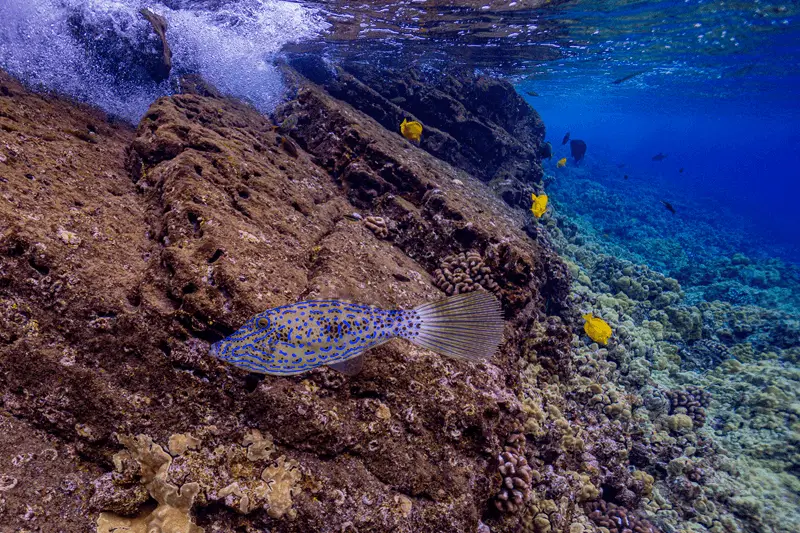
Maui snorkeling often includes sightings of sea turtles, tropical fish, dolphins, and, in season, humpback whales. The best way to protect these animals is to observe them calmly and give them plenty of space instead of trying to get closer.
- Stay at least 10 feet away from sea turtles.
- Keep at least 50 yards away from dolphins and other small whales, and at least 100 yards away from humpback whales.
- In Hawaiʻi, it is also illegal to swim with, approach, or remain within 50 yards of spinner dolphins.
Never touch, chase, corner, ride, or block the path of marine life. A good Maui snorkeling experience should feel passive and respectful, allowing wildlife to continue its natural behavior without interference from people in the water.
Maui Sunscreen Rules: What’s Allowed
Maui County allows only mineral sunscreen without a prescription. Choose non-nanotized zinc oxide, titanium dioxide, or both as the active ingredients.
Do not rely on labels like “reef-safe” or “reef-friendly” by themselves. Maui County says those terms are not regulated, so the best way to check a sunscreen is to read the list of active ingredients.
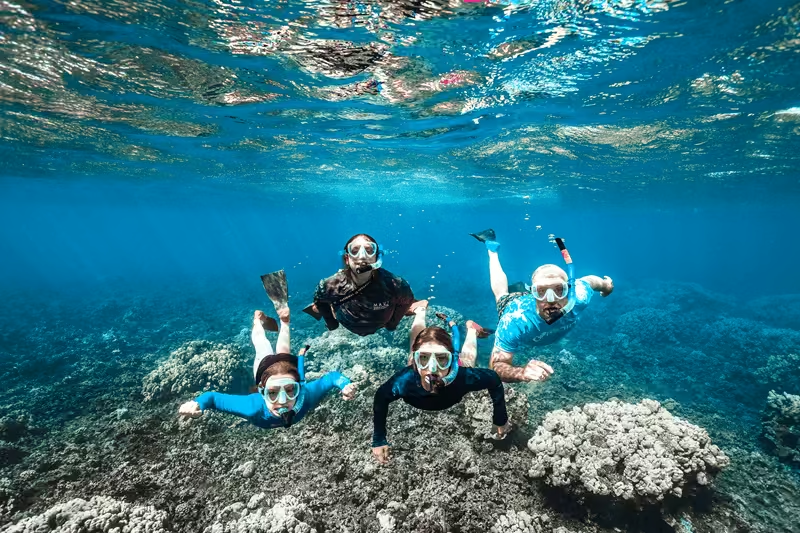
The best way to reduce sunscreen runoff is to use physical sun protection first. Rash guards, sun shirts, hats, and shade help protect your skin while limiting what washes into the ocean. If you do use sunscreen, choose a mineral lotion instead of an aerosol or powder whenever possible.
How To Avoid Damaging Coral And Reef Life
Responsible snorkeling in Maui starts with keeping your body, fins, and gear off the reef. Enter carefully, float rather than stand, and stay in water deep enough to move without brushing the bottom.
Never feed fish or throw food into the water. Feeding changes natural behavior, encourages marine life to gather around people, and adds food sources that don't belong on the reef.
Keep your hands off coral, avoid grabbing rocks for balance, and make sure cameras, straps, and other gear stay secure. If the water is too rough, too shallow, or too murky to avoid contact with the reef, skip the snorkel and try again when conditions are calmer.
Our guide to coral bleaching in Maui explains why coral turns white and how stressed colonies may recover.
What Makes a Snorkel Tour Eco-Friendly?
When choosing a Maui snorkel tour, look for operators that follow wildlife rules, respect marine preserve regulations, reduce waste, and give guests clear instructions on how to snorkel without touching coral or disturbing animals. The best tours make low-impact practices part of the trip, not just marketing copy.
Our (Maui Snorkeling) Eco-Tourism Efforts Include
- No dumping of waste at sea.
- Operating with low-emission, modern, tier 3 diesel engines that follow strict maintenance schedules.
- Limiting footprint at Molokini by abiding by all marine preserve rules.
- Operating at slower speeds during whale season.
Support Maui Reef Conservation
Eco-friendly snorkeling in Maui doesn't end when you leave the water. You can help protect local reefs by joining beach cleanups, supporting marine conservation groups, and choosing tours and businesses that follow low-impact practices to protect wildlife and reefs.
Even small actions help. Donating, volunteering, or sharing responsible snorkeling habits with your group can help protect Maui’s coral reefs, fish, and sea turtles for future generations.
Final Tips For Responsible Snorkeling In Maui
The best eco-friendly snorkelers keep it simple: use mineral sun protection, give wildlife plenty of space, and keep all body parts and gear off the reef. Snorkel on calm days, go with a buddy, and respect local safety guidance and ocean conditions before getting in the water.
A simple way to help beyond your own snorkel is to model good habits and share them with the people you travel with. When more visitors follow the same low-impact rules, Maui’s reefs, fish, and turtles have a better chance of staying healthy for future generations.
Sources & Updates: Before you snorkel, confirm the current rules, wildlife guidance, safety advice, and water quality using the official resources below.