Written by
Maui Snorkeling, operating tours to Molokini Crater, Turtle Town, and Coral Gardens from Māʻalaea Harbor since 1985. Tours are led by USCG-licensed captains aboard a
USCG-inspected passenger vessel.
Quick Answer
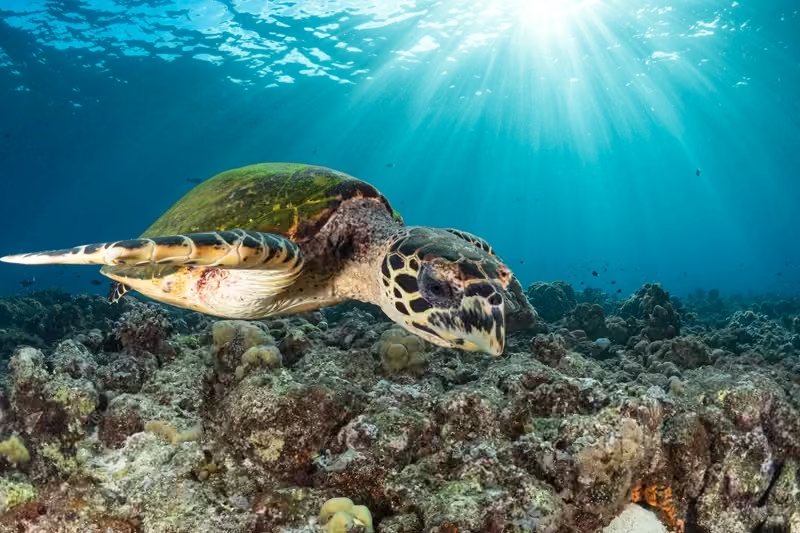
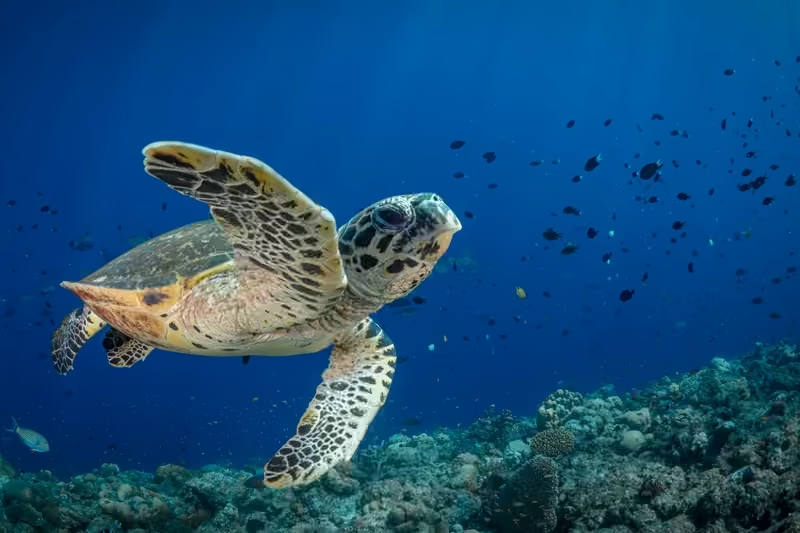
Hawksbill sea turtles in Maui, called honuʻea or ʻea in Hawaiʻi, are rare, endangered turtles found in coastal waters. Look for a narrow, pointed beak, two pairs of scales between the eyes, and shell plates that typically overlap. Size and color alone aren’t reliable identification clues. Most turtles visitors see around Maui are Hawaiian green sea turtles, so a hawksbill encounter is a special surprise rather than an expected part of a snorkel trip.
Main takeaways:
- Hawaiian name: Hawksbill sea turtles are called honuʻea or ʻea in Hawaiʻi
- Rarity: Hawksbills are much rarer in Maui than Hawaiian green sea turtles
- Best ID clue: Look for a narrow, birdlike beak, overlapping shell plates, and a patterned amber-brown shell
- Where they may appear: Hawksbills may be seen near coral reefs, rocky ledges, and reef edges, but sightings aren’t guaranteed
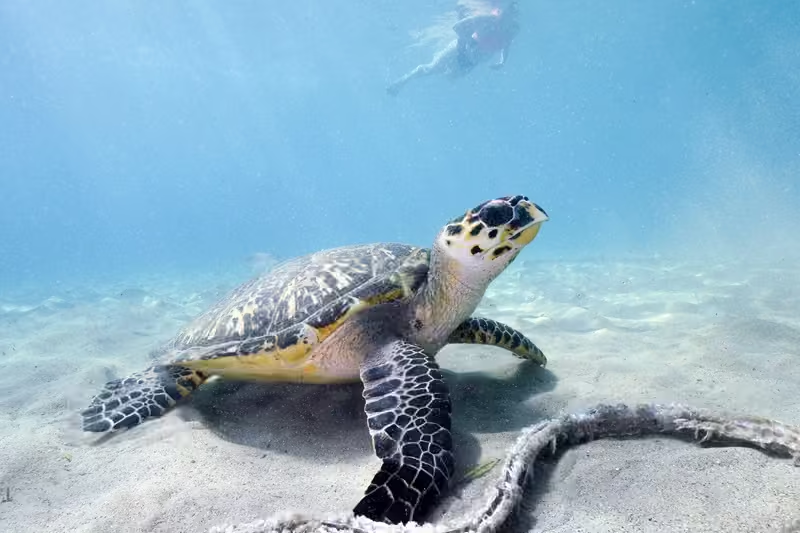
- Wildlife rule: Keep at least 10 feet away, don’t touch turtles, and never block their path
- Snorkeling tip: Float calmly, keep your fins away from coral, and let turtles move naturally through the reef
Seeing a sea turtle while snorkeling in Maui can be a highlight of your vacation. Most turtles you’ll encounter are Hawaiian green sea turtles, but the much rarer hawksbill, called honuʻea or ʻea, also lives in Hawaiian waters. Learning a few identification clues makes reef watching even more interesting, whether you spot a hawksbill or enjoy watching a familiar honu.
Hawksbill Sea Turtle Quick Facts
Here’s a simple look at hawksbill sea turtles in Maui, including how rare they are, how to identify them, and how to view them respectfully if you’re lucky enough to see one.
| Topic |
Details |
| Common name |
Hawksbill sea turtle |
| Hawaiian name |
Honuʻea or ʻea |
| Scientific name |
Eretmochelys imbricata |
| Conservation status |
Endangered under the U.S. Endangered Species Act and Critically Endangered on the global IUCN Red List |
| How common in Maui |
Rare. Most turtle sightings around Maui are Hawaiian green sea turtles, not hawksbills |
| Best ID clues |
Narrow, pointed beak; two pairs of scales between the eyes; shell plates that typically overlap; and a serrated rear shell edge, especially in younger turtles |
| Similar turtle |
Hawaiian green sea turtles are more common. Look for a rounder head, one pair of scales between the eyes, and shell plates that don’t overlap |
| Where they may appear |
Coastal reefs and rocky areas used for feeding and shelter, but sightings aren’t guaranteed |
| Best viewing mindset |
Enjoy all reef life instead of snorkeling only to find one rare turtle |
| Safe viewing distance |
Keep at least 10 feet away from all sea turtles in Hawaiʻi |
| What not to do |
Don’t touch, chase, feed, crowd, ride, or block a turtle’s path |
| If one approaches |
Stay calm, float still, and give the turtle room to swim, rest, or surface naturally |
| Snorkeling tip |
Move slowly, keep your fins away from coral, and let reef wildlife behave naturally around you |
Note: A hawksbill encounter is a special bonus, not an expected part of a snorkel trip. Use several identification clues together, and never approach a turtle for a closer look.
What Is A Hawksbill Sea Turtle
The hawksbill sea turtle (Eretmochelys imbricata) gets its name from its narrow, pointed, hawk-like beak. That mouth helps it reach food tucked into crevices in the reef.
Hawksbills eat mostly sponges in many parts of the world, but their diet in Hawaiʻi is more varied. Hawaiian hawksbills feed on sponges, algae, and other marine life, including small invertebrates. They use coastal reefs and rocky habitats for feeding and shelter.
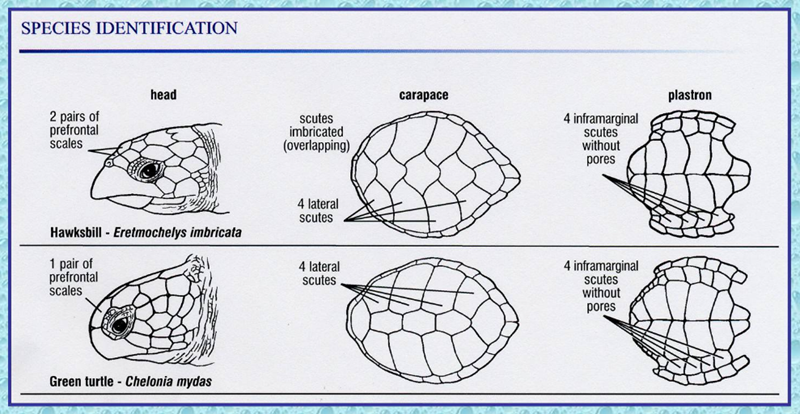
To identify them, look at several features together rather than relying on size or shell color alone. The comparison below explains what to watch for.
How Big Do Hawksbill Turtles Get?
An adult hawksbill is a substantial animal, even if it looks graceful underwater. NOAA describes mature hawksbills as roughly 2 to 3 feet in shell length and weighing about 100 to 150 pounds. Hatchlings start out just 2 to 3 inches long and are mostly brown.
They’re also long-lived. Scientists estimate hawksbills can live 50 years or more, although their exact lifespan remains uncertain. Size varies with age, so it’s an interesting fact, but not a reliable way to distinguish a hawksbill from a green turtle.
From Nest To Ocean: A Hawksbill’s Life
A hawksbill’s story begins on a sandy beach. Females typically come ashore at night to lay their eggs, returning to the general area where they hatched decades earlier. A female may lay several nests during a nesting season, but she doesn’t necessarily nest every year.
Each nest can contain around 130 to 160 eggs. After roughly two months developing in the sand, the hatchlings emerge and make their way toward the ocean. Beach lighting matters during this journey because artificial lights can lead them away from the water.
Hawksbills grow slowly, taking an estimated 20 to 35 years to reach reproductive maturity. That long journey from hatchling to nesting adult helps explain why protecting turtles at every life stage matters.
Are Hawksbill Sea Turtles Found In Maui?
Yes, hawksbill sea turtles live in Maui’s coastal waters, but sightings are uncommon. Most turtles visitors see are green sea turtles. NOAA has described greens as outnumbering hawksbills by about 100 to one across Hawaiʻi, although that isn’t a prediction for any particular reef or trip.
Hawaiʻi also supports a very small hawksbill nesting population. Annual nesting counts don’t represent the entire population because females don’t necessarily nest every year and monitoring can miss remote sites.
Enjoy a hawksbill encounter as an unexpected bonus, not something you need to find to have a wonderful snorkel day.
Why Hawksbill Turtles Are So Rare In Hawaii
Hawksbills recover slowly and face several overlapping threats. In Hawaiʻi, protecting both their coastal habitat and nesting beaches is especially important.
- Slow recovery: Hawksbills take decades to mature, so losing breeding adults can have lasting effects.
- Fishing gear and marine debris: Hooks, nets, and discarded line can injure or entangle turtles.
- Nesting beach disturbance: Development, shoreline lighting, and obstacles on the sand can interfere with nesting and hatchlings.
- Predators: Introduced animals can threaten eggs and hatchlings.
- Habitat changes: Damage to feeding areas and nesting beaches adds pressure to an already small population.
Historically, hawksbills were also hunted extensively for their patterned shells. Protecting the turtles that remain gives future generations a better chance to encounter them.
Hawksbill Vs. Green Sea Turtles In Maui
Most turtles visitors see around Maui are green sea turtles,
but knowing a few differences makes reef watching even more
interesting. Compare several features together rather than
relying on size or shell color alone.
| Feature |
Hawksbill Sea Turtle |
Green Sea Turtle |
| Hawaiian Name |
Honuʻea or ʻea |
Honu |
| How Common In Maui |
Rare and much less commonly encountered by snorkelers.
|
Much more common and the turtle most visitors are likely to see.
|
| Head And Beak |
Narrow head with a pointed, birdlike beak.
|
Rounder head with a shorter, less pointed beak.
|
| Scales Between The Eyes |
Two pairs of prefrontal scales.
|
One pair of prefrontal scales.
|
| Shell Clues |
Shell plates typically overlap like shingles.
The rear edge can look serrated, especially in younger turtles.
|
Shell plates meet without overlapping.
Adults generally have a smoother shell edge.
|
| Diet In Hawaiʻi |
A varied diet that includes sponges, algae,
and other marine life.
|
Primarily algae and seagrasses after the early life stages,
although they may also eat some animal foods.
|
| Typical Habitat |
Coastal reefs and rocky areas used for feeding and shelter.
|
Coastal feeding and resting areas, including reefs,
algae-rich shallows, and some beaches.
|
| Beach Basking |
Not typically seen basking on Maui beaches.
|
Known for resting on beaches in Hawaiʻi.
A basking turtle isn’t necessarily stranded.
|
Viewing tip: Use features you can see from a
respectful distance or in an existing photo. Don’t approach
for a closer identification check. Give either species at least
10 feet of space, and never touch, feed, chase, or block its path.
Where Hawksbill Turtles May Be Spotted In Maui Waters
Hawksbills have been documented around Maui and Molokini, but past sightings don’t make a location a reliable place to find one. These turtles use coastal reefs and rocky areas for food and shelter, and you can’t predict an individual encounter.
Choose your snorkel outing for the reef scenery, overall marine life, and conditions rather than a promise of finding honuʻea. Most turtle encounters around Maui involve green sea turtles, which are wonderful to watch in their own right.
Responsible Turtle Viewing: Protecting Maui’s Wildlife
Whether you spot a hawksbill or a green turtle, give it room to go about its day.
- Stay at least 10 feet away, and give more space if your presence changes the turtle’s behavior.
- Don’t touch, feed, chase, surround, or block its route to the surface.
- Avoid hovering directly above it.
- Use your camera’s zoom rather than swimming closer.
- If a turtle approaches, stay calm and allow it a clear path. Don’t follow it.
Spotted a turtle in trouble? Report an injured, entangled, stranded, or dead turtle to the NOAA Marine Wildlife Hotline at (888) 256-9840. Don’t attempt to untangle or move it yourself; follow the responder’s instructions.
Got an identification photo? Consider sharing a photo taken from a respectful distance with HIhawksbills. Don’t approach or follow a turtle to get more photos.
A Rare Part Of Maui’s Underwater World
You don’t have to spot a hawksbill to have a memorable day on Maui’s reefs. Colorful fish, coral formations, and a passing honu offer plenty to enjoy. Knowing how to recognize honuʻea simply adds another reason to keep your eyes open.
If one crosses your path, give it space and enjoy the moment without following it. That unexpected glimpse is special enough on its own! 🐢
Sources & Updates
Want to learn more about Maui’s rare honuʻea? These resources cover hawksbill identification, Hawaiian feeding habits, conservation, and respectful turtle viewing.