Snorkeling With Kids in Maui: A Parentâs Guide by Age and Ability
January 30th, 2026
| Maui SnorkelingMolokini Planning Guides
Written by the Maui Snorkeling team, operating Molokini Crater, Turtle Town, and Coral Gardens tours out of Maalaea (MÄÊ»alaea) Harbor since 1985. Tours are led by USCGâlicensed captains aboard a USCGâinspected passenger vessel.
Last updated August 10, 2026
Quick Answer
Snorkeling with kids in Maui works best when readiness and comfort come before distance. Every child entering the water must be able to swim independently, remain calm face-down in deep water, and follow instructions. Properly fitting flotation can reduce effort for a capable swimmer, but it does not replace those abilities or accompanying-adult supervision. Keep sessions short and let your child stop when theyâre ready.
Main Takeaways:
Best goal: Focus on comfort, confidence, and short snorkel sessions
Best gear: Use a well-fitting mask, mineral sunscreen, a dry warm layer for the boat ride, and properly fitting flotation when appropriate
Best conditions: Calm water, light wind, and good visibility make snorkeling easier for kids
Best safety rule: Keep children close and under an accompanying adultâs supervision, stay within their comfort level, and ask the crew about current conditions before entering the water
Best mindset: Donât force a long snorkel. A short, happy experience can help kids love the ocean
Snorkeling with kids can feel like a big leap, especially if this is their first ocean adventure. With the right plan, it can be calm, confidence-building, and memorable. Think clear readiness standards, short sessions, properly fitting gear, frequent breaks, and a crew that knows how to support families.
This guide walks you through a low-pressure approach for children of different ages and abilities, and for parents who want a clear plan before getting on the boat.
A childâs ticket category determines how you book, but age alone does not determine whether they are ready to enter the water. Anyone who snorkels must be able to swim independently, remain calm while face-down in deep water, and follow crew instructions.
Childâs Age
Tour Ticket
Ready To Snorkel When
Best Parent Plan
Ages 0â3
Infant: A ticket is required. Ages 3 and under have no base fare, but the $1 ocean stewardship fee still applies.
They meet the same independent swimming and deep-water comfort requirements as every other guest. An infant ticket does not indicate water readiness.
Plan for the child to enjoy the boat as a passenger or observer. If the child remains aboard, a responsible adult in your party should stay with them.
Ages 4â7
Child: The child ticket category covers ages 4â12.
They can swim independently in deep water, stay calm while face-down, and follow crew instructions. Pool confidence alone may not equal ocean confidence.
Practice before the trip, keep the first attempt short, and return to the boat if the child becomes cold, nervous, tired, or unwilling to continue.
Ages 8â12
Child: The child ticket category covers ages 4â12.
They meet every swimming and deep-water comfort requirement. Flotation can reduce effort, but it does not replace swimming ability.
Choose a boat tour or beach session based on the childâs actual ocean experience. Stay close, use a buddy system, and schedule breaks before fatigue begins.
Ages 13â17
Youth: The youth ticket category covers ages 13â17.
They can swim independently, remain calm in deep water, and follow instructions. Age and physical size do not replace water competence.
Choose the morning or afternoon tour based on stamina and boat comfort. Keep a buddy nearby, take breaks, and make it clear that opting out is always acceptable.
Important: Being old enough to book is not the same as being ready to snorkel. No previous snorkeling experience is required, but every person entering the water must meet the swimming and deep-water comfort requirements. Children must have a responsible adult with them at all times. Standard snorkel gear and flotation are included, but full-face snorkel masks are not allowed. Other booking categories are Adult, ages 18â64, and Senior, ages 65â99.
Why Snorkeling Can Be Great For Kids
Kids do not need previous snorkeling experience, but every child entering the water must be able to swim independently, remain calm face-down in deep water, and follow instructions. An accompanying adult must supervise them at all times. In fact, younger children often have the best reactions, wide eyes, happy giggles, and that unforgettable moment when they spot their first fish. When done right, snorkeling helps kids:
Feel confident in the water
Learn respect for the ocean
Experience wildlife up close in a gentle way
Build positive travel memories early
The key is comfort over distance and support over speed.
Start With Warmth: Happy Kids Stay In Longer
Warmth is one of the most overlooked details when snorkeling with young kids, but itâs often the difference between a quick dip and a joyful experience.
Why Warmth Matters
Kids lose body heat faster than adults. Even in Mauiâs warm ocean, a child who feels chilly will want out quickly, and once theyâre cold, the fun stops.
How To Keep Kids Warm
A thermal wetsuit can help retain warmth. A rash guard provides sun protection, but it is not equivalent to a thermal wetsuit.
Morning conditions are often calmer, but weather and ocean conditions are never guaranteed.
Boat breaks let kids warm up between swims
Bring a towel and a dry shirt or hoodie for the boat ride
Children love snorkeling in warm water. They'll float longer, smile more, and are excited to get back in! See our Best Time to Snorkel Maui guide.
Flotation Is Confidence
Properly fitting flotation can help a capable swimmer conserve energy and feel more comfortable, but it does not make a non-swimmer ready for deep water.
Ask What Is Available For Your Child
Ask the crew what flotation is available on your trip and whether the available fit and weight range are suitable for your child. Do not assume a specific flotation type or child size will be available.
Flotation does not replace independent swimming ability, comfort in deep water, or close supervision by an accompanying adult.
Breaks Are Part Of The Plan
Snorkeling with kids works best when thereâs no pressure to âstay in longer.â
Short Sessions Work Best
Kids donât need long swims to have an amazing experience. A few minutes of spotting fish is often better than pushing too long.
Break Ideas That Keep Them Excited
Snack and water breaks on the boat
Shade time between snorkel sessions
Watching other snorkelers from the deck
Talking about the fish they just saw
When kids know breaks are built in, theyâre more willing to jump back in happily.
Parent Comfort And Backup Plan
Use this quick guide when cold, fatigue, or changing conditions affect your childâs comfort. If your child decides not to enter or re-enter the water, see âWhat If My Child Wonât Get In?â
Family Situation
Best Parent Approach
Backup Plan
Child Gets Cold
Bring a towel, rash guard, dry shirt, and hoodie. Towels are not provided, and wetsuits are available to rent onboard for $10, subject to change.
End the snorkel session, dry off, use available shaded seating, and warm up with food or a drink.
Child Gets Tired
Use short snorkel sessions and return to the boat before fatigue becomes distress.
Use available shaded seating, take a bathroom, food, or water break, and only try again if the child feels ready.
Conditions Feel Uncomfortable
Ask the crew about current conditions and skip water entry if either you or your child feels unsure.
Stay aboard, use available shaded seating, watch the scenery, and treat snorkeling as optional.
Note: A short, comfortable swim is enough. End the session before discomfort becomes distress, and never pressure a child to continue.
What If My Child Wonât Get In?
Your child can stay aboard. They can use available shaded seating, eat or drink, watch the water and scenery, and decide whether they want to try again later. If timing and conditions allow them to try later, they must still be able to swim independently, remain calm face-down in deep water, and follow crew instructions. Do not pressure a nervous, cold, tired, or unwilling child to enter the water.
Plan adult coverage before the boat leaves the harbor. A responsible adult in your party should remain aboard with a child who stays out of the water.
Two adults: Rotate snorkeling time so one adult stays with the child while the other enters the water.
Solo parent or adult: Be prepared to skip snorkeling and remain aboard if your child chooses not to enter.
Crew members can help with equipment and answer safety questions, but crew support does not replace parental supervision or provide childcare. Do not plan for the crew to watch your child while you snorkel.
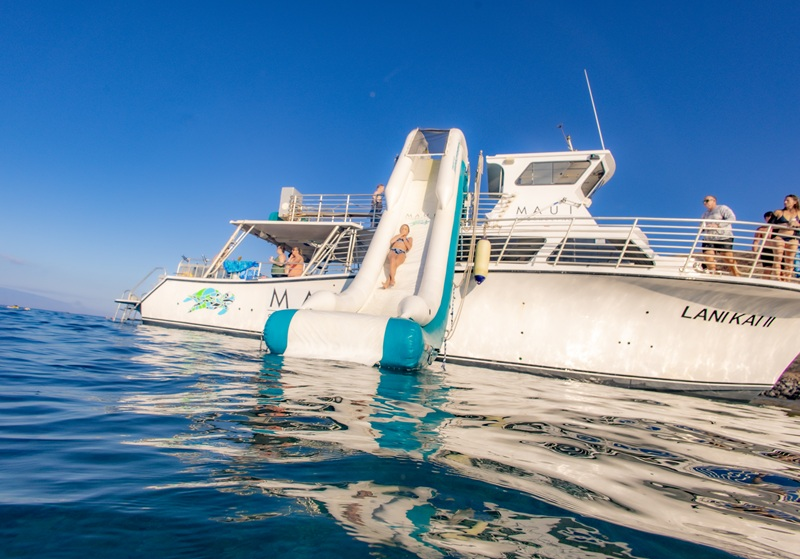
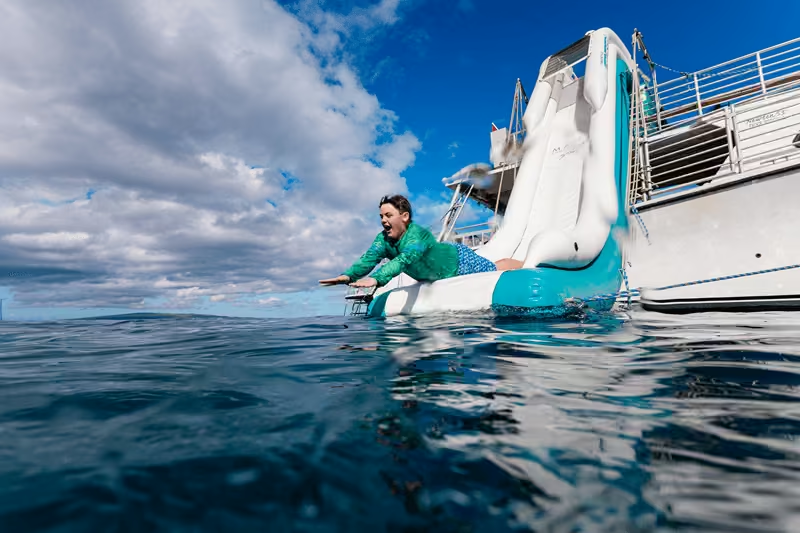
The waterslide is not a dry alternative. It requires water entry and may not be deployed on every trip. The Lani Kai II does not have a glass-bottom viewing room, so children who stay aboard will watch from the deck rather than through an underwater viewing area.
Crew Help Makes All The Difference
Even the most prepared parents appreciate having extra support when snorkeling with young kids.
Why A Supportive Crew Matters For Families
This is where a family-friendly snorkel tour really shines. A great crew doesnât just guide, they reassure, encourage, and assist. That's exactly what we do!
Look for crews who:
Help kids enter and exit the water
Adjust masks and snorkel gear patiently
Offer guidance during water entry and exit
Celebrate small wins (first fish, first float!)
Crew members can assist with equipment, water entry and exit, and general safety guidance. They do not provide childcare or replace the accompanying adultâs responsibility to supervise the child at all times.
Choosing A Kid-Friendly Snorkel Spot in Maui
Location matters just as much as preparation when snorkeling with children. For calm beginner bays plus boat-only options, see our Best Places to Snorkel in Maui guide.
Protected Water Beats Big Adventure
Snorkel areas with calm conditions can work well for children who meet the swimming requirements. Look for:
Less current
Clear visibility
Shallow reef areas
Plenty of colorful fish
This makes snorkeling feel more like floating in a giant aquarium than swimming in the open ocean. Read our Morning vs Afternoon Snorkeling in Maui guide for more information.
Setting Expectations
A little advance communication goes a long way toward making the day enjoyable for everyone.
Talk It Through Before You Get On The Boat
Let kids know:
They donât have to snorkel the whole time
If they meet the swimming requirements, itâs okay to keep the first swim short and stay close to their supervising adult.
The crew can help with equipment and safety questions
Most reef fish keep their distance
For parents, remember: every child warms up at their own pace. Some jump right in. Others take a few minutes, and thatâs perfectly okay.
Family Tour Logistics At A Glance
Both public tours include the core facilities and gear families need, but meal timing differs and several child-specific details should be confirmed before booking.
Available On Both Public Tours
Shaded seating areas and an open sun deck
Two onboard restrooms and a freshwater rinse
Snorkeling gear, flotation, and child-sized masks, fins, and snorkels
Meals and drinks
Meals And Familiar Food
The morning tour includes breakfast and lunch
The afternoon tour includes lunch
Families may bring familiar food and drinks
Vegetarian and gluten-free selections require advance planning
Warmth And What To Pack
Towels are not provided, so bring a towel
Pack a dry shirt or hoodie and a familiar snack
A rash guard provides sun protection, but it is not equivalent to a thermal wetsuit
Wetsuits are available to rent onboard for $10, subject to change
Gear And Water Rules
Full-face snorkel masks are not allowed
Flotation can reduce effort, but it does not replace independent swimming ability or deep-water comfort
An accompanying adult remains responsible for supervising the child at all times
Booking Details And What To Confirm
Published policy: Youth tickets cover ages 13â17. Cancel or reschedule at least 24 hours before the scheduled start. Cancellations within 24 hours are nonrefundable.
Confirm directly before relying on these details:
Available child wetsuit sizes
Flotation types, sizing, and weight ranges
Stroller and child-carrier rules
Diaper-changing options onboard
Whether a shaded seat is guaranteed for every guest
Morning Tour Vs. Afternoon Tour Vs. Beach Snorkeling
Choose based on your childâs water readiness, your familyâs stamina, and how important it is to stop early.
Family Consideration
5-Hour Morning Tour
3-Hour Afternoon Tour
Beach Snorkeling
Time And Duration
Check in at 6:30 AM. Tour runs from 7:00 AM to about noon.
Check in at 12:30 PM. Tour runs from 1:00 PM to about 4:00 PM.
Your family controls the start time, duration, breaks, and departure.
Best Family Fit
Ocean-ready children who handle early mornings, longer outings, and boat travel well
Ocean-ready children whose families want a later start and shorter commitment
Families that want maximum flexibility and are prepared to manage gear, conditions, and supervision
Water Setting And Stops
Deep-water boat entry with intended stops at Molokini and Turtle Town, conditions permitting
Deep-water boat entry with one typical stop at Coral Gardens or another nearby reef, conditions permitting
Shore entry. Depth, surf, currents, visibility, and entry difficulty vary by beach and day.
Typical Conditions
Mornings are usually calmer and clearer, but conditions are never guaranteed.
The outing is shorter, but afternoon wind and surface conditions can be less predictable.
Check current warnings and speak with a lifeguard before anyone enters.
Food And Drinks
Breakfast, lunch, and drinks are included.
Lunch and drinks are included.
Bring all food and drinks unless you have verified nearby facilities.
Shade And Bathrooms
Shaded seating, open sun deck, two onboard restrooms, and freshwater rinse
Facilities and natural shade vary. Verify restrooms, showers, and shade before leaving.
Flotation And Warmth
Snorkel gear and flotation are included. Wetsuits are available to rent onboard for $10, subject to change. Bring a towel and dry warm layer.
Bring or rent properly fitting gear, suitable flotation, towels, warm layers, and sun protection.
If A Child Stays Dry
Plan for a responsible adult to remain aboard with the child until the boat returns.
The same adult plan applies, but the total outing is shorter.
One adult can remain ashore, and two adults can usually rotate more easily.
Note: Tour destinations, timing, waterslide use, and wildlife sightings depend on weather, ocean conditions, visibility, and the captainâs safety assessment.
Safety and Reef Rules For Kids (And Parents)
A calm snorkel is a safe snorkel. These simple rules keep your family comfortable, confident, and respectful of Mauiâs reef.
Check Conditions Before Anyone Gets In
If the water looks rough, skip it (thereâs always another day)
Ask the crew (or a lifeguard at the beach) what the ocean is doing right now
Choose protected water whenever possible; kids do best in gentle conditions
Yes, some children under 8 can snorkel if they can swim independently, remain calm face-down in deep water, follow instructions, and stay under the supervision of an accompanying adult. Keep the first snorkel short, and let your child stop whenever theyâre ready.
There isnât one perfect age. Readiness matters more than age: a child should be able to swim independently, remain calm face-down in deep water, and follow instructions. A child who does not meet those requirements should stay out of the snorkeling water.
Every child entering the water should be comfortable in deep water, able to swim independently, remain calm while floating face-down, and follow instructions. Flotation and close adult supervision remain important, but they don't replace those abilities.
Kids should wear a well-fitting swimsuit, rash guard, mineral sunscreen, and a comfortable mask. A towel, hoodie, or dry shirt is also helpful for warming up on the boat between swims.
Start small. A 5 to 10 minute snorkel can be a great first win for a young child. Short sessions with breaks help kids stay happy, warm, and excited instead of tired or overwhelmed.
A family-friendly boat tour can be a good choice because the crew can help with snorkel gear, water entry and exit, and information about current conditions. Parents remain responsible for supervising their children, and every child entering the water must meet the swimming and deep-water requirements. Beach snorkeling gives families more timing flexibility, but parents need to check the surf, wind, visibility, entry points, and currents before entering.
Kids may see sea turtles while snorkeling in Maui, but sightings are never guaranteed. If you do see a turtle, give it plenty of space, donât chase it, and let it swim naturally.
Final Thoughts: Calm, Supported, And Totally Worth It
For children who meet the swimming and deep-water requirements, snorkeling in Maui can be a rewarding family experience. Warmth, short sessions, built-in breaks, and close adult supervision help keep the day comfortable and low-pressure.
You donât need perfection, just a plan that puts comfort first.
If youâre ready for a snorkeling experience designed with families in mind, weâd love to welcome you aboard the Lani Kai II! đđ
Sources & Updates
Use these trusted resources to confirm snorkeling safety, ocean conditions, water quality, wildlife viewing rules, and Maui sunscreen requirements before you head out with kids.