Best Waterfalls In Maui 2026: Road To Hana Stops And Epic Hikes
April 17th, 2026
| Hikes & Land Adventures
Written by Maui Snorkeling, operating tours to Molokini Crater, Turtle Town, and Coral Gardens from Māʻalaea Harbor since 1985. Tours are led by USCG-licensed captains aboard a USCG-inspected passenger vessel.
Last updated October 7, 2026
Quick Answer
The best waterfalls in Maui range from roadside views to beautiful rainforest hikes. For a relaxed waterfall day, choose a few stops that fit your route instead of trying to see everything. Check access rules and weather before heading out, leave plenty of time for the return drive, and enjoy the waterfalls from open trails and designated viewing areas.
Main takeaways:
Best Waterfall Hike: Waimoku Falls via the Pīpīwai Trail. This moderately strenuous, four-mile round-trip hike deserves about 3 to 4 hours for an unhurried visit.
Best Scenic Break: Puaʻa Kaʻa combines a short waterfall walk with restrooms and picnic space, making it a convenient Road to Hāna stop.
Best Beyond-Hāna Photo Stop: Wailua Falls is visible from the road toward Kīpahulu. Stop only where parking is permitted, and keep the bridge and traffic lanes clear.
Best Early Road To Hāna Stop: Twin Falls’ lower falls offer a shorter walk. Check parking and access rules before visiting, and remember that the first Saturday of each month is reserved for Hawaiʻi residents.
Keep Plans Flexible: If heavy rain, flood alerts, or closures affect your route, save the waterfall stops for another day. Clear-looking water doesn’t guarantee safe swimming.
If “see a waterfall” is on your Maui wish list, you’re in luck. Maui’s got everything from easy roadside cascades you can admire in five minutes to full jungle hikes where you earn the view (and the banana bread).
This guide covers Maui's best waterfalls, what’s actually worth your time, and how to visit safely and respectfully so you have a great day and don’t become the person blocking a one-lane bridge.
Waterfall Safety In Maui: Read This First
Waterfalls are beautiful, but they’re not theme parks. Maui waterfall conditions can change fast, especially after rain.
Quick Safety Rules That Save Vacations
Do not stop on bridges or in the road to take photos. Use legal pullouts only.
Do not trespass for “secret” waterfalls. If it’s marked private or closed, skip it.
Enjoy the waterfalls from the trail or designated viewing area. Hawaiʻi’s Department of Health advises against swimming or wading in freshwater streams and ponds because of leptospirosis. Clear water doesn’t rule out that risk.
Check the weather beyond your immediate surroundings. Rain upstream can cause a sudden rise in water, even when it’s sunny nearby. Skip waterfall trails during heavy rain or flood alerts, and never cross a flooded stream.
Wear shoes with grip. Wet rock is basically nature’s slip-and-slide.
Respect signage. If it says no entry, no swimming, or closed, it means today is not the day.
Compare these Maui waterfalls by location, access, walking time, and facilities to find the stops that fit your trip.
Waterfall
Location & Access
Visit Details
Practical Notes
Twin Falls
Area: Near the start of the Road to HānaAccess: Shorter walk to the lower falls; the upper route is longer and more uneven
Time: About 30 to 60 minutes for a lower-falls visitTrails: Check which routes are open when you arrive
Parking: $10 per vehicle; designated lot only, first-come, first-servedFirst Saturday: Reserved for Hawaiʻi residents each monthRestrooms: Portable toilets
Upper Waikani Falls
Area: East Maui, Road to HānaAccess: Roadside viewing, subject to permitted parking and pedestrian access
Time: About 10 to 15 minutes if a permitted stop is availablePlan: Keep this an optional sight along the drive
Parking: Very limited; keep the bridge and traffic lanes clearViewing: Don’t climb down informal paths to the poolsRestrooms: None
Hanawi Falls
Area: East Maui, Road to HānaAccess: Roadside viewing, subject to permitted parking and pedestrian access
Time: About 5 to 10 minutes if a permitted stop is availableBest For: Rainforest scenery along the route
Parking: Don’t assume roadside gaps are legal spaces; follow signs and keep the bridge clearRestrooms: None
Puaʻa Kaʻa Falls
Area: Puaʻa Kaʻa State Wayside on Hāna HighwayAccess: Short walk within the wayside park
Time: About 15 to 30 minutesHours: Daylight hours; check park alerts before visiting
Entrance Fee: NoneRestrooms: YesBest For: A scenic picnic and restroom break
Wailua Falls
Area: Beyond Hāna, toward KīpahuluAccess: Roadside viewing without descending to the pool
Time: About 10 to 20 minutes if parking and access allowBest For: A waterfall photo on the drive beyond Hāna
Parking: Limited and often busy; use permitted spaces and keep the bridge clearRestrooms: None
Waimoku Falls
Area: Haleakalā National Park’s Kīpahulu DistrictAccess: Four-mile round-trip hike on the Pīpīwai Trail
Difficulty: Moderately strenuousElevation Gain: About 800 feetTime: Allow 3 to 4 hours for an unhurried hike
Admission: National park entrance fee or valid pass requiredRestrooms: At the visitor center areaViewing: Stay at the designated viewpoint and respect barriers
Makahiku Falls Overlook
Area: Haleakalā National Park’s Kīpahulu DistrictAccess: One-mile round-trip hike on the Pīpīwai Trail
Terrain: Uphill sections and uneven footingTime: About 1 hour
Admission: National park entrance fee or valid pass requiredRestrooms: At the visitor center areaRoute Tip: You’ll pass this overlook on the full hike to Waimoku Falls
Honokōhau Falls
Area: West Maui MountainsAccess: Aerial sightseeing when the route and weather allow
Hiking: Not a standard visitor hikeTime: Tour-dependent
Before Booking: Confirm the flight duration and whether Honokōhau is on the planned routeWeather: Routes can change, and waterfall views aren’t guaranteed
Note: Times are planning estimates and don’t include the drive between stops. Check current access and weather before leaving, and remember that a roadside waterfall doesn’t always have a permitted place to park. Stay on open trails and use designated viewing areas.
Twin Falls
Best Waterfalls On The Road To Hana
If you want the biggest concentration of waterfalls in one day, the Road to Hana is the main event. You’ll see jungle valleys, roadside falls, and quick hikes that feel like you stepped into a movie.
Twin Falls: Best Early Stop With A Short Walk
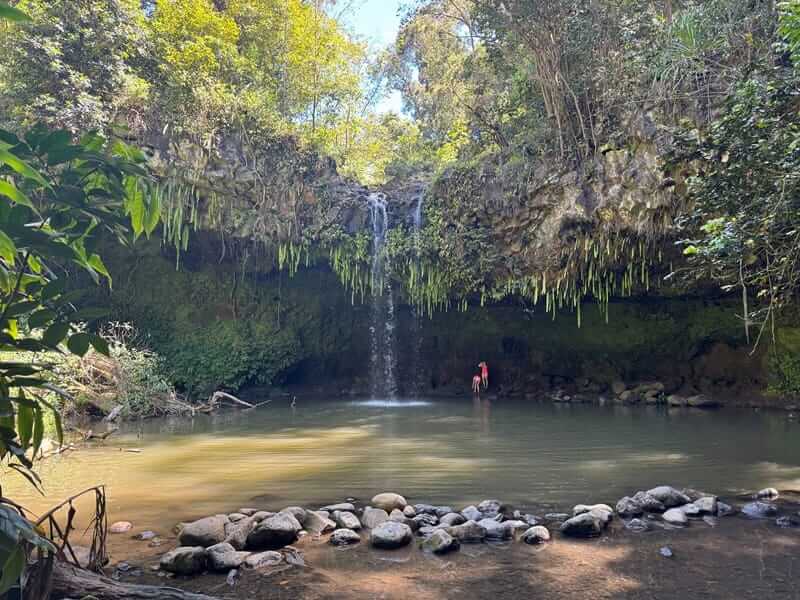
Twin Falls is one of the first popular waterfall stops on the Road to Hana. It’s a great warm-up because it’s close to the beginning of the route and doesn’t require a huge commitment.
Access: The lower falls are closest to the entrance. The upper falls involve a longer walk over uneven terrain and may include stream crossings, so check which trails are open when you arrive.
Time needed: Allow about 30 to 60 minutes for a shorter visit, with extra time if you’re exploring farther along the open trails.
Parking: Parking is $10 per vehicle in the designated lot and is first-come, first-served. Roadside parking, walk-ins, and rideshare drop-offs aren’t allowed.
Hours: Gates open at 7:10 a.m., last entry is at 4:30 p.m., and visitors must leave by 5 p.m. Weather and staffing can affect these hours.
Before you go: The first Saturday of each month is reserved for Hawaiʻi residents. If you’re visiting from out of state, choose another day.
Facilities: Portable toilets and a farm stand are available.
Planning to make this your first waterfall stop? Read our full Twin Falls Maui guide for parking, hours, farm stand tips, and waterfall safety.
Upper Waikani Falls: Best Roadside View (If You Do It Safely)
Upper Waikani Falls (often called “Three Bears”) is one of the most photographed roadside waterfalls on Maui. You’ll usually spot it right from the road.
Good To Know: The road is narrow here. Do not stop in the lane or block traffic. If there’s no safe pullout, keep going.
Access: Treat Upper Waikani as a roadside sight, not a waterfall hike. Don’t climb down from the bridge or follow informal paths toward the pools.
Time Needed: 10 to 15 minutes.
Parking: Don’t count on a parking space here. Only stop where parking is permitted, and you can stay clear of traffic. Otherwise, continue along the route.
Restrooms: None.
Best For: An iconic Road to Hāna photo with almost no hiking.
Hanawi Falls: Best “Wow” Moment From The Car
Hanawi Falls adds a beautiful burst of rainforest scenery to the Road to Hāna. Enjoy it as a possible roadside sight rather than a guaranteed stop, since parking and pedestrian access are limited.
Good To Know: Treat it as a scenic viewing stop, not an “I’m going to scramble around” stop
Access Type: Roadside bridge viewpoint.
Time Needed: 5 to 10 minutes.
Parking: A roadside gap isn’t necessarily a legal parking space. Follow posted restrictions, keep the bridge clear, and continue driving if there isn’t a permitted place to stop.
Restrooms: None.
Best For: Rainforest drama and a quick scenic break.
Pua’a Ka’a Falls: Best Easy Stop With Restrooms
Pua’a Ka’a is a classic Road to Hana wayside stop. It’s a convenient place to stretch your legs, use the restroom, and enjoy a small waterfall setting without a long hike.
Good To Know: State parks can have closures or construction, so it’s smart to check official updates before you go
Access Type: Easy state-park stop with a short walking path.
Time Needed: 15 to 30 minutes.
Parking Reality: One of the easier legal pull-in stops on the Road to Hāna.
Restrooms: Yes.
Best For: A bathroom break, picnic stop, and easy waterfall view in one place.
Wailua Falls: A Scenic Stop Beyond Hāna
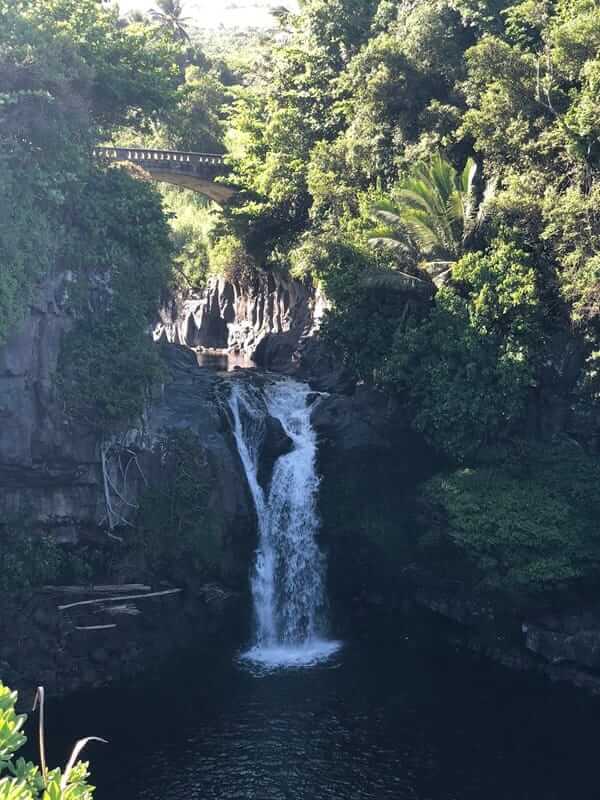
Wailua Falls sits beyond Hāna on the drive toward Kīpahulu, making it a natural addition if you’re already continuing to the national park. The waterfall is visible from the road, so you don’t need to hike down to its base to appreciate the view.
Good To Know: Be cautious with parking and traffic flow, especially on busy days
Access: Roadside viewing. Enjoy the waterfall without scrambling down informal paths or approaching the pool below.
Time Needed: 10 to 20 minutes.
Parking: Space is limited and can be busy. Follow posted signs, park only where permitted, and keep the bridge and travel lanes clear.
Restrooms: None.
Best For: A classic near-Hāna waterfall photo with low effort.
Wailua Falls
Best Waterfall Hikes In Maui
If you want the kind of waterfall you remember for years, you’ll usually have to hike a bit. The good news is that Maui’s most famous waterfall hike is also one of the most rewarding.
Waimoku Falls: Best Waterfall Hike In Maui
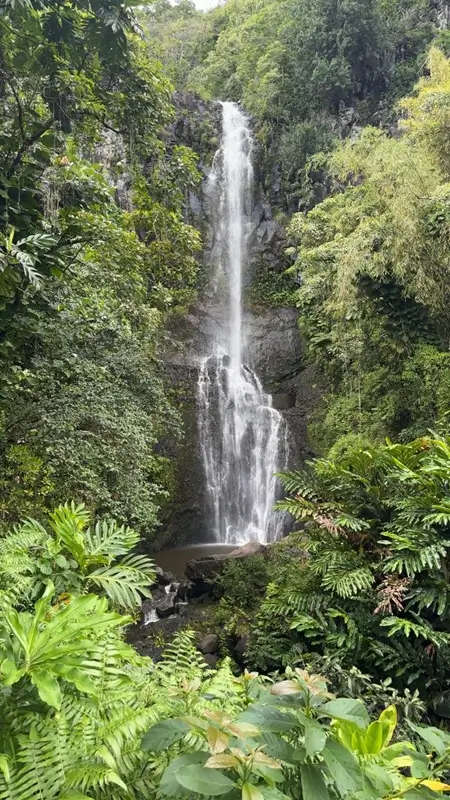
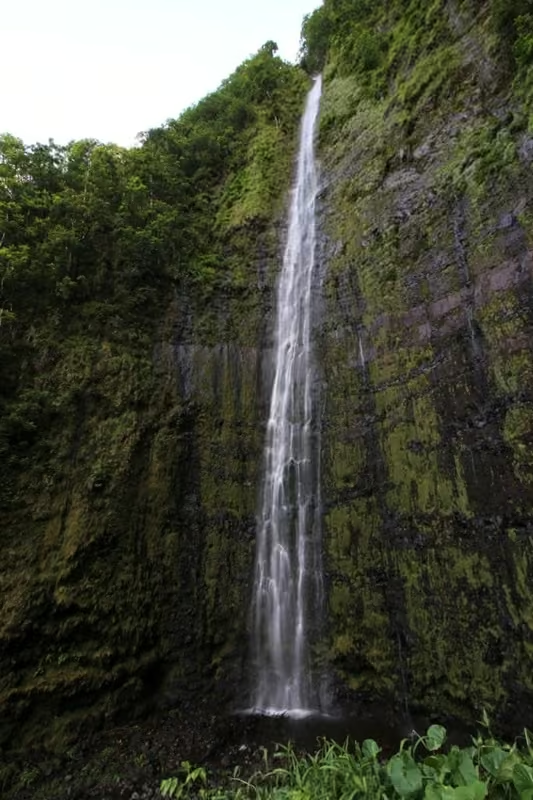
Waimoku Falls is the headliner. You reach it via the Pipiwai Trail in the Kīpahulu District of Haleakalā National Park. This hike delivers big time: banyan tree, bamboo forest, and then the waterfall viewpoint.
Good To Know: It’s a real hike. Bring water, expect mud, and respect all barriers near the falls
Access: A moderately strenuous, four-mile round-trip hike on the Pīpīwai Trail, with about 800 feet of elevation gain.
Time Needed: Allow 3 to 4 hours for an unhurried hike with photo stops, plus your driving time to and from Kīpahulu.
Parking Reality: Park at the Kīpahulu Visitor Center area and plan on park admission.
Restrooms: Yes, at or near the visitor center and campground area.
Swim: No.
Best For: The biggest earned-wow waterfall experience on Maui.
If you want help planning the full park day (summit vs Kīpahulu, fees, and what to expect), this guide makes it easy: Haleakala National Park Guide.
Makahiku Falls Overlook: Best Shorter Option On The Same Trail
Not everyone wants the full trek to Waimoku Falls. Totally fair. A great compromise is to hike part of the Pipiwai Trail to the Makahiku Falls overlook, then turn back. If you’re hiking all the way to Waimoku Falls, you’ll pass the Makahiku overlook along the same trail, so there’s no need to plan a separate hike.
Good To Know: The trail can still be slick, so take your time
Access Type: 1-mile round-trip hike on the Pīpīwai Trail to an overlook.
Time Needed: About 1 hour.
Parking Reality: Same Kīpahulu Visitor Center area parking as Waimoku; this is a real park stop, not a quick bridge pullout.
Restrooms: Yes, at or near the visitor center and campground area.
Swim: No.
Best For: A shorter rainforest hike with an actual waterfall payoff.
West Maui has lush valleys and dramatic terrain, but many waterfalls here are not easily accessible on foot. The smart approach is to enjoy the views safely, and for the big hidden valleys, consider viewing from above.
Honokohau Falls: Best Seen From The Air
Honokohau Falls is one of the most dramatic waterfall sights in West Maui, and most visitors see it on a helicopter tour. If a flight is in your budget and you want that “Jurassic Valley” feeling, this is the waterfall moment.
Access Type: Aerial only; there is no standard self-guided hike to it.
Time Needed: Tour-dependent.
Parking Reality: You are parking for a helicopter operator, not at the waterfall itself.
Restrooms: Tour-operator dependent.
Swim: No.
Best For: A bucket-list aerial view and dramatic West Maui scenery.
Worth It If: A helicopter tour is already on your shortlist.
Skip If: You want a self-guided stop or don't want to spend on an air tour.
If you’re exploring this area by car, use our guide for scenery, viewpoints, and safety tips: West Maui Mountains Guide.
Best Time To See Waterfalls In Maui
Maui’s waterfalls can be beautiful year-round, but their flow changes with recent rainfall. A fuller waterfall isn’t necessarily a better time to visit, since heavy rain can also bring flooding, slippery trails, and closures. Choose a day with suitable weather and open access, give yourself plenty of daylight, and check conditions along your whole route. Morning can help you avoid rushing, but it doesn’t guarantee clear trails or good weather.
What To Pack For A Maui Waterfall Day
Grippy shoes: You’ll thank yourself on wet steps and muddy trails
Bug spray: Rainforest mosquitoes do not play
Light rain layer: Even when it’s sunny in town, it can be wet in East Maui
Water and snacks: The drive is long, and you don’t want to be hangry on a one-lane road
Dry bag or zip bag: Phones and keys stay happier dry
If waterfalls are part of a bigger Maui itinerary, our Maui Packing List covers the rest of the essentials for beaches, snorkeling, Haleakalā, hiking, and everyday island travel. And if you want to travel in a way that’s better for the island (and honestly just feels better), this is worth a quick read before you go: Visit Maui Responsibly in 2026.
How To Pair Waterfalls With Snorkeling
A lot of visitors do Maui in “adventure days.” Waterfalls one day, snorkeling the next. It’s a perfect balance because the Road to Hana is a long day, and you’ll love having a relaxing ocean day after.
If you’re building your itinerary, here are two easy snorkel options:
If you want the most memorable “wow” factor, Waimoku Falls via the Pipiwai Trail is a top pick because the hike itself is part of the experience (bamboo forest included).
Puaʻa Kaʻa is a convenient option for a short waterfall walk and restroom break. Twin Falls’ lower falls are also close to the entrance, though you’ll need designated-lot parking and should check current access rules. Some waterfalls are visible from the road, but that doesn’t always mean there’s a permitted place to stop.
We recommend enjoying Maui’s waterfalls from open trails and designated viewing areas. Hawaiʻi’s Department of Health advises against swimming or wading in freshwater streams and ponds because of leptospirosis. Flash flooding, slippery rocks, and falling debris are additional concerns, and calm-looking water doesn’t guarantee safe conditions. Always follow posted restrictions.
There isn’t one reservation system covering Maui’s waterfalls. Twin Falls parking is first-come, first-served, and the first Saturday of each month is reserved for Hawaiʻi residents. Other stops have their own access rules, fees, or closures, so check the places you plan to visit before leaving.
Maui’s waterfalls can be worth visiting throughout the year, though their flow varies with rainfall. Rather than planning around the heaviest rain, choose suitable weather and open access for the places you want to see. Allow plenty of daylight, and keep your itinerary flexible if trail or road conditions change.
Bring grippy shoes, water, snacks, bug spray, and a light rain layer. East Maui can be wet even when the resort areas are sunny.
Final Thoughts
The best waterfalls in Maui aren’t just about the biggest drop. They’re about the whole vibe: jungle air, winding roads, surprise viewpoints, and that feeling of finding something wild and beautiful. Start early, drive patiently, stay on legal paths, and pick the stops that fit your day. Maui will handle the rest.
Sources & Updates
Before your waterfall day, use these resources to check trail access, park and parking rules, road updates, and freshwater safety guidance. Conditions can change, so keep your plans flexible and follow posted signs.