Written by
Maui Snorkeling, operating tours to Molokini Crater, Turtle Town, and Coral Gardens from Māʻalaea Harbor since 1985. Tours are led by USCG-licensed captains aboard a
USCG-inspected passenger vessel.
Quick Answer: Trumpetfish in Maui sightings are common around reef structure, where these long, “stick-shaped” fish hover close to coral and sometimes swim vertically to camouflage. They’re harmless to snorkelers and fun to spot once you know to scan reef edges and look for slow, stealthy movement.
Main Takeaways:
- How To Identify: Long body, tube-shaped snout, slow hovering movement
- Classic Behavior: Swimming vertically near coral to blend in
- Where To Look: Reef edges where coral meets sand or rubble
- Not Dangerous: Harmless to snorkelers, they hunt small reef fish
- Photo Tip: Approach slowly and wait for the vertical “stickfish” pose
If you’ve ever been snorkeling in Maui and spotted what looks like a floating stick with a face, you’ve probably met a trumpetfish. These long, skinny reef hunters are masters of blending in, and once you learn their “tells,” you’ll start seeing them everywhere.
They’re not flashy like a parrotfish or famous like a turtle. But trumpetfish are one of the coolest “wait, what was that?” sightings on a Maui reef.
Trumpetfish in Maui Quick Facts
Here’s a simple look at trumpetfish in Maui, including how to identify them, why they swim vertically, where snorkelers usually spot them, and what makes them such sneaky reef hunters.
| Topic |
Details |
| Common name |
Trumpetfish, sometimes nicknamed “stickfish” because of the long straight body |
| Scientific name |
Aulostomus chinensis |
| Hawaiian name |
nūnū |
| Best ID clues |
Long slender body, tube-shaped snout, and slow hovering movement close to reef structure |
| Signature behavior |
Often swims vertically near coral or rocks to camouflage itself before hunting |
| Where you’ll notice them |
Around reef edges, coral heads, and places where coral meets sand or rubble |
| Typical habitat |
Clear, shallow rocky and coral reef areas where they can blend into structure |
| What they eat |
Small reef fish and shrimp |
| Hunting style |
Slow stalking, stealthy hovering, then a quick suction strike through the long snout |
| Danger to snorkelers |
None. Trumpetfish are harmless to people and are focused on tiny prey, not swimmers |
| Easy look-alike clue |
Cornetfish often look even longer and usually show a noticeable tail filament, while trumpetfish tend to stay closer to reefs and may swim vertically |
| Best photo tip |
Move slowly, stay off the reef, and wait for a side profile or the classic vertical pose near coral |
| Snorkeler tip |
Scan slowly along reef edges and look for “a stick that seems a little too perfect” |
Note: Trumpetfish are easy to miss on your first few snorkels because they rely on camouflage more than speed. Once you learn their body shape and vertical pose, you’ll start noticing them much more often around Maui reef structure.
What Is A Trumpetfish
A trumpetfish is a reef fish with an elongated body and a tube-like snout that works like a high-speed vacuum when it hunts. Instead of chasing prey like a speed demon, it prefers the “stand still, look innocent, then surprise snack” approach.
On Maui, you’ll most often see the Indo-Pacific trumpetfish (Aulostomus chinensis). You might also hear the Hawaiian name nūnū used for trumpetfish.
Trumpetfish are part of the family Aulostomidae and are known for their long tubular snouts, small isolated dorsal spines, a dark mark along the upper jaw, and tiny dorsal and anal fins set far back on the body.
Why Trumpetfish Swim Vertically
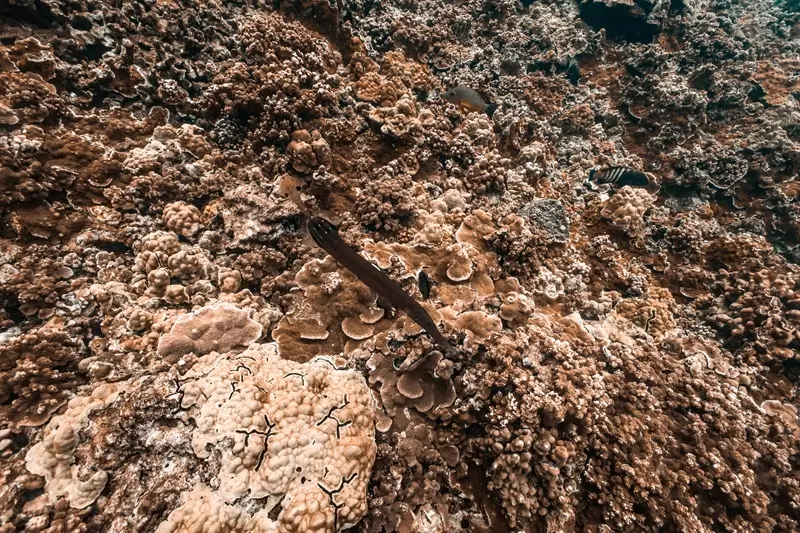
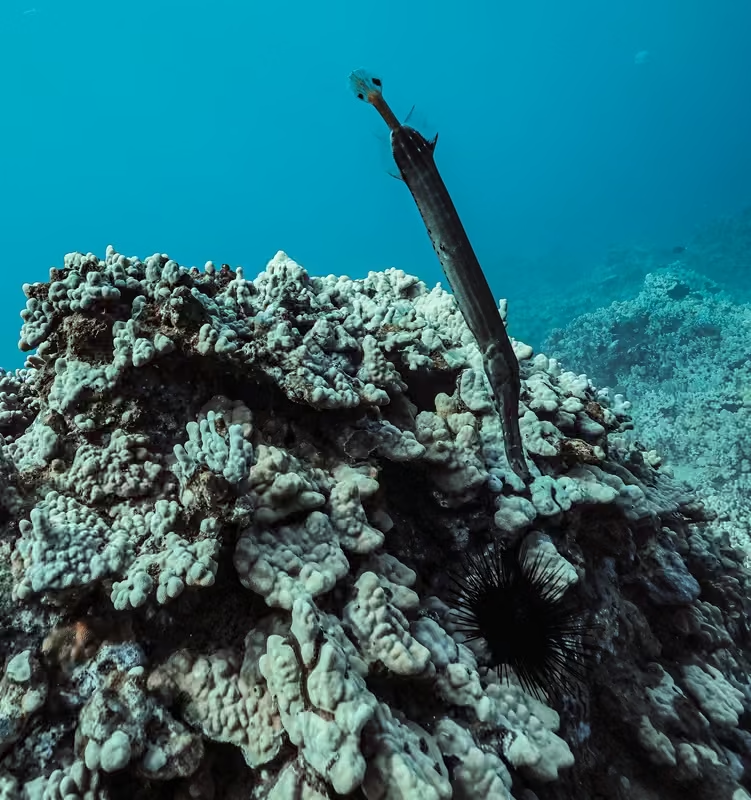
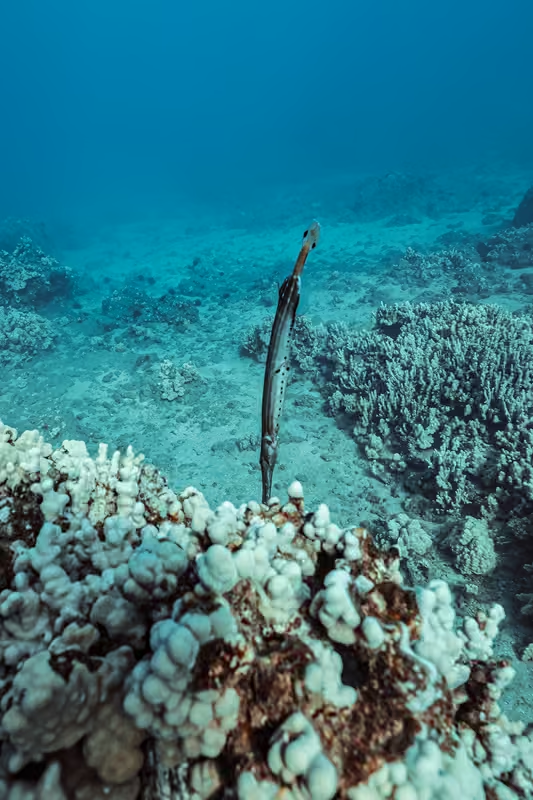
This is one of their signature moves. A trumpetfish will sometimes tilt its head downward and hover vertically near coral or rocks. It’s not showing off. It’s hiding in plain sight.
Why This Works So Well
- Camouflage: Vertical posture helps it blend in with coral branches and reef texture
- Stealth: Small fin movements let it hover without making a big splashy scene
- Ambush Positioning: It can line up a quick strike when a smaller fish drifts too close
Next time you’re snorkeling, look for the “weird vertical stick” near coral heads. That’s usually the giveaway.
How Trumpetfish Hunt
Trumpetfish are stalking predators. They move slowly, get close, then do a quick lunge and inhale prey with a sudden mouth expansion. It’s fast, sneaky, and honestly kind of impressive.
Their Sneakiest Trick
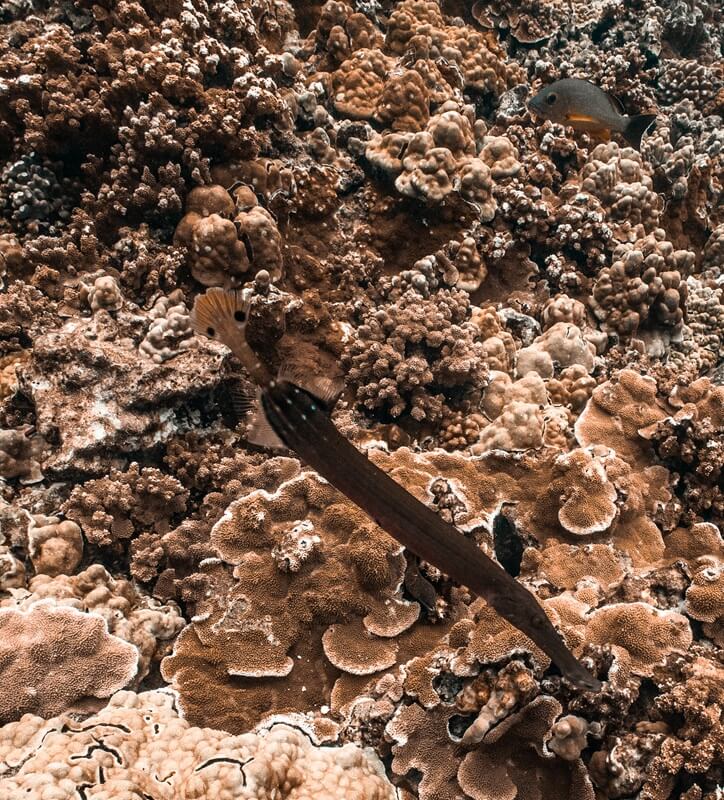
Sometimes, trumpetfish will use other fish as cover. You might see one hanging near larger reef fish, especially grazing fish, because it can sneak closer to smaller prey without getting noticed. It’s basically reef-level hide-and-seek. They may even shadow larger herbivorous fish as moving cover while they sneak closer to smaller prey.
How To Spot A Trumpetfish While Snorkeling In Maui
If you want to reliably spot trumpetfish, don’t just stare into the blue water and hope for magic. Use a simple scan method.
The Easy “Spot The Stick” Checklist
- Scan the reef edge: Look where coral meets sand or rubble
- Look closely at the structure: They often hover right next to coral or rocks
- Watch for slow motion: If something long is moving very slowly, that’s a clue
- Check vertical shapes: A vertical fish near coral is often a trumpetfish
- Color Clue: Often reddish brown or tan, sometimes with dark spots, or darker markings that help blend into the reef
If you want more “what am I looking at?” help, this pairs perfectly with our fish ID guides:
Trumpetfish vs. Cornetfish In Maui
These two long, skinny reef fish get mixed up all the time. Use this simple comparison to tell what you’re seeing while snorkeling in Maui.
| Feature |
Trumpetfish |
Cornetfish |
| Overall look |
Long and stick-like, usually hovering close to reef structure
|
Long and whip-like, often looking even more stretched out
|
| Tail tip |
No long tail filament
|
Usually has a long thread-like tail filament
|
| Chin clue |
Small chin barbel under the snout
|
No chin barbel
|
| Signature behavior |
May swim vertically near coral to camouflage
|
Usually stays horizontal and glides more openly
|
| Where snorkelers notice them |
Near coral heads, reef edges, and reef structure
|
Above reef or over sand where the long body stands out more
|
| Best instant ID tip |
If it looks like a vertical stick near coral, think trumpetfish
|
If you notice a trailing tail string first, think cornetfish
|
Note: The easiest fast clue is usually the tail. If you can clearly see a long trailing filament, you’re probably looking at a cornetfish, not a trumpetfish.
See Our Full Guide to Long Skinny Fish In Maui
Are Trumpetfish Dangerous
Nope. Trumpetfish aren’t dangerous to snorkelers. They’re interested in small reef fish and shrimp, not humans in masks doing awkward fin kicks.
Your main job is the same as with all reef wildlife: keep your distance, don’t chase, and don’t touch.
How To Photograph A Trumpetfish Without Spooking It
Trumpetfish are one of the best “slow subject” fish for underwater photos, as long as you approach them the right way.
Photo Tips That Work
- Approach slowly: If you rush, it’ll slide away like a ghost
- Stay off the reef: Don’t plant fins or hands on coral to get the shot
- Aim for eye-level: Side profiles show off the snout and body shape
- Wait for the vertical pose: That’s the iconic trumpetfish look
Final Thoughts
Trumpetfish are one of Maui’s coolest “once you see it, you can’t unsee it” reef fish. Look for the long stick shape, the slow hover near coral, and the classic vertical pose. Then enjoy the moment, because you just spotted one of the reef’s sneakiest hunters doing its thing.
Sources & Updates: We keep this guide updated, but marine life information can evolve as new research is published. Before you snorkel, confirm current safety guidance and ocean conditions using the official resources below.