Road To Hana Guide (2026): Best Stops By Mile Marker
July 5th, 2024
| Hikes & Land AdventuresTrip Planning & Logistics
Written by Maui Snorkeling, operating tours to Molokini Crater, Turtle Town, and Coral Gardens from Māʻalaea Harbor since 1985. Tours are led by USCG-licensed captains aboard a USCG-inspected passenger vessel.
Last updated September 28, 2026
Quick Answer:The Road to Hana is a full-day adventure through East Maui, with waterfalls, coastal views, tropical gardens, and tempting snack stops along the way. Start early, choose a few favorites, and build your day around your Waiʻānapanapa reservation so you can enjoy the scenery without rushing the drive back.
Main Takeaways:
Simple One-Day Route: Start in Paʻia, choose one early stop, visit Keʻanae, add Puaʻa Kaʻa if time allows, then enjoy Waiʻānapanapa and lunch in Hāna before heading back
Choose Your Early Stop: Pick Twin Falls for a waterfall walk, Garden of Eden for tropical plants and viewpoints, or Hoʻokipa for coastal scenery
Book Ahead: Non-Hawaiʻi residents need advance Waiʻānapanapa entry reservations, plus parking if arriving by car. Same-day reservations aren’t available
Planning for Kīpahulu: Make the Kūloa Point Trail or Pīpīwai Trail a planned part of your day and choose fewer stops along the way, or book an overnight stay in Hāna ahead of your trip
Before You Go: Check road, weather, and park updates. Park only in designated areas, follow posted warnings, and enjoy the Pools of ʻOheʻo from the trail, not the water
Aloha! The Road to Hana is a full-day drive through East Maui, with waterfalls, coastal viewpoints, food stops, and short rainforest walks along Highway 36 and Highway 360. This guide shows which stops are worth your time, how to plan a realistic one-day itinerary, and what requires an advance reservation.
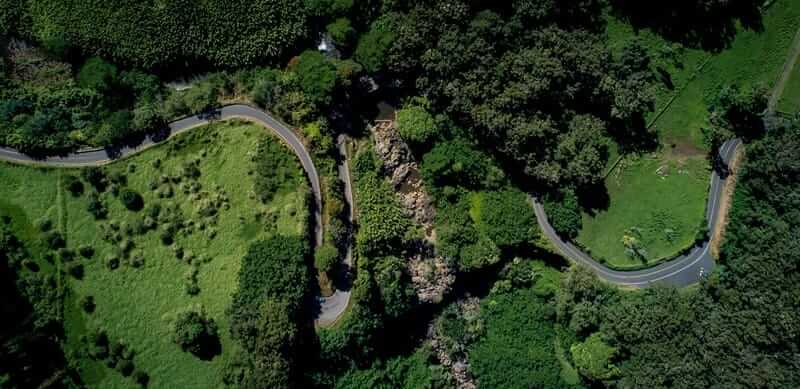
The drive to Hāna takes several hours without sightseeing, but most visitors should plan a full day once stops, meals, short walks, and the return drive are included. Starting early and choosing 5 to 7 priority stops makes the day more enjoyable than trying to see every mile marker.
Reservations & Fees
The Road to Hāna itself doesn’t require a reservation, but advance planning is required for some popular stops. Review the current entry rules, fees, and availability before your drive.
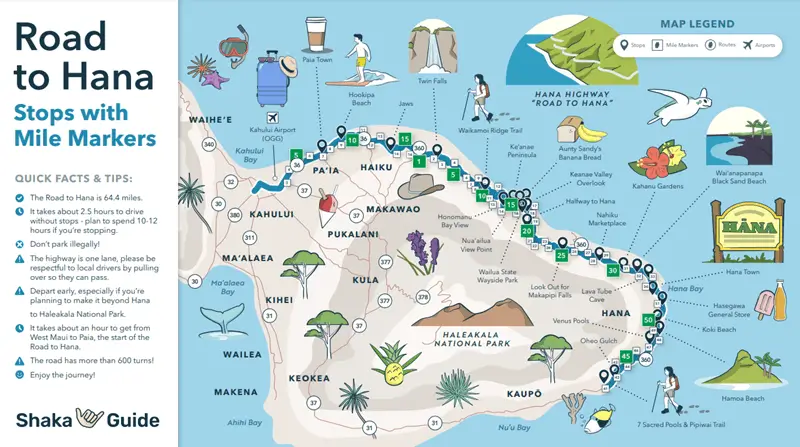
Before you begin on your journey, having a reliable Road to Hana Maui map is essential. A good map will show the many stops along the way. This helps you plan your Road to Hana itinerary and make the most of your time on the road. We recommend that you download an offline map, as cellular service can be spotty in some areas.
Several resources offer interactive Road to Hana maps for Maui, Hawaii. These maps include GPS navigation and detailed information for each stop. Some popular options include the Shaka Guideapp and GuideAlong (GyPSy Guide).
1-Day Road to Hana Itinerary
Planning your first Road to Hāna adventure? Start early, choose a few
favorite stops, and build your day around your Waiʻānapanapa reservation.
This sample itinerary leaves room for coastal views, a banana bread break,
and lunch in Hāna before heading back.
Time
Stop & Location
Plan Your Visit
6:30 to 7:00 a.m.
Start in Paʻia
Grab breakfast, coffee, and snacks, and fill your gas tank
before leaving town. Allow about 30 minutes to get ready
for the drive.
7:15 to 9:00 a.m.
Choose one early stop
Twin Falls: Hwy 360, MM 2
Garden of Eden: Hwy 360, MM 10.5
Hoʻokipa: Hwy 36, MM 9
Choose a waterfall walk, garden visit, or coastal viewpoint,
and allow roughly 45 to 90 minutes. Garden of Eden opens at
8:00 a.m., so time your arrival accordingly. Twin Falls is
reserved for Hawaiʻi residents on the first Saturday of
each month.
9:30 to 10:30 a.m.
Keʻanae Peninsula & Aunty Sandy’s
Turnoff near Hwy 360, MM 16
Enjoy the coastal views and a banana bread break.
Allow 30 to 60 minutes, adding the nearby arboretum only
if you have time. Aunty Sandy’s is closed on Sundays,
but you can still visit the peninsula.
10:45 to 11:15 a.m.
Optional: Puaʻa Kaʻa State Wayside
Hwy 360, near MM 22
Take a 15 to 20 minute break for restrooms, a snack,
and a short look around this leafy wayside park.
Skip this stop if you need more time to reach
Waiʻānapanapa for your reservation.
12:30 to 2:00 p.m.
Waiʻānapanapa State Park
Turnoff near Hwy 360, MM 32
Spend 60 to 90 minutes enjoying the black sand beach,
volcanic coastline, and a short walk.
Non-Hawaiʻi residents need advance entry reservations
and a parking reservation if driving.
For this itinerary, book the 12:30 to 3:00 p.m. time slot
and follow the arrival instructions in your confirmation.
2:15 to 3:00 p.m.
Hāna Town
Hāna area
Enjoy a late lunch, top up your fuel if needed,
and get ready for the return drive.
Allow about 45 minutes.
Around 3:00 p.m.
Begin the return drive
Hāna Highway toward Paʻia
Head back along Hāna Highway, allowing extra time for
traffic and brief breaks. Start back earlier if conditions,
your pace, or the available daylight call for it.
Note: These times are a planning example, not a fixed
schedule. Build your day around the Waiʻānapanapa reservation you
actually book, and leave extra time for traffic, meals, and stops.
Check current road and park notices before setting out.
If you’re running behind, trim optional stops instead of rushing
the drive.
Best Simple Version:
Paʻia → One Early Stop → Keʻanae → Optional Puaʻa Kaʻa →
Waiʻānapanapa → Hāna Town → Return via Hāna Highway
Want more time for Hāna and Kīpahulu? Book an overnight stay ahead of your trip so you can enjoy the area without fitting everything into one day. If you haven’t arranged accommodations, keep enough time for your return drive.
The Road to Hāna can anchor one full day of your trip.
For the rest of your stay, compare more
Maui activities
by area, time commitment, cost, and reservation needs.
Best Road to Hana Stops by Mile Marker
The Road to Hana has many stops. Each one shows a unique view of the island's natural beauty and rich history. The whole drive is stunning, but some stops stand out!
Start in Paʻia: Breakfast, Fuel, & Last-Minute Supplies
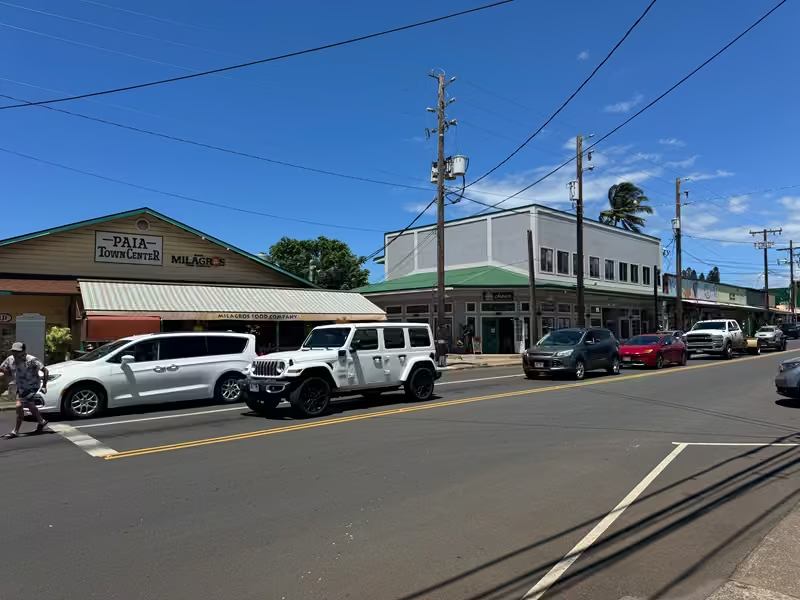
Paʻia is the best place to start the Road to Hana because it lets you handle the basics before the day's scenic part begins. Grab breakfast, coffee, snacks, and a full tank of gas here, then get on the road early while the day still feels easy.
Hwy 36 MM 9 - Hoʻokipa Beach Park
Come here for the coastal views, strong surf, and a classic first look at East Maui before the road gets deeper into the rainforest. Check our Hoʻokipa Beach Park parking and safety guide for current hours, facilities, turtle-viewing guidance, surf information, and tips for deciding whether to stop.
Later in the day, it can also be a good place to look for sea turtles resting on the sand. Think of Hoʻokipa as a lookout stop, not a swim stop.
Wildlife viewing: Keep at least 10 ft/3 m from sea turtles, 50 yards from spinner dolphins, and 100 yards from humpback whales (on water). NOAA guidelines.
Hwy 360 MM 2 - Twin Falls
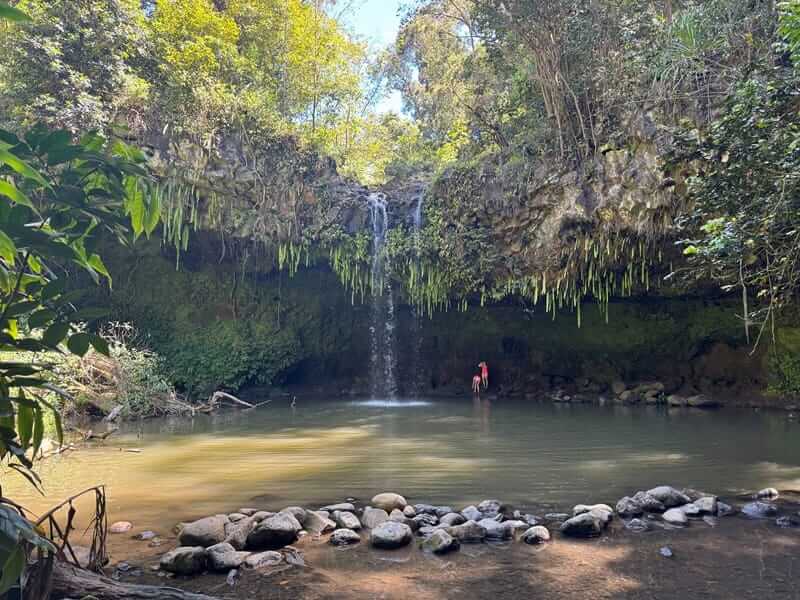
Twin Falls is the classic first waterfall stop on the Road to Hana because it gives you an early rainforest payoff without a major time commitment. If you want one easy waterfall stop near the beginning of the drive, this usually makes the most sense.
The main reason to stop here is to stretch your legs, enjoy a short walk, and get that “we’re really on the Road to Hana now” feeling early in the day. Conditions can change quickly, though, so keep this stop flexible. If it's crowded, muddy, or parking feels stressful, skip it and move on.
For parking rules, hours, swimming safety, and first-visit tips, use our full Twin Falls Maui guide before you go. Planning your visit? The first Saturday of each month is reserved for Hawaiʻi residents. On other visiting days, parking is first come, first served, so keep an alternative stop in mind if the lot is full.
Hwy 360 MM 10.5 - Garden of Eden Arboretum
The Garden of Eden is one of the best-paid stops on the Road to Hana if you want an easy, polished scenic stop instead of another roadside pullout. It's a strong choice for first-timers who want big views, tropical plants, and a comfortable place to slow down without committing to a real hike.
This stop makes the most sense if you prefer viewpoints and landscaped grounds over a more casual waterfall stop like Twin Falls. For many visitors, the Garden of Eden earns its place because the scenery is easy to access and the stop feels more relaxed than some tighter roadside pullouts.
Did you know? Movie fans may recognize Keōpuka Rock, visible from one of the Garden of Eden overlooks, from the helicopter arrival sequence in the original Jurassic Park!
This is one of the best combo stops on the Road to Hāna because you get a scenic detour, an easy rainforest walk, and one of the route’s classic snack stops in the same stretch. Just after mile marker 16, turn left onto Keʻanae Road for the peninsula and Aunty Sandy’s. The Keʻanae Arboretum is about 0.7 miles past mile marker 16 and begins from a short paved access path off the highway.
At the arboretum, expect an easy, relatively flat walk through a tropical forest setting along Piʻinaʻau Stream. The area sits on terraces that were built centuries ago for taro cultivation, and many of the trees are labeled, so it works well as a quick stretch-your-legs stop without turning the day into a real hike.
Then continue down to Keʻanae Peninsula for rugged coastal views and a quieter, more local-feeling stop than some of the busier pullouts on the drive. Aunty Sandy’s serves fresh banana bread Monday through Saturday, with posted hours of 8:30 a.m. to 2:30 p.m., though it can sell out earlier. It’s closed Sundays, so choose another snack stop if that’s your Road to Hāna day. Keʻanae Park has restrooms and water, but the shoreline is not conducive to swimming, so think of this as a scenic snack-and-photos stop rather than a beach stop.
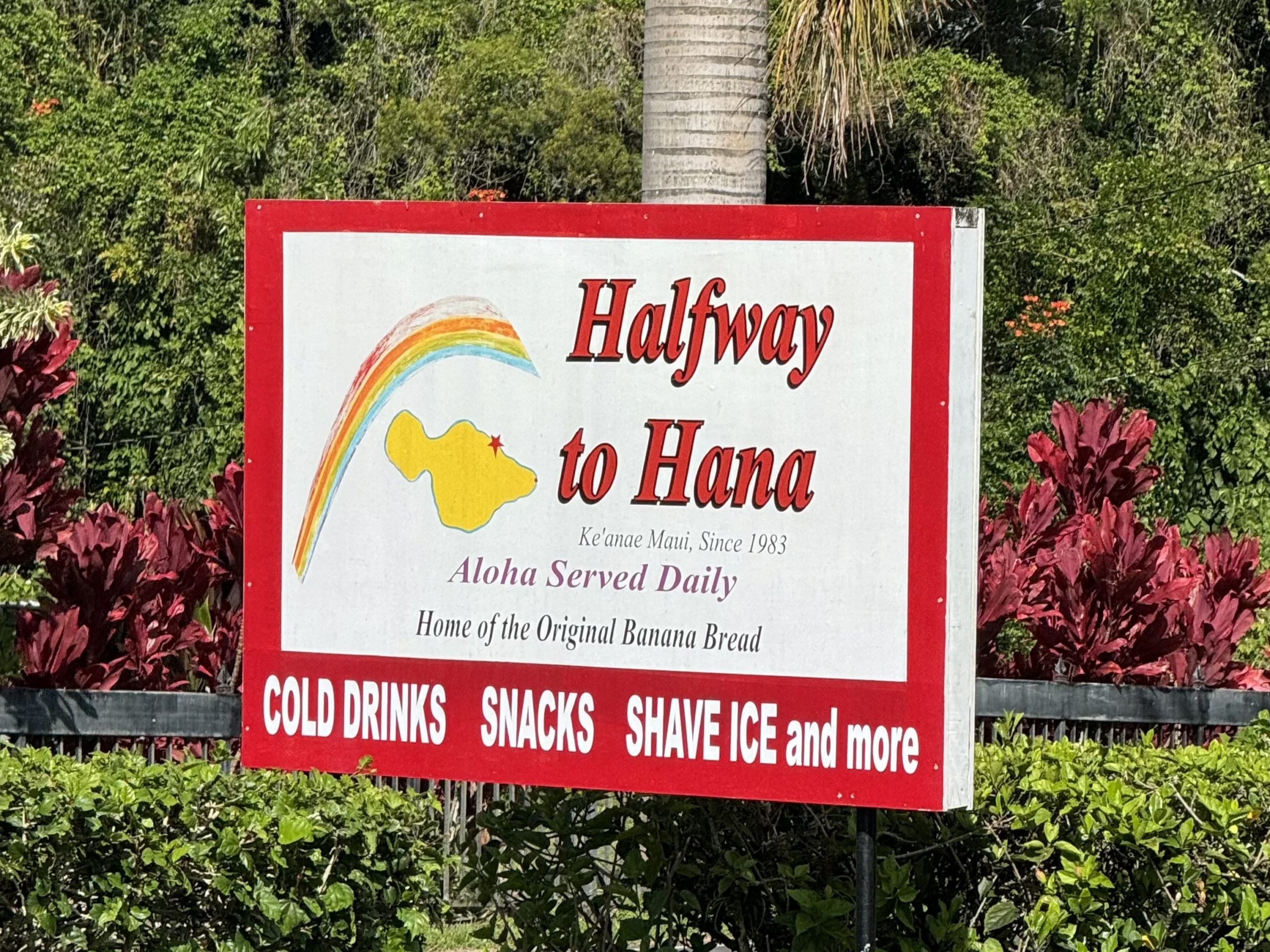
Hwy 360 MM 17 - Halfway to Hana
Halfway to Hana is a classic food stop on the drive. The stand sits at mile marker 17, just past Keʻanae Arboretum, and has been a Road to Hāna staple since 1982. It’s best known for fresh banana bread, but it also serves shave ice, ice cream, sandwiches, and other grab-and-go snacks.
This is a good place to stretch, grab a drink, and take a break from the curves before continuing east. There is a small parking lot, shaded seating, and basic traveler conveniences like trash and recycling.
Hwy 360 MM 18 - Wailua Valley State Wayside
Wailua Valley State Wayside offers views across the valley, taro fields, and mountain backdrop. It’s a lovely place to pause and enjoy East Maui’s scenery.
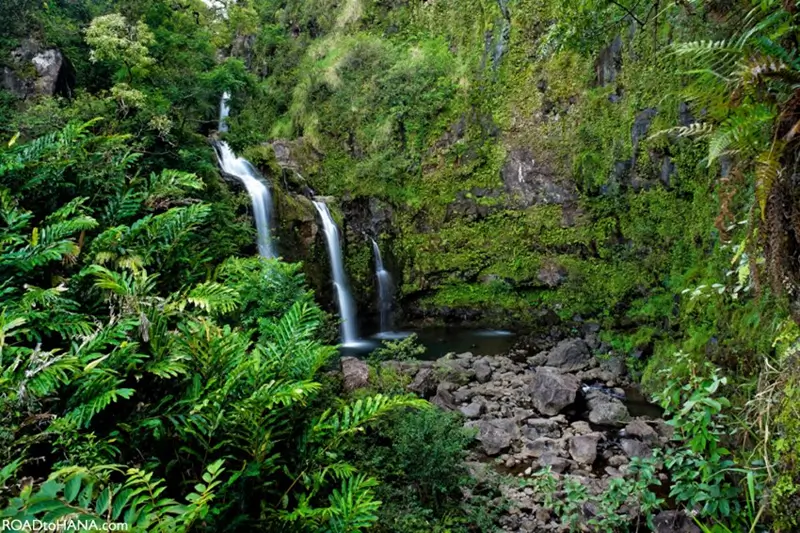
Hwy 360 MM 19 - Upper Waikani Falls (Three Bears)
Upper Waikani Falls, also called Three Bears, is a memorable waterfall sight along Hāna Highway. Treat it as scenery along the drive rather than a planned parking stop. Follow posted no-parking signs, keep the bridge clear, and let passengers enjoy the view while the driver stays focused on the road.
Hwy 360 MM 22 - Puaʻa Kaʻa State Wayside
Puaʻa Kaʻa State Wayside is one of the most practical stops on the drive because it combines rainforest scenery with real traveler basics. This is a daylight-hours wayside with no entrance fee, and the park includes restrooms, picnic tables, trash cans, a walking path, and small scenic waterfalls and pools.
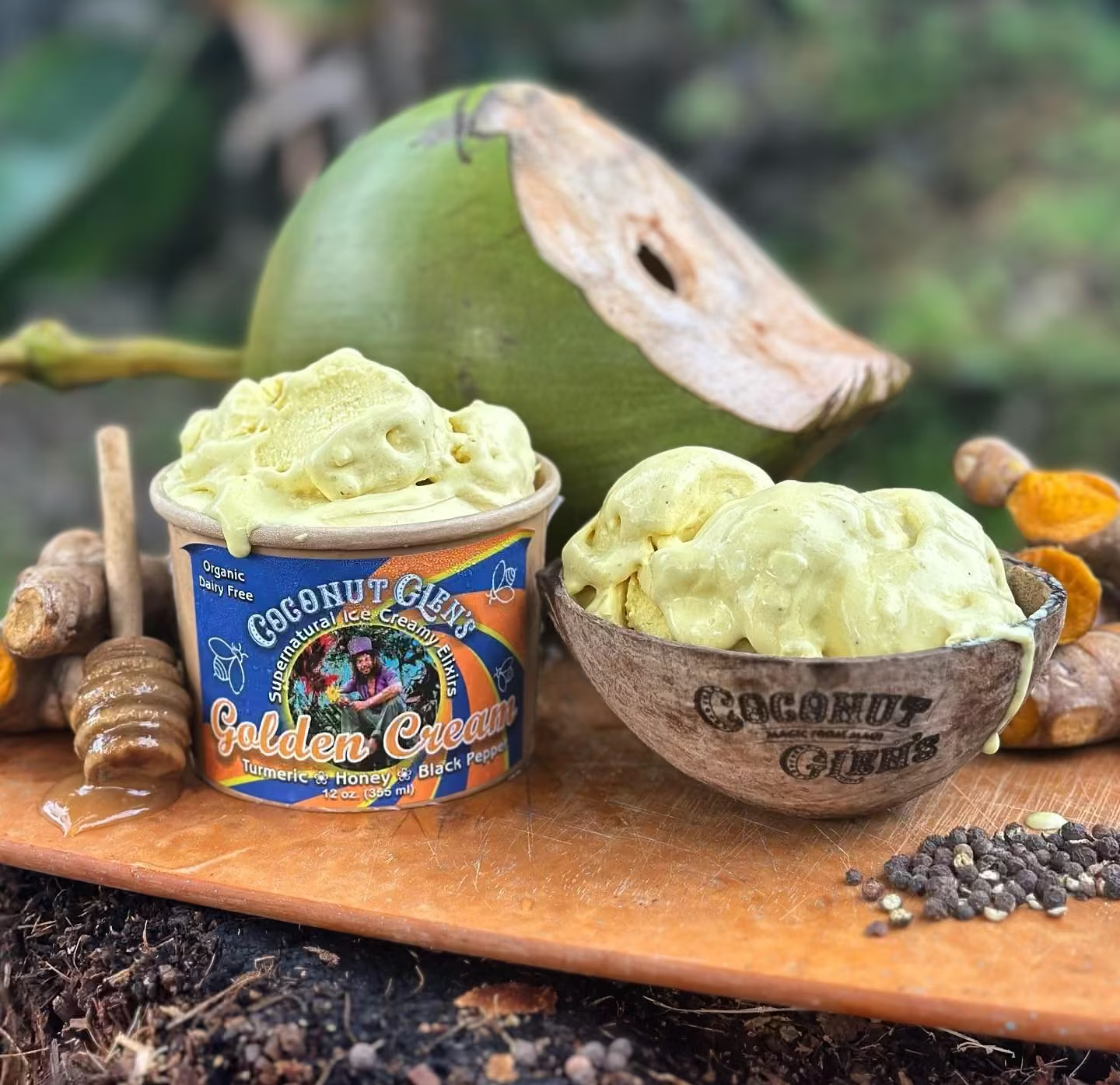
Coconut Glen’s is a fun late-route food stop at mile marker 27 1/2 on Hāna Highway and is best known for dairy-free ice cream made from coconut milk and organic ingredients. If you want something different from banana bread and coffee, this is an easy sweet stop to add before Nahiku and the final stretch into Hāna.
Hwy 360 MM 29 - Nahiku Marketplace
Nahiku Marketplace is a smart stop around mile marker 29, about six miles before Hāna Town, when many drivers are ready for a real break. It's known as a place to stretch, relax, grab coffee or lunch, and browse a few local vendors before continuing east.
Road to Hāna guides describe Nahiku as home to several casual food vendors and covered picnic tables, but hours can vary, so it works best as a welcome food-and-break stop rather than your only meal plan for the day. If you start to feel road fatigue on the last stretch in, this is one of the easiest places to pause.
Hāna Farms is one of the strongest late-route stops because it sits just after mile marker 31 and gives you a clear, easy-to-find place to pause before Hāna. The stand describes itself as a local marketplace on the Road to Hāna, with produce, homemade baked goods, Hāna-made souvenirs, and other locally made food products.
The stop also has a great local backstory: it began with roadside banana bread and grew into a marketplace that now hosts products from more than 15 local suppliers.
Hwy 360 MM 32 - Waiʻānapanapa State Park
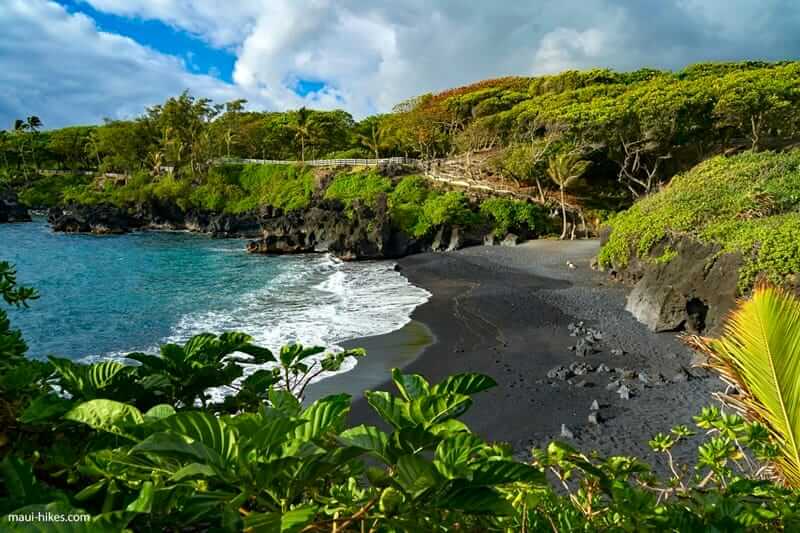
Waiʻānapanapa State Park is one of the signature stops on the Road to Hāna and one of the best places to experience Maui’s dramatic black sand coastline. The main draw is Paʻiloa Beach, but the park also includes sea stacks, blowholes, a natural stone arch, native hala forest, and part of the ancient Ke Ala Loa O Maui/Piʻilani Trail.
This is a great place to slow down, check out the volcanic shoreline, enjoy the coastal views, and, if you have time, explore a short stretch of trail. If you only choose one major scenic stop near Hāna, Waiʻānapanapa is one of the easiest to justify.
Reservation required: Non-resident visitors need advance reservations for entry and parking at Waiʻānapanapa State Park. Reservations can’t be purchased same-day; they must be made at least 1 day in advance and open 30 days ahead at midnight Hawaiʻi Standard Time. During the current improvement project, the eastern day-use and tour-bus parking area is closed, beach access is routed through the park's western end, and road work may require temporary park closures. Reserve here.
Note: Campervan camping reservations remain temporarily unavailable through March 2027 during construction.
By the time you reach Hāna, it helps to think of the town as a practical stop more than a major scenic attraction. This is a smart place to pause for lunch, top off fuel if needed, and decide whether to turn around after Waiʻānapanapa or continue south toward Kīpahulu and the Pīpīwai Trail. The Hasegawa General Store and Hāna Ranch Store are in town, and the Hana Ranch Restaurant, located in the village center, is open daily for lunch. Fuel is also available at Hāna Pit Stop in town.
For a slower-paced visit, book an overnight stay in Hāna before your trip. Hana-Maui Resort and Hana Kai Maui are two options in town. If you’re heading back the same day, enjoy a meal and a break here, then leave enough time for the return drive.
Planning to spend more time after you arrive? Use our complete Hāna Maui guide for beaches, food, town attractions, overnight planning, and things to do near Hāna.
Hāna Area Cultural Stop - Kahanu Garden & Piʻilanihale Heiau
Kahanu Garden offers a quieter way to experience East Maui’s plants and Hawaiian cultural heritage. It’s home to Piʻilanihale Heiau, believed to be Polynesia's largest ancient structure. Give yourself at least an hour to explore and appreciate the setting.
Self-guided visits are currently offered Monday through Friday from 9:00 a.m. to 3:00 p.m., and visitors must leave by 3:30 p.m. Check the garden’s schedule and arrange your visit before heading out, especially if you’re also working around a Waiʻānapanapa reservation.
Hamoa Beach is a lovely spot to stretch your legs, relax on the sand, and enjoy the coastal views. It’s a great place for a scenic beach break during your Hāna visit, rather than a stop to plan around snorkeling.
Note: There’s no county lifeguard here; check hazards and skip the water if surf or currents are up.
MM 45 - Wailua Falls
Wailua Falls is one of the easiest iconic waterfall stops on the beyond-Hāna side because the payoff is high and the effort is low. If you are continuing past Hāna, this is one of the simplest dramatic waterfall views to add to the day.
The goal here is to enjoy the view from a legal pullout, get the photo, and move on without creating traffic or turning the stop into a parking gamble. This is one of those places that is absolutely worth seeing, but only if you can stop cleanly and safely.
MM 42 area - ʻOheʻo Gulch/Kūloa Point Trail
Kīpahulu is one of the best beyond-Hāna add-ons because it gives you a short, scenic stop with a lot more substance than a simple roadside pullout. The Kūloa Point Trail starts near the Kīpahulu Visitor Center, passes a Hawaiian cultural demonstration area, and leads to ocean views and archaeological sites. It's an easy 0.5-mile walk with roughly 80 feet of elevation change, so it is a realistic stop even for travelers who don't want a full hike.
The most important thing here is that this is NOT a swimming stop. The Pools of ʻOheʻo are not accessible due to safety concerns; they should be viewed from the Kūloa Point Trail instead. That makes this stop best for views, photos, and a short walk rather than getting in the water.
Note: Kīpahulu is remote; food and gas are not available in the park, sturdy shoes are recommended, and emergency medical assistance is at least an hour away. Park entrance fees also apply here because Kīpahulu is part of Haleakalā National Park.
MM 42 area - Pīpīwai Trail & Waimoku Falls
If you only do one real hike beyond Hāna, make it the Pīpīwai Trail. It's a moderately strenuous trail in the Kīpahulu District that runs 4 miles round trip with about 800 feet of elevation gain and ends at the Waimoku Falls viewing area. It's a much bigger commitment than a quick scenic stop, but it's also one of the most memorable experiences on this side of the island.
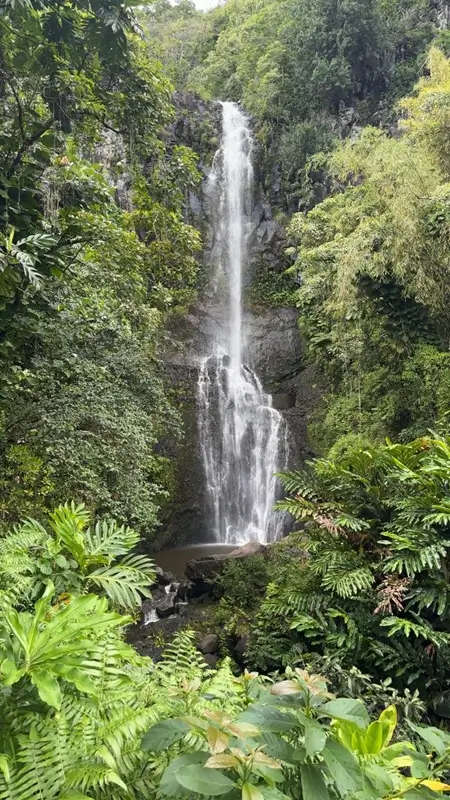
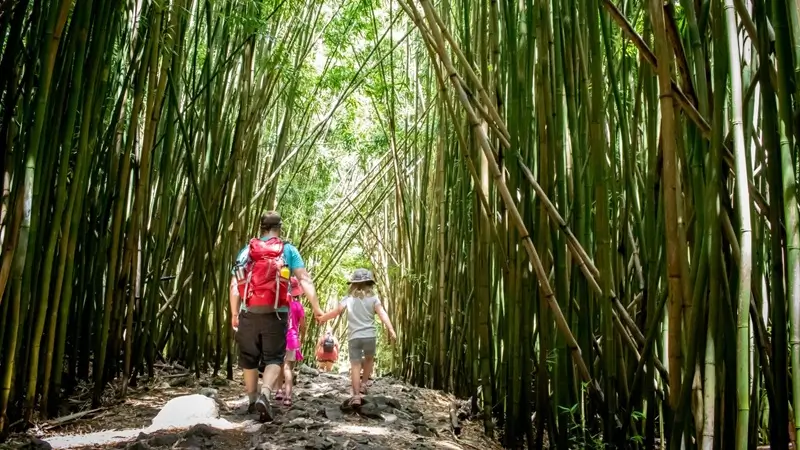
Along the way, you’ll pass the Makahiku Falls overlook about half a mile in, reach the bamboo forest around the one-mile mark, and arrive at the Waimoku Falls viewing area after two miles one way. The route includes boardwalks and footbridges, along with uneven stretches that can be slippery after rain, so wear sturdy shoes with good grip.
Because this hike takes real time and energy, it works best for travelers who start early, skip some smaller stops earlier in the day, or plan to overnight in Hāna. Check posted trail closures and current park conditions before heading out, especially in rainy weather.
What To Bring & Safety Tips
What to Bring
Water & snacks: Bring more water and snacks than you think you’ll need. The Road to Hana is a full-day drive, and food options can be spaced out depending on your stops.
Sun & rain protection: Pack sunscreen, a hat, sunglasses, and a light rain jacket or poncho. East Maui can switch from sunny to wet fast.
Good shoes: Wear sturdy shoes with grip if you plan to walk trails, explore lookout areas, or continue beyond Hāna to Kīpahulu or Pīpīwai.
Bug spray: Bring mosquito repellent for rainforest stops and wetter parts of the drive.
Charged phone & car charger: Start with a full battery and bring a charger. Service can be spotty in parts of East Maui.
Full tank of gas: Fill up before you start the drive so you are not stressing about fuel later in the day.
If the Road to Hāna is only one part of your trip, use our complete Maui packing list to make sure you also have what you need for beaches, snorkeling, Haleakalā, hiking, and changing weather.
Safety Tips
Start early: The best Road to Hana days start early and stay relaxed. Give yourself a full day so you are not rushing the drive back.
Keep your stop list short: Pick a handful of stops you really care about instead of trying to do everything. That makes the day safer and a lot more enjoyable.
Park only in legal, marked areas: Don't squeeze into unsafe roadside spots or block traffic for a quick photo.
Be careful around waterfalls and streams: Conditions can change quickly, especially after rain, so avoid taking risks near moving water or slippery rocks.
Treat ʻOheʻo as a viewpoint, not a swim stop: If you continue beyond Hāna, enjoy the views and trails, but do not build your day around getting in the water there.
Respect local neighborhoods and private property: Stick to places that are set up for visitors and skip unofficial pullouts or trespassing shortcuts.
Drive with patience: This is a narrow, winding road. Let faster cars pass when it is safe, slow down through one-lane bridges, and do not drive distracted.
Should You Drive Yourself or Book a Tour?
Drive yourself if you:
Want total freedom to stop or skip stops based on mood and weather
Prefer a slower pace with snack breaks and photo stops
Don’t mind planning reservations and parking ahead of time
Are comfortable driving winding, narrow roads and sharing one-lane bridges
Book a guided tour if you:
Want less planning and fewer “where do we park?” moments
Would rather enjoy the views than focus on driving the entire day
Are traveling with a group that prefers structure and a set schedule
Want local context (history, culture, and safety tips) built into the day
Still deciding whether a Road To Hāna tour should take one of your full vacation days? Compare it with the Best Tours And Excursions In Maui before finalizing your schedule.
FAQs
Yes. If you want a full-day scenic drive, and you are okay with the day being more about the journey than checking off a huge list. We think it's most worthwhile when you keep your stop list realistic, start early, and treat East Maui as the main experience rather than rushing straight to Hāna.
From Kahului, allow roughly two to four hours to reach Hāna, with extra time for sightseeing, meals, and longer walks. That’s one way, not the full outing. For a round-trip visit with stops, set aside a full day. If you’re staying in South or West Maui, also account for the drive between your accommodation and Kahului.
Yes, but only if you start early and keep your stop list short. Our recommendation is to build the day around a handful of high-payoff stops rather than trying to hit every waterfall, food stand, and trail on one drive.
For your first trip, choose Twin Falls, Garden of Eden, or Hoʻokipa as an early stop, then enjoy Keʻanae, Waiʻānapanapa, and lunch in Hāna. Puaʻa Kaʻa is a handy optional stop for a break along the way. Want to explore Kīpahulu or hike Pīpīwai? Plan your day around that visit and choose fewer stops, or book an overnight stay in Hāna ahead of time.
You don't need a reservation for the drive itself, but Waiʻānapanapa requires advance reservations for entry and parking for non-resident visitors. Those reservations must be made in advance; same-day reservations aren't available, and reservation windows are released 30 days in advance, at midnight Hawaiʻi Standard Time.
It can be, especially if you don't like narrow, winding roads. The Hāna Highway has 620 curves and 59 bridges, and the one-lane bridges work best when you stay patient, slow down, and let oncoming traffic clear before crossing.
We usually recommend self-driving if you want flexibility and are comfortable spending a full day on curvy roads. A tour is the better choice if you would rather enjoy the scenery without dealing with the bridges, turns, and the mental load of driving all day.
No, and we wouldn't plan the day around swimming at multiple stops. Some places are better treated as scenic stops, and at Kīpahulu, the Pools of ʻOheʻo are currently not open for entry, so that area is better thought of as a viewpoint and trail stop instead.
Yes, if you continue to Kīpahulu for the Kūloa Point Trail or Pīpīwai Trail, standard Haleakalā National Park entrance fees apply. Right now, a private vehicle pass is $30 and covers both the Summit and Kīpahulu Districts for three days.
Final Thoughts
Waterfalls, coastal views, and a banana bread break make the Road to Hāna a memorable day in Maui. Choose a few stops you’re excited about and leave time to enjoy them. For more trip-planning tips, read our guide to common Maui travel mistakes. Mahalo for reading!
Sources & Updates: Before you go, confirm current reservations, road conditions, and park rules using the official resources below.