Written by Maui Snorkeling, operating tours to Molokini Crater, Turtle Town, and Coral Gardens from Māʻalaea Harbor since 1985. Tours are led by USCG-licensed captains aboard a USCG-inspected passenger vessel.
Last updated October 12, 2026
Quick Answer
To visit Maui responsibly in 2026, choose legal accommodations, support local businesses, respect cultural sites and recovering communities, and care for the ocean. Follow current access rules, use mineral sunscreen, and give wildlife space. You can enjoy a wonderful Maui vacation while making thoughtful choices along the way.
Main takeaways:
Enjoy Your Visit: Plan around places welcoming visitors, follow local guidance, and leave time to appreciate more than the highlights.
Choose Legal Lodging: Confirm that your accommodations are authorized for short-term stays. A tax number or booking-platform listing alone doesn't establish that a rental is legal.
Respect Lahaina: Support open businesses, check current access guidance, and give recovering neighborhoods privacy. Don't enter restricted areas or photograph fire-impacted properties.
Care For The Ocean: Use mineral sunscreen, keep your hands and fins off coral, and never feed, chase, or crowd marine wildlife.
Connect Locally: Explore Maui-owned restaurants, shops, farms, and galleries. If you'd like to volunteer, join an organized opportunity that fits your trip.
Plan Thoughtfully: Check reservations, parking rules, weather, and access updates. Review your lodging's full tax and fee breakdown before booking.
A memorable Maui vacation can include beautiful beaches, local food, scenic drives, and thoughtful choices along the way. If you’re wondering how to visit Maui responsibly in 2026, start with the basics: book legal accommodations, respect community spaces, care for the ocean, and support the people who make the island special.
You don’t need a packed volunteer schedule or a perfect itinerary. A little preparation, curiosity, and consideration can help you enjoy your trip while being a welcome guest.
Is it OK to Visit Maui in 2026?
Yes, you can plan a wonderful Maui vacation in 2026. Choose visitor-friendly places, follow local guidance, and respect the privacy of recovering communities. Enjoying Maui and visiting thoughtfully can go hand in hand.
What “Regenerative Travel” Means in Hawaiʻi in 2026
Regenerative travel focuses on supporting a place's health and communities, not just reducing the impact of a visit. On Maui, that can mean joining a community-led restoration project, learning from Native Hawaiian cultural practitioners, or supporting local businesses.
Before booking a vacation rental, ask how the specific property and unit are authorized for short-term stays during your travel dates. Check applicable permit or zoning information through Maui County, and contact the County if anything is unclear.
Verify the property, not just the listing. A Tax Map Key identifies a property, and tax registration serves a different purpose. Neither alone proves that short-term renting is allowed.
Check the applicable authorization. Some accommodations operate under zoning rules rather than a short-term rental home permit, so the same paperwork won’t apply to every property.
Read the full booking terms. Confirm taxes, fees, cancellation policies, occupancy limits, and house rules before paying.
Be considerate of neighbors. Follow quiet hours, use designated parking, and keep gatherings within the property’s rules.
Choose a home base near the activities you’ll enjoy most. Staying within walking distance of meals or beach access can reduce some driving, but don’t assume a Central Maui address means you won’t need transportation.
For help choosing where on the island to base yourself, check out:
Lahaina’s recovery continues, and many businesses have reopened. Visiting places that welcome customers supports the community, while recovering neighborhoods still deserve privacy and space.
Check access before heading over. Use Maui Recovers for official updates, and follow signs and barriers when you arrive.
Visit open businesses, not recovery sites. Plan around a meal, shopping stop, or other welcoming destination rather than sightseeing through fire-impacted areas.
Give residents privacy. Don’t photograph damaged properties or people rebuilding, and don’t enter private or restricted areas.
Follow on-site directions. A map app isn’t permission to drive through a closed road or local-access-only area.
3. Care For Maui’s Ocean: Sunscreen, Reefs, And Wildlife
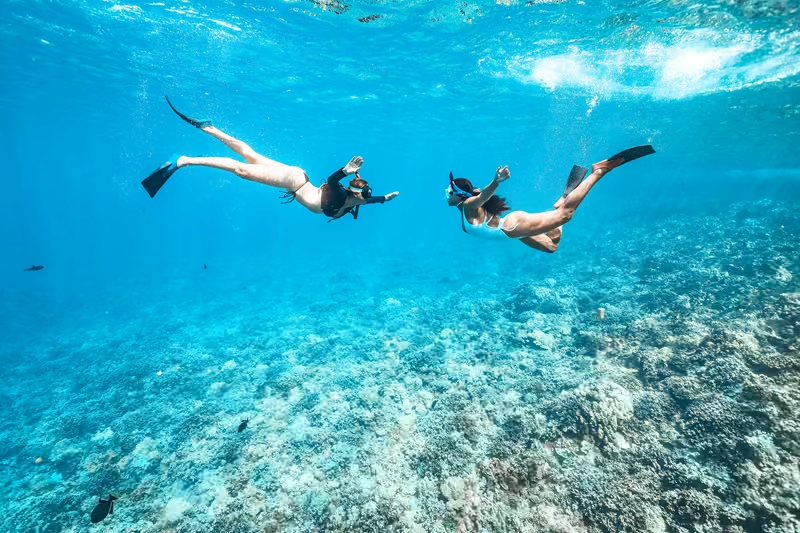
Maui’s underwater world is a highlight of many vacations. A few thoughtful habits help protect the reef and make wildlife encounters more respectful.
Choose mineral sunscreen. Maui County prohibits the sale, distribution, and use of non-mineral sunscreen without a prescription. Check that the active ingredients are zinc oxide and/or titanium dioxide rather than relying on a “reef-safe” label. Rash guards, hats, and shade can also help protect you from the sun. Maui County sunscreen guidance
Keep your hands and fins off the reef. Don’t stand on coral, handle marine life, or feed fish. Leave enough space to move without brushing against the reef.
Watch wildlife without approaching. NOAA recommends staying at least 10 feet from sea turtles and 50 feet from monk seals, or 150 feet from mothers with pups. Federal rules prohibit approaching Hawaiian spinner dolphins within 50 yards and humpback whales within 100 yards. Follow any larger posted buffers. NOAA wildlife guidance
Choose an outing that fits your ability. Hawaiʻi Ocean Safety recommends snorkeling only for experienced ocean swimmers. Check conditions, stay with your buddy, and follow lifeguard or crew instructions. Guided support and flotation don’t replace swimming ability. Hawaiʻi Ocean Safety
4. Support Locally Owned Businesses and Maui-Based Tours
Shopping and dining locally can be one of the most enjoyable parts of your trip. Try a neighborhood food truck, browse work by Maui artists, or visit a farm stand along your route.
Look for local ownership and locally made products. Ask who made an item and where it came from, especially when shopping for art, food, or souvenirs.
Choose operators thoughtfully. Look for clear safety policies, respectful wildlife practices, and specific examples of community involvement rather than broad “eco-friendly” claims.
Plan for gratuities. Include tips in your vacation budget, check whether a service charge is already included, and recognize good service.
Bring patience. Allow extra time for meals and activities, and treat the people helping you with kindness.
5. Visit Maui Responsibly: Local Etiquette And Everyday Tips
Responsible travel and responsible tourism here is as much about how you move as where you spend.
A Few Basics that Go a Long Way
Learn a little ʻŌlelo Hawaiʻi (Hawaiian language). Simple words like aloha (hello/love), mahalo (thank you), and mālama ʻāina (care for the land) mean more when you understand them. Before your trip, use our guide to common Hawaiian words for visitors to learn useful greetings, directions, ocean terms, and tips for using them respectfully.
Follow posted rules at beaches, trails, and cultural sites. When a sign says “No Trespassing” or “Heiau - Sacred Site,” it means it.
Keep noise in check at night. Many locals get up before dawn for work. Loud balconies and late‑night yelling carry.
Dress appropriately away from the beach. Swimsuits alone are perfect at the shore, less so in grocery stores and small towns.
Drive with consideration. Use safe, legal pullouts to let faster traffic pass. Don’t stop on bridges or block driveways, and park only where it’s permitted. On the Road to Hāna, remember that the road also serves people going about their daily lives. Official Maui travel tips
Learn from cultural practitioners. Look for Native Hawaiian-led cultural experiences, follow your host’s guidance, and ask before photographing ceremonies or cultural activities.
Keep everyday waste down. Carry a reusable water bottle, take your rubbish with you when bins aren’t available, and leave natural objects where you find them.
Use resources thoughtfully. Avoid unnecessary water use, switch off lights and air conditioning when appropriate, and follow any local conservation instructions.
6. Consider Giving Back While You’re Here
If you’d like to give back during your vacation, choose an organized opportunity that matches your interests, abilities, and available time.
Maui Cultural Lands: Explore community-led work caring for Hawaiian cultural resources and landscapes. Check its official website for participation information.
Hawaiʻi Land Trust: Look for Maui volunteer opportunities through its volunteer page.
Maui Strong Fund: If a donation fits your plans better, read about the fund’s recovery work through the Hawaiʻi Community Foundation.
Confirm registration, age requirements, physical demands, and what to bring before committing. Don’t enter restoration areas or begin work without the organizer’s permission.
Volunteering is an option, not a vacation requirement. Thoughtful everyday choices still matter if a workday doesn’t fit your trip.
7. Hawaiʻi’s 2026 Green Fee: What Visitors Pay and What It Funds
Hawaiʻi’s “Green Fee” includes an increase in the state Transient Accommodations Tax, or TAT, from 10.25% to 11%, effective January 1, 2026. For lodging, this is part of the state accommodation tax, not another 0.75% charge to add on top of the 11% rate.
The increase is 0.75 percentage points. For illustration, it adds $2.25 on $300 of taxable lodging charges or $3 on $400. Those amounts represent only the increase, not the full taxes and fees on your booking.
The legislation is intended to support climate resilience and environmental priorities. Before booking, review the full price breakdown rather than comparing nightly rates alone. County accommodation taxes and other applicable taxes or property fees are separate from the state TAT.
Yes, visitors can come to Maui in 2026, but how you visit matters. Stay in legal accommodations, support local businesses, respect recovery areas, protect the ocean, and follow current guidance from Maui County and local organizations.
Responsible travel means enjoying Maui while respecting the people, culture, and natural places that make it special. Book legal accommodations, support local businesses, follow access rules, reduce waste, and give wildlife space. You don’t need a perfect itinerary, just thoughtful choices along the way.
Many Lahaina businesses have reopened, but access isn’t the same everywhere. Check Maui Recovers before visiting, follow posted signs, and plan around places welcoming customers. Give recovering neighborhoods privacy, and don’t enter restricted or private areas.
Avoid entering restricted areas, local-access-only neighborhoods, private property, and active recovery zones. Do not photograph damaged homes, memorials, debris, or residents rebuilding. The respectful choice is to support open businesses while giving recovering neighborhoods privacy and space.
Maui County allows mineral sunscreen and bans the sale, distribution, and use of non-mineral sunscreen without a prescription. Choose sunscreen whose active ingredients are only zinc oxide and/or titanium dioxide, and use hats, rash guards, shade, and sun-protective clothing when possible.
Snorkel only if you’re an experienced ocean swimmer and conditions suit your ability. Go with a buddy, follow lifeguard or crew instructions, use mineral sunscreen, and keep your hands and fins off coral. Don’t feed, chase, or crowd marine life.
You may see sea turtles while snorkeling, but don’t approach them or try to follow along. NOAA recommends staying at least 10 feet away on land and in the water. Never touch, feed, chase, or block a turtle. If one comes close, give it room to pass and increase your distance when you can do so safely.
Book directly with locally owned tours, eat at Maui-owned restaurants, shop from local artists and farmers, tip generously, and choose businesses that hire locally. Spending locally helps more of your visitor dollars stay in Maui’s community.
For lodging, Hawaiʻi’s Green Fee includes the state Transient Accommodations Tax increase from 10.25% to 11%, effective January 1, 2026. The increase is already included in that 11% rate, not added on top. Review your booking’s full tax and fee breakdown before paying.
Before traveling, check current Maui County updates, Maui Recovers guidance, ocean conditions, weather alerts, road closures, park closures, and lodging rules. Conditions can change, especially around Lahaina recovery areas, high surf, storms, and wildfire-related work.
Ready to snorkel Maui?
Snag your spot on a Maui Snorkeling Tour! Make your ocean day easy with snorkel gear, food, crew support, and simple online booking.
5-Hr Morning Adventure: Molokini Crater Snorkeling Tour
3-Hr Afternoon Reef Trip: Maui Afternoon Snorkeling Tour
You don’t have to take the fun out of your vacation to visit Maui responsibly. Make room for local perspectives, respect the places you explore, and choose experiences thoughtfully. There’s still plenty of room for beach days, delicious food, and a little adventure.
Leave time to slow down, learn something new, and appreciate where you are. Those unhurried moments can become your favorite Maui memories.
Sources & Updates
A little preparation helps you enjoy Maui thoughtfully. Use these official resources to check Lahaina access, lodging authorization, sunscreen rules, snorkeling safety, wildlife guidance, and accommodation taxes before your trip.