Escrito por
Snorkel en Maui, operando excursiones al cráter Molokini, Turtle Town y Coral Gardens desde el puerto de Māʻalaea desde 1985. Las excursiones son dirigidas por capitanes con licencia de la Guardia Costera de EE. UU. a bordo de un
Buque de pasajeros inspeccionado por la Guardia Costera de EE. UU..
Respuesta rápida
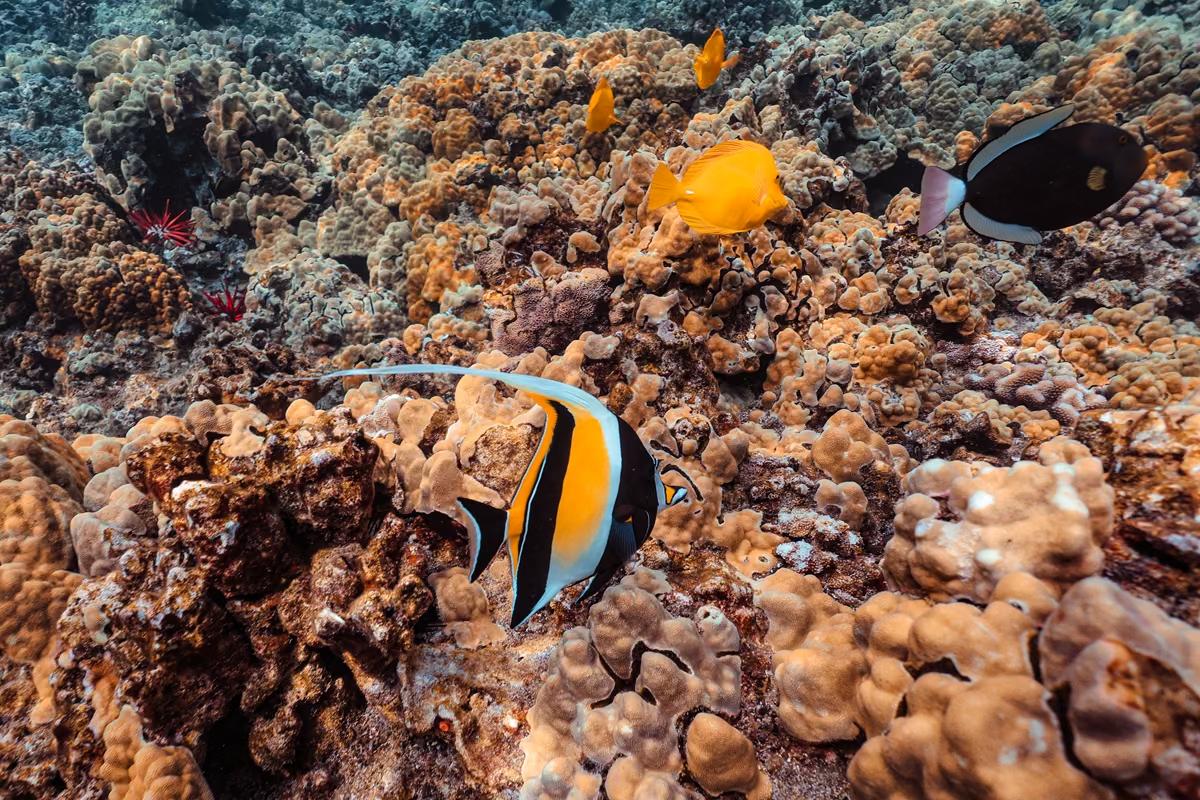
Pez ídolo moro en Maui, llamado kihikihi in Hawaiʻi, have a tall, flattened body with black, white, and yellow markings and a long white dorsal streamer. For a more confident identification, look for the black tail y orange-to-yellow saddle across the projecting snout. These details help distinguish them from similar bannerfish. You may see Moorish idols picking food from rocky or coral reef surfaces, alone, in pairs, or in groups.
Conclusiones principales:
-
Nombre hawaiano: Kihikihi; the scientific name is Zanclus cornutus.
-
Best identification clues: Combine the striped body and dorsal streamer with the black tail and orange-to-yellow snout marking.
-
Common lookalike: Schooling bannerfish also have a dorsal streamer, but their tail is yellow and their jaw is pale.
-
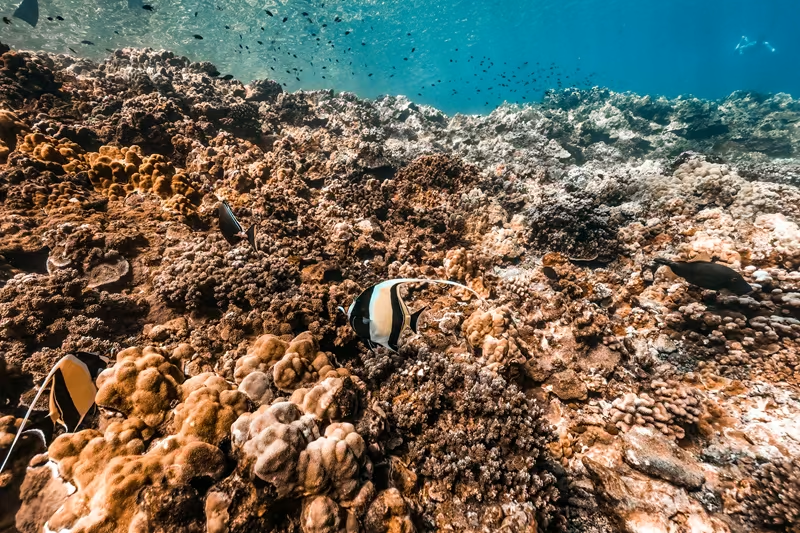
Dónde buscar: Watch rocky and coral reef surfaces along your normal snorkeling route. Don’t swim toward deeper ledges or drop-offs to search for fish.
-
What they eat: Sponges, algae, and other small organisms picked from reef surfaces and crevices.
-
Consejo para la visualización: Observe without chasing, feeding, or touching fish, and keep your body and fins clear of coral. Sightings aren’t guaranteed.
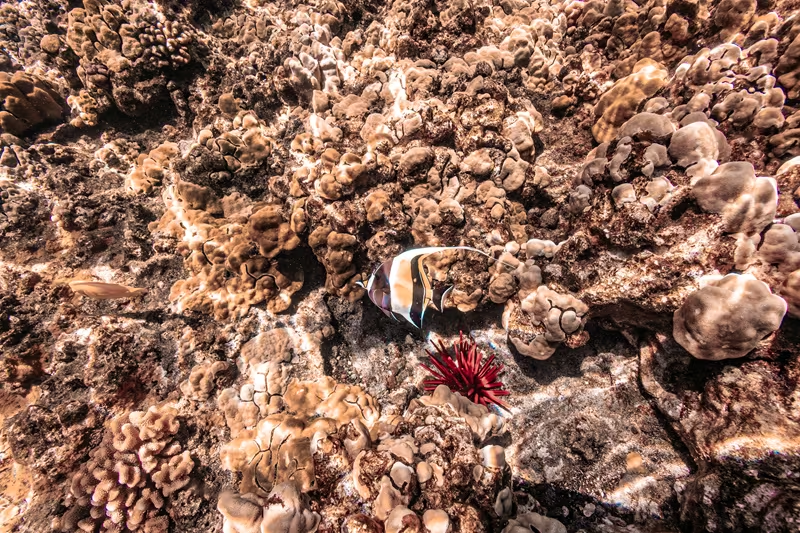
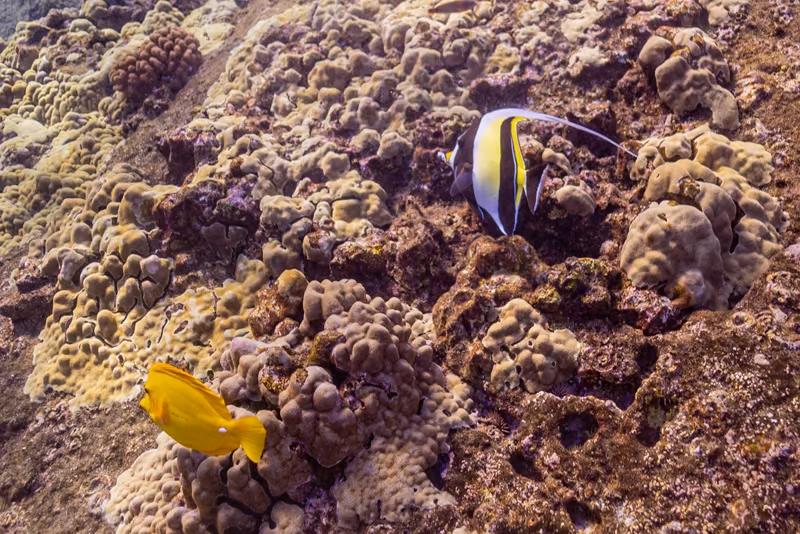
El Pez ídolo moro en Maui es uno de los peces de arrecife más fáciles de reconocer. En Hawái, se le llama kihikihi, Los buceadores suelen reconocerla por sus bandas negras, blancas y amarillas, su cuerpo alto y plano, y su larga aleta dorsal que se extiende a lo largo de la espalda.
Esta guía explica cómo identificar un ídolo moro, dónde es más probable verlo mientras se practica esnórquel en Maui, qué come y cómo observar los peces de arrecife sin perturbar el arrecife.
Datos curiosos sobre el ídolo morisco
Get to know kihikihi, from its distinctive black tail and
trailing dorsal fin to its reef-feeding habits and wide
natural range.
| Tema |
Detalles |
| Nombre común |
Moorish idol |
| nombre hawaiano |
Kihikihi |
| Nombre científico |
Zanclus cornutus
|
| Familia de los peces |
Zanclidae. The Moorish idol is the family’s only
living species.
|
| Reported maximum size |
About 9 inches (23 cm) in total length, as reported
by FishBase
|
| Best identification clues |
Tall, flattened body with black, white, and yellow
markings; a long white dorsal streamer; a black tail;
and an orange-to-yellow saddle across the projecting snout
|
| Distribución autóctona |
Indo-Pacific and tropical eastern Pacific.
Native to Hawaiʻi, but not found only in Hawaiʻi.
|
| Hábitat de arrecife |
Rocky and coral reefs, reef flats, and lagoons.
Its habitat is not limited to pristine coral or
clear water.
|
| Social behavior |
May be seen alone, in pairs, or in groups;
larger schools also occur
|
| What it eats |
Sponges, algae, and other small organisms picked
from reef surfaces and crevices
|
| Parecido común |
Schooling bannerfish. Compare the Moorish idol’s
black tail and orange-to-yellow snout marking
with the bannerfish’s yellow tail and pale jaw.
|
Nota: The size listed is an approximate
published maximum, not the expected size of every Maui
sighting. Compare several identification features rather
than relying on the dorsal streamer alone.
References:
Acuario de Waikīkī: ídolo moro
y
FishBase: Zanclus cornutus.
Conozca al pez ídolo moro
Although it resembles a butterflyfish, the Moorish idol belongs to its own family, Zanclidae, and is closely related to surgeonfish. Unlike tangs, it lacks the sharp, scalpel-like spine beside the tail.
Moorish idols are native to Hawaiʻi but aren’t Hawaiian endemics. Their natural range extends across the Indo-Pacific and into the tropical eastern Pacific.
En Hawái, el ídolo morisco se llama kihikihi. Aprender los nombres comunes de los peces hawaianos puede hacer que practicar esnórquel sea más significativo, ya que te ayuda a reconocer la vida marina que ves en el agua.
Cómo identificar un ídolo morisco
Cuando practiques esnórquel en Maui, busca estos rasgos característicos de los ídolos moriscos:
- Bandas negras, blancas y amarillas llamativas: El patrón de alto contraste es la pista más sencilla.
- Cinta dorsal larga: Una fina aleta caudal se extiende desde la parte superior del pez.
- Cuerpo alto y plano: Los ídolos moriscos parecen delgados vistos de frente y altos de perfil.
- Hocico tubular: Su boca ligeramente alargada les ayuda a recoger el alimento de la superficie y las grietas de los arrecifes.
- Movimiento de protección de los arrecifes: Suelen nadar cerca de los corales, las rocas y los bordes de los arrecifes, en lugar de permanecer sobre la arena abierta.
- Black tail: Look beyond the striped body to the dark tail fin, an important clue when comparing similar bannerfish.
- Snout marking: Look for an orange-to-yellow saddle across the projecting snout.
Moorish Idol vs Bannerfish
A long dorsal streamer and striped body can make these fish easy
to confuse. This comparison focuses on the schooling bannerfish,
also called pennantfish or false Moorish idol. Start with the
tail color and snout markings rather than the streamer alone.
| Característica |
Moorish idol
Zanclus cornutus
|
Schooling bannerfish
Heniochus diphreutes
|
| Tail color |
Black tail, often outlined by a narrow pale edge
|
Yellow tail, with yellow also covering the rear portion
of the dorsal fin
|
| Snout and face |
Projecting snout with an orange-to-yellow saddle across
the upper jaw
|
Shorter snout and pale jaw, with dark snout markings
rather than an orange-to-yellow saddle
|
| Body pattern |
Tall, flattened body with broad black bands and
white-to-yellow areas
|
Silvery-white body with two broad, diagonal dark bands
and yellow rear fins
|
| Cinta dorsal |
Long, thin, trailing extension from the dorsal fin
|
Also has a long dorsal extension, so this feature
alone does not distinguish the fish
|
| Feeding behavior |
Often picks food from reef surfaces and crevices
|
Often feeds on plankton above the reef and may
gather in schools
|
| Familia de los peces |
Zanclidae, the Moorish idol family
|
Chaetodontidae, la familia de los peces mariposa
|
Nota: Start with the tail and snout markings,
then compare body shape and behavior. Swimming position is a
supporting clue, not a definitive identification rule.
References:
Acuario de Waikīkī: ídolo moro
y
Fishes of Australia: Schooling Bannerfish.
¿Qué comían los ídolos moriscos?
Moorish idols use their projecting snout to pick food from reef surfaces and crevices. Their diet includes sponges, algae, and other small organisms growing on the reef. Watch for brief pauses as a fish investigates a surface, then moves to another feeding spot.
They may forage alone, in pairs, or in groups. Observing from a distance lets you watch this feeding behavior without interrupting it.
Dónde ver ídolos moriscos mientras se practica snorkel en Maui
Moorish idols occur around rocky and coral reef habitats in Hawaiʻi. On Maui, snorkelers may encounter them at Molokini, Coral Gardens, Honolua Bay, and other reef sites. Sightings vary, and seeing one doesn’t establish that the surrounding reef is healthy.
Watch reef surfaces from your normal snorkeling route rather than swimming toward deeper ledges or drop-offs to search for fish. Choose the site based on current conditions, not the possibility of a particular sighting.
Si desea una lista de zonas de snorkel en todo Maui, comience con nuestra Los mejores lugares para practicar snorkel en Maui guía.
Una breve nota sobre los acuarios
En ocasiones, se pueden encontrar ídolos moros en el mercado de acuarios, pero tienen fama de ser extremadamente difíciles de mantener en cautividad. Incluso las fuentes oficiales señalan que, por lo general, no se adaptan bien a los acuarios domésticos, principalmente debido a su dieta y cuidados especializados.
Pensamientos finales
A long dorsal streamer may catch your attention first, but the black tail and orange-to-yellow snout marking help confirm a Moorish idol. Once you recognize kihikihi, watch how it pauses to feed and moves between reef formations. Mahalo for reading!
👉 Give the fish room, keep clear of coral, and use our Guía de peces tropicales de Maui to identify other reef residents.
Fuentes y actualizaciones
Use these resources to learn about Moorish idol identification, feeding behavior, native range, and differences from schooling bannerfish. Before snorkeling, check current ocean conditions, water quality advisories, and safety guidance.