30 Hawaiian Words For Beginners: A Friendly Guide for Your Maui Trip
June 26th, 2026
| Maui Information
Written by Maui Snorkeling, operating tours to Molokini Crater, Turtle Town, and Coral Gardens from Māʻalaea Harbor since 1985. Tours are led by USCG-licensed captains aboard a USCG-inspected passenger vessel.
Last updated October 12, 2026
Quick answer
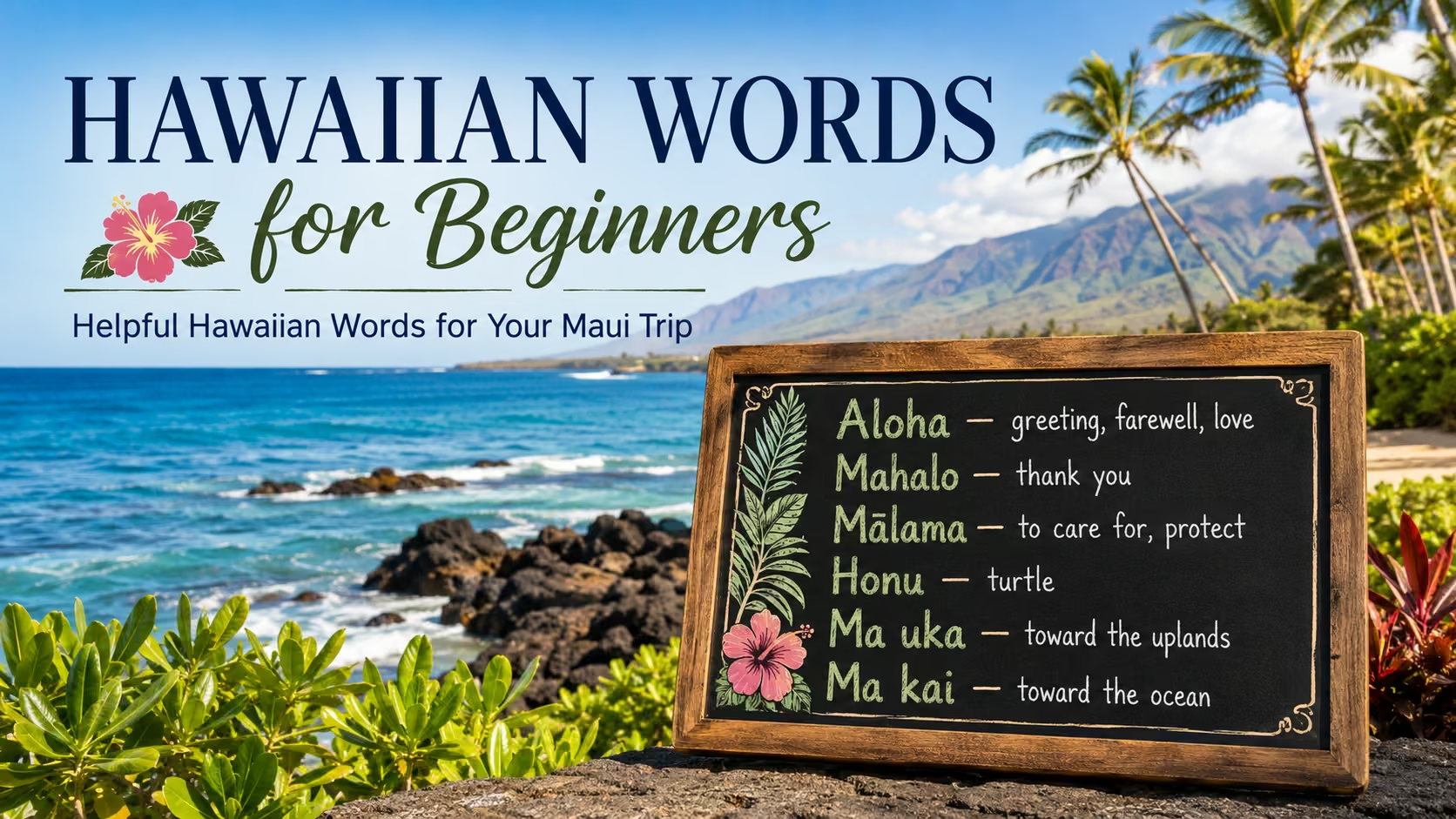
Some of the best Hawaiian words for beginners include aloha, mahalo, e kala mai, e komo mai, ʻohana, keiki, ma uka, ma kai, mālama, honu, and iʻa. Learning a few of these words before visiting Maui can help you understand greetings, directions, place names, signs, local culture, and words you may hear during a snorkeling trip.
Main takeaways:
Useful greetings: Aloha can be used as a greeting or farewell, mahalo means thank you, and a hui hou means until we meet again
Helpful directions: Ma uka means toward the uplands or mountains, while ma kai means toward the ocean
Ocean words: Honu means turtle, iʻa means fish, nalu means ocean wave, and kai means ocean or sea
Respectful travel: Mālama means to care for or protect, while kuleana can refer to responsibility and privilege
Pronunciation tip: Pay attention to the ʻokina and kahakō because they’re meaningful parts of Hawaiian spelling and pronunciation
Heading to Maui? You don't need to step off the plane speaking fluent ʻŌlelo Hawaiʻi. Still, learning a few Hawaiian phrases and words can help you recognize greetings, understand road signs and local directions, pronounce place names, and feel more connected to Maui and Hawaiian culture. Use them thoughtfully, and remember that some words carry broader meanings than a simple English translation can capture.
A great beginner list includes aloha, mahalo, e kala mai, e komo mai, a hui hou, ʻohana, keiki, ma uka, ma kai, mālama, kuleana, honu, and iʻa.
That's enough to get started. No flashcards at baggage claim are required.
Hawaiian, or ʻŌlelo Hawaiʻi, is one of the official languages of Hawaiʻi and a living Indigenous language with meanings, history, and cultural context that can't always be reduced to one English word.
12 Essential Hawaiian Words and Phrases at a Glance
Start with these 12 useful words and phrases, then continue through the guide for all 30 beginner terms, pronunciation cues, and Maui examples.
Hawaiian Word Or Phrase
Beginner Meaning
Aloha
Greeting, farewell, love, or affection
Mahalo
Thank you or appreciation
E kala mai
Excuse me or pardon me
E komo mai
Welcome
A hui hou
Until we meet again
ʻOhana
Family or kin group
Ma uka
Toward the uplands or mountains
Ma kai
Toward the ocean
Mālama
To care for, protect, or preserve
Kuleana
Responsibility and privilege
Honu
Turtle
Iʻa
Fish
Language note: These are simple beginner meanings. Hawaiian words and phrases may carry broader meanings depending on their cultural and grammatical context.
These short meanings are useful starting points, but several of the words, especially aloha, mālama, kuleana, and pono, carry wider meanings depending on context. Hawaiian dictionaries define aloha through ideas including love, affection, compassion, kindness, and greeting, while official visitor-language resources describe kuleana as both responsibility and privilege.
A Two-Minute Hawaiian Pronunciation Guide
Before we dive in, or luʻu in, there are two important marks to recognize.
The ʻokina
The ʻokina looks a little like a backward apostrophe: ʻ
It represents a brief stop in the voice, similar to the break between the two parts of “uh-oh.” You can see it in words such as:
Hawaiʻi
ʻohana
iʻa
waʻa
luʻu
The ʻokina is not a decorative quotation mark. It can affect both pronunciation and meaning.
The kahakō
The kahakō is the line over a vowel, as in:
ā
ē
ī
ō
ū
It tells you that the vowel sound is held longer. You will see it in words such as mālama, kūpuna, and koholā.
The University of Hawaiʻi recommends using the proper U+02BB ʻokina rather than substituting a quotation mark, apostrophe, or other “tick” character.
A Simple Starting Point For The Vowels
Hawaiian vowels are generally pronounced consistently. These rough English sound comparisons can help beginners get started.
Vowel
Rough English Starting Sound
A
“Ah”
E
“Eh”
I
“Ee”
O
“Oh”
U
“Oo”
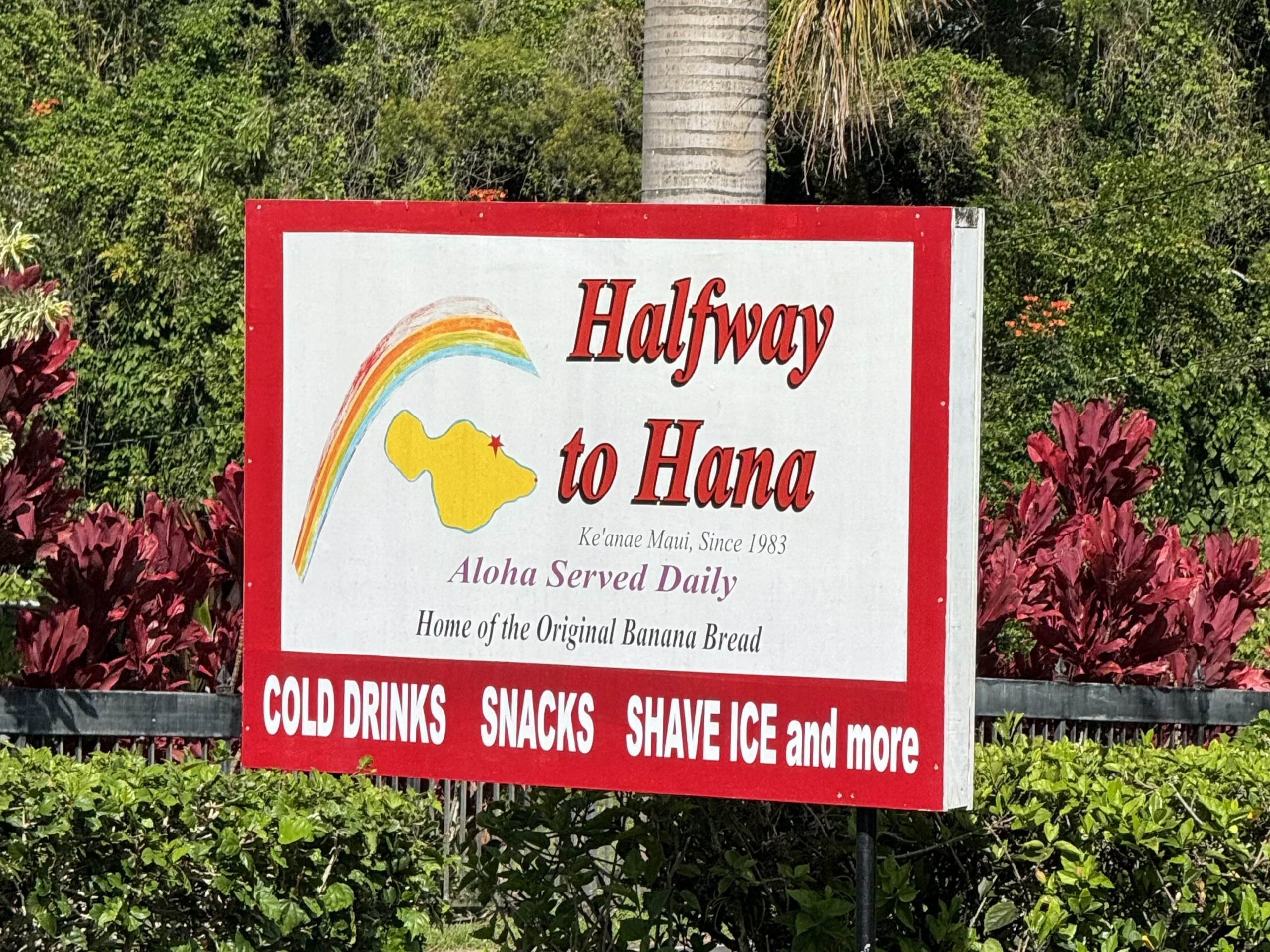
Note: Businesses and signs sometimes omit Hawaiian diacritical marks, while the proper forms are Hāna and Keʻanae.
Greetings and Courteous Hawaiian Phrases
These are some of the most useful Hawaiian phrases to learn before meeting your tour guides, checking into your hotel, visiting local businesses, or exploring Maui.
#
Hawaiian
Rough Reading Cue
Beginner Meaning
A Maui Visitor Example
1
Aloha
ah-loh-hah
Greeting or farewell; also love, affection, compassion, or kindness
Greet your boat crew with a warm aloha or use it when saying goodbye.
2
Mahalo
mah-hah-loh
Thank you; appreciation or respect
Say mahalo when someone helps with directions, meals, equipment, or service.
3
E kala mai
eh kah-lah my
Excuse me; pardon me
Use this polite phrase when getting someone’s attention or moving past them.
4
E komo mai
eh koh-moh my
Welcome; come in
You may see this phrase on signs at shops, hotels, restaurants, and visitor centers.
5
A hui hou
ah hoo-ee hoh-oo
Until we meet again; see you later
Use this as a friendly way to end your Maui adventure.
6
Maikaʻi
my-kah-ee
Good, fine, or well
Maikaʻi au means “I am well” or “I am good.”
Pronunciation note: These reading cues are simple English approximations for beginners. Slow down, pronounce each vowel, and listen carefully when you hear the word spoken by a fluent speaker.
GoHawaii’s Hawaiian-language guide lists e kala mai as “excuse me” or “pardon me,” e komo mai as “welcome,” and a hui hou as “until we meet again.” It also defines maikaʻi as good, fine, or well.
Two more greetings to know: Aloha kakahiaka means “good morning,” while aloha ahiahi means “good evening.”
Is Aloha Just Another Word For Hello?
Aloha can function as a greeting or farewell, but its meaning is not limited to “hello” and “goodbye.” Hawaiian dictionaries also connect it with love, affection, compassion, kindness, sympathy, and caring.
The best way to use aloha is sincerely. You don't have to place it in every sentence or use it as tropical decoration. A genuine greeting is plenty.
For a deeper look at the word's cultural meaning and values, read our Spirit of Aloha guide.
Hawaiian Words for People, Food, and Everyday Life
These terms may appear on menus, family-activity pages, signs, or in everyday conversations.
#
Hawaiian
Rough Reading Cue
Beginner Meaning
A Maui Visitor Example
7
ʻOhana
oh-hah-nah
Family, relatives, or kin group
A family-friendly activity may be described as suitable for the whole ʻohana.
8
Keiki
kay-kee
Child
You may see keiki used on children’s menus, ticket options, or family-activity listings.
9
Kupuna / kūpuna
koo-poo-nah
Grandparent, ancestor, or elder; kūpuna is the plural form
Listen respectfully when kūpuna share knowledge, history, or stories.
10
Kōkua
koh-koo-ah
Help or assistance; to help
You may be asked to kōkua by keeping an area clean or helping someone nearby.
11
ʻOno
oh-noh
Delicious or tasty
A useful word after your first bite of fresh poke, banana bread, or local fruit.
12
Pau
pow, as in “cow”
Finished or done
You may hear pau when an activity, task, or meal is finished.
Pronunciation note: These reading cues are simple English approximations for beginners. Slow down, pronounce each vowel, and listen carefully when you hear the word spoken by a fluent speaker.
The Hawaiian dictionary defines ʻohana as family, relatives, or a kin group; kupuna as a grandparent, ancestor, or relative of a grandparent’s generation; and kūpuna as the plural form. ʻOno means delicious, tasty, or savory, while GoHawaii defines kōkua as help and pau as finished or done.
A Useful Note About Keiki
In English-language visitor materials about Hawaiʻi, you may see keiki used to refer to children in general. Hawaiian does not necessarily create plurals by changing the ending of a noun in the same way English does, so surrounding words and context matter.
For a beginner visitor, remembering keiki = child or children in context is a practical place to start.
Hawaiian Direction and Nature Words
Directions in Hawaiʻi often make more sense when you think about the land and ocean rather than north, south, east, and west.
#
Hawaiian
Rough Reading Cue
Beginner Meaning
A Maui Visitor Example
13
Ma uka
mah oo-kah
Toward the uplands or mountains
“The parking area is on the ma uka side of the road.”
14
Ma kai
mah kye
Toward the sea or ocean
“The beach entrance is on the ma kai side.”
15
ʻĀina
eye-nah
Land
You may hear this word in conversations about caring for the ʻāina and respecting the places you visit.
16
Kai
kye
Sea or ocean
You’ll spend plenty of time looking at the kai during a Maui vacation.
17
Mauna
mow-nah
Mountain
Haleakalā is a prominent mauna on Maui.
18
Kahakai
kah-hah-kye
Beach or seashore
Follow posted rules and respect local guidance when visiting a kahakai.
19
Makani
mah-kah-nee
Wind
Makani can influence boating, snorkeling, and beach conditions.
Pronunciation note: These reading cues are simple English approximations for beginners. Slow down, pronounce each vowel, and listen carefully when you hear the word spoken by a fluent speaker.
Official Hawaiian visitor-language resources present ma uka as toward the mountains and ma kai as toward the ocean. They also define ʻāina as land, kai as ocean, mauna as mountain, kahakai as beach, and makani as wind.
Are Mauka and Makai One Word or Two?
Visitors will often see "mauka" and "makai" written as single words in local English. In this Hawaiian-language beginner guide, we use ma uka and ma kai, following the presentation used in GoHawaii’s language guide.
Try These Directions on Maui
Imagine that you are standing on a coastal road:
The ocean side is ma kai.
The upland or mountainside is ma uka.
Once you learn those two phrases, many local directions suddenly become much easier to follow.
Hawaiian Words for Respectful Travel
These words are frequently used in discussions about how visitors, residents, and businesses care for Hawaiʻi. Their meanings are broader than a quick English translation, so context matters.
#
Hawaiian
Rough Reading Cue
Beginner Meaning
A Maui Visitor Example
20
Mālama
mah-lah-mah
To care for, attend to, preserve, or protect
Mālama the places you visit by following signs, packing out trash, and leaving natural features untouched.
21
Kuleana
koo-leh-ah-nah
Responsibility and privilege
Visitors share a kuleana to treat Maui’s people, wildlife, and natural resources with respect.
22
Pono
poh-noh
Goodness, uprightness, or what is right and proper
To travel pono is to make thoughtful and responsible choices.
Language note: These words can carry deeper cultural meanings than a short English definition can fully express. Use them thoughtfully and consider their context.
The Hawaiian dictionary defines mālama through meanings such as taking care of, attending to, preserving, and protecting. GoHawaii describes kuleana as both responsibility and privilege, while pono can communicate goodness, uprightness, and doing what is right.
What does Mālama Mean for a Maui Visitor?
Mālama is something you do, not simply a word you print on a tote bag.
On Maui, visitors can put mālama into practice by:
Following beach, trail, and parking regulations
Keeping a respectful distance from wildlife
Leaving rocks, coral, sand, and cultural objects where they are
Avoiding contact with coral and other marine life
Supporting locally owned businesses
Being patient and considerate in residential communities
Taking trash and belongings with them
The goal is not to “save” Maui during a one-week vacation. It's about moving through the island with care and avoiding unnecessary pressure on the land, ocean, and community.
Now for the words that may come in handy once the mask goes on and the fins hit the water.
#
Hawaiian
Rough Reading Cue
Beginner Meaning
A Maui Snorkeling Example
23
Honu
hoh-noo
Turtle
In Maui ocean conversations, honu often refers to Hawaiian green sea turtles.
24
Iʻa
ee-ah, with a brief pause
Fish
Maui reefs are home to many colorful iʻa.
25
Nalu
nah-loo
Ocean wave
Captains and ocean guides watch the nalu when evaluating conditions.
26
Waʻa
wah-ah, with a brief pause
Canoe
Waʻa have an important place in Hawaiian voyaging and ocean traditions.
27
ʻAu
“ow,” beginning with a small catch
To swim
ʻAu means to swim.
28
Luʻu
loo-oo, with a brief pause
To dive
You might luʻu below the surface for a closer look while staying off the reef.
29
Koholā
koh-hoh-lah
Humpback whale
During the appropriate season, visitors may see koholā in Maui waters.
30
Heʻe nalu
heh-eh nah-loo
To surf; surfing
The phrase heʻe nalu is associated with riding or sliding on ocean waves.
Pronunciation note: These reading cues are simple English approximations for beginners. The ʻokina marks a glottal stop, which is a brief break in the voice similar to the pause between the two parts of “uh-oh.”
GoHawaii defines honu as turtle, iʻa as fish, nalu as an ocean wave, waʻa as canoe, ʻau as swimming, and luʻu as diving. Hawaiian dictionaries define heʻe nalu as surfing or riding a surfboard, while NOAA identifies koholā as the Hawaiian term for humpback whale.
Honu Etiquette: Admire Without Approaching
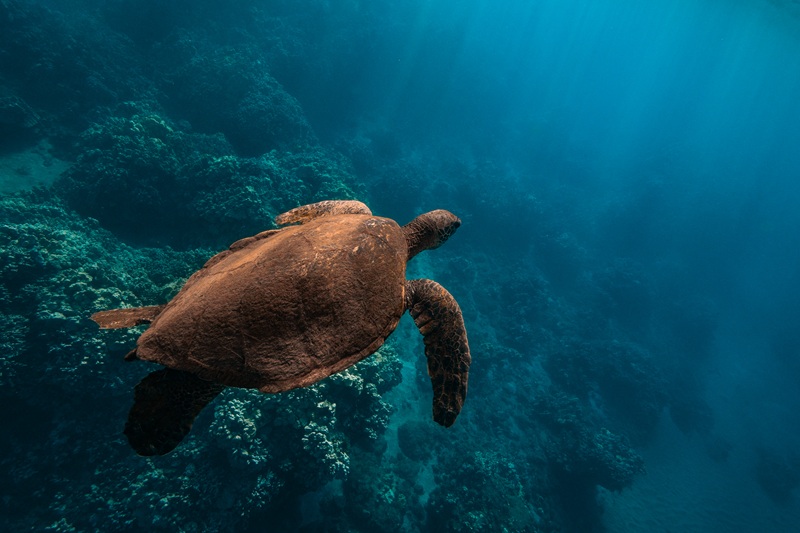
Spotting a honu can be one of the highlights of a Maui snorkeling trip. Give the turtle room to swim, surface, rest, or change direction without having to avoid you.
NOAA recommends staying at least 10 feet, or 3 meters, away from sea turtles in Hawaiʻi, both on land and in the water. Never touch, chase, feed, surround, block, or attempt to ride a turtle.
The best wildlife encounter is one in which the animal gets to behave naturally.
Hawaiian Words You May Hear on a Maui Snorkeling Day
Here is how several of these beginner words might come together during one Maui adventure:
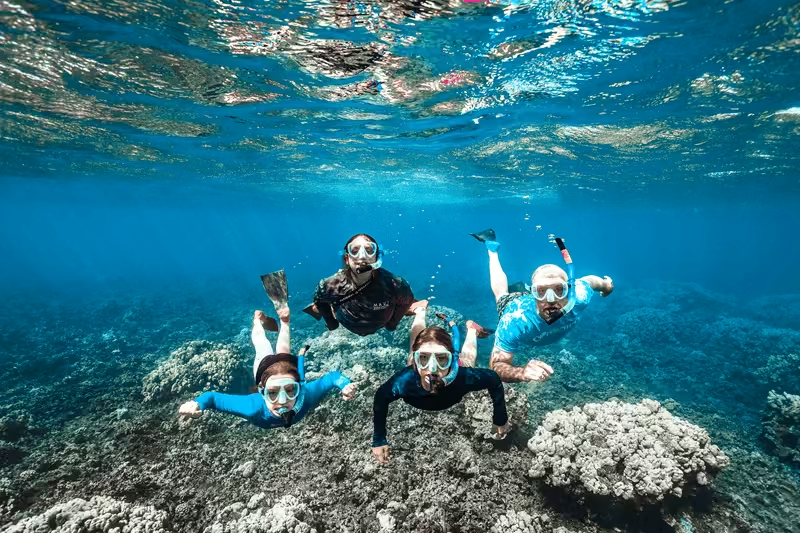
Your morning begins with an aloha at Māʻalaea Harbor. Before departure, the captain checks the makani and nalu. Once you're out on the kai, you may see colorful iʻa, a passing honu, or even koholā during Maui whale season.
Your guides may ask for a little kōkua when handing out equipment or keeping the deck organized. While snorkeling, everyone shares a kuleana to protect the reef and mālama the ocean by keeping hands, fins, and equipment away from coral.
When the adventure is pau, a cheerful mahalo and a hui hou are perfect ways to end the day.
Maui Snorkeling currently operates ocean trips from Māʻalaea Harbor to destinations including Molokini Crater, Turtle Town, and Coral Gardens. That makes ocean vocabulary a natural connection between this guide and our first-hand experience helping Maui visitors on the water.
Five Hawaiian Words to Review Before Your Snorkeling Trip
Before heading out from Māʻalaea Harbor, review Māʻalaea, honu, ma kai, ma uka, and mahalo. These words can help you recognize a Maui place name, a common ocean animal, two useful directions, and a courteous way to thank your guides.
Hawaiian place names are not tongue twisters to race through. Slow down, look for the ʻokina and kahakō, and listen to a reliable local recording.
Start with these five names:
Māʻalaea: Māʻalaea Harbor is an important departure point for many Maui ocean activities, including Maui Snorkeling tours.
Kīhei: Notice the kahakō over the ī. The longer vowel is part of the word’s correct spelling and pronunciation.
Hāna: The kahakō over the ā indicates a longer vowel sound.
Kāʻanapali: The ʻokina creates a noticeable separation within the name.
Haleakalā: Take your time rather than trying to say the whole name as one rushed English sound.
University of Hawaiʻi language resources emphasize that names carry meaning and that correct pronunciation helps honor the places people move through and visit.
Common Mistakes Hawaiian-Language Beginners Can Avoid
Treating Every Word as an Exact Translation
Languages don't always line up word for word. Aloha, mālama, kuleana, and pono can communicate more than their shortest English definitions.
Use the quick meanings in this guide to recognize the words, but do not assume you have learned every possible meaning or use.
Dropping the ʻokina and Kahakō
The marks in Hawaiʻi, ʻohana, mālama, Kīhei, and Māʻalaea aren't optional decorations. They provide information about pronunciation and may distinguish one word from another.
Use the proper characters when your website, device, or publishing platform supports them.
Calling Pidgin “Hawaiian”
Hawaiian and Pidgin are not the same language. Hawaiian is ʻŌlelo Hawaiʻi. Pidgin generally refers to Hawaiʻi Creole English, a separate local language with its own history and community use.
Visitors don't need to imitate Pidgin. Listen respectfully, speak naturally, and concentrate on learning Hawaiian words and place names carefully.
Using one sincere aloha or mahalo is better than filling a sentence with words you do not yet understand.
Natural, thoughtful use feels welcoming. Forced use can feel like branding or performance.
Guessing at Permanent or Ceremonial Translations
A beginner's glossary is not the right tool for translating a tattoo, business name, wedding vow, memorial, blessing, chant, or formal statement.
For anything permanent, public, ceremonial, or culturally important, work directly with a qualified Hawaiian-language practitioner.
Test Your New Hawaiian Vocabulary
See how many you can answer without scrolling up.
1. Which word would you use to thank your snorkeling crew? Answer: Mahalo
2. A sign says “E komo mai.” What does it mean? Answer: Welcome
3. Someone tells you the beach is on the ma kai side of the road. Which direction should you look? Answer: Toward the ocean
4. Your guide spots a honu. What should you look for? Answer: A turtle
5. Which word communicates caring for or protecting a place? Answer: Mālama
6. Which phrase means “until we meet again”? Answer: A hui hou
7. What does ʻono mean after a great meal? Answer: Delicious
Scorecard
6–7 correct: Maikaʻi! You’ve got a strong start for your Maui trip.
4–5 correct: Great start. One more pass through the tables should do it.
0–3 correct: No worries. Your Maui vacation does not come with a vocabulary exam.
FAQs
Helpful Hawaiian words for beginners include aloha, mahalo, e kala mai, e komo mai, a hui hou, ʻohana, keiki, ma uka, ma kai, mālama, kuleana, kai, honu, and iʻa. These words cover greetings, courtesy, directions, family, respectful travel, and common ocean experiences.
Aloha is commonly used as a greeting. It can also be used when saying goodbye, but its meaning is broader than hello or farewell. Hawaiian dictionaries connect aloha with love, affection, compassion, kindness, and caring.
Mahalo means thank you and can also communicate appreciation or respect. Mahalo nui loa is commonly translated as “thank you very much.”
You may hear aloha used when someone is leaving. A hui hou means “until we meet again” or “see you later” and is another warm way to say goodbye.
Ma uka means toward the uplands or mountains. Ma kai means toward the ocean. These phrases are especially helpful when following directions on Maui because roads and locations are often described by their relationship to the land and sea.
Yes, visitors can use Hawaiian words respectfully. Start with simple greetings and courtesy terms, preserve the correct spelling, listen to fluent speakers, and avoid pretending to know more than you do. A sincere effort is more respectful than using Hawaiian words as decorations or tourist catchphrases.
Common ocean words include kai for ocean, iʻa for fish, honu for turtle, nalu for wave, makani for wind, ʻau for swimming, luʻu for diving, and koholā for humpback whale.
Perfection is not required before you use a simple greeting. Slow down, pay attention to the ʻokina and kahakō, and listen to reliable recordings. Correcting yourself after hearing a word pronounced properly is part of learning.
No. Hawaiian, or ʻŌlelo Hawaiʻi, is the Indigenous language of Hawaiʻi. Pidgin generally refers to Hawaiʻi Creole English. They are separate languages with different histories and forms of use.
Bring Your New Words onto the Water
Knowing a few Hawaiian words will not make you fluent, but it can make your Maui vacation more connected.
You'll understand why someone points ma kai, know what to look for when your guide spots a honu, and recognize that mālama and kuleana are more than words on a sign. They are reminders to care for the places and experiences that make Maui special.
Ready to hear Maui place names and ocean words in their natural setting? Join Maui Snorkeling for a Molokini Crater, Turtle Town, or Coral Gardens adventure departing from Māʻalaea Harbor.
We'll bring the snorkeling equipment, ocean guidance, and enthusiasm. You bring your curiosity, your sense of adventure, and a genuine aloha for the place you are visiting.
Sources & Updates
Use these trusted resources to confirm Hawaiian spelling, pronunciation, word meanings, cultural context, language-learning guidance, and marine-life viewing recommendations.