
Written by the Maui Snorkeling team, operating Molokini and Turtle Town tours out of Maʻalaea Harbor since 1985. We spend more days in these waters than on land!
Last updated: December 2025
Quick Answer: Whistling on a boat is considered bad luck because sailors believed it could “call up the wind,” and because whistles were used for onboard commands—random whistling could cause confusion. Today, Maui crews mainly avoid it to protect communication and focus.
You’re out on the water off Maui, the sun’s shining, the boat’s cruising, and someone lets out a cheerful whistle.
Then you hear it.
A deckhand laughs and says, “Eh—no whistling on the boat!”
A captain grins but still shakes their head like you just triggered a decades-old rule.
If you’ve ever wondered why whistling on a boat is considered bad luck, especially on fishing boats or ocean charters in Hawaiʻi, this No Whistling on a Boat guide breaks down where the belief comes from, why crews still honor it, and how it shows up on Maui snorkeling and fishing trips today. In many ways, it fits right into old sailors’ superstitions and the broader world of nautical superstitions, where the smallest actions could either bring bad luck or bring good on the ocean.
Why is Whistling on a Boat Bad Luck? (Quick Answer)
Before we break down the deeper history and meaning, here’s the simple version of why whistling on a boat became such a big deal. Other classic sailor sayings also come from this same tradition of weather + luck at sea.
The Belief
In old maritime lore, whistling is said to “call the wind.” More wind means rougher seas, harder work, and a less comfortable day on the ocean. Some believed you were tempting the god of sea, which definitely wouldn’t bring good weather.
The Modern Take
Today, most Maui snorkeling crews treat it as a fun, lighthearted tradition that also reinforces something very real: the ocean is powerful, conditions change quickly, and good seamanship depends on focus—not accidental distractions.

No Whistling on a Boat
Origins: Why Sailors Banned Whistling on Ships
This superstition didn’t appear out of nowhere—its roots go back to the earliest days of sailing culture, including the Royal Navy and old-world mariners.
Calling the Wind
The most common explanation is simple: whistling invites wind. In old sailing lore, whistling (or even singing into the wind) was taboo because it could “whistle up a storm”—the New Zealand Maritime Museum
lists “No whistling” as a classic sailing superstition. On a wind-powered ship, wind wasn’t background weather—it was the engine: too little, and you drift; too much, and you’re dealing with rough seas and hard work. On Maui, wind can quickly affect comfort and visibility, which is why we teach guests to read it before they book: Maui Snorkel Conditions 101.
Whistles Were Tools, Not Toys
Another practical truth: on ships, whistling wasn’t for fun. It was a signal device. The boatswain’s call (the “bosun’s whistle”) has long been both a badge of office and a practical instrument for conveying orders at sea—Royal Museums Greenwich notes its shrill whistle can be varied in pitch and heard above wind and sea. Read the boatswain’s call description here.
The USS Constitution Museum also describes how boatswains (and their mates) carried a small silver “pipe” or “call,” with sharp notes meant to cut through the noise of wind and water. That’s why many crews still prefer no random whistling during briefings, maneuvers, and ladder time: it adds noise when clear communication is essential. Fun footnote: some traditions even gave the cook a pass—Mercury Marine shares the old joke that if you can hear the cook whistling, he’s not eating the rations: see “Whistling is forbidden on board”.
Keeping Order on Deck
Boats are tight, moving workspaces full of:
- Lines
- Ladders
- Fins
- Snorkel gear
- Anchors
- Guests moving around
Superstitions often form around practical behavior. “No whistling” is another way of saying “Keep the deck calm.” Respect the work happening around you. Don’t disrupt the rhythm of the ocean day. Even small mishaps—like when a ship’s cat slipped or a cat fell overboard—were once interpreted as omens.
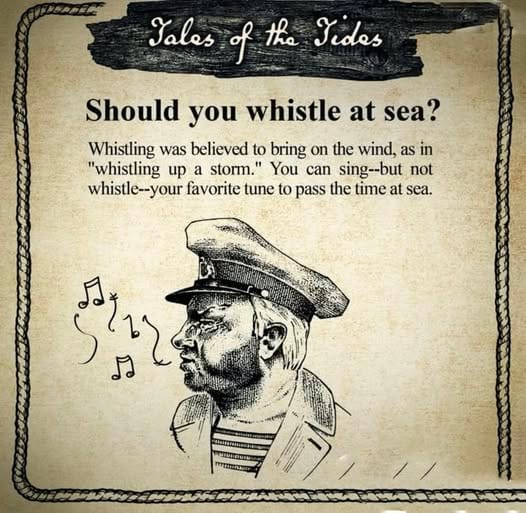
Photo Courtesy of Tall Ships
Why Crews Still Prefer No Whistling Today
Even on modern Maui boats, there are real-world reasons crews still prefer that guests avoid whistling.
Wind Really Does Change Everything
Even if whistling doesn’t summon weather, wind matters—especially on Maui.
More wind means:
- A rougher ride
- Extra spray
- More seasickness
- Harder ladder entries/exits
- Less comfortable snorkeling
- Reduced visibility
So while the superstition is playful, the concern behind it is absolutely real, just like the old morning sailors’ sayings that predicted weather and luck.
👉 Want to see what captains actually check before leaving the dock? Use our Maui Snorkel Conditions 101 to read wind + swell in about 5 minutes.
Distraction Is the Real Risk
Whistling itself isn’t dangerous. But distraction can be.
Crew members may be:
- Assisting a swimmer
- Watching the ladder
- Monitoring ocean conditions
- Managing lines
- Listening for instructions
A sudden whistle can break focus at the wrong moment. And on a boat, attention is everything!
It Can Interfere With the Captain’s Communication
Some captains run a chill, talk-story style boat. Others operate with tight communication.
Either way, unnecessary sound during:
- Safety briefings
- Maneuvers
- Snorkel entries
- Ladder time
can get in the way.
So the superstition also acts as a polite cue: save the soundtrack for the ride home.
👉 If you like boat-culture rules like this, you’ll also want our
snorkeling safety & etiquette list (what not to do on a Maui snorkel day—boat or shore).
Make your Maui morning unforgettable. Reserve your Molokini Crater Snorkeling Tour today and snorkel with sea turtles and vibrant reef life.
First time heading out? Read our Molokini snorkeling guide (best time, rules, depth, and what you’ll see), then book your tour.
Maui Fishing Lore: How the Superstition Shows Up Locally
While the belief is global, Maui’s fishing community has its own spin on how this superstition plays out.
It’s a Classic “Don’t Jinx It” Rule
Fishing boats around Maui are full of sayings like:
- “Don’t talk about the fish yet.”
- “Don’t call it a good day until we’re back.”
- “Don’t count it early.”
Whistling fits right into this same mindset—don’t tempt fate on the water.
The Ocean Always Gets the Last Word
If Maui fishermen sound superstitious, it’s because they’ve seen enough unpredictable weather and unbelievable timing to respect what they can’t control. Many don’t literally believe that whistling changes the weather, but they still honor the rule because it reinforces humility.
Delivered With a Smile
On Maui charters, “no whistling” isn’t a strict command. It’s more like:
- A playful warning
- A fun story
- A grin followed by, “We like calm seas, yeah?”
It’s part of the culture—something that keeps tradition alive while keeping the vibe light!
What To Do Instead of Whistling on a Boat
If you’re tempted to whistle on board, here are some easy alternatives that keep things running smoothly.
Use Clear Signals and Words
If you need someone’s attention:
- Say their name
- Wave
- Walk over if it’s safe
- Let the crew handle ladder and entry communication
Boats run best with clarity.
Save the Whistling for Shore
Instead of whistling:
- Hum quietly
- Take photos
- Enjoy the views
- Stay calm during briefings
You can have fun without becoming the person who “summoned the wind.”
Ask the Crew About Their Boat Rules
Every charter is unique. If you’re unsure, ask. Crews appreciate guests who stay aware and tuned in.

Is Whistling Actually Bad Luck—or Just a Story?
So is this superstition real or just a fun part of boat culture? The truth sits somewhere in the middle.
Myth vs. Reality
There’s no scientific evidence that whistling affects the weather. But superstitions don’t last centuries by accident. They often survive because they encourage:
- Awareness
- Safety
- Respect
- Good teamwork
The Best Way to Think About It
A perfect middle-ground explanation:
Whistling doesn’t control the ocean. But respect does. If avoiding a whistle keeps the deck calm and the vibe focused, that’s good seamanship—not superstition.
Our Maui Snorkeling Crew’s Take
Here’s how our team approaches the superstition—and why we still love sharing it with guests.
We Keep It Light
If a guest whistles, no one gets scolded. It’s usually a grin and a friendly, “Eh! No whistling!” But yes—most ocean folks still prefer quiet during:
- Safety briefings
- Approaches to snorkel sites
- Ladder time
- Any moment involving coordination
We Like Traditions That Promote Respect
Some traditions fade away. Others stick because they genuinely help. “No whistling on the boat” lives in that perfect middle:
Fun. Light. Harmless. And a small reminder that the ocean is in charge.
Quick Boat Etiquette Checklist
Want to be everyone’s favorite guest? Keep this in mind:
- Listen during the safety briefing
- Keep gear out of walkways
- Follow crew direction at the ladder
- Don’t touch wildlife
- Don’t block visibility for the captain
- And… maybe skip the whistling 😉
FAQs: No Whistling on a Boat
1. Is it bad luck to whistle on any boat or just fishing boats?
The superstition applies to all boats, not just fishing vessels. Many crews believe whistling can “call the wind” and bring bad luck on the water.
2. Is whistling on a boat actually dangerous?
Not directly—but it can distract the crew during critical moments, creating a safety concern.
3. Can whistling be confused with a captain or crew signal?
Yes. Whistling can mimic real commands, especially on boats that still use whistle-like cues.
4. What is a bosun’s call (boatswain’s whistle)?
It’s a high-pitched whistle once used to give commands aboard ships, which is why random whistling became taboo.
5. Is there any science that whistling changes the weather?
No—there’s zero scientific evidence. The belief survives because it’s part of old nautical superstitions.
6. What should I do if I need attention on a boat?
Use your voice, wave, or move closer if it’s safe. Clear communication keeps everyone aware and organized.
7. What are other typical boat superstitions in Hawaiʻi and Maui charters?
“No bananas on board,” not bragging early, and lucky rituals before the first catch are among the most common.
8. Why do boat traditions focus on good luck or bad luck?
Sailors relied on rituals to feel protected at sea, believing specific actions could bring good fortune—or bad weather.
What Are Other Boat Superstitions?
If you enjoyed this one, you’ll probably also hear:
- No bananas on board
- Don’t call it a great day until you’re back at the dock
- Lucky hats, shirts, or rituals
- A specific song or saying before the first drop
Ready to see Molokini Crater up close? Book your all-inclusive snorkeling tour and experience Maui’s crystal-clear water, tropical fish, and unforgettable views.
Sources & Further Reading
- New Zealand Maritime Museum – “Top 20 Sailing Superstitions” (includes “No whistling” / “whistle up a storm”)
- Royal Museums Greenwich – Boatswain’s call (museum notes on shipboard use for conveying orders)
- USS Constitution Museum – “Good Call” (history and shipboard role of the boatswain’s call/pipe)
- ReadyAyeReady (Canadian Navy traditions reference) – notes on whistling being confused with boatswain calls and “whistling a wind”


