5 Best Maui Campgrounds: Fees, Permits, and Where to Camp in 2026
August 15th, 2024
| Maui InformationThings To Do In Maui
Written by Maui Snorkeling, operating tours to Molokini Crater, Turtle Town, and Coral Gardens from Māʻalaea Harbor since 1985. Tours are led by USCG-licensed captains aboard a USCG-inspected passenger vessel.
Last updated September 24, 2026
Quick Answer
The best Maui campgrounds for most visitors are Hosmer Grove for Haleakalā, Kīpahulu for a Road to Hāna overnight, Waiʻānapanapa for black sand beach scenery, Camp Olowalu for beach camping with amenities, and Pāpalaua Wayside Park for simple West Maui camping. You'll need to check permits, reservations, closures, and campground rules before you go, since Maui camping options can change by season, weather, and park status.
Main Takeaways:
Best For Haleakalā: Hosmer Grove is a good pick if you're planning sunrise, hiking, or cooler upcountry camping
Best For Hāna: Kīpahulu and Waiʻānapanapa are the strongest choices for an overnight stay on Maui's east side
Best For Amenities: Camp Olowalu is the easiest option if you want beach camping with showers, restrooms, parking, and a more organized setup
Best Simple Beach Option: Pāpalaua Wayside Park works well for basic West Maui camping, but you'll need to plan around limited facilities
Permit Reminder: Don't show up expecting open camping, since most Maui campgrounds require reservations, permits, or advance planning
Aloha! If you want to experience Maui beyond resorts and hotel walls, camping is one of the most memorable (and affordable) ways to do it. The key is to keep it legal and plan ahead, as many Maui campgrounds require reservations, permits, or both.
From tents by the beach to campsites high in a volcanic crater, Maui campgrounds have something for every outdoor lover. In this guide, we’ll explore some of the best campgrounds on Maui. You’ll get the info you need to plan a fun and stress-free camping trip.
How Camping Reservations Work on Maui
Haleakalā National Park (Hosmer + Kīpahulu): Campsites are reserved online (Recreation.gov). You’ll also need a park entrance pass to enter Haleakalā National Park.
Hawaiʻi State Parks (Waiʻānapanapa): Camping reservations for Feb 1, 2026, and beyond are handled via Explore Outdoor Hawaiʻi (per DLNR guidance). Day-use reservations/fees may be separate for certain parks.
Vehicle sleeping rules: State Park campgrounds are generally not set up for sleeping in vehicles. At Waiʻānapanapa, campervan camping reservations are temporarily unavailable through March 2027 during construction.
⚠️ Always check ahead for updates. Some trails and campgrounds may be closed until further notice due to maintenance or weather. For the latest info, call the park office or visitor center.
Best Maui Campgrounds At A Glance
Here’s a simple look at the best Maui campgrounds, what each one is best for, how booking works, and what you’ll want to know before you go.
Campground
Best For
Cost / Booking
Facilities
Know Before You Go
Hosmer Grove Campground
Haleakalā sunrise, hiking, birdwatching, and cooler upcountry camping
$20 per night, reservation required
Picnic tables, grills, potable water, pit toilets, and paved lot parking
It sits near 7,000 feet, so you’ll want warm layers and rain gear.
Kīpahulu Campground
A Road to Hāna overnight near ʻOheʻo Gulch and Pīpīwai Trail
$20 per night, reservation required
Picnic tables, grills at drive-up sites, vault toilets, and a nearby water station
There’s no water at the campground, no showers, no beach access, and no swimming in the stream.
Waiʻānapanapa State Park
Black sand beach scenery, coastal hiking, and an overnight stop near Hāna
$20 per night for residents or $30 per night for non-residents, permit required
Tent camping, cabins, restrooms, picnic areas, and park access; campervan camping is temporarily unavailable through March 2027
Reservations are required, and non-residents also need to follow park entry and parking rules.
Camp Olowalu
Beach camping with the easiest amenities and a more organized setup
$35 per adult, $12 per child ages 9–17, and $4 per pet, plus tax; reservations required
Bathrooms, hot showers, dishwashing station, Wi-Fi hotspot, parking, charging stations, picnic benches, and BBQ grills
It’s one of Maui’s most convenient camping options if you don’t want a primitive setup.
Pāpalaua Wayside Park
Simple West Maui beach camping close to the shoreline
There’s no drinking water, no electricity, and no camping on Tuesdays or Wednesdays.
Note: Campground fees, reservations, closures, amenities, and permit rules can change. Check the official campground source before you book, especially for weather alerts, park closures, and road conditions.
Maui campgrounds usually fall into four categories: national park campgrounds, state park campgrounds, county campgrounds, and private campgrounds. The right choice depends on whether you want Haleakalā access, an overnight on the Road to Hāna, beach camping, or a more organized setup with amenities.
National park campgrounds: Hosmer Grove and Kīpahulu are managed by Haleakalā National Park. They’re good for hiking, sunrise plans, and nature-focused camping, but you’ll need reservations and a park entrance pass.
State park campgrounds: Waiʻānapanapa is the main active state park option in this guide. It’s best for black sand beach scenery, coastal views, and a planned overnight near Hāna.
County campgrounds: Pāpalaua Wayside Park is a simple county beach campground with limited facilities. It’s not the right pick if you need drinking water, electricity, or a full-service setup.
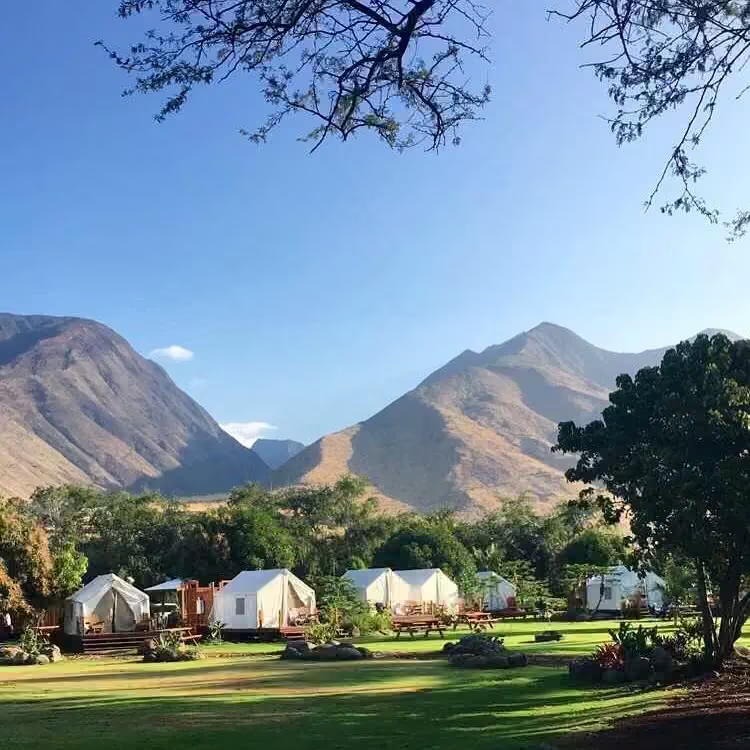
Private campgrounds: Camp Olowalu is the easiest choice if you want showers, bathrooms, parking, charging stations, and a more organized camping experience.
Top Maui Campgrounds to Explore
Here are five Maui campgrounds to compare for your trip:
1. Hosmer Grove Campground
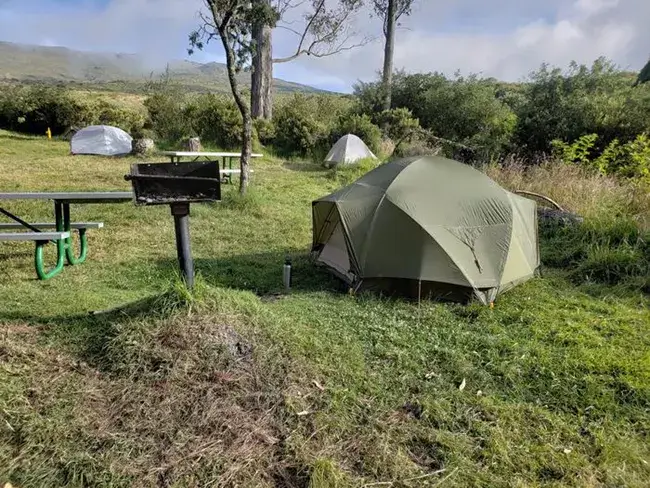
Why camp here: Hosmer Grove is the classic “sleep near the summit” option; great if you want an early start for sunrise, stargazing, or crater hikes.
Camp fee: $20/night per campsite
Stay limits: 3-night max consecutive; limited overnight camping per 30-day period in the park
Elevation: Nearly 7,000 ft (expect cold nights and rain)
Amenities: Picnic table, grill, potable water access, pit toilets
Pets: Not permitted in/around campsite facilities
Important sunrise note: A Hosmer Grove camping reservation includes a sunrise reservation for the next morning. Without a campsite reservation, sunrise requires a separate reservation.
Why camp here: If you’re doing the Road to Hāna and want a real East Maui nature experience, Kīpahulu is hard to beat, especially if you plan to hike the Pīpīwai Trail.
Camp fee: $20/night per campsite
Reservations: Required (30-day rolling basis)
Setting: Ocean cliff overlook sites near ʻOheʻo Gulch
Big rule most people miss: Entry into the stream is prohibited (no swimming in the gulch)
Water/showers: No water at the campground; no showers; vault toilets; water station nearby at the visitor center
Other notes: No beach access; mosquitoes/rain/sun exposure are common; quiet hours are enforced
Why camp here: This is one of Maui’s most iconic coastal parks; dramatic lava shoreline, sea stacks, and the famous black sand beach (Pa‘iloa/Honokalani).
Park hours: 7:00 am to 6:00 pm daily
Day entry/parking: Reservations required; non-residents pay an entry fee and parking fee (residents free with Hawaiʻi ID)
Camping: By permit only; $20 resident/$30 non-res per night per campsite
Cabins: $70 resident/$100 non-res per night per cabin (online cabin reservations must be made at least 7 days prior)
Campervans: Campervan camping reservations are temporarily unavailable through March 2027 while a new comfort station is under construction. The campervan lot is temporarily being used for day visitors and tent campers.
Weather/ocean note: Monitor weather reports and ocean conditions before visiting.
Why camp here: If you want a more convenient camping setup (showers, bathrooms, parking, and an easier “campground flow”), Camp Olowalu is a popular choice on the West Maui side.
Common amenities: Bathrooms, instant hot water showers, outdoor dishwashing station, Wi‑Fi hotspot at check-in, trash/recycling, private parking, charging stations, fire pit, picnic benches, BBQ grills
Why camp here: Pāpalaua Wayside Park is a simple West Maui beach campground along Honoapiʻilani Highway. It’s a good fit if you want a basic shoreline camping setup and you’re comfortable bringing your own water, supplies, and shade.
Pack for microclimates: It can be beach-warm in the afternoon and genuinely cold at night in Upcountry/Haleakalā.
Don’t count on water: Some campgrounds have potable water; others don’t. Always verify before you arrive and bring backup.
Follow vehicle rules: Sleeping in vehicles is generally not allowed at State Parks. Waiʻānapanapa normally has a designated campervan section, but campervan reservations are temporarily unavailable through March 2027.
Respect cultural sites + signage: Many Maui camping areas have sensitive resources, stay in designated areas and trails.
Check alerts before driving out: Storms and maintenance closures can change access quickly.
Planning Your Maui Camping Trip
Choose Your Campground: When selecting a campground, consider your preferences, interests, and budget. Do you prefer a remote wilderness experience or a more developed campground with amenities? Are you interested in hiking, swimming, or simply relaxing in nature?
Make Reservations: If your chosen campground requires reservations, be sure to book well in advance, especially during peak seasons.
Pack Wisely: Pack appropriate clothing and gear for the weather and activities you plan to enjoy. Don't forget essentials such as a tent, sleeping bag, sleeping pad, cooking equipment, and a first-aid kit.
Respect the Environment: Practice responsible camping and leave the campground as you found it, or even better.
Enjoy the Experience: On your camping trip, enjoy the beautiful views of Maui. Explore the island's rich culture and make great memories.
FAQs
Yes. Every campground in this guide requires a reservation, permit, or advance booking. Hosmer Grove and Kīpahulu use Recreation.gov, Waiʻānapanapa requires a state camping reservation, Camp Olowalu accepts private reservations, and Pāpalaua requires a County camping permit. Pāpalaua permits are issued on a first-come, first-served basis. Confirm current rules before you go because availability and closures can change.
Not usually. Sleeping in vehicles is generally not allowed in Hawaiʻi State Parks. Waiʻānapanapa normally has a designated campervan area, but campervan camping reservations are temporarily unavailable through March 2027 during construction.
Yes. Hosmer Grove campers receive a sunrise reservation for the morning after their camping trip. If you’re not camping, you’ll need a separate sunrise reservation to enter during sunrise hours.
No. Haleakalā National Park notes that entry into the stream is prohibited. Plan to enjoy the scenery and hikes instead.
Camping is $20 per night per campsite for Hawaiʻi residents and $30 per night for non-residents. Cabins are $70 per night for residents and $100 per night for non-residents, and online cabin reservations must be made at least seven days before check-in. Non-residents should also confirm the park’s current entry and parking requirements before visiting.
The best Maui campgrounds for most visitors are Hosmer Grove, Kīpahulu, Waiʻānapanapa State Park, Camp Olowalu, and Pāpalaua Wayside Park. Hosmer Grove is best for Haleakalā, Kīpahulu and Waiʻānapanapa are strong choices for East Maui and the Road to Hāna, Camp Olowalu is best for amenities, and Pāpalaua is best for simple West Maui beach camping.
Camp Olowalu is usually the easiest Maui campground if you want amenities. It offers bathrooms, hot showers, an outdoor dishwashing station, Wi-Fi near check-in, trash and recycling stations, private parking, charging stations, picnic benches, and BBQ grills.
No. You’ll need to camp in designated campgrounds and follow the permit, reservation, and overnight rules for that specific park or campground. Maui camping isn’t a show-up-anywhere setup, so check the official source before you go.
Kīpahulu Campground and Pāpalaua Wayside Park are two important ones to plan around. Kīpahulu doesn’t have water at the campground, though there’s a nearby water station at the visitor center. Pāpalaua has no water or electricity, so you’ll need to bring what you need.
Conclusion: The Magic of Maui Camping
Maui camping can take you from cool Haleakalā mornings to quiet beach nights and wild East Maui scenery. Choose the campground that fits your route and comfort level, reserve early, check current park notices, and pack for changing weather. A little planning goes a long way toward a relaxed and memorable stay.