Written by
Maui Snorkeling, operating tours to Molokini Crater, Turtle Town, and Coral Gardens from Māʻalaea Harbor since 1985. Tours are led by USCG-licensed captains aboard a
USCG-inspected passenger vessel.
Quick Answer
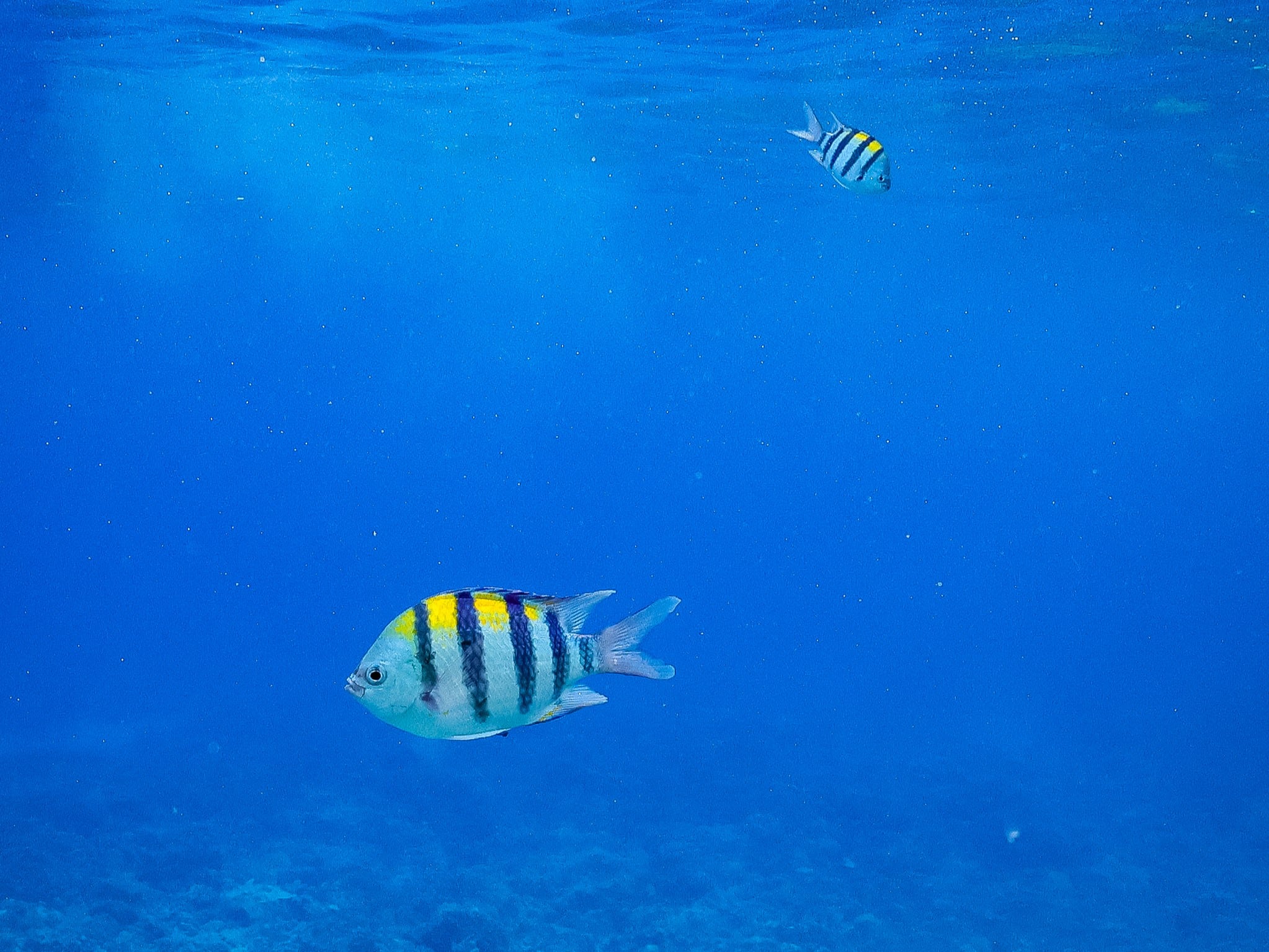
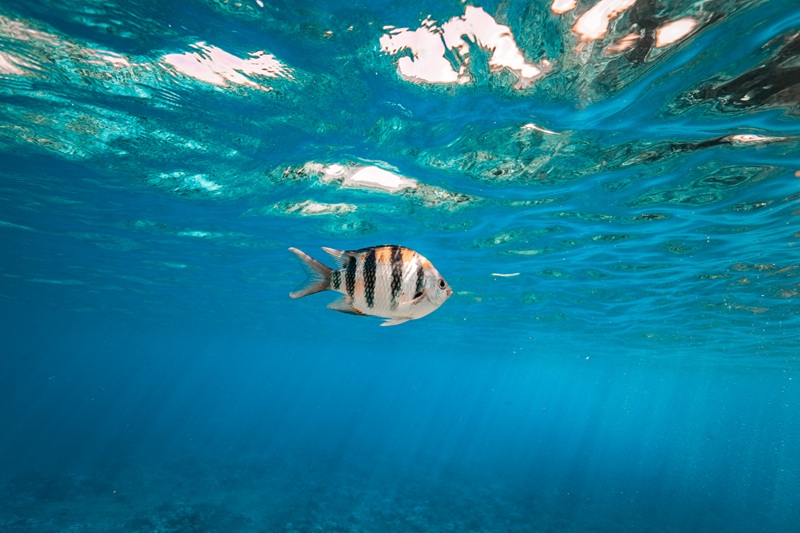
Hawaiian sergeant fish in Maui, called mamo in Hawaiʻi, are easy to recognize by their silver-green body, five dark vertical bars, and yellowish belly. Snorkelers may see them near reef ledges, lava rock, surge channels, and shallow reef structure when the water is calm and clear.
Main takeaways:
- Hawaiian name: The Hawaiian sergeant is called mamo in Hawaiʻi
- Best ID clue: Look for five dark vertical bars on a deep, oval-shaped body
- Where to look: Check reef ledges, lava rock, surge channels, tide pools, and shallow reef areas
- Best conditions: Calm mornings with clear water make reef fish easier to spot
- Snorkeling tip: Don’t chase fish. Slow down, float, and let reef life move naturally around you
Spotting a striped fish is only the beginning. Watch a group of Hawaiian sergeants for a moment, and you may notice them picking food from the water above the reef. Learning their markings and behavior will make these familiar Maui fish easier to spot on your next snorkel.
Hawaiian Sergeant Fish: Size, Diet, And Reef Life
How Big Do Hawaiian Sergeants Get?
Hawaiian sergeants can reach about 10 inches (25 centimeters), making them relatively large damselfish. Juveniles may live in tide pools before moving into deeper reef habitats as they grow.
What Do Hawaiian Sergeant Fish Eat?
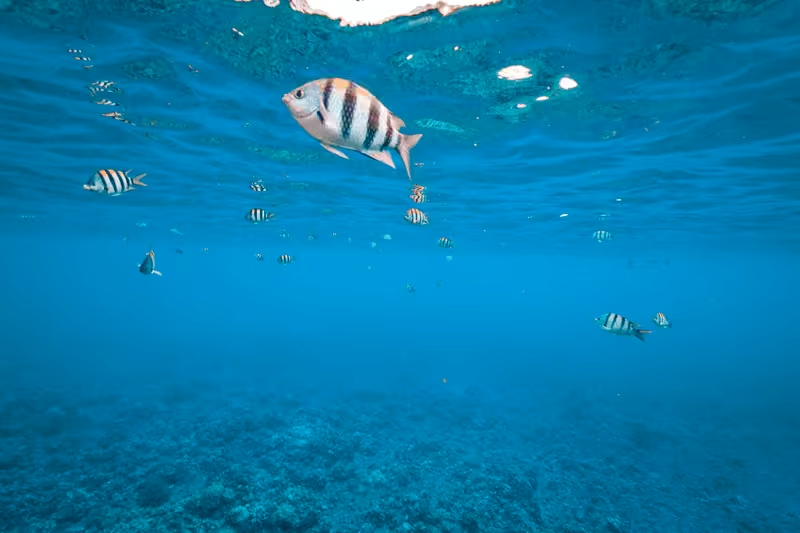
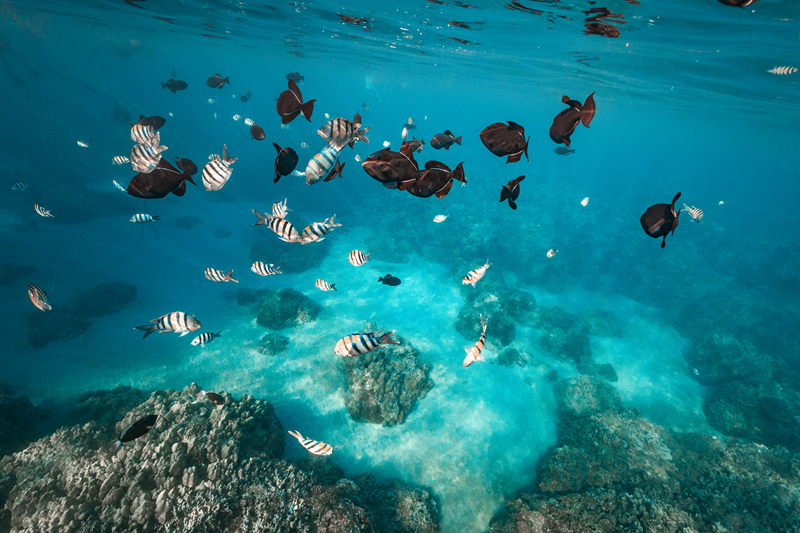
Mamo eat plankton, algae, and other small marine organisms. Adults often gather above the reef during daylight to pick food from the water. That hovering behavior is worth watching, even after you’ve identified the fish.
Where to See Them on Maui
Hawaiian sergeants occur around Maui’s rocky reefs. These locations offer reef habitat where you may encounter them, but choose your snorkeling spot based on conditions and your experience.
- Molokini Crater: Look for groups above the reef during a boat-based snorkeling visit.
- Coral Gardens: This boat-accessed reef along the Pali coastline offers coral formations and tropical fish habitat.
- Black Rock: Watch reef areas only when conditions are suitable. Don’t approach rocky points or surge zones just to find fish.
- ʻĀhihi-Kīnaʻu: Explore only the reserve’s open visitor areas and follow posted access and conservation rules.
Viewing tip: Look at the water above the reef as well as the reef itself. Don’t follow fish into waves, strong water movement, or areas beyond your ability.
How Hawaiian Sergeant Fish Nest And Guard Their Eggs
Male Hawaiian sergeants prepare nesting surfaces on rock, attract females through courtship displays, and guard the eggs after spawning. Their colors can also change during courtship and nest defense, so a nesting fish may look different from the striped fish feeding nearby.
Spawning can occur year-round, with research reporting a peak in late spring and early summer. If you notice a fish repeatedly defending one patch of reef, give it room rather than moving closer for a photograph. Disturbing a guarding male can leave its eggs exposed to other fish.
Fun fact: Researchers have recorded Hawaiian sergeants producing short, pulsed sounds during courtship and territorial interactions.
Why Some Sergeant Fish Are Hard To Identify
Hawaiian and Indo-Pacific sergeants can hybridize, making some individuals harder to identify from appearance alone. Use several clues together, including the body bars, tail-base markings, and overall coloring. If the markings don’t fit neatly, it’s fine to leave the identification uncertain.
Note: Check out our Tropical Fish guide!
How To Watch Hawaiian Sergeant Fish Without Disturbing Them
- Don’t feed them: Let fish find their own food and behave naturally.
- Give nesting fish room: Back away from a fish defending a patch of reef.
- Watch without following: Observe from your existing position rather than pursuing fish toward rocks or moving water.
- Protect the reef: Keep your hands and fins clear of coral, and don’t stand on reef-covered surfaces.
Why Locals Call Them Mamo
The Hawaiian name mamo is described by Papahānaumokuākea as a shortened form of maʻomaʻo, meaning green, referring to the fish’s greenish coloring. You may also encounter the name Hawaiian sergeant major in fish guides.
Photo Ideas for Your Next Snorkel Adventure
📸 Try capturing:
- A clear side profile showing all five stripes and the golden belly glow.
- A small school hovering above a reef ledge.
- A male guarding a purple egg patch (shoot from a distance, no flash).
Final Thoughts On Hawaiian Sergeant Fish In Maui
Hawaiian sergeants reward a closer look, without a closer approach. Their changing markings, feeding groups, and nest-guarding behavior make them more than another striped fish on the reef. Learn a few identification clues, give them space, and enjoy noticing a little more on your next Maui snorkel.
Sources & Updates
Use these resources to check Hawaiian sergeant identification, native range, diet, nesting behavior, and snorkeling conditions before your Maui reef day.