Escrito por
Snorkel en Maui, operando excursiones al cráter Molokini, Turtle Town y Coral Gardens desde el puerto de Māʻalaea desde 1985. Las excursiones son dirigidas por capitanes con licencia de la Guardia Costera de EE. UU. a bordo de un
Buque de pasajeros inspeccionado por la Guardia Costera de EE. UU..
Respuesta rápida
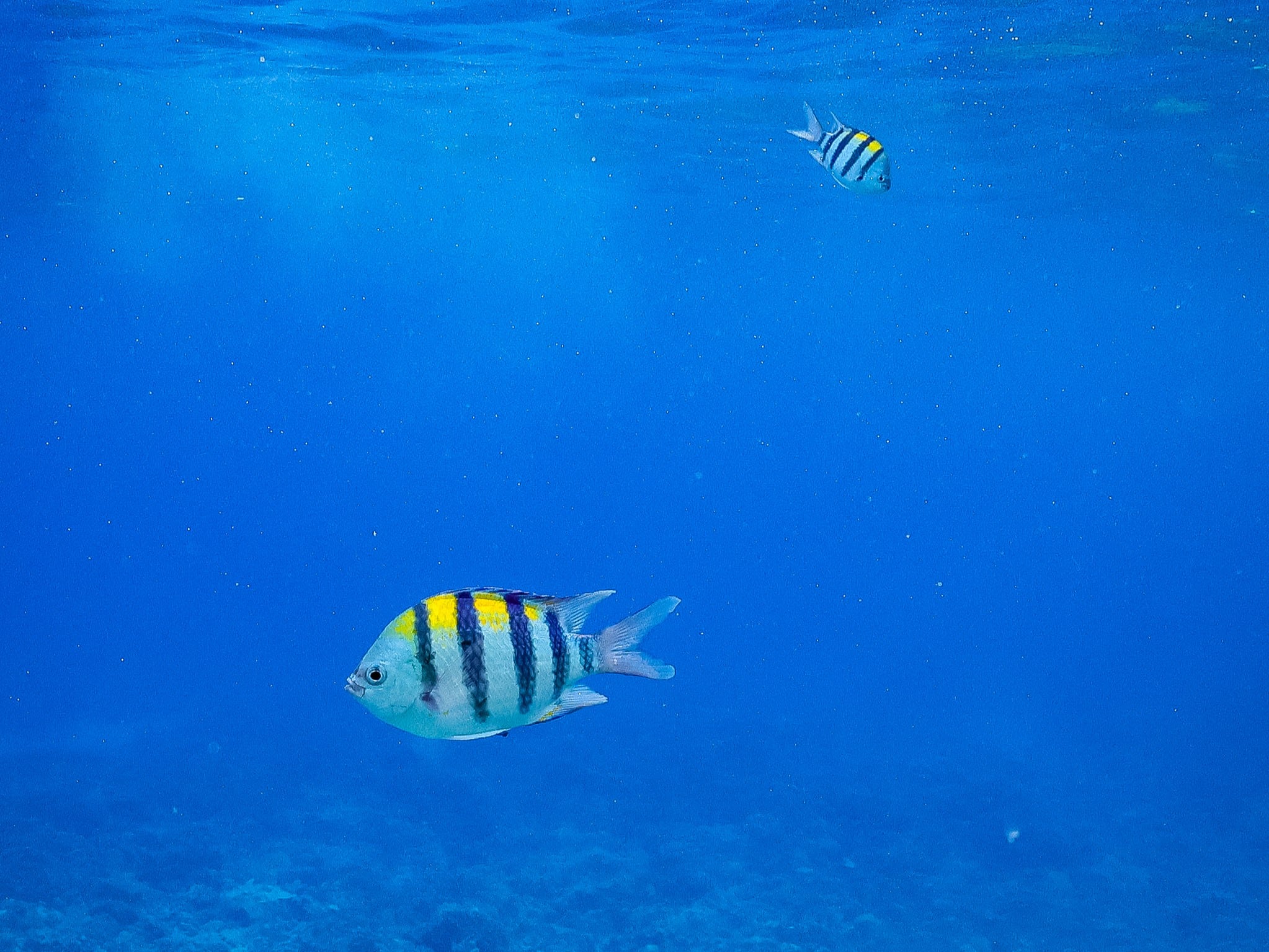
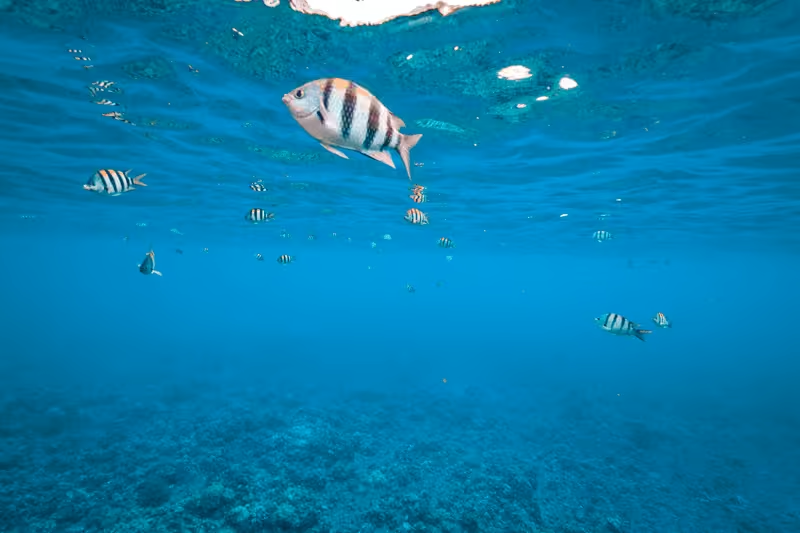
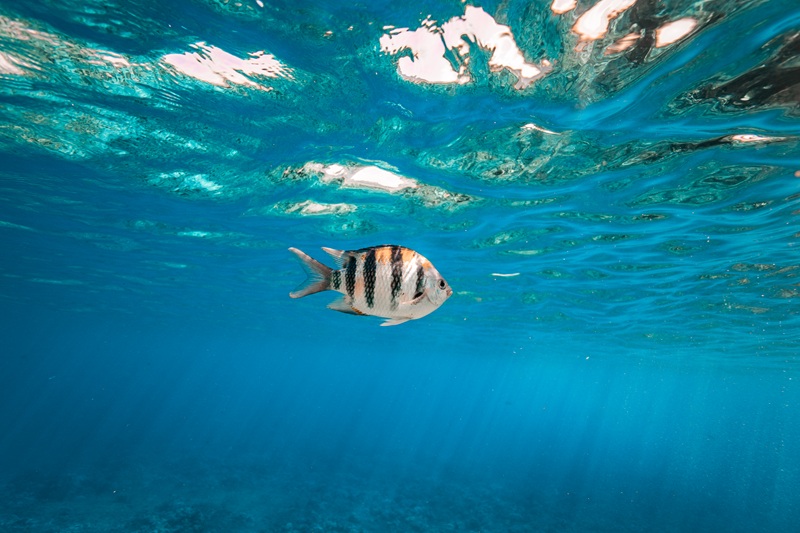
Pez sargento hawaiano en Maui, llamado mamo En Hawái, son fáciles de reconocer por su cuerpo verde plateado, cinco barras verticales oscuras y vientre amarillento. Los buceadores pueden verlos cerca de salientes de arrecifes, rocas volcánicas, canales de oleaje y estructuras de arrecifes poco profundas cuando el agua está tranquila y clara.
Conclusiones principales:
- Nombre hawaiano: El sargento hawaiano se llama mamo en Hawái.
- Mejor pista de identificación: Busque cinco barras verticales oscuras en un cuerpo profundo de forma ovalada.
- Dónde buscar: Revisa los salientes de los arrecifes, las rocas volcánicas, los canales de oleaje, las pozas de marea y las zonas de arrecifes poco profundas.
- Mejores condiciones: Las mañanas tranquilas con aguas claras facilitan la observación de los peces de arrecife.
- Consejo para practicar snorkel: No persigas a los peces. Baja el ritmo, déjate llevar y deja que la vida del arrecife se mueva naturalmente a tu alrededor.
Spotting a striped fish is only the beginning. Watch a group of Hawaiian sergeants for a moment, and you may notice them picking food from the water above the reef. Learning their markings and behavior will make these familiar Maui fish easier to spot on your next snorkel.
Hawaiian Sergeant Fish: Size, Diet, And Reef Life
How Big Do Hawaiian Sergeants Get?
Hawaiian sergeants can reach about 10 inches (25 centimeters), making them relatively large damselfish. Juveniles may live in tide pools before moving into deeper reef habitats as they grow.
What Do Hawaiian Sergeant Fish Eat?
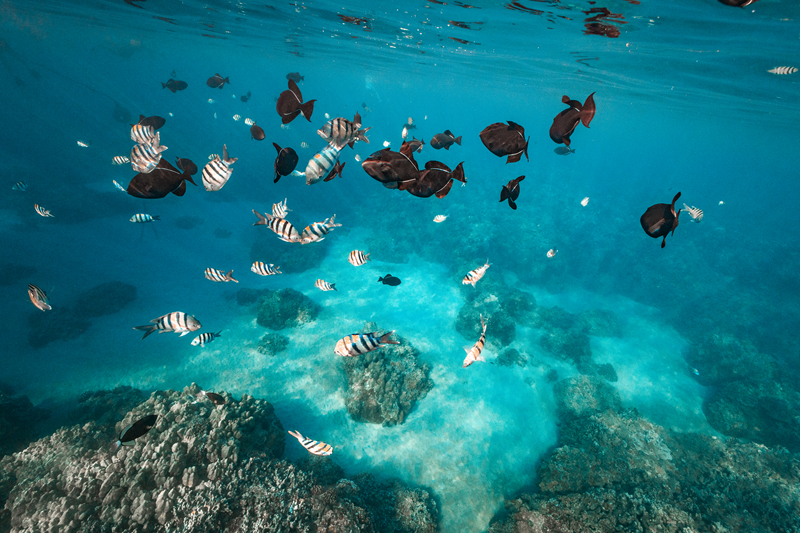
Mamo eat plankton, algae, and other small marine organisms. Adults often gather above the reef during daylight to pick food from the water. That hovering behavior is worth watching, even after you’ve identified the fish.
Dónde verlos en Maui
Hawaiian sergeants occur around Maui’s rocky reefs. These locations offer reef habitat where you may encounter them, but choose your snorkeling spot based on conditions and your experience.
- Cráter Molokini: Look for groups above the reef during a boat-based snorkeling visit.
- Jardines de Coral This boat-accessed reef along the Pali coastline offers coral formations and tropical fish habitat.
- Roca Negra: Watch reef areas only when conditions are suitable. Don’t approach rocky points or surge zones just to find fish.
- ʻĀhihi-Kīnaʻu: Explore only the reserve’s open visitor areas and follow posted access and conservation rules.
Consejo para la visualización: Look at the water above the reef as well as the reef itself. Don’t follow fish into waves, strong water movement, or areas beyond your ability.
How Hawaiian Sergeant Fish Nest And Guard Their Eggs
Male Hawaiian sergeants prepare nesting surfaces on rock, attract females through courtship displays, and guard the eggs after spawning. Their colors can also change during courtship and nest defense, so a nesting fish may look different from the striped fish feeding nearby.
Spawning can occur year-round, with research reporting a peak in late spring and early summer. If you notice a fish repeatedly defending one patch of reef, give it room rather than moving closer for a photograph. Disturbing a guarding male can leave its eggs exposed to other fish.
Dato curioso: Researchers have recorded Hawaiian sergeants producing short, pulsed sounds during courtship and territorial interactions.
Why Some Sergeant Fish Are Hard To Identify
Hawaiian and Indo-Pacific sergeants can hybridize, making some individuals harder to identify from appearance alone. Use several clues together, including the body bars, tail-base markings, and overall coloring. If the markings don’t fit neatly, it’s fine to leave the identification uncertain.
Nota: Échale un vistazo a nuestro Pez tropical ¡guía!
How To Watch Hawaiian Sergeant Fish Without Disturbing Them
- Don’t feed them: Let fish find their own food and behave naturally.
- Give nesting fish room: Back away from a fish defending a patch of reef.
- Watch without following: Observe from your existing position rather than pursuing fish toward rocks or moving water.
- Protejamos el arrecife: Keep your hands and fins clear of coral, and don’t stand on reef-covered surfaces.
Por qué los lugareños los llaman mamo
The Hawaiian name mamo is described by Papahānaumokuākea as a shortened form of maʻomaʻo, meaning green, referring to the fish’s greenish coloring. You may also encounter the name Hawaiian sergeant major in fish guides.
Ideas fotográficas para tu próxima aventura de snorkel.
📸 Intenta capturar:
- Un perfil lateral nítido que muestra las cinco franjas y el brillo dorado del vientre.
- Un pequeño cardumen flotando sobre una cornisa de arrecife.
- A male guarding a purple egg patch (shoot from a distance, no flash).
Reflexiones finales sobre el pez sargento hawaiano en Maui
Hawaiian sergeants reward a closer look, without a closer approach. Their changing markings, feeding groups, and nest-guarding behavior make them more than another striped fish on the reef. Learn a few identification clues, give them space, and enjoy noticing a little more on your next Maui snorkel.
Fuentes y actualizaciones
Use these resources to check Hawaiian sergeant identification, native range, diet, nesting behavior, and snorkeling conditions before your Maui reef day.