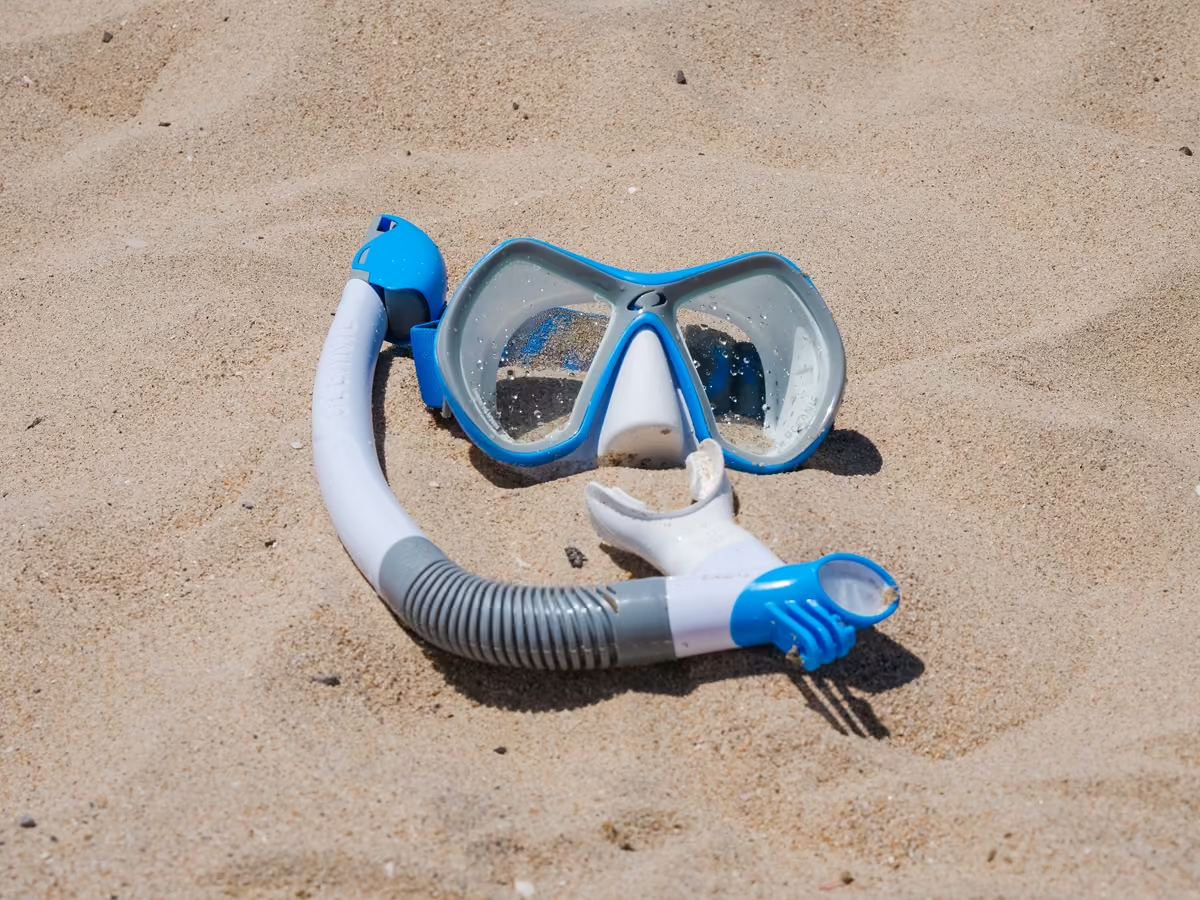
Why Does A Snorkel Mask Fog Up? 7 Fixes For A Clearer View
September 11th, 2026
| Maui Snorkeling
Written by Maui Snorkeling, operating tours to Molokini Crater, Turtle Town, and Coral Gardens from Māʻalaea Harbor since 1985. Tours are led by USCG-licensed captains aboard a USCG-inspected passenger vessel.
Last updated September 21, 2026
Quick Answer
Why does a snorkel mask fog up? Moisture inside it condenses into tiny droplets on the lens. Manufacturing residue, sunscreen, skin oils, and an ineffective anti-fog layer can make the problem harder to control. For a clearer view, start with lens-compatible cleaning, apply an approved defogger as directed, and check the fit. New masks may need different preparation from masks that fog halfway through a swim.
Main takeaways:
New Masks: Check first-use instructions before treating glass, plastic, prescription lenses, or factory anti-fog coatings.
Daily Prep: Clean away residue, apply compatible defog, and follow the product's rinsing instructions.
Dosage: Use the labeled amount; extra solution isn't a substitute for a clean lens.
Different Problems: Mist suggests condensation; water collecting inside points toward a leak or broken seal.
In The Water: Stop when visibility fails, signal your buddy or crew, and return safely.
You finally spot a flash of color over the reef, lower your face for a better look, and get a view that resembles a steamy bathroom mirror. Not exactly the Maui snorkeling moment you had in mind.
Why does a snorkel mask fog up? Moisture inside the mask condenses on the lens, creating tiny droplets that blur your view. The fix usually starts with the lens surface and your preparation routine, not a tighter strap or a stronger scrub.
The advice below is for a traditional mask with a separate snorkel.
Why Snorkel Masks Fog
Your mask traps air around your eyes and nose. When moisture in that air meets a sufficiently cool lens, it condenses into droplets. Those droplets scatter light, turning sharp reef details into a cloudy blur.
Anti-fog treatments help moisture spread into a thin film rather than bead into view-blocking droplets. But sunscreen, skin oils, and manufacturing residue can interfere with that layer. That's why adding more defog to a dirty lens doesn't necessarily solve the problem.
New-Mask Fogging Versus Mid-Swim Fogging
A brand-new mask that fogs repeatedly may need its specified first-use cleaning. Some new glass lenses carry manufacturing residue that interferes with defog. However, an intentional anti-fog coating or installed film isn't unwanted residue. Don't scrub it away.
A mask that starts clear, then clouds over points you toward your preparation and habits. Consider whether you've touched the inside, wiped away the treatment, or repeatedly exhaled through your nose. A previously reliable mask may simply need compatible cleaning rather than replacement.
How To Keep A Snorkel Mask From Fogging: 7 Fixes
1. Check Your Lens Type Before The First Swim
Find the care instructions for your exact mask, including any prescription lenses or added anti-fog film. Uncoated glass, plastic, and specially coated lenses don't necessarily tolerate the same preparation.
For rental equipment, ask the crew or rental shop how they prepare it. Don't try a permanent treatment on borrowed gear.
2. Start With A Clean Lens
Clean your mask lenses using a nonabrasive method approved for your mask. Mild dish soap can work when your manufacturer's care instructions allow it, but don't assume it's suitable for every lens or coating. Rinse off any sand before cleaning, then thoroughly remove the cleaner as directed.
Cleaning and mask defogging serve different purposes: cleaning removes oily residue, while defogging helps keep condensation from blurring your view. Starting with a clean surface gives your anti-fog treatment a better chance to work.
3. Use A Compatible Mask Defogger
Choose an anti-fog solution that's compatible with your mask's lens material and coatings. Apply the recommended amount and spread it evenly across the inside viewing surface, following the product's directions. Uneven coverage can leave a cloudy patch right where you're trying to watch the fish.
Prescription lenses need particular attention. A bottle labeled for dive masks isn't automatically suitable for every optical mask.
4. Get The Rinse And Timing Right
Read whether your product needs a wet or dry starting surface, a waiting period, or a rinse. Follow that sequence instead of borrowing instructions from a different bottle.
For rinse-off products, remove the excess as directed without deliberately scrubbing away the treatment. Don't towel-polish the inside afterward unless the instructions require it.
5. Keep Fingers And Sunscreen Off The Inside
Wash your hands after applying sunscreen and before preparing your mask. Once the lenses are ready, handle the frame and skirt instead of rubbing the inside to check whether it feels clean.
Keep your sun protection. The goal is to avoid transferring oily residue onto the lens, not to skip sunscreen.
6. Breathe Normally Through Your Snorkel
With a traditional mask and snorkel, breathe steadily through your mouth while snorkeling at the surface. Repeatedly breathing out through your nose sends warm, moist air into the mask.
Don't hold your breath to prevent fogging. If you feel uncomfortable with the equipment, stop and get help instead of forcing a breathing pattern.
7. Check The Fit With The Mouthpiece In Place
Before you enter the water, check your mask's fit with the snorkel mouthpiece held normally in your mouth, since this can affect the seal. Move any hair away from the skirt and adjust the strap until it's comfortably snug, not painfully tight.
A leaking mask can leave you repeatedly clearing and rinsing it. Fix that problem before chasing another anti-fog treatment.
How Much Defog Solution To Use
Use the amount specified for your particular product, not a universal number of drops. For example, Sea Drops directs users to apply one to two drops inside each lens. Sea Gold gel specifies a small drop per lens. Both call for spreading the product and rinsing away excess while leaving the treatment behind.
Those are label examples, not recommendations for every mask. Both products' current instructions exclude prescription lenses. Check compatibility before copying the dose.
Aim for the specified coverage, not a puddle. If your view looks smeared before entering, check for excess product or an incompletely cleaned lens instead of adding another layer.
Fogging Versus Leaking: How To Tell The Difference
Fogging looks like mist on the inside lens. It may spread across the glass or appear in patches without a noticeable pool of water.
Leaking introduces water into the mask. You may feel it around your nose or see it collecting at the bottom. Use the seal and strap checks in our snorkel mask leaking fixes rather than treating a fit problem with defog.
Both can happen together. Persistent blur through a clean, clear lens is a different issue again, especially when you normally need vision correction. More anti-fog won't change a lens prescription.
Snorkel Mask Fogging Troubleshooting
Match what you're seeing to a likely cause. Make these adjustments safely aboard or ashore, not while trying to stay afloat.
Symptom
Likely Cause
Immediate Fix
A new mask fogs on every attempt
Manufacturing residue or preparation that doesn't match the lens
Check the model's first-use instructions. Use only an approved cleaning method; don't strip an intentional coating.
The same patch keeps fogging
Uneven treatment or localized oily residue
Clean as approved, then apply compatible defog across the full inside viewing surface.
Fog returns after wiping the inside
The anti-fog layer may have been disturbed
Reapply according to the label and avoid touching or towel-polishing the treated surface afterward.
The lens looks smeared before entry
Excess product or contamination, rather than fresh condensation
Check the dose and rinse instructions. Clean and restart instead of adding more solution.
Water collects around the nose
A seal leak, trapped hair, or poor fit
Clear hair from the skirt and check the fit with the mouthpiece in place. Ask for help with persistent leaks.
Haze remains after approved cleaning
Possible scratches or coating damage
Have the lens inspected. Don't attempt to polish away permanent damage with abrasive products.
Note: These are troubleshooting possibilities, not a diagnosis. Your mask's care instructions take priority.
What To Do If Your Mask Fogs In The Water
Stop sightseeing when you can't see clearly. Get your face above water, keep breathing, and tell your buddy or crew. Use available flotation for support while arranging a safe return or assistance. Ask for help immediately if you're struggling.
Don't pull off your mask and start experimenting while treading water. Once you're safely aboard or ashore, clean and reapply an approved treatment as needed. Don't stand on coral to work on your gear.
A rinse can clear condensation temporarily, but it won't necessarily address the cause. Re-enter only when the mask works, you're comfortable, and conditions remain suitable.
Unsafe Hacks And Products To Avoid
Skip lighter flames, torches, and boiling-water treatments. A fogging problem isn't a reason to expose your lens, skirt, or frame to uncontrolled heat.
Toothpaste, scouring powders, abrasive pads, and forceful scrubbing aren't universal fixes either. Some instructions for particular uncoated glass masks permit specific preparation methods. That doesn't make them appropriate for plastic, prescription lenses, or factory coatings. Follow your model's instructions rather than a generic video.
Keep household window cleaners, solvents, and automotive anti-fog products out of your routine unless the mask manufacturer explicitly approves them. Baby shampoo and spit are familiar shortcuts, but neither should override the care instructions or a rental operator's preparation process.
When It's Time To Replace The Mask
Fogging alone doesn't mean you need a new mask. Start with correct cleaning, compatible defog, and a fit check. If the problem persists, ask a dive shop to inspect it rather than escalating to harsher treatments.
Stop using a mask with a cracked lens, torn skirt, or unreliable buckle. Persistent haze after approved cleaning deserves inspection for scratches or coating damage. Depending on the design, an authorized replacement part may solve the problem without replacing the whole mask.
After snorkeling, rinse with fresh water, dry as directed, and store the mask protected from impact and excessive heat.
Focus On The Reef, Not Your Gear
Snag your spot on a Maui Snorkeling Tour! Make your ocean day easy with snorkel gear, food, crew support, and simple online booking.
Best visibility: Morning Tour at Molokini Crater & Turtle Town
Some new lenses have manufacturing residue that interferes with anti-fog treatment. Check your exact model's first-use instructions before cleaning. Don't assume a factory coating is residue to remove, and don't scrub a borrowed mask without the operator's approval.
Follow the directions for your particular defogger and lens. Preparation and rinsing instructions aren't interchangeable between products. Keep separate the initial cleaning rinse and any rinse required after application; one removes contamination, while the other leaves the intended treatment.
Don't use toothpaste as a default treatment. Some manufacturers permit specific cleaning methods for certain uncoated glass lenses, but abrasives can be unsuitable for other materials or coatings. Check your exact mask instructions before using anything intended to scrub the surface.
No. Check both the lens manufacturer's care instructions and the defogger's compatibility information. Some products sold for dive masks explicitly exclude prescription lenses. Ask the optical-mask supplier which cleaner and anti-fog treatment suit your particular lenses and coatings.
A rinse may clear existing condensation briefly, but it doesn't necessarily remove oily residue or restore an effective anti-fog layer. Return safely to the boat or shore to address recurring fog rather than repeatedly interrupting your swim to troubleshoot.
Not usually. Fogging concerns condensation on the lens, while strap adjustments address fit. Tightening won't clean the lens or replace its anti-fog treatment. When water is also entering, check the seal and mouthpiece fit instead of simply pulling the strap harder.
Final Thoughts: Less Fog, More Reef
A clearer view starts before your face reaches the water. Know your lens, clean it correctly, apply compatible defog, and check the fit. That gives you a useful routine to repeat, not a collection of random hacks.
Take the extra moment to get comfortable with your gear. The best part of snorkeling should be watching what moves across the reef, not wondering what's hiding behind a cloudy lens.
Sources & Updates
Check your exact mask instructions and current product label. Lens coatings and formulas differ; model-specific guidance takes priority over general tips.
Fogging And Breathing:Cressi
and
PADI
explain moisture and breathing habits.