
Let’s get one thing out of the way: if you need glasses to see, you’re not doomed to a blurry underwater world of “Is that a turtle or a floating sandal?” 😄
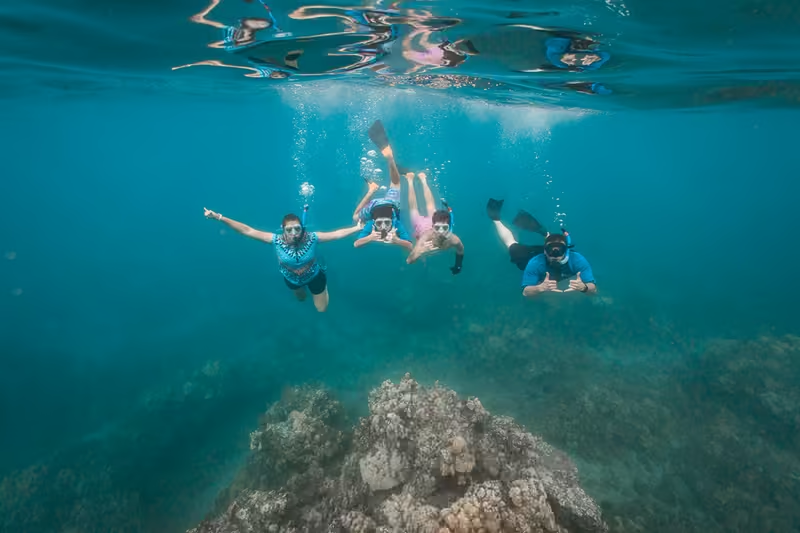
If you wear glasses or contacts, you can still enjoy Maui’s underwater scenery with the right mask. Regular glasses won’t seal beneath a standard snorkel mask, so a prescription snorkel mask is usually the best option for distance vision. Stick-on readers can help with close-up tasks. The CDC and FDA recommend removing contact lenses before swimming or snorkeling.
Main takeaways:
Let’s get one thing out of the way: if you need glasses to see, you’re not doomed to a blurry underwater world of “Is that a turtle or a floating sandal?” 😄
If you need vision correction, the right setup can make snorkeling easier, clearer, and more comfortable.
| Vision Option | Best For | What To Know |
|---|---|---|
| Prescription snorkel mask | The clearest all-around option | A prescription mask helps you see underwater without wearing contacts in the ocean. |
| Soft contacts | Not recommended for snorkeling | The CDC and FDA recommend removing contact lenses before swimming or snorkeling because water exposure can increase infection risk. |
| Stick-on reader lenses | Reading gauges, cameras, watches, or fish guides | Reader lenses help with close-up vision, but they don’t replace full prescription correction. |
| Regular glasses | Wearing on the boat before and after snorkeling | Glasses don’t work under a snorkel mask because the arms break the seal and let water in. |
| No correction | Mild prescriptions or guests who can see well enough without help | You’ll need to see your buddy, surroundings, and boat or shore exit clearly without lenses. If you’re unsure whether your vision is adequate, ask your eye care provider before your trip. |
Note: Keep regular glasses for the boat or beach. In the water, use a prescription snorkel mask for distance vision or stick-on readers for close-up vision, and follow CDC and FDA guidance to remove contact lenses before swimming or snorkeling.
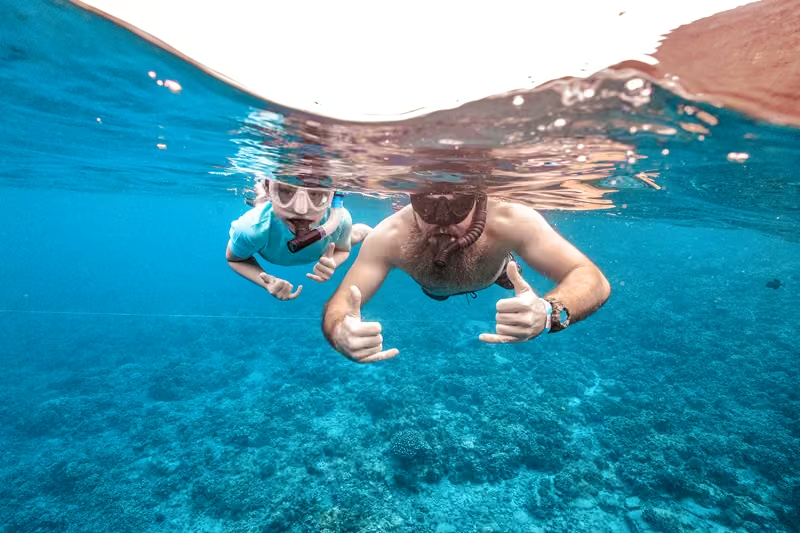
Snorkel masks rely on a clean seal. Glasses create gaps, which means:
So the goal is simple: clear vision + a leak-free mask seal.
A prescription snorkel mask can help bring Maui’s fish and reef details into focus without wearing contacts in the ocean. The right choice depends on your prescription and how the mask fits your face.
Stock-lens masks: These come in preset strengths and may work well for some prescriptions, but they don’t fully correct every vision need.
Custom prescription masks: These can address more specific needs, including significant astigmatism or stronger prescriptions. Ask your eye care provider which option suits your vision.
We have prescription mask options onboard, but available strengths vary. Contact us before your tour with your prescription details so you can check your options in advance. You’re also welcome to bring your own prescription snorkel mask.
Want a more detailed breakdown? Divers Alert Network explains prescription mask options and what they’re best for:
DAN: Prescription Dive Masks (Options + Pros/Cons)
If distance vision is fine but close-up is blurry (hello, menus, phones, and GoPro screens), you can use stick-on “reader” segments inside a standard mask. They’re popular with snorkelers who want help with:
Stick-on readers help with close-up tasks, but they don’t replace distance correction. Check that they’re compatible with your mask and follow the manufacturer’s fitting instructions.
The CDC and FDA recommend removing contact lenses before swimming or snorkeling. Water can introduce germs that contact lenses may trap against the eye, increasing infection risk. If you need distance correction in the water, use a prescription snorkel mask instead.
Not medical advice: If you have a history of eye infections, dry eye, or you’re unsure, ask your eye care provider what’s appropriate for you.
Official References:
CDC: Keeping Water Away From Contact Lenses
FDA: Everyday Eye Care
CDC: Acanthamoeba Keratitis Overview
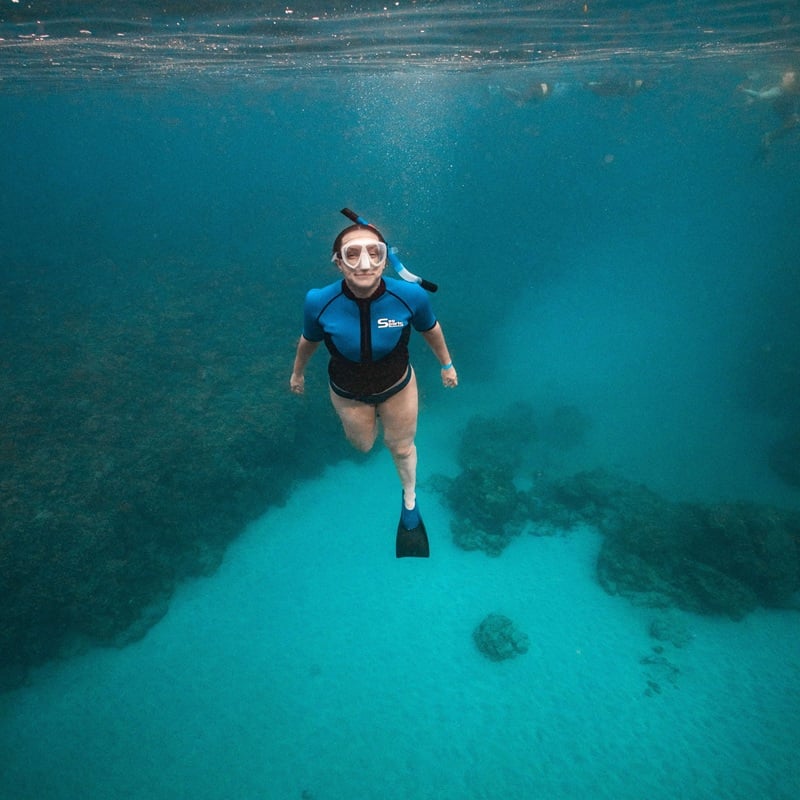
Even the right prescription won’t make up for a leaky mask. Look for a comfortable seal against your face, then take a moment to check the fit before getting in the water.
Put the mask on without the strap, inhale gently through your nose, and see if it “sticks” to your face. If it falls off immediately, try a different mask shape.
If you’re planning a shore snorkel day, check conditions first. Wind and chop make leaking more likely (and snorkeling less fun): Maui Snorkel Conditions 101.
If water reaches your contact lenses, end the snorkel calmly and return to the boat or shore.
Do not insert a backup pair until you are out of the water and can handle lenses with clean, dry hands.
A prescription mask needs the right care and the right lenses. Don't assume every dive-mask defogger works with prescription lenses or coatings. Our snorkel mask defogging guide explains what to check before applying a treatment.
If you’d rather skip the trial-and-error and enjoy the ocean, our crew provides gear fitting and comfort tips on board.
Either way, shore or boat, clear vision makes Maui snorkeling more magical. And yes, it’s totally possible!
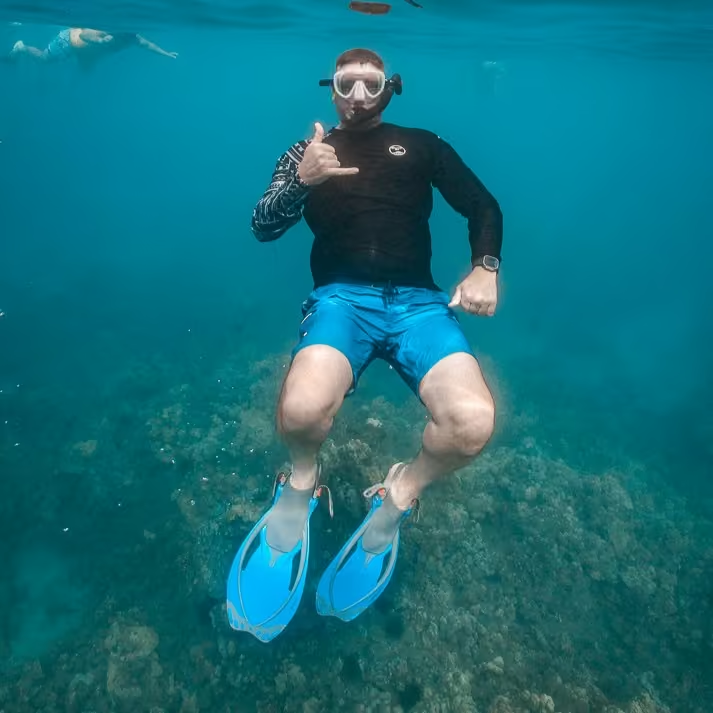
A little planning before your trip means less gear guesswork on the day. Set up your vision gear ahead of time, tuck your glasses into a protective case, and look forward to discovering Maui’s underwater details. If it’s your first snorkel trip, our Maui Snorkeling for Beginners guide will help you get ready.
Use these trusted resources to confirm contact lens safety, prescription mask options, snorkeling safety, and current water quality before you snorkel.
© 2026 Maui Snorkeling | Sitemap | Disclaimer | Privacy Statement | Cookie Policy