Whale Sharks In Maui: Sightings, Safety, And What To Expect
July 7th, 2026
| Marine Life
Written by Maui Snorkeling, operating tours to Molokini Crater, Turtle Town, and Coral Gardens from Māʻalaea Harbor since 1985. Tours are led by USCG-licensed captains aboard a USCG-inspected passenger vessel.
Last updated September 3, 2026
Quick Answer
Whale sharks in Maui are real, but sightings are rare, random, and never guaranteed. Research throughout the main Hawaiian Islands found no clear seasonal aggregation and suggested that most whale sharks are passing through. They’re the world’s largest fish, but they’re filter feeders that eat plankton and other tiny prey. If one appears, stay calm, give it plenty of room, don’t touch or chase it, and report the sighting to Hawaiʻi Uncharted Research Collective.
Main takeaways:
Sighting Odds: A Maui whale shark encounter is an extraordinary bonus, not something you should expect
Best Season: Researchers haven’t found a clear whale shark season in Hawaiian waters
Animal Type: A whale shark is a shark and a fish, not a whale or other marine mammal
Diet: Whale sharks filter plankton, fish eggs, and other tiny organisms from the water
Encounter Rules: Don’t chase, touch, ride, feed, surround, or block a whale shark’s path
Report A Sighting: Record the time, location, direction, photos, and video, then contact Hawaiʻi Uncharted Research Collective
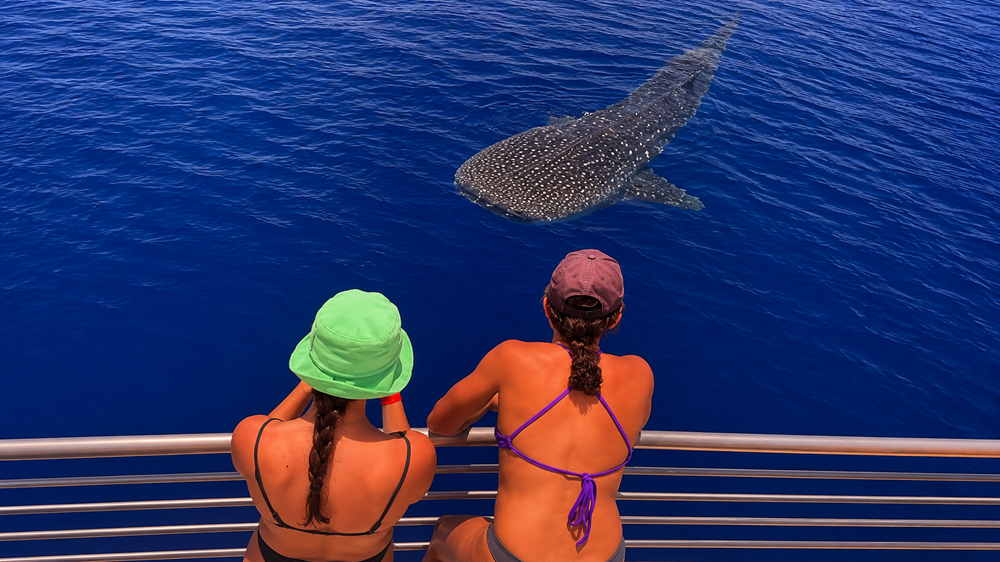
Imagine looking out over Maui’s blue waters and seeing what appears to be a small submarine covered in white polka dots. Then it moves its tail, opens an enormous mouth, and casually glides past the boat.
Congratulations. You may have just met the biggest fish in the ocean.
Whale sharks in Maui are real, but “possible” and “plan your vacation around it” are two very different things. These enormous spotted sharks occasionally pass through Hawaiian waters, yet sightings around Maui remain rare and unpredictable.
That makes a whale shark encounter an unforgettable surprise, not a standard part of a Maui snorkeling itinerary. This guide explains how rare they are, whether there’s a whale shark season, how to identify one, what they eat, whether they’re dangerous, and exactly what to do if one appears.
Are There Whale Sharks In Maui?
Yes, whale sharks have been documented in the waters surrounding the main Hawaiian Islands, and occasional sightings occur around Maui. They aren’t considered predictable residents of a particular Maui beach, reef, crater, or boat route.
The first peer-reviewed study focused on whale sharks in Hawaiian waters used citizen-science photos and reports collected between 1991 and 2020. Researchers identified 309 individual whale sharks by comparing their unique spot patterns.
That number confirms that whale sharks use Hawaiian waters, but it doesn’t mean they’re commonly seen by visitors. Sightings were collected over multiple decades and across the main Hawaiian Islands, not from a single Maui location or snorkeling route.
For information about the species snorkelers are more likely to encounter, read our guide to sharks in Maui. That article covers reef sharks, tiger sharks, safety, and what Maui snorkelers should realistically expect.
Whale Shark Quick Facts
Here’s a simple look at whale sharks in Maui, including how to identify them, what they eat, how rare they are, and what snorkelers should do during an unexpected sighting.
Topic
Details
Common name
Whale shark
Scientific name
Rhincodon typus
Animal type
Shark and fish. Despite its name, a whale shark isn’t a whale or marine mammal.
Size
Whale sharks can grow to approximately 40 feet long. Animals documented in Hawaiian waters have ranged from young individuals to very large adults.
Best ID clues
Enormous body, broad flat head, wide front-facing mouth, pale spots and stripes, long body ridges, large pectoral fins, and a tall tail.
Color and markings
Usually gray, blue-gray, or brownish on top with a pattern of pale spots and stripes. Each whale shark has a unique spot pattern.
Body shape
Long, wide, and heavy-bodied with a flattened head, large fins, and a powerful tail that moves from side to side.
Maui sightings
Rare and unpredictable. Whale sharks occasionally pass through Hawaiian waters, but they aren’t dependable residents of any Maui beach, reef, or tour route.
Best season
There isn’t a proven whale shark season in Maui. Sightings have occurred throughout the year without a clear seasonal aggregation.
Where to look
Offshore waters, channels, outer reef areas, and places where plankton or small prey may gather. There’s no guaranteed Maui whale shark location.
How they move
Whale sharks usually cruise steadily through the water by moving their large tails from side to side. They can also dive quickly and travel long distances.
What they eat
Plankton, fish eggs, tiny fish, and other small organisms filtered from seawater through specialized structures near the gills.
Feeding style
Filter feeding. A whale shark may swim with its wide mouth open while water and tiny food items pass through its filtering system.
Similar animals
Whale sharks may be confused by name with humpback whales, but whale sharks are fish that breathe through gills. Humpback whales are mammals that breathe air.
Are they dangerous?
Whale sharks don’t hunt humans and aren’t considered predatory threats. However, their enormous size, powerful tail, and sudden movements can injure someone who gets too close.
Conservation status
Whale sharks are globally listed as Endangered and face threats from fishing, accidental capture, entanglement, vessel strikes, and other human activity.
Sighting report
Record the date, time, location, direction of travel, estimated size, photos, video, scars, injuries, or entanglement, then report the sighting to Hawaiʻi Uncharted Research Collective.
Snorkeling tip
Treat a whale shark sighting as an extraordinary bonus. Stay calm, keep plenty of space, don’t touch or chase it, avoid its head and tail, and let the animal choose its path.
Note: Whale shark sightings aren’t guaranteed on Maui snorkeling trips. There’s no dependable viewing season or location, so any encounter should be treated as a rare and memorable wildlife moment.
How Rare Are Whale Shark Sightings Around Maui?
Whale shark sightings around Maui are rare enough that local captains, divers, snorkelers, and researchers get very excited when one appears.
In the Hawaiian whale shark study, approximately 88% of identified animals were reported only once. That suggests many of them were moving through the islands instead of repeatedly returning to the same documented location.
The study authors described Hawaiʻi as a potentially important habitat for whale sharks, mainly as a migratory corridor or navigational waypoint. In plain English, the islands may be one stop during a much larger journey across the Pacific.
Citizen-science data can’t tell us the precise chance of seeing one on any particular Maui trip. More cameras, social media posts, boat activity, and public awareness can all increase the number of reported sightings without proving that the population suddenly increased.
The honest expectation is simple: come to Maui for colorful reef fish, coral, sea turtles, rays, and beautiful ocean time. If a whale shark appears, you’ve won the marine-life lottery.
Whale Shark Research At A Glance
Researchers have used sighting reports and photographs to learn more about whale sharks in Hawaiian waters. This snapshot shows what the available research means for visitors hoping to see one around Maui.
Research Finding
What It Means
Research period
Sighting records and photographs collected in Hawaiian waters from 1991 to 2020 were included in the research.
Identified whale sharks
Researchers identified 309 individual whale sharks using their unique spot patterns and other visible features.
Single-sighting rate
Approximately 88% of the identified whale sharks were documented only once in Hawaiian waters.
Seasonal pattern
Researchers found no clear seasonal aggregation, so there isn’t a proven whale shark season in Maui or across Hawaiʻi.
Likely role of Hawaiʻi
The findings suggest Hawaiian waters may serve as a migratory corridor, temporary waypoint, or occasional feeding area rather than a dependable gathering place.
Visitor expectation
Whale shark sightings around Maui are rare, random, and never guaranteed during snorkeling tours, boat trips, or visits to a particular reef.
Important: These findings cover documented whale shark sightings throughout Hawaiian waters, not only sightings around Maui. New reports and photographs can help researchers better understand when and why whale sharks pass through the islands.
Is There A Whale Shark Season In Maui?
There isn’t a dependable whale shark season in Maui.
Researchers studying sightings around the main Hawaiian Islands didn’t find a clear seasonal aggregation. Hawaiʻi Uncharted Research Collective has also documented whale shark presence during every month of the year, although that doesn’t make sightings common or predictable.
This is very different from Maui’s humpback whale season. Humpbacks migrate to Hawaiʻi during a recognizable part of the year, while whale sharks may pass through at scattered times with no dependable viewing calendar.
Searching for the “best month to see whale sharks in Maui” may lead to confident-sounding answers, but current Hawaiian research doesn’t support choosing one month over another.
Where Can You See Whale Sharks In Maui?
There’s no reliable Maui whale shark location.
A whale shark could appear in offshore water, near an island channel, along a boat route, or close to an area where food has concentrated near the surface. That doesn’t turn the location into a permanent whale shark spot.
One sighting at Molokini, along the South Maui coast, or between islands doesn’t mean another whale shark will be waiting there tomorrow. These animals can travel great distances and dive far below the surface, which makes their movements difficult to predict.
Our Molokini Marine Life And Turtle Town Guide lists whale sharks as a rare treat. That’s the right way to think about them. They’re a possible surprise, not one of the animals a responsible operator should promise.
What Is A Whale Shark?
A whale shark, scientifically known as Rhincodon typus, is the largest living fish in the world. Despite the word “whale” in its name, it’s a true shark.
Whales are mammals. They breathe air through their lungs, surface to breathe, nurse their young, and move their tail flukes primarily up and down.
Whale sharks are fish. They breathe through gills, have skeletons made mostly of cartilage, and move their tails from side to side.
The name comes from their enormous size and filter-feeding lifestyle. Like several large whales, whale sharks eat some of the ocean’s smallest organisms instead of hunting large animals.
How Big Do Whale Sharks Get?
NOAA reports that whale sharks can reach approximately 12.2 meters, or about 40 feet, in length. Some estimates place their weight at up to 40 tons.
The whale sharks included in the Hawaiian study were estimated to range from about 2 to 12 meters long, or roughly 6.5 to 39 feet. The mean estimated length was 6.1 meters, which is about 20 feet.
Even a “small” whale shark can be longer than a compact car. A full-grown animal may approach the length of a school bus.
Size estimates made from boats, photos, or video aren’t always exact, especially when there’s no nearby object for scale. Still, nobody who sees one is likely to confuse it with a tiny reef fish.
What Do Whale Sharks Eat?
Whale sharks are filter feeders. Their diet includes plankton, fish eggs, small schooling fish, and other tiny organisms suspended in the water.
A feeding whale shark may swim with its broad mouth open, allowing water and food to enter. Special filtering structures near its gills trap edible material while water passes back into the ocean.
The mouth can look enormous, but whale sharks aren’t interested in eating snorkelers, divers, or people on boats. Their feeding equipment is designed for tiny prey.
They may gather near concentrated food created by spawning fish, plankton blooms, currents, or other ocean conditions. Because those conditions move and change, they don’t create a dependable Maui viewing site.
How Can You Identify A Whale Shark?
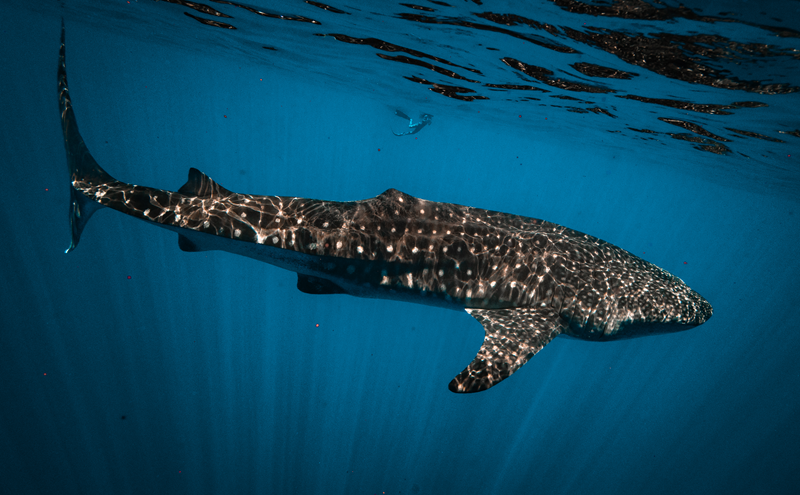
Whale sharks have one of the ocean’s most recognizable designs. Look for these features:
A Broad, Flat Head: The head is wide and blunt rather than pointed.
A Wide Front-Facing Mouth: The mouth stretches across the front of the head.
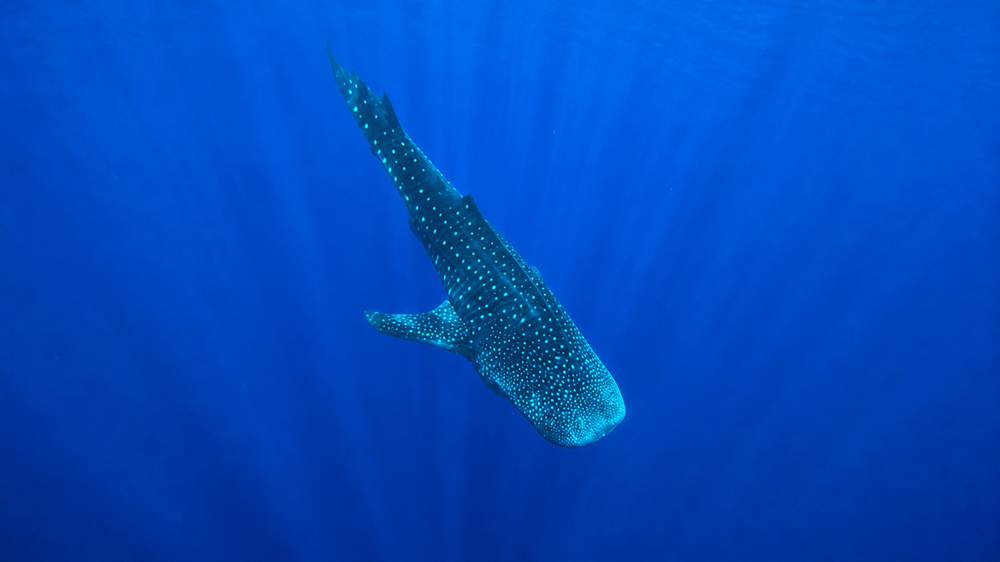
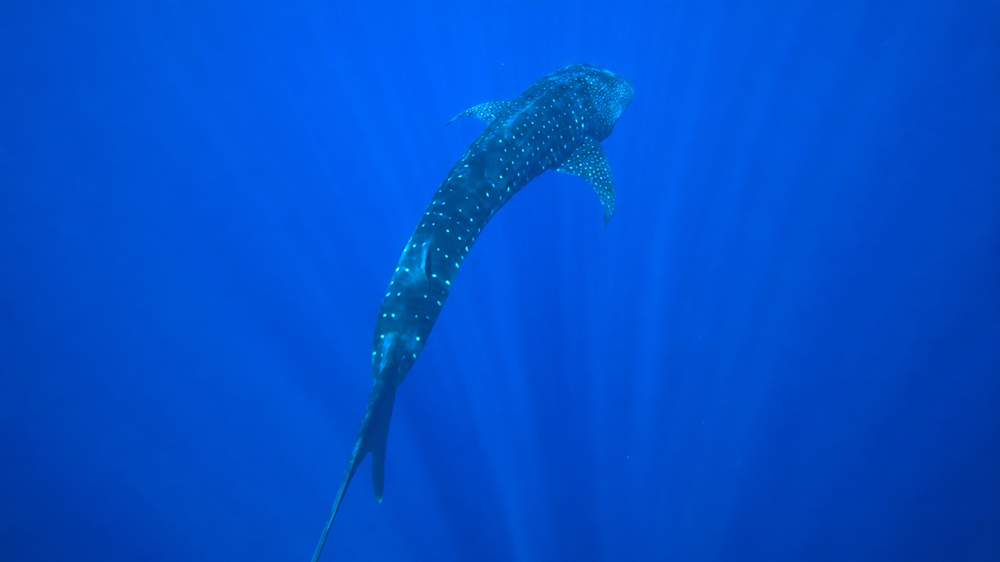
White Spots And Stripes: Pale dots and lines create a checkerboard pattern across a gray, blue-gray, or brownish back.
Long Body Ridges: Raised ridges run lengthwise along the sides of the body.
Large Pectoral Fins: The fins extend from both sides behind the head.
A Powerful Tail: The tall tail moves from side to side as the shark swims.
An Enormous Overall Size: Even young whale sharks can be much larger than the reef sharks commonly seen by divers.
Every whale shark has a unique spot pattern, much like a human fingerprint. Researchers compare photographs of those patterns to identify individuals and determine whether a shark has been documented before.
The area behind the gills on the left side is especially useful because left-side photographs are the international standard for whale shark identification. Right-side photos, overhead images, videos, and other angles can still provide valuable information.
Are Whale Sharks Dangerous To Humans?
Whale sharks aren’t considered predatory threats to humans. They feed on tiny organisms and don’t hunt people.
That doesn’t mean you should treat one like a giant pool float.
A whale shark is an extremely large, strong wild animal. Its tail can move with tremendous force, it may change direction without warning, and it can dive quickly when disturbed. A careless swimmer could be struck, separated from the group, or placed in danger while trying to get closer.
Never touch, grab, ride, chase, feed, or surround a whale shark. Don’t swim directly in front of its mouth, crowd its head, or position yourself behind its tail.
The safest and most respectful encounter is one controlled by the animal. Let the whale shark decide whether to remain nearby or continue its journey.
Whale Shark Vs. Humpback Whale
The similar names cause plenty of confusion, but whale sharks and humpback whales are completely different animals.
Whale Shark: A fish and a member of the shark family
Humpback Whale: A marine mammal
Whale Shark Breathing: Takes oxygen from the water through gills
Humpback Breathing: Surfaces to breathe air through blowholes
Whale Shark Movement: Moves its tail primarily from side to side
Humpback Movement: Moves its tail flukes primarily up and down
Maui Whale Shark Timing: Rare and unpredictable throughout the year
Maui Humpback Timing: Seasonal migration with a recognizable winter viewing period
Both animals are filter feeders, but they use different anatomy and feeding methods. Both also deserve plenty of space and responsible viewing.
What Should You Do If You See A Whale Shark?
A surprise whale shark encounter can turn calm adults into excited kindergarteners. Take a breath before everyone starts kicking, shouting, pointing, and accidentally swimming into one another.
Stay Calm: Slow your breathing and avoid frantic swimming.
Alert Your Buddy Or Crew: Quietly let nearby people know what you’ve seen.
Give It Plenty Of Space: Don’t approach its head, tail, or swimming path.
Don’t Chase It: A departing whale shark is ending the encounter. Let it go.
Never Touch Or Ride It: Physical contact can disturb the shark and put you in danger.
Don’t Feed It: Feeding changes natural behavior and can create unsafe interactions with boats and swimmers.
Avoid Surrounding It: Leave the animal a clear path in every direction.
Follow The Captain Or Crew: If you’re on a tour, listen immediately to the safety instructions.
Photograph From Your Existing Position: Use your camera’s zoom instead of moving closer for a better shot.
Let The Encounter End Naturally: The best sighting is one that doesn’t change the animal’s behavior.
Don’t jump from a boat, kayak, or paddleboard to pursue a whale shark. A surprise sighting doesn’t automatically make surrounding water safe for swimming, and the animal may already be navigating vessels, fishing lines, waves, or current.
How Do You Report A Maui Whale Shark Sighting?
Hawaiʻi Uncharted Research Collective, also called HURC, maintains Hawaiʻi’s whale shark catalog and uses public reports to learn about individual animals and their movements.
If you see a whale shark, collect whatever information you can without chasing or disturbing it:
Date and approximate time
General location or GPS coordinates
Direction the whale shark was traveling
Estimated length
Number of whale sharks present
Visible injuries, scars, tags, or entanglement
Photos and video from any available angle
Weather and ocean conditions
HURC encourages people to submit sightings even when the photos aren’t perfect. Left-side images are especially useful for matching the international identification standard, but right-side photos and video can also help researchers.
Don’t circle, crowd, or chase a whale shark to obtain a specific angle. The animal’s wellbeing matters more than creating the perfect catalog image.
Don’t attempt to cut fishing line, rope, netting, or other gear from an entangled whale shark yourself.
Whale sharks are powerful animals that can dive quickly, thrash unpredictably, and seriously injure a swimmer. Disentanglement requires trained responders, specialized equipment, planning, and communication.
If you see an entangled whale shark:
Give the animal plenty of space.
Call HURC at 808-465-4872.
Record the location or GPS coordinates.
Document the shark and entangling material with photos or video from a safe position.
Note the shark’s direction of travel.
Tell your captain or crew immediately.
Don’t grab the gear or enter the water to attempt a rescue.
A rushed rescue attempt can make the entanglement worse, drive the animal away from trained responders, or place multiple people in danger.
Why Are Whale Shark Photos Important?
Whale shark photos are more than vacation souvenirs. The spot pattern behind each animal’s gills allows researchers to recognize individuals, compare sightings, and build movement histories.
A clear photo may reveal that a shark has been seen before. Repeated reports can help researchers understand how long an individual remains near Hawaiʻi, whether it returns, where it travels, and which areas may be important habitat.
Citizen-science photos formed the foundation of the first broad study of whale sharks in Hawaiian waters. That project identified hundreds of animals and provided evidence that many are transient visitors.
Your photo could add another chapter to a whale shark’s travel record, even when the picture doesn’t belong on a magazine cover.
Why Do Whale Sharks Need Protection?
The International Union for Conservation of Nature lists whale sharks as Endangered. Major threats include fishing, accidental capture, entanglement, vessel strikes, and other human pressures.
Their large size doesn’t make them invincible. Whale sharks spend time near the surface, move through busy ocean routes, mature slowly, and travel across international boundaries where protections differ.
In Hawaiʻi, state law makes it illegal to knowingly capture, entangle, or kill a shark in state marine waters. The law applies to every shark species found in Hawaiian waters, including whale sharks.
Visitors can help by choosing responsible ocean operators, securing loose gear, reducing plastic waste, never feeding or touching wildlife, reporting entanglements, and allowing every whale shark to control its own movement.
Can You Book A Whale Shark Tour In Maui?
Whale sharks aren’t a standard or predictable Maui tour attraction. No responsible Maui snorkeling company should guarantee that you’ll see one.
Some destinations around the world have dependable seasonal whale shark aggregations. Maui isn’t currently known as one of those destinations.
A Maui snorkeling tour should be selected for the reef, scenery, crew, safety support, fish, coral, possible sea turtles, and the overall ocean experience. A whale shark would be an extraordinary bonus.
Treat any Maui advertisement promising a guaranteed whale shark swim with caution. Wildlife moves freely, ocean conditions change, and the most responsible operators are honest about what they can and can’t control.
What Marine Life Are You More Likely To See?
Although a whale shark is unlikely, Maui’s reefs support plenty of animals that snorkelers see more regularly.
Depending on the site, conditions, season, and route, you may encounter:
Yellow tangs
Butterflyfish
Parrotfish
Moorish idols
Triggerfish
Trumpetfish
Bluefin trevally
Sea cucumbers
Hawaiian green sea turtles
Spotted eagle rays
Whitetip reef sharks
Every wildlife encounter depends on natural conditions, so even commonly seen species are never guaranteed. Review our Molokini Marine Life And Turtle Town Guide for a more complete look at the animals you may find beneath Maui’s surface.
How To Prepare For A Maui Snorkeling Day
Don’t let the dream of seeing a whale shark distract you from basic snorkeling safety. The most important animal in the water is still the human swimmer responsible for getting back safely.
Check ocean and weather conditions before entering.
Snorkel with a buddy.
Use a properly fitted mask and snorkel.
Choose flotation when you want additional support.
Stay within your swimming ability.
Listen to lifeguards, captains, and crew.
Don’t enter rough, murky, or fast-moving water.
Stay hydrated and avoid snorkeling when exhausted.
Experience Maui’s ocean environment aboard the Lani Kai II. We’ll provide snorkel gear, food, and friendly crew support, so you can focus on the adventure!
Tours depart from Maʻalaea Harbor. Routes, snorkel sites, and marine life sightings vary with ocean conditions.
FAQs
Yes. Whale sharks have been documented in Hawaiian waters, and occasional sightings happen around Maui. They’re rare, transient visitors rather than animals you can expect at a particular reef, beach, or tour site.
They’re very rare compared with common reef fish, sea turtles, and other Maui marine life. Hawaiian research confirms their presence but doesn’t provide an exact chance of seeing one on a particular Maui trip.
There isn’t a proven best month. Researchers haven’t found a clear seasonal whale shark aggregation in Hawaiian waters, and sightings have been reported throughout the year.
Whale sharks aren’t a standard or predictable Maui tour attraction. Book a snorkeling tour for the reef, fish, scenery, and guided experience. A whale shark sighting would be an extraordinary bonus, but it can’t be guaranteed.
A surprise encounter may occur while you’re already snorkeling or diving, but you shouldn’t pursue the animal. Give it plenty of space, don’t touch or feed it, avoid its head and tail, and let the whale shark control the encounter.
Whale sharks don’t hunt humans and aren’t considered predatory threats. However, they’re enormous and powerful wild animals. Their tail, sudden movements, and diving behavior can injure someone who gets too close.
No. Whale sharks are sharks and fish. They breathe through gills and have skeletons made mostly of cartilage. Whales are mammals that breathe air through lungs.
Whale sharks documented in the Hawaiian study were estimated at approximately 2 to 12 meters long, with a mean of 6.1 meters. NOAA says the species can grow to about 12.2 meters, or 40 feet.
Stay calm, give it plenty of room, don’t chase or touch it, follow your crew’s instructions, and photograph it only from a respectful position. Record the time and location, then report the sighting to Hawaiʻi Uncharted Research Collective.
Final Thoughts On Whale Sharks In Maui
Whale sharks in Maui are rare, real, enormous, and completely unpredictable. There’s no dependable Maui season, guaranteed beach, or standard tour route that places one on demand.
That uncertainty is part of what makes a sighting so remarkable.
Come to Maui ready to enjoy the reef animals you’re more likely to meet. If the ocean decides to add a 20-foot spotted visitor to the itinerary, stay calm, give it space, follow your crew’s instructions, and let the whale shark control the encounter.
Then remember to report it. Your lucky vacation moment could become valuable information for researchers working to understand and protect the world’s largest fish.
Sources & Updates
Use these trusted resources to review Hawaiian whale shark research, report a sighting or entanglement, confirm identification details, understand conservation status, and prepare for responsible ocean wildlife viewing.