Quick Answer
Peacock grouper in Maui are roi (Cephalopholis argus), introduced reef predators recognized by blue spots, a thick brown body, and pale bars near the tail. They were intentionally brought to Hawaiʻi in 1956, rather than arriving naturally. Their fish-eating diet is well documented, but research doesn't support treating them as the sole explanation for reef decline. Snorkelers should observe them without chasing, feeding, or attempting removal.
Main takeaways:
-
Identification: Combine the blue spots, robust body, rounded tail, and variable pale bars for a confident identification.
-
History: Roi were introduced to develop fishing opportunities and are now established on Maui.
-
Look-Alike: Peacock flounder are flat sand-dwellers, not thick-bodied groupers, despite also having blue markings.
-
Ecology: Eating native fish is established; lasting population effects and removal benefits need careful interpretation.
-
Ciguatera: The concern involves eating toxin-containing fish, not simply watching a peacock grouper underwater.
-
Viewing: Stay with your buddy, keep off coral, and photograph the fish without pursuing it.
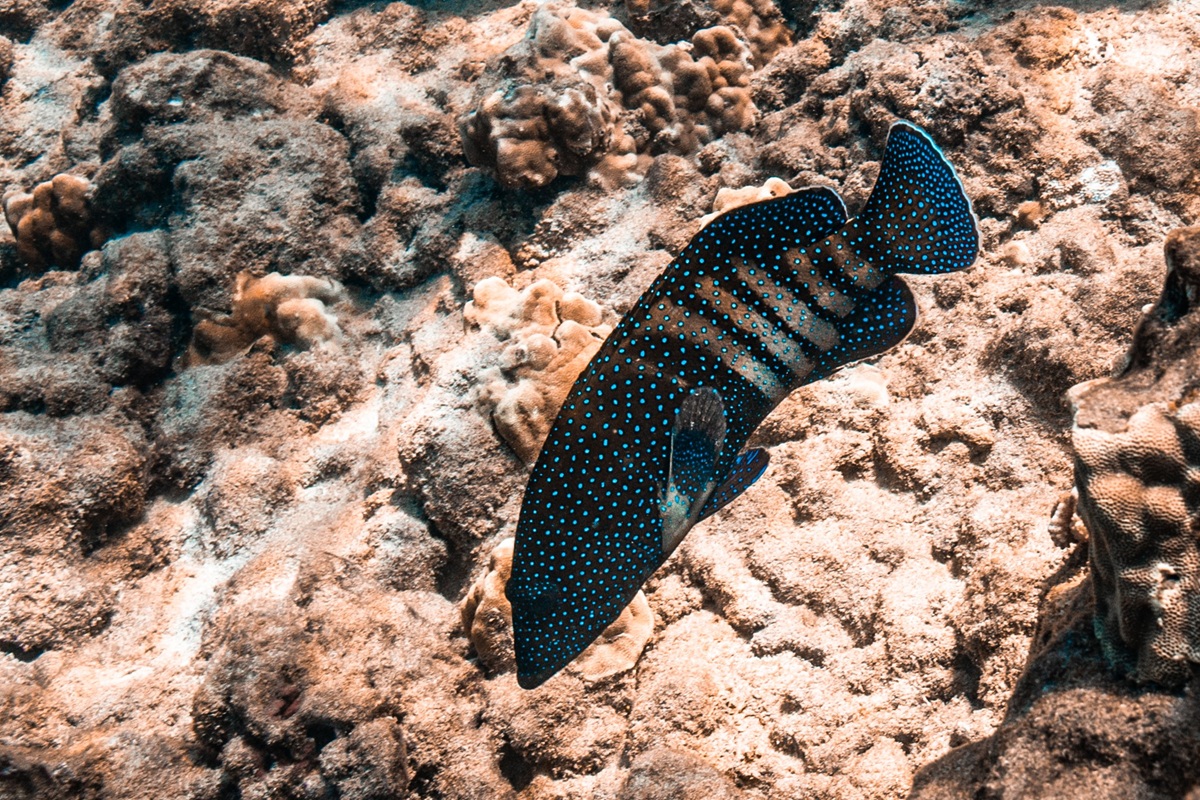
At first, you might notice the blue spots. Then the rest of the fish comes into focus: a sturdy brown body, pale bars near the tail, and a large mouth that leaves little doubt this is a predator. A peacock grouper can turn an ordinary reef scan into a memorable fish-identification moment.
Known locally as roi, the peacock grouper (Cephalopholis argus) has a story that goes well beyond its striking pattern. It was deliberately brought to Hawaiʻi, became established, and now features in discussions about introduced predators and reef conservation.
This guide to peacock grouper in Maui helps you recognize roi through your mask, discover how they arrived in Hawaiʻi, and understand what researchers have learned about their role on the reef.
How To Identify Roi Underwater
Look for a combination of features, not just one bright spot. Blue dots, a thick-bodied grouper shape, and a rounded tail make a useful starting point.
Blue Spots Across A Brown Body
Roi have numerous small blue spots, often edged in darker color, across the head, body, and fins. The background is generally brown, but an individual can look much lighter or darker than the fish in a reference photo.
When reviewing a photo, check whether the spots continue onto the fins. A close crop of one patch of skin is less useful than a view that shows the whole animal.
Pale Bars Toward The Tail
The rear half may show broad pale vertical bars, with another pale area around the chest. Those markings can be conspicuous or relatively faint, so don't rule out roi because the bars aren't obvious.
A Substantial Head And Rounded Tail
The body is robust rather than wafer-thin, with a large mouth and a rounded tail instead of a deeply forked one. Large individuals can reach approximately 24 inches, or 60 centimeters, although that maximum isn't a typical sighting size.
For other possibilities, compare your photo with our Maui Tropical Fish Identification Guide. Getting the shape right before concentrating on color makes the process much easier.
Roi Versus Peacock Flounder
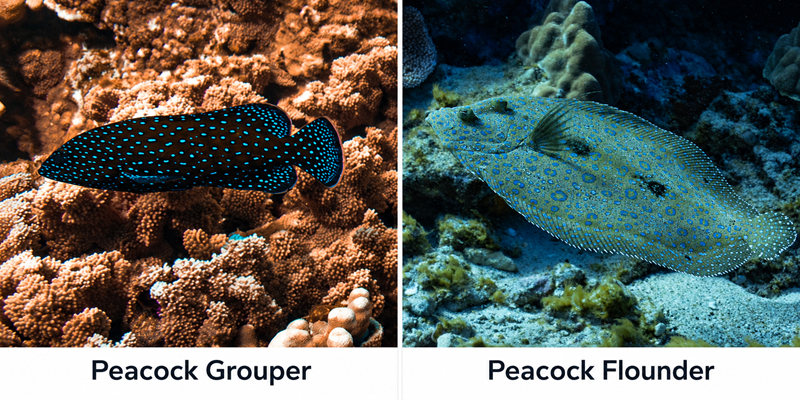
Peacock grouper and peacock flounder aren't the same fish. Both can show blue markings, which makes the shared common name confusing until you look at their bodies.
The Indo-Pacific peacock flounder, Bothus mancus, is a flattened fish with both eyes on its upper-facing side. It often rests on sand, where its variable pattern helps it blend in. You may also see it called the flowery flounder.
Roi have the much thicker, upright profile of a grouper. Think substantial reef fish versus flat sand-dweller. A picture showing the head and body outline usually settles this comparison more effectively than counting spots.
Where Peacock Grouper Originally Lived
Peacock grouper are native to a broad area of the tropical Indo-Pacific, including the Red Sea. French Polynesia is part of that native range and supplied fish for the Hawaiian introduction.
Hawaiʻi isn't part of their original native range. A fish can be familiar around the islands today without having arrived naturally. That's the distinction between recognizing roi as a local reef resident and calling it a native Hawaiian species.
Other common names include peacock hind and argus grouper. The scientific name, Cephalopholis argus, helps keep the identification consistent across research papers and fish guides.
Why Roi Were Introduced To Hawaiʻi
Roi were intentionally introduced to Hawaiʻi in 1956. The goal was fisheries enhancement: adding a fish people could catch. Hawaiʻi DLNR describes the stocking as a sportfish introduction, while research also discusses the intended food-fish value.
This wasn't simply a tropical aquarium fish accidentally finding its way into the ocean. Its arrival was planned. What followed illustrates why establishing a new fish and creating a useful fishery aren't the same outcome.
Roi spread through the main Hawaiian Islands, including Maui, and are listed among Hawaiʻi's aquatic invasive species. Concerns about ciguatera complicated their value as food, while their feeding on other reef fish raised a separate ecological question. Those two issues are connected historically, but they require different kinds of evidence.
Where Snorkelers May Encounter Peacock Grouper In Maui
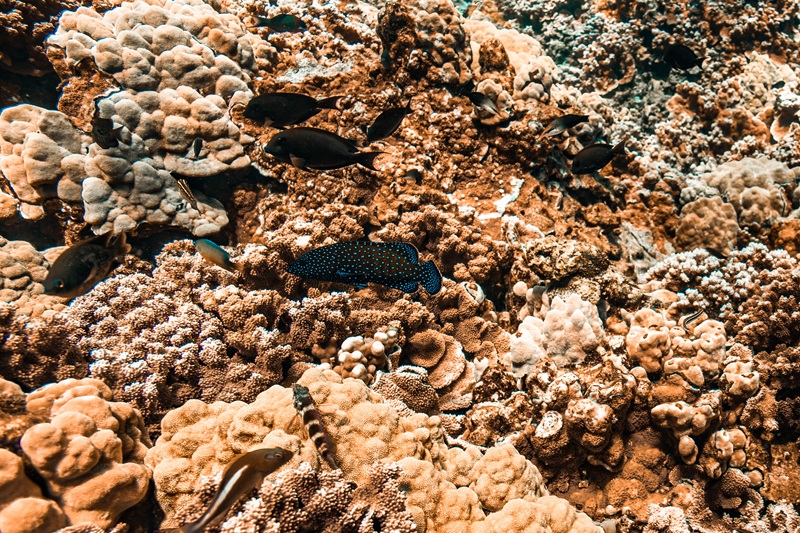
Look for reef habitat rather than a guaranteed roi hotspot. Peacock grouper occupy coral and rocky reef areas, including relatively shallow habitat, so a sighting doesn't require a scuba dive.
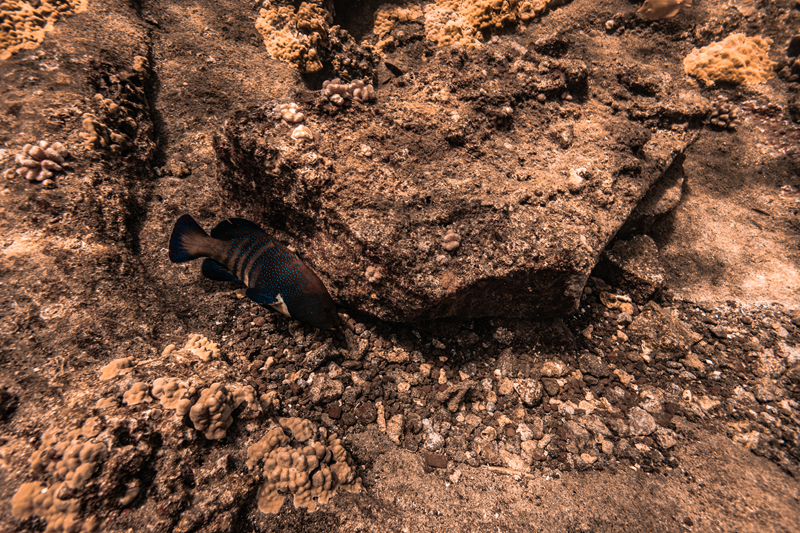
During an ordinary reef scan, pay attention to the outlines beside rocks and coral heads, not only the fish swimming conspicuously above them. Look for the body shape first, then see whether you can make out the spots.
Roi are established on Maui, although sightings vary. Give yourself time to notice the shapes beside rocks and coral heads, and stay within your comfortable snorkeling area as you explore.
Our Maui Coral Reefs Guide offers more context for the habitat around you. Learning a few reef features can make the whole swim more interesting, whether or not roi appears.
What Peacock Grouper Eat
Roi eat mainly fish, with some crustaceans also recorded. Their diet includes reef-fish groups such as surgeonfish, parrotfish, and squirrelfish. The reef concern centers on predation, rather than direct feeding on coral.
A 2009 Hawaiian diet study examined 285 roi collected around Oʻahu and the Kona coast of Hawaiʻi Island. The stomach contents documented feeding on many reef-fish species and showed that prey weren't selected simply in proportion to availability.
What Research Says About Their Reef Impact
Roi’s fish-eating diet explains why this introduced species attracts conservation attention. To understand its wider effects, researchers also study what happens to a reef’s fish community when researchers remove roi.
A 2018 study followed a 5.5-year removal experiment on a 1.3-hectare Hawaiian patch reef. Small prey fish became more abundant after 18 months, but that increase didn’t last. Some potential competitors, particularly wrasses, increased, while the overall mix of fish species changed little.
The researchers concluded that removing roi alone was unlikely to replenish native fishery resources. That finding helps explain why reef recovery is more complicated than removing a single introduced predator.
The experiment examined one Hawaiian reef site, so it doesn’t establish what’s happening across Maui’s reefs. It does offer a useful distinction: researchers have documented what roi eat, while their lasting effects on fish populations require a broader look at the reef community.
Ciguatera And Why Roi Has A Complicated History
Ciguatera is an illness caused by eating fish containing ciguatoxins. The toxins originate in microscopic marine organisms and can accumulate through the food web. Roi's association with this illness has complicated its intended role as a food fish.
This isn't unique to peacock grouper, and it doesn't mean every individual carries the same toxin level. You can't establish that a fish is safe to eat from its appearance, taste, or smell. Cooking and freezing don't destroy ciguatoxins.
Watching roi while snorkeling isn't how you get ciguatera. It's a food-safety issue, not a reason to panic at a sighting. Leave the fish alone rather than treating an introduced species as an invitation to catch dinner.
Anyone who becomes ill after eating reef fish should seek medical care and mention what they ate. This guide isn't a way to clear a catch for consumption.
How Snorkelers Should Respond To A Roi Sighting
Pause, observe, and give the fish space. Point it out to your buddy or mention it to the crew afterward. A snorkeling outing isn't a removal operation: don't chase, capture, feed, or injure the fish.
For a useful identification photo, try to include the head, tail, and side markings in one frame. Take the shot from a comfortable swimming position. Don't reach into a crevice, rest on coral, or separate from your buddy for a closer angle.
Our Maui Snorkeling Photography Guide can help you bring home better images without making the camera the focus of every moment. When the fish disappears, enjoy the rest of the reef instead of pursuing it.
Final Thoughts On Peacock Grouper In Maui
Roi's blue spots make it memorable. Its history makes it worth understanding. Recognizing this fish gives you more than another name on your snorkeling list: it offers a glimpse into how human decisions can reshape an island's marine community.