Written by the Maui Snorkeling team, operating Molokini and Turtle Town tours out of Maʻalaea Harbor since 1985. We spend more days in these waters than on land!
Last updated: January 2026
Maui is one of the best places in Hawaiʻi to experience wildlife both in the ocean and on land. From snorkeling with colorful reef fish to spotting sea turtles along the shore—or seeing native birds upcountry—wildlife encounters are a huge part of what makes a Maui trip special.
That said, wildlife sightings on Maui are never guaranteed. What you see depends on location, season, time of day, ocean conditions, and a little bit of luck! Some days the ocean is alive with activity; other days, animals keep their distance.
This guide breaks down what wildlife you can see on Maui, where to see it, the best times of year, and how to view animals responsibly—so you can set realistic expectations and enjoy Maui’s wildlife the right way.
Maui Wildlife Quick List (Land + Sea)
If you’re short on time, this scannable list provides a quick overview of the animals people most commonly associate with Maui.
Ocean Wildlife You Might See On Maui
- Hawaiian green sea turtles (honu)
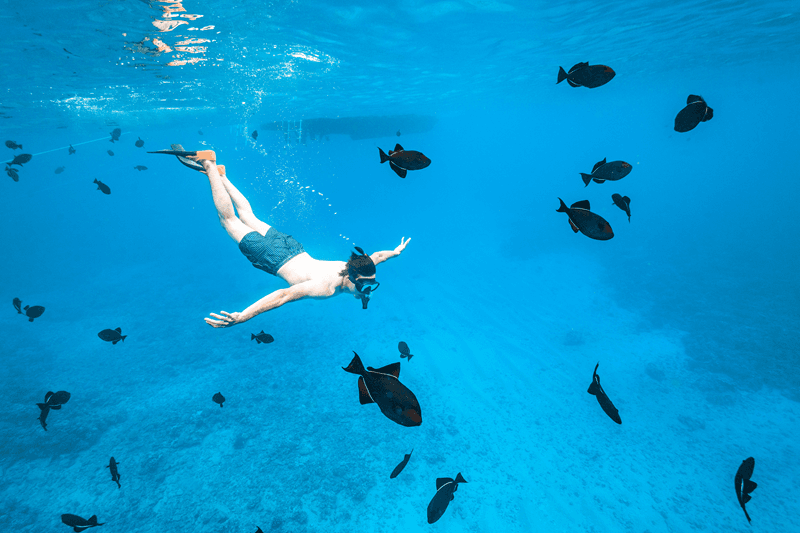
- Reef fish (triggerfish, parrotfish, butterflyfish, surgeonfish, and more)
- Rays (spotted eagle rays, manta rays)
- Dolphins (spinner dolphins, bottlenose dolphins)
- Hawaiian monk seals (rare, but possible)
- Humpback whales (seasonal, winter months)
- Octopus (heʻe)
- Seabirds (seen from shore or boats)
Land Wildlife You Might See On Maui
- Nēnē (Hawaiian goose)
- Tropical birds (varies by elevation and habitat)
- Axis deer (introduced species)
- Mongooses (introduced species)
- Geckos and small lizards
Native vs. Introduced Species
Some animals on Maui evolved here over thousands of years (such as nēnē), while others were introduced by humans (such as axis deer and mongooses). Both are commonly seen today, but native species require additional care and protection to survive.
Maui Marine Wildlife
Maui’s ocean wildlife is what draws many visitors to the island. Calm bays, healthy reefs, and seasonal migrations make Maui one of the best places in Hawaiʻi to observe marine life from shore and on the water.
Some animals—like reef fish and sea turtles—are common daily sightings. Others, such as rays, dolphins, monk seals, and whales, depend heavily on timing, location, and ocean conditions. Use the blocks below to know what to look for and how to watch responsibly.
Hawaiian Green Sea Turtle (Honu)
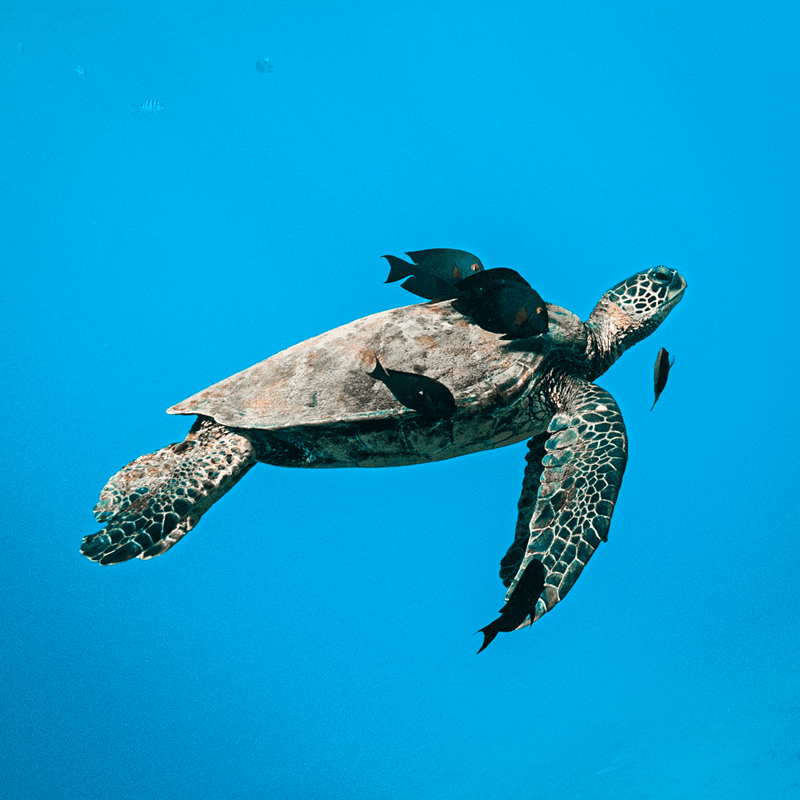
Honu are Maui’s most iconic marine wildlife sighting. These ancient sea turtles move slowly and gracefully through shallow reefs, surfacing every few minutes to breathe before continuing their search for algae.
- Look for a smooth oval shell gliding just above the reef.
- Watch for turtles surfacing briefly to breathe.
- Calm bays and shallow reef areas
- Boat snorkel sites like Molokini and Turtle Town
- Stay at least 10 feet away.
- Never touch or block a turtle’s path.
- If a turtle approaches you, stay still and let it pass.
Tropical Reef Fish
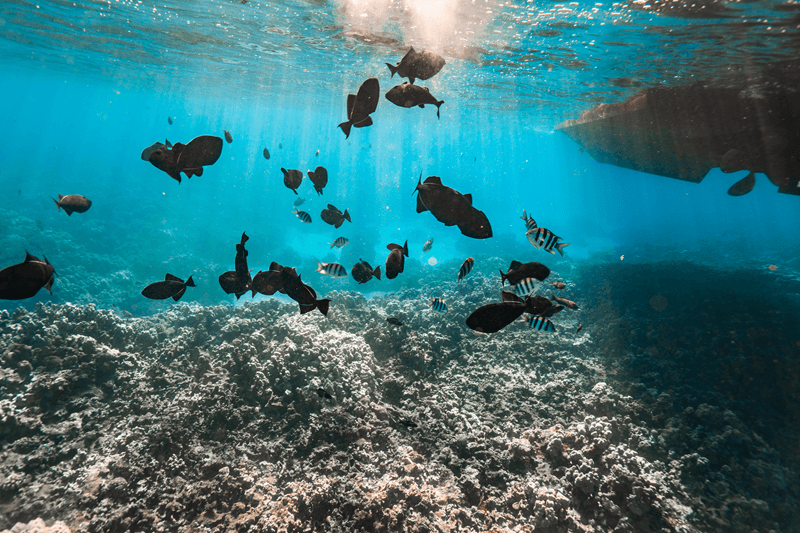
Reef fish are the most consistent marine life you’ll see while snorkeling in Maui. Bright colors, stripes, and schools of fish move through coral heads and lava rock formations across the island.
- Look closely at coral heads and rocky crevices.
- Slow down—fish appear everywhere when you stop rushing.
- Shallow reefs throughout South and West Maui
- Molokini Crater and Coral Gardens
- Never touch or feed fish.
- Avoid kicking coral or standing on the reef.
Rays (Eagle Rays & Manta Rays)
Rays are a special “right place, right time” sighting. When they appear, they glide effortlessly over sandy channels and deeper reef edges, often disappearing as quietly as they arrived.
- Deeper reef edges and sandy channels
- Occasionally during boat rides and crossings
- Do not dive down toward rays.
- Stay calm and let them pass naturally.
Dolphins (Spinner & Bottlenose)
Dolphins are present around Maui, but most sightings happen from boats rather than shore. They are protected under federal law, and respectful viewing is essential—especially around resting pods.
- Do not chase or swim toward dolphins.
- Never surround or block their path.
Hawaiian Monk Seal
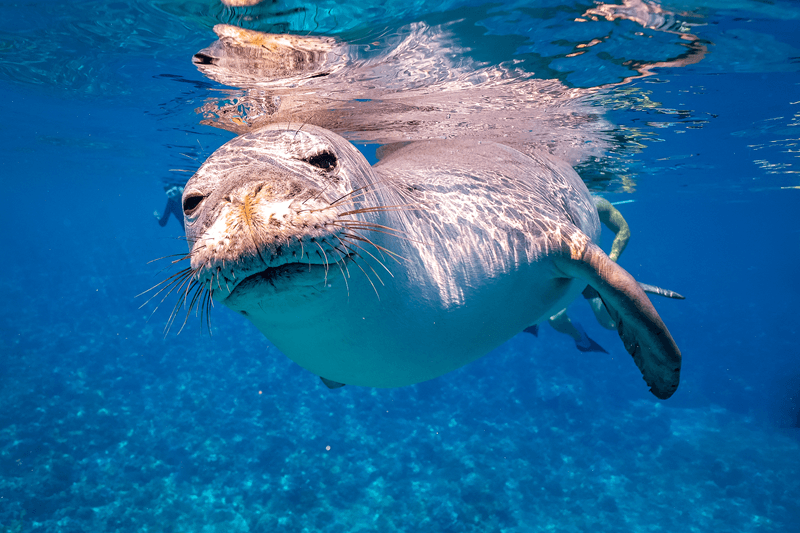
Hawaiian monk seals are one of the rarest marine mammals in the world. On Maui, sightings are uncommon but unforgettable, often involving a seal resting quietly on the beach.
- Give lots of space and keep dogs away.
- Do not crowd or approach for photos.
Humpback Whales (Seasonal)
Each winter, humpback whales migrate to Hawaiian waters to breed and give birth. Maui becomes one of the best places in the world to see whales—sometimes even from shore.
- Look for tall white spouts (“blows”) on the horizon.
- Watch for breaches, tail slaps, and fin waves.
- Never approach whales by swimming.
- Observe only from land or licensed vessels.

Maui Land Wildlife
Maui’s land wildlife is quieter than the ocean, but it’s still full of memorable sightings—especially if you explore upcountry, park areas, and more natural open spaces. Some animals are native and protected, while others were introduced and are now commonly seen across the island.
The cards below cover the land animals visitors most often notice on Maui, plus simple tips to spot them safely and respectfully.
Nēnē (Hawaiian Goose)
Nēnē are Hawaiʻi’s state bird and one of the most meaningful wildlife sightings you can have on Maui. They often graze in small groups in open grassy areas, and it’s not unusual to see them near roads in upcountry zones.
- Goose-like shape with a darker face and patterned neck.
- Often grazing slowly in open grass, sometimes with goslings.
- Upcountry parks and cooler elevation areas
- Roadside grass zones (especially early/late in the day)
- Give them space—don’t approach for selfies.
- Never feed wildlife.
- Drive slowly if you see them near the road.
Axis Deer
Axis deer were introduced to Hawaiʻi and are now common in parts of Maui. They’re beautiful animals, but they can also be a real driving hazard—especially at dawn and dusk when they’re more active and visibility is lower.
- Slender deer with white spots (often visible even on adults).
- Seen in open fields, brush edges, and sometimes near road shoulders.
- Rural areas and open grassy zones
- Along roads in less-developed areas
- Slow down at dawn and dusk—deer can dart into the road quickly.
Mongooses
Mongooses are small, fast mammals that you’ll sometimes see darting across parking lots, roadside areas, and landscaped walkways. Most sightings are quick—blink and they’re gone.
- Parking lots and roadside pull-offs
- Near trash bins and food areas
- Never feed wildlife—human food changes behavior and creates problems.
- Secure snacks and dispose of trash properly.
Geckos & Small Lizards
Geckos are everywhere on Maui—hotel walkways, patios, gardens, and especially near outdoor lights at night. They’re harmless, and they’re one of the easiest “wildlife wins” you’ll notice without even trying.
- Check near outdoor lights after sunset—bugs attract geckos.
- Look on warm walls and garden edges during sunny parts of the day.
Maui Birds
Many visitors mean “birds too” when they search for Maui wildlife. The good news: you don’t need to be an experienced birder to enjoy Maui’s bird life. A little patience—and a good lookout point—goes a long way.
Seabirds (From Shore Or Boats)
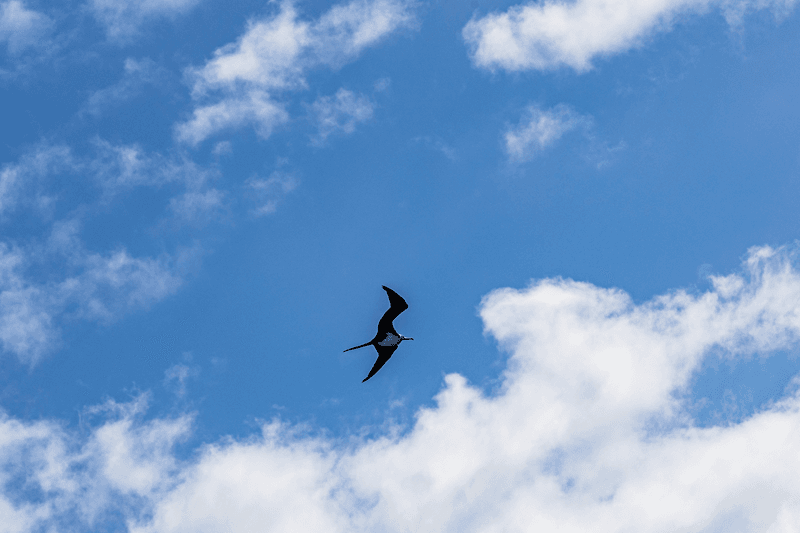
Even if you never “go birding,” you’ll likely spot seabirds on Maui. Watch for smooth gliding above cliffs, quick dives offshore, and birds cruising just above the surf line—especially on windy days.
- Coastal cliffs and rocky points
- Offshore waters during boat rides
Upcountry & Forest Birds
Bird species change a lot as you climb in elevation. Cooler upcountry zones and forested areas can reveal very different birds than the beach. The best approach is simple: go slow, stay on trails, and listen before you look.
- Bring binoculars (even compact ones).
- Wear neutral colors and avoid sudden movements.
- Stay on trails to protect habitat.
Best Places To See Wildlife On Maui
If you’re trying to plan the “best chance” spots, think in terms of habitat + conditions. Calm reefs tend to produce the most consistent marine sightings, while upcountry and forested areas are better for birds and native land wildlife. Below is a practical, by-area guide you can actually use while you’re here.
South Maui (Wailea & Kihei)
South Maui is one of the most reliable areas for shallow reef snorkeling and turtle sightings. On calm mornings, visibility is often better and the reef tends to feel more active.
- Best Time Of Day: Morning
- What To Bring: Reef-safe sunscreen, snorkel gear, water shoes (if shoreline is rocky)
West Maui (Kāʻanapali & Kapalua)
West Maui offers excellent shore snorkeling opportunities and frequent turtle sightings, but conditions can change fast. Always check ocean conditions before entering, especially if there’s swell or strong current.
- Best Time Of Day: Morning (calmest water)
- What To Bring: Snorkel float, fins, and a backup “calm bay” option
Central Maui (Maʻalaea)
Maʻalaea is a major harbor for snorkel and whale-watching departures, so it’s a strong area for boat-based sightings—especially dolphins and whales (in season).
- Best Time Of Day: Morning departures often have calmer conditions
- What To Bring: Light jacket (breezy on the water), motion-sickness prevention if needed
Upcountry & Haleakalā Area
Upcountry is your best bet for native land wildlife like nēnē and a wider range of birds. The cooler climate changes what you’ll see, and the scenery alone makes this area worth exploring.
- Best Time Of Day: Morning or late afternoon
- What To Bring: Light layers, binoculars, water
- Driving Note: Watch for wildlife near roads and drive cautiously
North Shore
The North Shore is often windier and rougher, but in winter it can be a great area for whale watching from shore. When conditions cooperate, you may spot spouts and breaches offshore.
- Best Time Of Day: Morning (less wind)
- What To Bring: Binoculars, hat, light wind layer
East Maui & Hāna
East Maui’s lush landscape supports different birds and plant life than the dry leeward side. The drive is part of the experience—just remember to use pull-offs safely and respect private property and local communities.
- Best Time Of Day: Earlier is better for safer driving and fewer crowds
- What To Bring: Rain jacket, snacks, water, patience
Maui Wildlife By Season
Maui wildlife is here year-round, but what you’re most likely to see changes with the seasons. Use this as a practical “what’s most likely” guide—without expecting guarantees.
Winter (Dec–Mar)
Best chance for humpback whale sightings from shore and boat. Ocean conditions can be more variable, so always choose protected spots and check conditions.
Spring (Apr–May)
A quieter shoulder season with fewer crowds. Many days offer excellent snorkeling, especially when trade winds are light.
Summer (Jun–Aug)
Peak snorkeling demand with warm water and consistent reef life. Whales are typically gone, but turtles and reef fish remain active.
Fall (Sep–Nov)
Great snorkeling continues with fewer crowds. Late fall can bring the first early whale sightings as the season begins to ramp up.
Wildlife Viewing Rules + Safety
This section is the difference between a great wildlife encounter and an accidental “bad moment.” These simple rules protect animals, keep you safe, and help preserve Maui’s wildlife for future visitors.
General Wildlife Etiquette
- Don’t touch, chase, surround, or feed wildlife.
- Keep voices low and movements slow.
- Give animals an “exit route.”
- Stay off dunes and sensitive areas.
Ocean-Specific Safety
- Don’t corner turtles or free-dive at animals.
- Avoid flash photography up close.
- Stay aware of currents, waves, and your surroundings.
Land & Road Safety
- Slow down in areas where animals cross.
- Don’t stop in unsafe spots to take photos.
- Don’t approach nēnē or deer for selfies.
What To Do If You Encounter Wildlife
If You See A Monk Seal On The Beach
- Give lots of space and keep dogs away.
- Don’t crowd or approach for photos.
- If volunteers rope off an area, stay outside it.
If A Turtle Swims Toward You While Snorkeling
- Stay still, give it room, and let it pass.
- Don’t dive down or try to “follow” it.
If You See Nēnē Near The Road
- Slow down and don’t honk.
- Never try to shoo them across the road.
If You Spot Whales From Shore
- Watch from land and never attempt to approach by swimming.
- Use binoculars and be patient—spouts can be brief.
Maui Wildlife FAQ
What Wildlife Can You See On Maui?
Maui wildlife includes sea turtles, reef fish, rays, dolphins, monk seals (rare), humpback whales in winter, native birds like nēnē, and introduced animals like axis deer.
What Is The Best Time Of Year To See Whales On Maui?
Winter whale season (late fall through early spring) offers the best chance, with peak sightings in mid-winter.
Where Is The Best Place To See Sea Turtles On Maui?
Calm bays and shallow reef areas are most reliable—especially in the morning when visibility is often best.
Are Monk Seals Common On Maui?
No. Monk seals are rare. If you see one resting on the beach, give lots of space and avoid crowds and pets near the animal.
Can You Swim With Dolphins In Maui?
No. Dolphins are protected and should never be chased, surrounded, or disturbed—especially when they’re resting.
Are There Dangerous Animals On Maui?
Most Maui wildlife is not dangerous when given space. The bigger risks are ocean conditions (currents/swell) and getting too close to animals on land or in the water.
What Land Animals Live On Maui?
You may see nēnē (native), birds, and introduced animals like axis deer and mongooses, plus common geckos and small lizards.
What’s The Best Way To See Maui Wildlife Responsibly?
Observe quietly, keep your distance, never feed wildlife, and choose safe conditions—especially for snorkeling and ocean viewing.
Conclusion: Experience Maui Wildlife The Right Way
Maui wildlife is unforgettable when viewed respectfully. Give animals space, respect ocean conditions, and let encounters happen naturally—those are the moments you’ll remember most.