Maui Dolphins: 3 Species You Might See on a Snorkel Tour
August 19th, 2025
| Marine Life
Written by Maui Snorkeling, operating tours to Molokini Crater, Turtle Town, and Coral Gardens from Māʻalaea Harbor since 1985. Tours are led by USCG-licensed captains aboard a USCG-inspected passenger vessel.
Last updated October 14, 2026
Quick Answer
Maui dolphins may be seen during boat travel to and from snorkeling destinations, but sightings aren’t guaranteed. Three species covered in this guide are Hawaiian spinner dolphins, common bottlenose dolphins, and pantropical spotted dolphins. Learn their distinguishing features and enjoy any sighting without approaching, feeding, or disturbing the animals.
Main Takeaways:
Common Species: Hawaiian spinner dolphins, common bottlenose dolphins, and pantropical spotted dolphins
Best Viewing: From the boat, especially during calm ocean conditions
Sightings: Possible but never guaranteed because dolphins are wild animals
Important Rule: Don’t swim with, chase, touch, or approach dolphins in Maui waters
Spinner Dolphin Distance: Stay at least 50 yards away from Hawaiian spinner dolphins
A dolphin sighting can be a memorable bonus during a Maui boat trip. A surfacing fin, a traveling group, or a distant leap offers a glimpse of animals going about their day.
This guide explains how to recognize three dolphin species found around Maui, what their behavior can tell you, and how to watch responsibly. Dolphins aren’t performing for visitors, and a close approach or leap isn’t an invitation to interact.
Maui Dolphin Species At A Glance
Compare three dolphin species found around Maui by their size,
markings, feeding habits, and behavior. These aren’t the only dolphins
in Hawaiian waters, and no boat trip guarantees a sighting.
Feature
Hawaiian Spinner Dolphin
Common Bottlenose Dolphin
Pantropical Spotted Dolphin
Scientific name
Stenella longirostris
Tursiops truncatus
Stenella attenuata
General adult size
About 4.6–6.8 feet; slender build
About 6–13 feet across the species; robust build
About 6–7 feet; slender build
Identification clues
Long beak, dark back, lighter sides, and white belly
Sturdy gray body, short thick snout, and curved dorsal fin
Long beak, dark cape along the back, white-tipped beak,
and spots that develop with age
Behavior
Known for aerial spins. Island-associated Hawaiian spinners
typically feed at night and rest near shore during daylight.
May travel alone or in groups that separate and reform.
Groups may also hunt cooperatively.
Social dolphins that may form large groups and associate
with other dolphin species. Calves are born without spots.
Food
Small fish, squid, and shrimp, primarily hunted at night
Fish, squid, and crustaceans
Primarily fish and squid
Maui viewing note
Don’t seek close encounters in resting bays. A traveling
or resting group should be left undisturbed.
May occur in coastal or offshore waters. An approach toward
a boat isn’t an invitation to interact.
Occur in Maui Nui waters. Young animals may lack the
spotting that makes adults easier to recognize.
Responsible viewing
Federal rule: No swimming with, approaching, or remaining
within 50 yards in covered Hawaiian waters, subject to
specific exceptions.
NOAA recommends a viewing distance of at least 50 yards.
Don’t feed, chase, touch, or disturb dolphins.
NOAA recommends a viewing distance of at least 50 yards.
Don’t feed, chase, touch, or disturb dolphins.
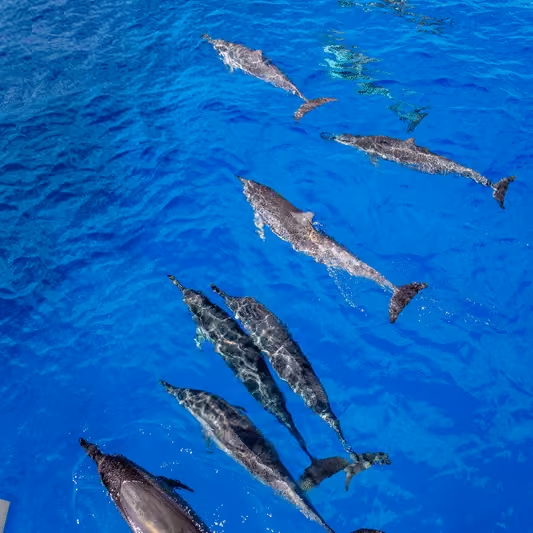
Dolphins move through coastal and offshore waters around Maui and neighboring islands. You may see them while traveling between Maʻalaea Harbor and snorkeling destinations, but no route, time, or location guarantees a sighting.
Choose a snorkeling tour for its reef itinerary, departure time, and suitability for your group. Treat dolphins as a possible bonus, not the reason you're getting in the water. Don’t visit resting bays to seek close encounters.
Meet Maui’s Dolphins
Here are three dolphin species found around Maui and the features that can help you recognize them. These aren’t the only dolphins in Hawaiian waters, and some sightings are too brief or distant for confident identification.
Hawaiian spinner dolphins
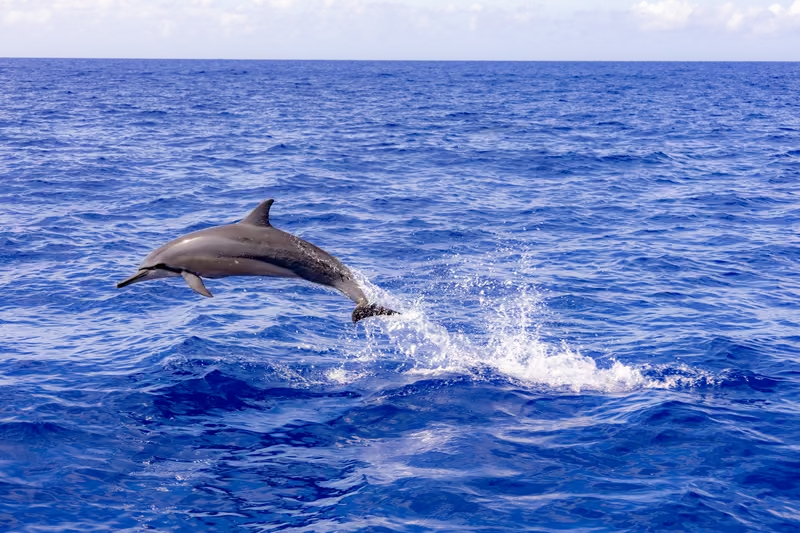
Spinner dolphins have slender bodies, long beaks, and a three-part color pattern: a dark back, lighter sides, and a white belly. They’re known for aerial spins, but don’t rely on seeing a leap to identify them. Island-associated Hawaiian spinners typically feed at night and use coastal areas to rest during daylight.
Common bottlenose dolphins
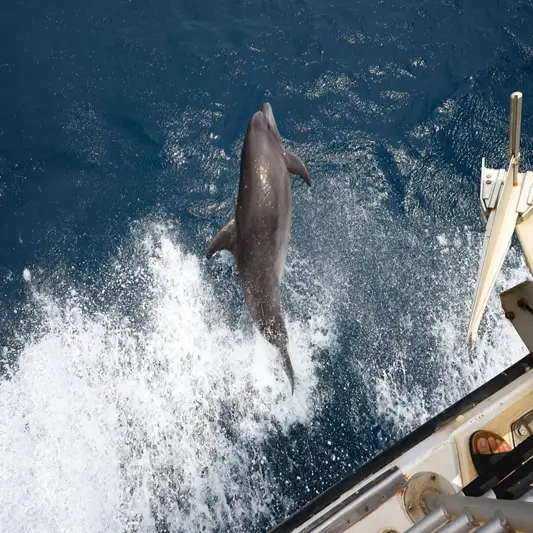
Bottlenose dolphins have robust gray bodies and short, thick snouts. They may travel alone or in groups that separate and reform. Their diet includes fish, squid, and crustaceans. A dolphin approaching a boat isn’t permission to feed, touch, or encourage interaction.
Pantropical spotted dolphins
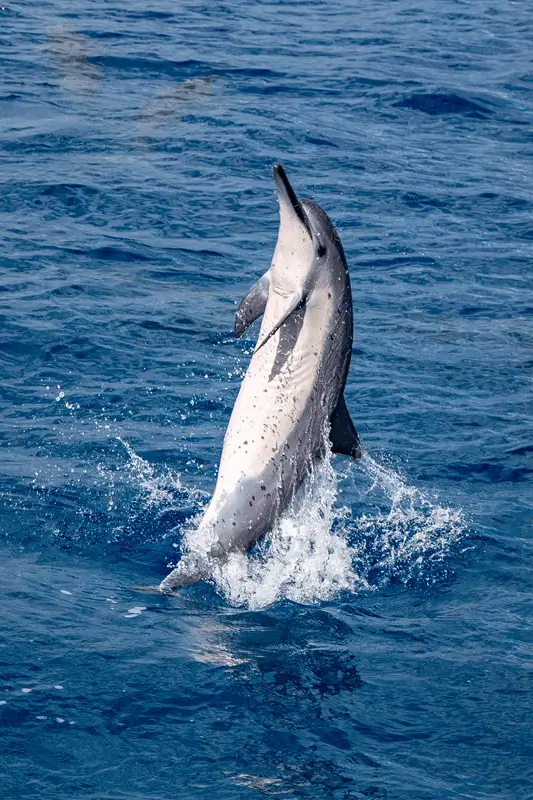
Pantropical spotted dolphins have slender bodies, long beaks, and a dark cape along the back. Adults develop spotting, while calves are born without spots. These social dolphins may associate with other species. Their markings, body shape, and beak are more useful identification clues than group size alone.
How can dolphins sleep while swimming?
Dolphins breathe air and can rest one side of the brain while the other remains alert enough to support breathing and awareness. A slowly moving group may be resting rather than inviting interaction. Uninterrupted space matters for dolphins, even when they appear calm.
Responsible dolphin viewing in Maui
NOAA recommends staying at least 50 yards from dolphins and small whales. Hawaiian spinner dolphins have an additional federal rule prohibiting swimming with, approaching, or remaining within 50 yards in covered waters.
That rule applies within 2 nautical miles of the main Hawaiian Islands and in designated waters between Maui, Lānaʻi, and Kahoʻolawe. Don’t intercept dolphins or position yourself, a vessel, or another object in their path to create a close encounter.
Watch without feeding, touching, chasing, or encouraging interaction. Use binoculars or zoom your camera instead of getting closer.
What if dolphins approach?
If you’re aboard a boat, stay aboard and follow the crew’s instructions. Don’t enter the water to join dolphins or try to attract their attention.
If a spinner dolphin approaches you while you’re swimming, don’t engage or pursue it. Move safely away immediately. NOAA provides specific exceptions for vessels approached by dolphins, so an unexpected approach isn’t a reason to maneuver for a closer encounter.
FAQs About Maui Dolphins
Hawaiian spinner dolphins, common bottlenose dolphins, and pantropical spotted dolphins are three species found around Maui. They aren’t the only dolphins in Hawaiian waters. Sightings during boat travel are possible but never guaranteed.
Don’t enter the water to swim with or approach wild dolphins. Hawaiian spinner dolphins are protected by a specific federal swim-with and 50-yard approach rule in covered Hawaiian waters. NOAA recommends staying at least 50 yards from all dolphins and avoiding any interaction that disturbs them.
No, dolphin sightings aren’t guaranteed on Maui snorkel tours. The ocean changes every day, and dolphins choose where they travel. If they appear near the boat on their own, it can be an amazing part of the trip.
Dolphins occur in coastal and offshore waters around Maui and neighboring islands. Sightings may happen during boat travel to or from snorkeling destinations, but no particular route or location guarantees dolphins. Don’t seek close encounters in resting bays.
Look at body shape, snout, and markings together. Spinner dolphins are slender with long beaks and a dark-back, light-side, white-belly pattern. Bottlenose dolphins are more robust with short, thick snouts. Pantropical spotted dolphins have slender bodies and develop spots as they mature. Not every sighting allows a confident identification.
Stay aboard, follow the crew’s instructions, and don’t feed, touch, or attract the dolphins. Don’t enter the water to join them. The captain manages navigation according to the circumstances and applicable wildlife rules.
Yes. Dolphins can rest one side of the brain while the other remains alert enough to support breathing and awareness. Slow-moving dolphins may be resting, so don’t assume they’re seeking interaction.
Ready to Explore Maui’s Underwater World?
Experience Maui’s ocean environment aboard the Lani Kai II. We’ll provide snorkel gear, food, and friendly crew support, so you can focus on the adventure!
Tours depart from Maʻalaea Harbor. Routes, snorkel sites, and marine life sightings vary with ocean conditions.
Final Splash
A Maui dolphin sighting is a chance to observe wild animals, not a promised encounter or performance. Knowing their body shapes, markings, and daily habits makes distant viewing more rewarding.
Choose your ocean outing for the whole experience, and let any dolphin sighting remain a welcome bonus. Keeping your distance helps protect the behaviors that make these animals so fascinating to watch. 🐬
Sources & Updates
Use these official resources to review dolphin identification, behavior,
and wildlife-viewing guidance. Before your ocean outing, check current
marine conditions and follow crew instructions and posted warnings.