Coral Bleaching In Maui: Why Coral Turns White And How It Can Recover
October 20th, 2026
| Maui Information
Written by Maui Snorkeling, operating tours to Molokini Crater, Turtle Town, and Coral Gardens from Māʻalaea Harbor since 1985. Tours are led by USCG-licensed captains aboard a USCG-inspected passenger vessel.
Last updated October 20, 2026
Quick Answer
Coral bleaching in Maui occurs when stressed corals lose the microscopic algae living in their tissues. With less algal color, the pale skeleton becomes more visible, and the coral loses an important energy source. Bleached coral isn't automatically dead: living colonies may recover if conditions improve. Prolonged heat and other stress make recovery harder. Snorkelers can help by avoiding contact and checking current reef guidance without trying to diagnose or treat coral.
Main takeaways:
Living Animals: Reef-building corals contain tiny polyps, with microscopic algae supplying much of their energy.
White Isn't Always Dead: Bleaching affects living tissue; tissue loss is a different change that can also expose white skeleton.
Main Stressors: Unusually warm water drives mass bleaching; strong sunlight, pollution, and runoff can add pressure.
Recovery: Surviving corals can regain algae and color, but neither timing nor survival is guaranteed.
Reef Care: Keep hands, fins, and equipment off coral, and never scrape, collect, or attempt repairs.
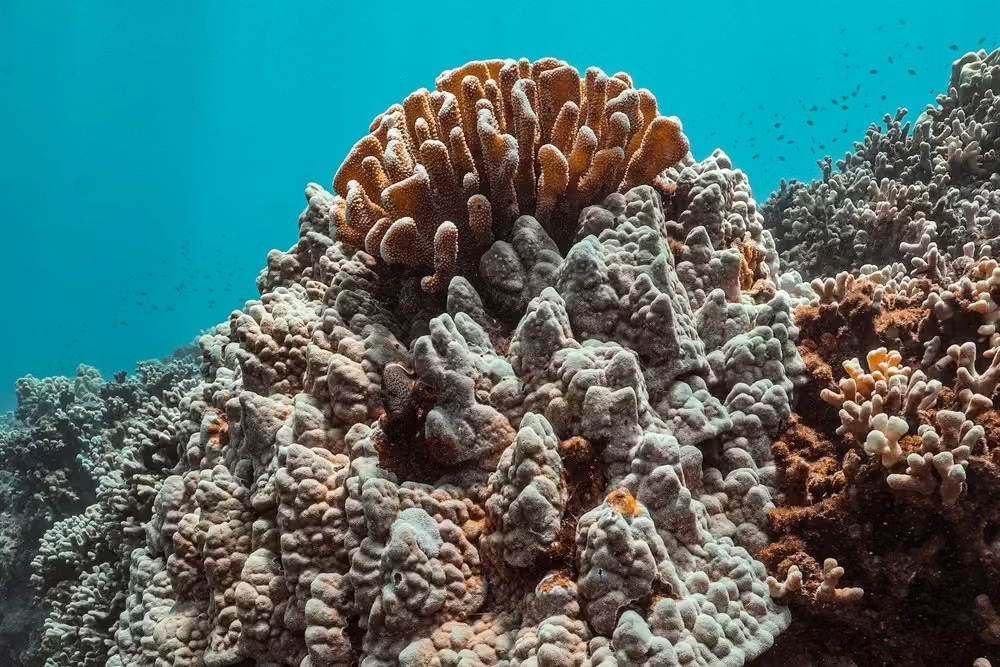
The fish may catch your attention first, but the coral creates much of the scenery beneath your mask. Branches, rounded colonies, and layered plates turn a reef into a place worth exploring. A bright white patch can be striking too, but it raises a different question: is that coral still alive?
Coral bleaching in Maui happens when stressed corals lose the microscopic algae that help feed them and give them color. Bleaching doesn't automatically mean death. Some corals recover when conditions improve; prolonged stress makes survival harder.
Understanding that difference adds another dimension to your snorkeling day. Here's what the colors can tell you, what they can't, and how to enjoy the reef without adding avoidable stress.
Coral Is A Living Animal, Not A Rock
Most of the reef-building coral colonies you notice around Maui contain many tiny animals called polyps. Each has a mouth and tentacles for catching food, and the colony builds a hard calcium carbonate skeleton. The living tissue lies over that framework.
That rock-like appearance can be misleading. A coral head isn't a convenient foothold or a sturdy place to steady your camera. Its hard structure supports living animals.
The Microscopic Partnership Inside Coral
Most shallow-water reef-building corals host microscopic algae called zooxanthellae inside their tissues. Through photosynthesis, the algae use sunlight to produce compounds that provide much of the coral's energy. In return, the coral supplies shelter and resources the algae need.
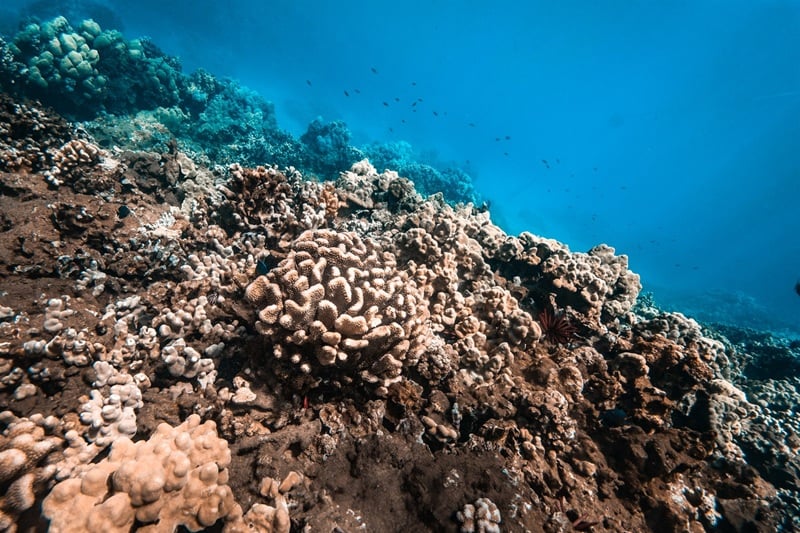
The algae contribute much of the familiar brown and golden coloration, though coral pigments also influence appearance. Our Maui Coral Reefs Guide introduces the different shapes and coral types you may notice.
Why Does Coral Turn White?
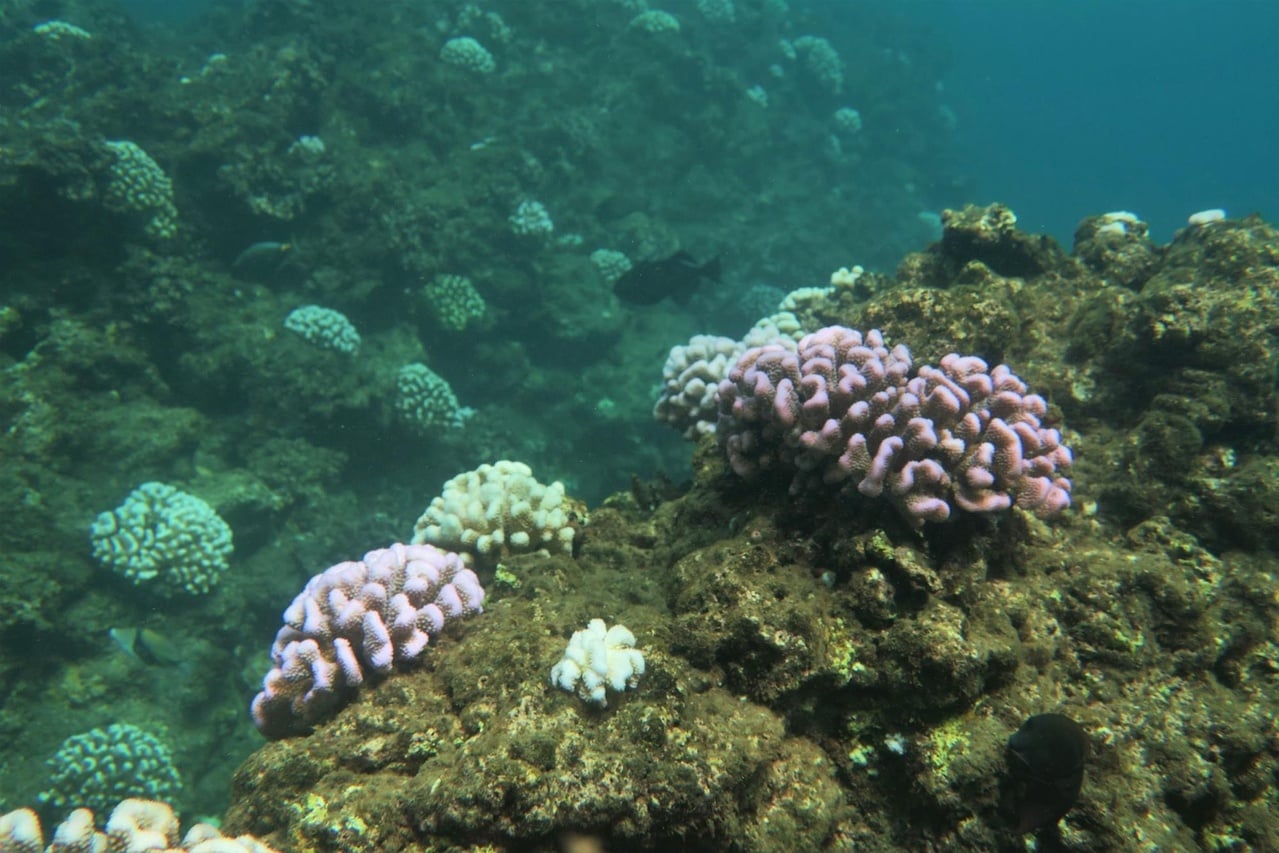
When stress disrupts the partnership, corals can lose their algae and the color they provide. The coral's translucent tissue then reveals more of the pale skeleton underneath. A colony may lighten, develop pale patches, or turn almost entirely white.
The term bleaching describes that change in appearance. It doesn't mean someone poured household bleach into the ocean, and it doesn't mean the skeleton suddenly changed color.
For the animal, the problem goes beyond appearance: losing algae means losing an important energy supply. A white colony can still be alive, but with fewer resources for normal growth, reproduction, and coping with other stress.
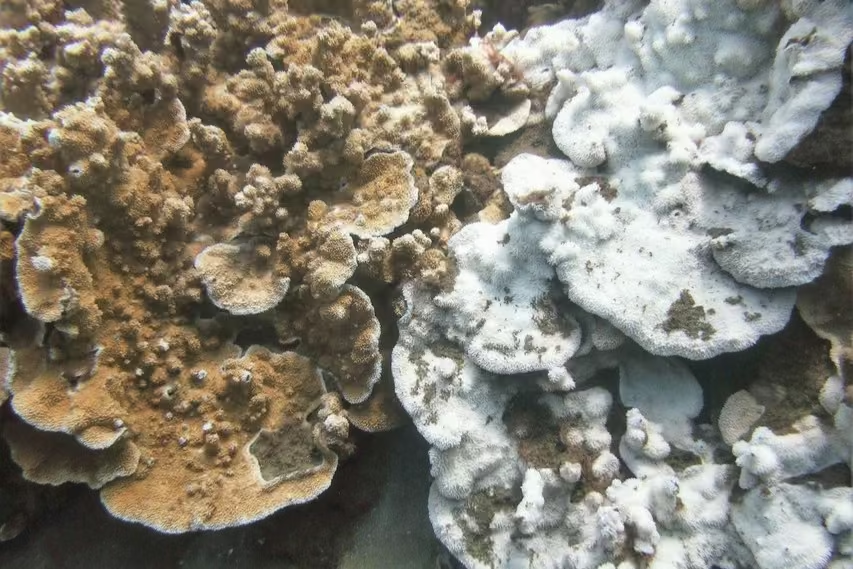
Neighboring rice coral (Montipora capitata) off Lahaina during the 2019 survey: the left colony retained its color, while the right colony was bleached. Historical photograph. Photo: NOAA Fisheries.
Bleached Coral Versus Dead Coral
Bleached coral still has living tissue; dead portions of a colony have lost it. Newly exposed skeleton can also look white, then become covered by algae and other organisms. A single colony can include living, bleached, and dead areas.
From the surface, those distinctions aren't always obvious. Color, underwater lighting, and viewing distance make a quick diagnosis unreliable. Don't touch or scrape a colony to investigate. Use the comparison below to understand the possibilities, not to certify a coral's condition.
Bleached Coral, Dead Coral, And Disease
Similar colors can reflect different conditions. Use these distinctions to understand what you might be seeing without touching the coral.
Condition
What It Means
What The Appearance Can Tell You
Pigmented Living Coral
Living tissue contains algal partners and pigments that contribute to its color.
Brown and golden tones can be normal. Brightness alone doesn't establish overall health.
Bleached Coral
Living coral has lost much of its algal color and associated energy supply.
Pale or white areas may be visible, but the remaining tissue can be difficult to distinguish from the surface.
Dead Coral Or Dead Areas
Living tissue is absent from the affected skeleton.
Newly exposed skeleton may be white; algae and other organisms can cover it later.
Possible Disease Or Injury
Tissue loss, discoloration, or other damage may have causes beyond bleaching.
White patches or unusual bands need further assessment. These changes can overlap with bleaching.
Note: More than one condition can occur within a colony. A photograph isn't a diagnosis, and no appearance makes coral a suitable handhold or foothold.
What Causes Coral Bleaching In Maui?
Unusually Warm Water
Elevated ocean temperatures are the main driver of widespread mass bleaching. The concern is heat above the temperatures corals normally experience, especially when it persists. Water that feels pleasant to a swimmer can still be stressful for coral.
Ocean warming increases the pressure, but there isn't one universal thermometer reading that predicts every colony's response. The intensity and duration of exposure matter alongside differences among corals and locations.
Strong Sunlight During Heat Stress
Coral's algal partners need light, yet strong sunlight can worsen bleaching stress when the water is unusually warm. Shallow corals can be particularly exposed. A sunny, clear-water day therefore doesn't establish that the reef is free of stress.
Pollution, Runoff, And Sediment
Heavy rain can send freshwater, sediment, excess nutrients, and pollutants toward nearshore reefs. Rapid changes in salinity and pollution can trigger bleaching; sediment can also smother coral or block needed light. Excess nutrients may encourage algae growing over the reef.
Those larger algae aren't the same thing as the microscopic partners living inside coral tissue. Keeping runoff out of the ocean helps address local pressures, but it doesn't replace the need to limit ocean warming.
What Past Maui Bleaching Surveys Show
Maui isn't one uniform reef. During 2019 surveys off leeward Maui, scientists documented neighboring rice-coral colonies with different responses: one retained its color while another was bleached. Even adjacent colonies of the same species didn't necessarily look alike.
Hawaiʻi monitoring has documented major bleaching episodes in 2014, 2015, and 2019. Those historical observations explain why monitoring matters, but they aren't a description of today's conditions at Molokini, Coral Gardens, or a particular beach. Check the current tools below rather than treating an old photograph as a live report.
Can Bleached Coral Recover?
Yes, if living tissue remains and the stress eases sufficiently. Corals may rebuild their algal partnerships and regain color. The outcome depends on how severe and prolonged the stress was, the coral involved, and the conditions during recovery.
Color returning is encouraging, but it doesn't necessarily mean growth and reproduction have fully recovered. Repeated stress can interrupt the process. There's no reliable guarantee that every white colony will recover within a set number of weeks.
A Reason For Cautious Optimism
A study published in 2025 followed 2,150 coral colonies at 18 sites in the Main Hawaiian Islands from the 2019 bleaching event through 2021. Researchers found high overall survivorship, with differences among coral groups and lower survival among smaller colonies.
That's encouraging evidence from those study sites, not proof that every Hawaiian reef recovered or that future heat events will have the same outcome. A surviving colony regaining its algae is also different from a reef rebuilding after coral mortality. Dead tissue doesn't come back to life.
Is Coral Bleaching The Same As Coral Disease?
No. Heat-driven bleaching is a stress response, not an infectious disease. Coral diseases can produce tissue loss, unusual bands, discoloration, or other changes. Exposed white skeleton caused by tissue loss may resemble bleaching from a distance.
The problems can overlap: bleaching leaves corals more vulnerable, and disease may affect already stressed colonies. A white patch alone doesn't identify the cause. Scientists use closer observations, repeated monitoring, and sometimes tissue examinations to investigate.
For a visitor, the useful response is to observe without interfering, not decide which treatment a coral needs.
Where To Check Current Maui Coral Heat Stress
NOAA Coral Reef Watch is the starting point for current satellite-based bleaching heat-stress information. Its products estimate environmental stress, not the health of every colony or whether a beach is suitable for swimming.
1. Open The Current Heat-Stress Maps
Start with Coral Reef Watch's daily 5 km products and choose the Hawaii regional view. Check the date and map title. The Bleaching Alert Area, 7-day maximum shows the highest alert category reached during the preceding seven days, not just that moment.
2. Look Beyond Today's Temperature
The HotSpot product compares temperatures with a local warm-season baseline. Degree Heating Weeks summarize accumulated bleaching-level heat stress over the previous 12 weeks. Together, they explain why one cooler day doesn't erase a prolonged hot period.
Read the map's legend rather than assuming every NOAA display uses identical categories. The expanded alert scale reaches Level 5, while some virtual-station pages still reference older alert displays.
3. Add Local Context
The Maui Nui single-pixel stations offer more localized time series, but they're labeled experimental. Check the timestamp and product notes. A 5 km satellite cell isn't a direct underwater survey of your snorkeling spot.
Keep your body, fins, and equipment clear of the reef, whether a colony looks colorful or pale. Don't break off a white piece, brush away algae, or reposition coral. A sightseeing swim isn't a restoration project.
Snorkel only when conditions suit your swimming ability, and stay with your buddy. Flotation doesn't replace the ability to swim independently. Get comfortable with your gear before moving above coral. Our guide to how snorkel fins should fit can help reduce equipment distractions. If you can't maintain clearance or need assistance, signal your buddy or crew instead of using the reef for support.
Don't Stir The Bottom Or Crowd Wildlife
Leave enough space beneath your fins to avoid kicking sediment onto coral. Secure loose camera straps, and don't chase fish into shallow reef. Give grazing fish room to feed naturally rather than offering them food.
Photographs can document what you noticed without disturbing it. Record the location and date, and tell the crew about unusual paling or tissue loss. Our Maui Snorkeling Photography Guide offers camera tips that don't require touching the bottom.
Keep Sun Protection And Runoff In Mind
Wear sun-protective clothing and follow current local sunscreen guidance. Our Maui sunscreen guide explains the options. Sun protection matters, but changing sunscreen alone won't prevent heat-driven bleaching.
Keep rubbish and chemicals out of drains, and don't enter brown or runoff-affected water if you want to see coral up close. Our Maui Brown Water Advisory Guide explains the separate water-quality checks.
Ready to snorkel Maui?
Snag your spot on a Maui Snorkeling Tour! Make your ocean day easy with snorkel gear, food, crew support, and simple online booking.
5-Hr Morning Adventure: Molokini Crater Snorkeling Tour
3-Hr Afternoon Reef Trip: Maui Afternoon Snorkeling Tour
No. A bleached coral may still have living tissue and a chance to recover. Recently exposed dead skeleton can also look white. Color alone isn't enough to distinguish the two, so don't touch or scrape coral to investigate.
Yes. Brown and golden tones can be normal because microscopic algae contribute much of a coral's color. A reef doesn't need to look like a brightly edited photograph to contain living coral. Color alone still can't establish overall health.
There's no dependable timetable for every colony. Recovery depends on the severity and duration of stress, the coral involved, and subsequent conditions. Color may return before growth and reproduction fully recover, and repeated heat stress can interrupt progress.
No. Heat-driven bleaching involves loss of algal partners and color, while disease can cause tissue loss and other changes. The two can occur together, and bleaching increases vulnerability. A photograph of a white patch doesn't identify its cause.
A bleaching alert describes stress affecting corals; it isn't a swimming forecast or an automatic closure notice. Check local restrictions, actual ocean conditions, and operator advice separately. Avoid any visit that would disturb protected habitat or exceed your swimming ability.
Don't attempt coral treatment during a snorkeling outing. Scrubbing, handling, or moving coral can cause additional harm. Leave the habitat undisturbed, take a photograph from a comfortable distance, and tell the crew what you noticed rather than trying to fix it.
Unusually warm ocean water is the main driver of mass bleaching. Pollution can add stress, but changing sunscreen alone won't stop marine heat events. Use sun-protective clothing, follow local sunscreen guidance, and reduce other avoidable impacts during your visit.
Start with NOAA Coral Reef Watch's current Hawaii heat-stress maps, then check dated local coral-monitoring reports. Satellite alerts estimate bleaching risk; they don't confirm the condition of every colony. An old survey or photograph isn't evidence of today's reef health.
Final Thoughts On Coral Bleaching In Maui
Coral bleaching is serious, but white doesn't automatically mean lifeless. Recognizing coral as an animal, understanding its partnership with algae, and knowing where to check for heat stress gives you a more informed view of the reef.
Enjoy the fish, notice the coral beneath them, and leave both undisturbed. Careful snorkeling won't cool the ocean, but avoiding extra damage is one practical contribution you can make on every reef visit.
Sources & Updates
This explains coral biology, not today's reef condition. Check map dates, legends, field-observation dates, and local notices. Historical surveys and photographs don't establish current bleaching at a snorkeling site.