
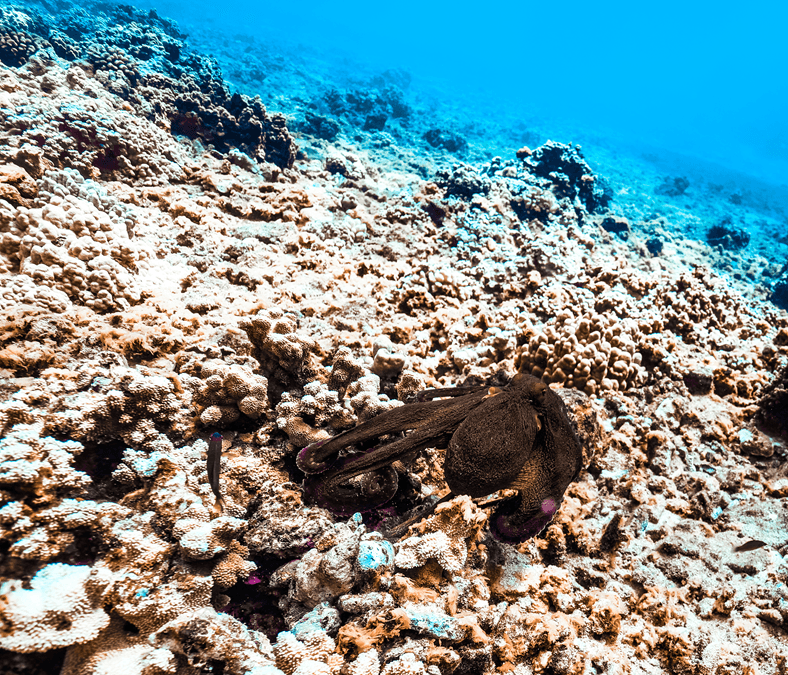
Written by the Maui Snorkeling team, operating Molokini and Turtle Town tours out of Maʻalaea Harbor since 1985. We spend more days in these waters than on land!
Last updated: December 17, 2025
Quick Facts
- Hawaiian name (Heʻe mauli)
- Scientific name (Octopus cyanea)
- Typical habitat (shallow reefs, coral heads, rubble)
- Best spotting window (early morning / late afternoon)
- Do not touch
Aloha! Let’s dive into the vibrant underwater world of the Hawaiian Day Octopus. Known as “he’e” in Hawaiian and “tako” in Japanese-influenced local culture, this creature is a marvel of the deep.
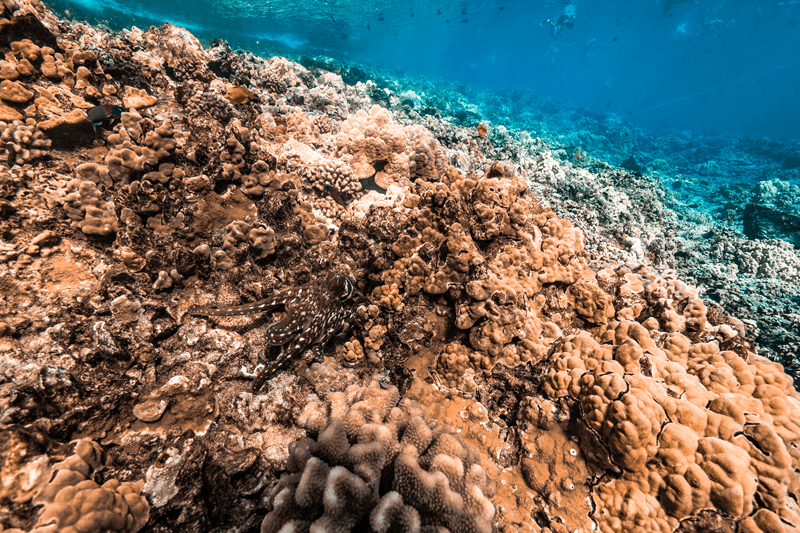
The Hawaiian Day Octopus, scientifically named Octopus cyanea, is a diurnal species. Unlike many of its counterparts, it’s active during the day. This octopus calls the warm, tropical waters of the Pacific Ocean home, particularly around the Hawaiian Islands. Renowned for its incredible camouflage abilities, this octopus can change color and texture to blend seamlessly with its surroundings. It’s a master of disguise, a trait that aids in its survival.
In this article, we’ll examine the fascinating life cycle of the He’e and discuss its unique traits, behavior, and important role in Hawaii’s ocean ecosystem. Join us on this journey as we uncover the secrets of this captivating creature. Discover the colorful world of the Hawaiian Day Octopus!
Introduction To The Hawaiian Day Octopus
The octopus is a mesmerizing creature with a complex character. It thrives in the crystal-clear waters surrounding the Hawaiian Islands. Due to its unique behavior and biology, this octopus stands out among marine life.
Its active diurnal nature sets it apart from many nocturnal octopus species. This characteristic offers a unique opportunity for divers and snorkelers to observe it in action. The octopus goes about its daily activities in vibrant coral reefs and sandy ocean floors.
Octopuses are widely recognized for problem-solving. In experiments, octopuses have solved mazes and other tricky tasks to earn food rewards—one reason they’re a favorite subject in cognition research. This level of intelligence is rare among invertebrates and adds to its mystique.
Understanding the Hawaiian Day Octopus’ role in its ecosystem is crucial. This species helps maintain the balance of marine life and reef health. Its presence is a testament to the rich biodiversity of Hawaii’s waters.
Characteristics
One of the most striking features of this octopus is its ability to change color. It uses specialized skin cells called chromatophores to blend with its surroundings. This ability is not just for camouflage; it also communicates emotions or warnings.
The octopus has a flexible body devoid of a rigid skeleton. It squeezes through incredibly small spaces, evading predators and searching for food. This adaptability has fascinated scientists and divers alike! Standing out is its significant intelligence. With a large brain relative to its body size, it learns through observation and experience. This makes it an intriguing subject for marine biologists studying cognition in underwater environments.
Importance in Hawaii Marine Life
The Hawaiian Day Octopus is more than just a curious marine inhabitant. It plays a pivotal role in Hawaii’s ecosystem. As a predator, it helps control populations of species that could threaten coral health.
Beyond its ecological contributions, the octopus is deeply woven into Hawaii’s cultural tapestry. Ancient stories and legends often feature the He’e, highlighting its revered status. These tales speak to its long-standing influence on local traditions and practices.
Tourism, too, benefits from the presence of this awe-inspiring creature. Visitors flock to Hawaiian waters, hoping to witness its beauty firsthand. Through snorkeling and diving, they contribute to a deeper understanding and appreciation of the region’s rich marine life.
Where To See The Hawaiian Day Octopus In Maui (Heʻe mauli)
While sightings are never guaranteed, the Hawaiian Day Octopus (Heʻe mauli / Octopus cyanea) is regularly spotted in Maui’s nearshore reefs when conditions are right. Knowing where and how to look greatly increases your chances.
Typical Habitat Cues To Watch For
Hawaiian day octopus prefer areas that provide both shelter and hunting access:
- Reef edges where coral meets sand
- Large coral heads with multiple crevices
- Rocky outcrops and lava formations
- Sandy rubble zones near reefs (ideal for burrows)
They often choose dens with multiple escape routes, allowing them to retreat quickly if disturbed.
Best Time Of Day For Spotting Heʻe In Maui
Because Octopus cyanea is diurnal, sightings are most likely during daylight — but timing still matters:
- Early morning: calmer water, less snorkeler traffic
- Late afternoon: active hunting behavior before dusk
- Midday sightings do occur, especially on overcast days or calm mornings
Clear visibility and low swell dramatically improve your chances.
What To Look For: Signs An Octopus Is Nearby
Even if you don’t see the octopus itself right away, there are telltale clues:
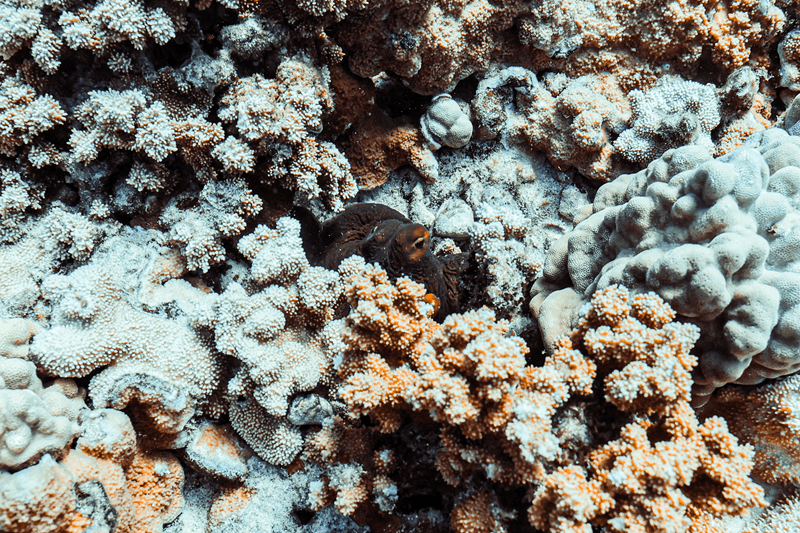
- Shell piles (“middens”) outside a hole or crevice
- Small rocks or coral pieces arranged near a den
- A sudden color shift or texture change on the reef
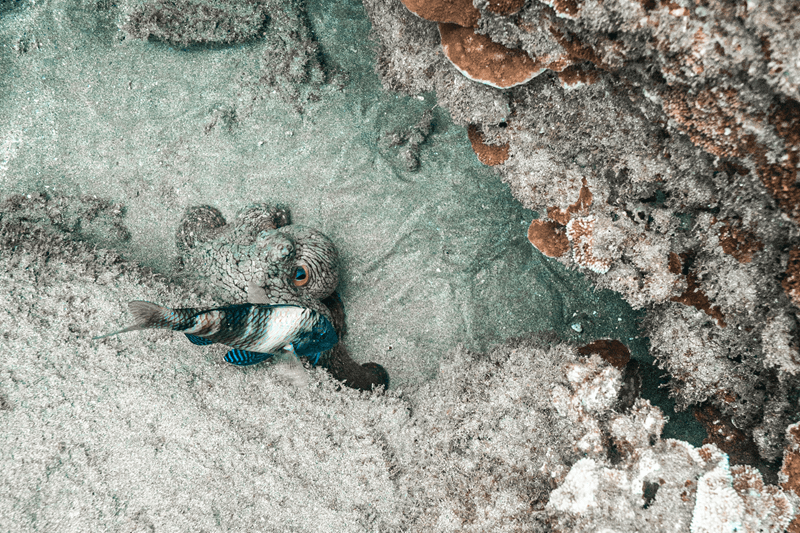
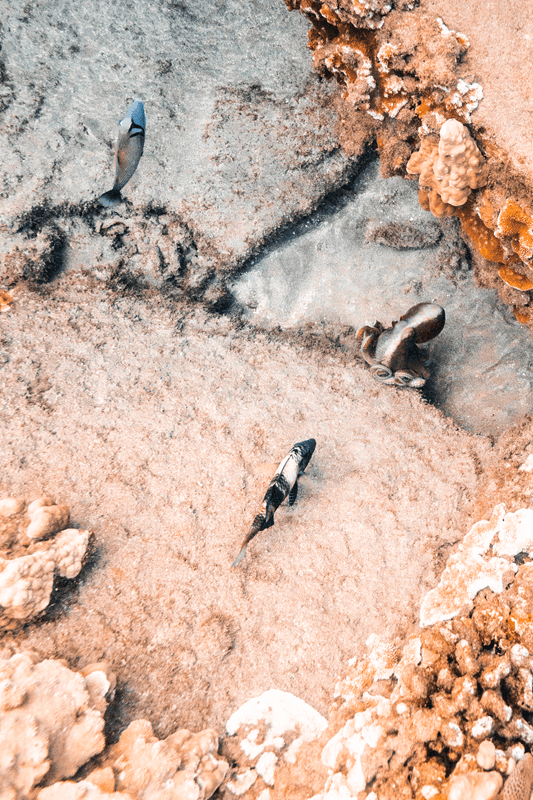
- Moano (manybar goatfish) stopping repeatedly at the same rock — often a giveaway
If you notice these signs, pause and observe quietly rather than moving closer.
How To Spot A Hawaiian Day Octopus While Snorkeling (Without Bothering It)
Seeing a Heʻe in the wild is special — and how you behave matters.
Ethical Octopus Viewing Checklist
- Move slowly and calmly
- Give the octopus a clear escape route
- Observe from the side, not directly overhead
- Keep fins well clear of coral and rocks
- Never touch, poke, or corner an octopus
- Avoid using flashlights or camera lights during the day
- If it changes color rapidly or retreats, you’re too close
Respectful observation helps protect the octopus — and gives you a better chance to watch natural behavior.
Hawaiian Day Octopus vs. Other Octopus Species In Hawaii
Snorkelers often wonder if they’re seeing the Hawaiian day octopus or another species. Here’s how Octopus cyanea stands out.
Hawaiian Day Octopus (Heʻe mauli – Octopus cyanea)
- Active during the day
- Large body with long, powerful arms
- Known for dramatic color and texture changes
- Common in shallow reefs around Maui
Night Octopus (Octopus ornatus)
- Primarily nocturnal
- More likely seen during night dives
- Less frequently encountered by snorkelers
Deep-Water Octopus Species
- Live far offshore or at depth
- Rarely seen by recreational snorkelers
- If you spot an octopus during daylight hours on a reef in Maui, there’s a strong chance it’s Heʻe mauli.
Is The Hawaiian Day Octopus Dangerous? Can You Touch It?
The Hawaiian day octopus is not aggressive, but it should never be touched.
- It has a strong beak used to break shells
- It can bite if threatened or handled
- Touching causes stress and can injure the animal
- Harassment may cause it to abandon its den
Looking — not touching — keeps both snorkelers and marine life safe.
Life Cycle Of The Octopus
The Hawaiian Day Octopus’s life cycle is filled with transformation and growth. Like other octopuses, it experiences several distinct stages from the egg to adulthood. This process is complex and fascinating, showcasing the wonders of marine biology.
A female He’e lays thousands of eggs during her reproductive phase. She diligently guards these precious eggs, dedicating her remaining life to their care. This sacrifice highlights the maternal instincts deeply rooted in the species’ life cycle.
The eggs hatch into larvae, which drift with the ocean currents. This planktonic stage is brief yet perilous, as the young octopuses face many threats. Despite these challenges, it is crucial for the species’ dispersal and survival.
As the larvae mature, they undergo significant changes, transitioning into juveniles. This stage marks a crucial part of their development as they learn to hunt and fend for themselves. Their journey toward adulthood is a testament to their resilience and adaptability!
Egg Development
The egg stage is where the life of a Hawaiian Day Octopus begins. After a successful mating, the female selects a hidden spot to lay her eggs. These clusters can contain thousands of tiny eggs, carefully tended by their diligent mother.
While protecting her eggs, the female ceases to hunt, staying nearby for months. This dedication ensures the young are shielded from predators. Her unwavering commitment underscores the critical importance of the egg stage in the life cycle.
Juvenile Stage
After hatching, the newborns enter the juvenile stage, adapting to their new world. These juveniles are tiny and must navigate many dangers in the ocean. This stage is marked by rapid growth and adaptation to their surroundings.
While they are still vulnerable, juveniles begin developing essential survival skills. They learn to find food and shelter, honing their instincts. As they grow, their confidence and independence lead them towards the next phase of life.
Adult Maturity
Reaching adulthood is a significant milestone in the life of an octopus. Here, they exhibit full camouflage capabilities and refined predatory skills. The daily challenges of survival demand their utmost cognitive and physical prowess.
Mature octopuses are solitary by nature, engaging in interactions primarily for mating. This period of life involves continuing their role in the marine ecosystem. As they approach the end of their life, they contribute to the next generation, completing the circle of life.
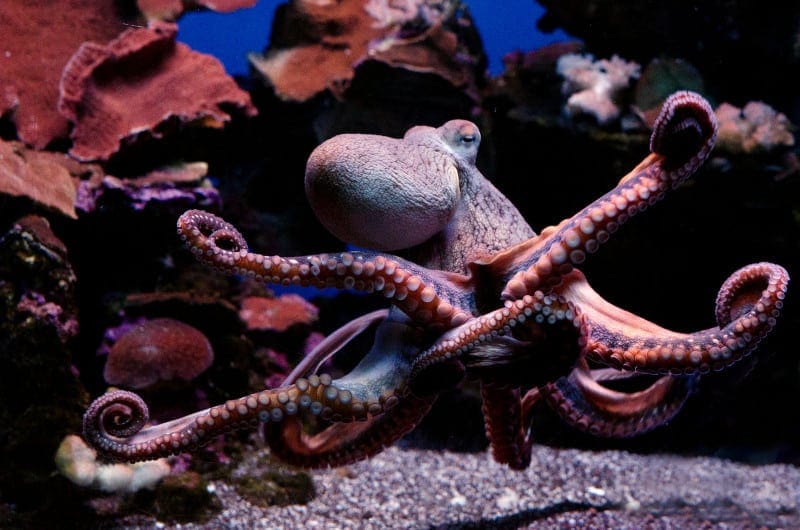
Photo Courtesy of Maui Ocean Center
Behavior and Habitat
He’e is a fascinating marine creature, showcasing intelligence and adaptability. Known scientifically as Octopus cyanea, this species is active during daylight hours. This diurnal behavior sets it apart from many other nocturnal octopuses.
Remarkably intelligent, the octopus utilizes complex problem-solving skills daily. Its behavior involves interacting with the environment in innovative ways. This includes the impressive use of camouflage to blend seamlessly into surrounding habitats.
The octopus’s ability to mimic its surroundings is unparalleled. It can change its skin color and texture very quickly. This ability is vital for hunting and staying safe.
The habitat of this octopus is primarily the shallow waters around Hawaii. These environments offer plenty of hiding places and ample food sources. The coral reefs provide an ideal backdrop for this master of disguise.
Feeding Habits
The He’e is an opportunistic predator that preys mainly on crustaceans, small fish, and mollusks. Its eight powerful arms allow it to skillfully capture and secure prey.
The octopus’s sharp beak at the center of its arms is instrumental in breaking hard shells. The octopus uses its arms to taste and feel. This helps it find and catch its next meal accurately.
Predators and Survival Mechanisms
Despite its intelligence, the octopus has natural predators. Larger fish, sharks, and some marine mammals pose threats. To evade these dangers, the octopus relies heavily on camouflage.
Besides blending with the environment, it uses other defense mechanisms. An ink cloud can be ejected, disorienting predators and providing a chance to escape. This combination of tactics ensures a higher survival rate in the wild.
Preferred Habitats in Hawaii
In Hawaii, He’e thrives in shallow, warm waters rich in coral reefs and rocky outcrops. These locations offer ample opportunities for hiding and hunting.
The octopus prefers these areas due to their abundance of prey and shelter. The varied textures and colors in these habitats complement its camouflage skills. This ecological preference supports its role as both predator and prey within the marine ecosystem.
Explore vibrant coral reefs and marine life at Molokini. Secure your snorkeling experience today!
Cultural Significance of the He’e
The Hawaiian Day Octopus, known locally as “he’e,” holds a special place in Hawaiian culture. It’s not only an ecological keystone but also a cultural symbol. This cephalopod is woven into the fabric of Hawaii’s traditions and mythology.
The octopus’s unique characteristics have inspired various Hawaiian legends. Its ability to change color and shape has made it a metaphor for adaptability and transformation. As a result, He’e is often linked to themes of mystery and power.
In addition, He’e is significant in traditional Hawaiian art and stories. Its depiction symbolizes protection and guidance. These cultural representations continue to influence modern interpretations and artistic expressions.
Role in Hawaiian Folklore
Hawaiian folklore reveres the He’e as a creature of great wisdom and cunning. Stories often describe its shape-shifting abilities, showcasing its capacity to adapt and survive. These traits have elevated the octopus to almost mythic status.
Legend tells of the He’e’s role in creation myths, emphasizing its connection to the ocean’s origins. Its presence in these tales highlights the octopus’s perceived strength and intelligence. Such narratives have preserved the He’e’s legacy across generations.
The octopus appears in various mythological contexts, often interacting with gods and heroes. Its portrayal as a wise creature underscores its respected status in Hawaiian folklore. This rich storytelling tradition continues to fascinate and inspire.
Traditional Uses of Tako
In Hawaiian culture, the octopus, or “tako” in Japanese-influenced culture, is also part of culinary traditions. It’s featured in local dishes and is valued for its unique texture and flavor. Preparing tako is a skill passed down through generations.
Besides its culinary value, the octopus is used in traditional fishing practices. Fishermen regard it as a symbol of sustenance and survival. They catch it using methods respectful of marine ecosystems and cultural practices.
Moreover, the He’e has ceremonial significance. It’s sometimes included in offerings to deities or during celebrations. These uses highlight the octopus’s importance in everyday life and spiritual practices in Hawaii.
Conservation and Threats
He’e plays an integral role in the health of Hawaii’s coral reef ecosystems. However, this remarkable cephalopod faces several threats. Overfishing, habitat destruction, and climate change pose significant risks to its survival. These factors have sparked growing concern among scientists and conservationists alike.
Efforts to protect the He’e are increasingly important because of their crucial ecological role. As an important predator, the octopus helps maintain balance in its habitat. Its decline could lead to unforeseen consequences for the marine ecosystem. As awareness of its plight grows, protective measures become more urgent.
Conservation strategies focus on the octopus and its marine environment. Healthy coral reefs are vital for their survival, providing food and shelter. Thus, broader initiatives aim to safeguard entire ecosystems. These efforts are crucial for preserving both the octopus and the rich biodiversity of Hawaiian waters.
Community involvement is key in these preservation efforts. Local residents and tourists are encouraged to engage in sustainable practices. Responsible wildlife viewing and fishing can significantly reduce human impact on octopus populations. Through collective action, we can support the survival of this captivating creature.
Current Status
The global conservation picture for Octopus cyanea is generally considered lower risk at the species level. The IUCN Red List assessment available for Octopus cyanea lists it as Least Concern (a global category).
However, “Least Concern” doesn’t mean “no threats.” Because this octopus depends on healthy reef habitat and is harvested in some regions, local populations can still be affected by reef decline and fishing pressure.
The octopus’s health reflects the overall state of the reef ecosystem. A decline in octopus populations can indicate broader environmental issues. Hence, monitoring their status is crucial for reef conservation. Scientists use these observations to guide future protective measures.
Efforts for Preservation
Conservation efforts include establishing marine protected areas. These zones limit human activities and provide a safe haven for marine life. Creating these spaces ensures octopuses and other species thrive in their natural habitats. Additionally, educational programs raise awareness about octopus ecology and threats.
Research initiatives play a critical role in understanding octopus populations. Scientists study their biology and behavior, with a focus on adaptability and resilience. Such research informs conservation policies and practical approaches. By learning more about these creatures, we can better protect them.
How to Help Protect Hawaii Marine Life
Everyone can contribute to protecting Hawaiian marine life. Choosing sustainable seafood options helps reduce overfishing. Supporting local conservation projects can also have a lasting impact. These initiatives often involve habitat restoration and scientific research.
Tourists can practice responsible snorkeling and diving. Maintaining a safe distance from marine animals protects their natural behavior. Avoiding contact with coral reefs helps preserve crucial habitats. Small, everyday actions can collectively lead to substantial positive changes.
Educating others about the importance of marine conservation is vital. Sharing knowledge promotes widespread awareness and action. By promoting respect and responsibility, we can protect the Hawaiian Day Octopus and help preserve its vibrant ocean home.
See the unique coral formations and the many fish that reside there during a calm afternoon snorkel at Coral Gardens. Book your trip today.
Fun Facts!
- Three hearts: Like other cephalopods, octopuses have three hearts—two push oxygen-depleted blood through the gills, while the systemic heart pumps oxygenated blood through the body.
- Short lifespan: Octopus cyanea is short-lived. Reported lifespans are commonly around 12–15 months, with the longest known around 18 months (and rare cases longer under certain conditions).
- Arms vs. tentacles: Octopuses have arms, not tentacles. In cephalopods, a tentacle has suckers mainly at the tip, while an arm has suckers along most/all of its length.
- Mostly colorblind (with a twist): Octopus eyes contain a single photoreceptor, so they’re technically colorblind (black-and-white)—but they may still distinguish colors using how their eyes focus light at different depths.
FAQs
Where can you see a Hawaiian day octopus in Maui?
Hawaiian day octopus (Heʻe mauli) are most often seen along reef edges, coral heads, and rocky areas in shallow Maui waters. Look near lava formations and sandy rubble zones where they can hide in crevices. Calm ocean conditions and clear visibility greatly improve your chances.
What time of day are Heʻe mauli most active?
Heʻe mauli are diurnal, meaning they are active during the day. Early morning and late afternoon are commonly the best times to spot them while snorkeling. These periods often have less water movement and fewer people in the water.
How can you tell an octopus den is nearby?
One of the biggest signs is a small pile of shells or crab remains, called a midden, near a hole or crevice. You may also notice small rocks arranged near an opening or see fish like moano stopping repeatedly at the same spot. These clues often indicate an octopus is hiding nearby.
Are Hawaiian day octopuses dangerous?
Hawaiian day octopuses are not aggressive and rarely pose a danger to snorkelers. However, they do have a strong beak and may bite if touched or threatened. Observing from a distance keeps both you and the octopus safe.
What do Hawaiian day octopuses eat?
Their diet mainly consists of crabs, shrimp, small fish, and mollusks. They use their arms to capture prey and their beak to break through hard shells. This hunting behavior plays an important role in maintaining reef balance.
How big do Hawaiian day octopuses get?
Hawaiian day octopuses can grow quite large compared to other reef octopus species. Their arms can span several feet, with some individuals reaching arm lengths of over three feet. Their size makes them especially impressive to see in the wild.
How long do Hawaiian day octopuses live?
Like most octopus species, they have a short lifespan of about one to two years. During this time, they grow quickly, reproduce once, and then die. This short life cycle is typical for octopuses worldwide.
Can you touch an octopus while snorkeling?
No, octopuses should never be touched while snorkeling. Touching can stress or injure the animal and may cause it to abandon its den. Ethical wildlife viewing means looking, not touching.
Maui Snorkeling Tours
Join our tours to see the enchanting He’e! We see this beautiful creature mostly in spring and fall. The fish you see in this blog’s photos is called a Moano. The best way to find an octopus while snorkeling is to follow this fish. Watch what they look at when they stop at a rock! We offer two exceptional snorkeling adventures, providing the perfect opportunity to encounter this remarkable cephalopod firsthand:
The Molokini Crater Snorkeling Tour is an all-inclusive experience running daily from 7 AM to 12 PM. You’ll snorkel and slide into crystal-clear waters at Molokini Crater, famous for its abundant marine life, and at Turtle Town, renowned for sightings of Hawaiian green sea turtles. This tour includes snorkeling gear and a delicious lunch and breakfast.
Alternatively, join the Afternoon Snorkeling Tour from 1 PM to 4 PM. This tour lets you explore the stunning Coral Gardens, teeming with tropical fish and colorful coral reefs. Lunch and snorkeling gear are provided. This makes it easy to enjoy Maui’s underwater paradise and search for this octopus!
Final Thoughts
The Hawaiian Day Octopus is one of the ocean’s most fascinating creatures. You might be drawn to their smart behavior or ability to change colors. Many people find their playful nature charming. Next time you’re snorkeling in Maui, keep an eye out for this clever He’e. You might spot one blending seamlessly into its colorful surroundings! Happy snorkeling, and enjoy exploring Hawaii’s incredible underwater world!
Sources
- Maui Ocean Center – Day Octopus (He‘e mauli)
- Animal Diversity Web – Octopus cyanea (lifespan, reproduction, behavior)
- IUCN Red List – Octopus cyanea assessment
- Natural History Museum (UK) – Octopus intelligence & experiments
- Smithsonian Ocean Portal – Cephalopods (three hearts explanation)
- MarineBio – Day Octopus overview (range, habitat, fishing notes)


