Written by
Maui Snorkeling, operating tours to Molokini Crater, Turtle Town, and Coral Gardens from Māʻalaea Harbor since 1985. Tours are led by USCG-licensed captains aboard a
USCG-inspected passenger vessel.
Quick Answer
The Haleakalā silversword plant, also called ʻāhinahina, is a threatened native plant found naturally only on Haleakalā’s high slopes on Maui. It spends most of its life as a silver rosette, flowers once, and then dies. You can appreciate the rosettes year-round; flowering is seasonal and varies between years. View plants from designated trails and overlooks without touching them or stepping into the surrounding soil.
Main Takeaways:
- Best Place To See It: Haleakalā National Park’s Summit District, especially near designated crater viewpoints and trails
- Plant Name: The Haleakalā silversword is also known as ʻāhinahina
- Blooming: It blooms once in its life, releases seeds, then the individual plant dies
- Viewing Season: Silver rosettes can be seen year-round. Flowering generally occurs in summer, but the number and location of blooming plants vary
- Visitor Rule: Don’t touch, pick, or step near silverswords because the plants and seedlings are fragile
- Trip Tip: Sunrise visits require advance planning, while daytime summit visits can still offer amazing views and photo opportunities
The Haleakalā silversword plant, also called ʻāhinahina, is a threatened native plant found naturally only on Haleakalā’s high slopes on Maui. Found on Haleakalā's high volcanic slopes, this striking silver plant is known for its sharp, shimmering leaves, harsh summit habitat, and once-in-a-lifetime bloom. For many visitors, seeing a Hawaiian silversword in Haleakalā National Park is one of the most memorable parts of a trip to Upcountry Maui.
In this guide, you’ll learn what the Haleakalā silversword plant is, where to see it on Maui, when it may bloom, why it’s protected, and how to enjoy it responsibly without harming this fragile species.
What Is The Haleakalā Silversword Plant?
The Haleakalā silversword belongs to the sunflower family, Asteraceae. Its scientific name is Argyroxiphium sandwicense subsp. macrocephalum. Although its spiky shape can resemble an agave, it isn’t an agave or cactus.
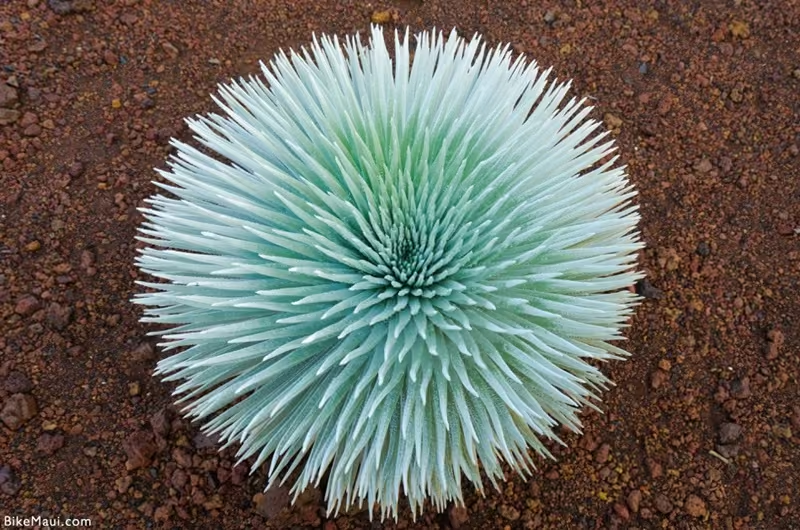
Its silver appearance comes from dense hairs covering fleshy leaves. The hairs help reflect intense sunlight, while the succulent leaves and compact rosette suit its harsh alpine habitat. This Maui subspecies is distinct from the related silverswords found on Hawaiʻi Island.
Where Can You See The Silversword Plant?
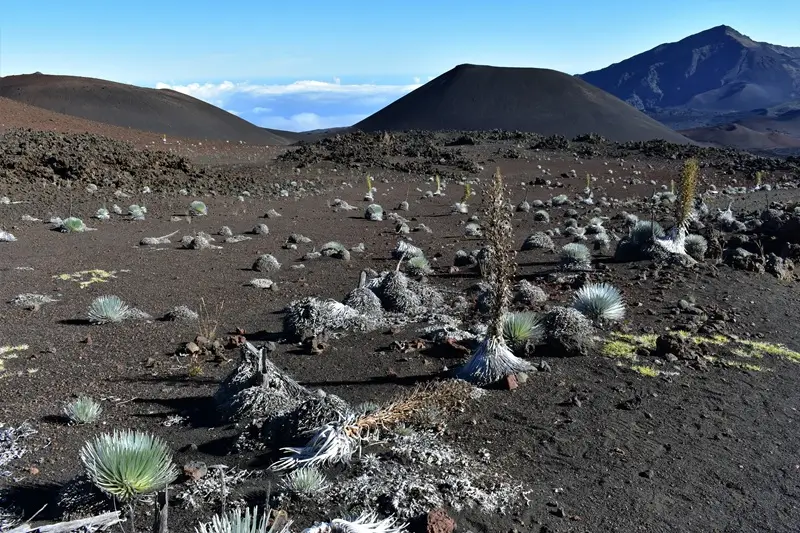
To see the Hawaiian silversword plant in the wild, visit the Summit District of Haleakalā National Park on Maui. The Haleakalā silversword plant, also called ʻāhinahina, grows in the high, dry volcanic landscape near the summit and crater. This is one of the best places in the world to see this rare native plant in its natural habitat.
You don’t need to hike far to appreciate the silversword, but you do need to be careful. Stay on marked trails, use overlooks and designated viewing areas, and don’t touch, pick, or step near the plants. Even small seedlings can be hard to see, and walking off the trail can damage this fragile summit environment.
Best Places To Look For Silverswords
Bare-looking ground around a silversword may contain fragile roots and tiny seedlings. Staying clear of the leaves isn’t enough if you step off the trail beside the plant. Use your camera’s zoom and keep your feet within designated walking areas.
- Haleakalā Visitor Center Area: This summit area gives many visitors their first chance to see the volcanic crater landscape where silverswords grow.
- Keoneheʻeheʻe Trail, also called Sliding Sands Trail: This famous crater trail passes through a dramatic volcanic setting where silverswords may be seen along designated areas. If you’re comparing summit hikes with other island trails, our Maui hiking trails guide can help you choose the right route.
- Leleiwi Overlook: Enjoy crater views from the designated overlook. Ask park staff where silverswords can currently be viewed without leaving established paths.
- Kalahaku Overlook: This higher overlook is another great place to enjoy summit scenery and learn more about Haleakalā’s rare high-elevation plants.
Planning Tip: Bring warm layers and check the summit forecast. You don’t need a sunrise visit to appreciate silverswords, and clear crater views aren’t guaranteed at any time of day.
How The Haleakalā Silversword Blooms
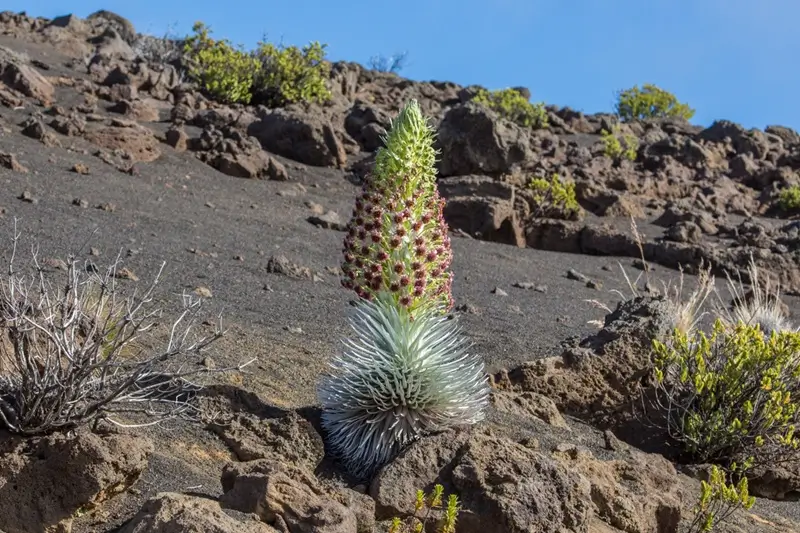
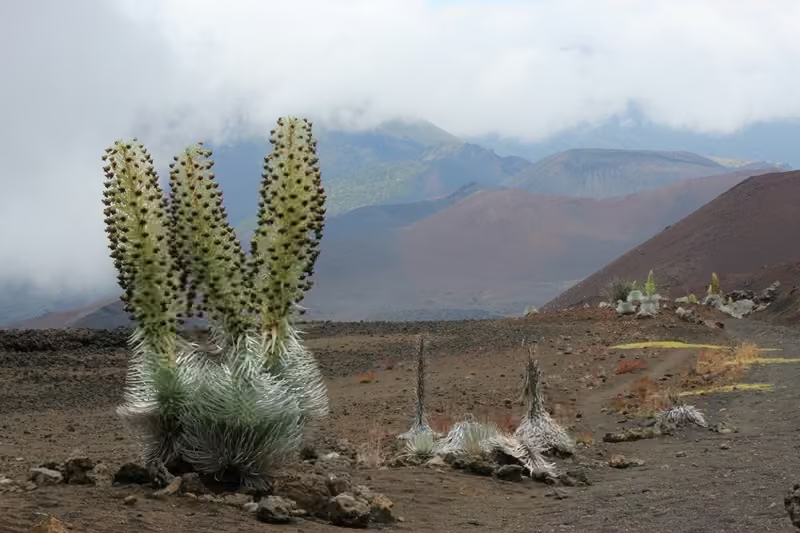
A silversword spends most of its life growing as a rosette. Eventually, it produces a tall stalk bearing many flower heads, each containing numerous tiny flowers. It flowers only once before the individual plant dies.
This one-time flowering is called monocarpic reproduction. Different plants reach that stage in different years, so the population doesn’t bloom together on a dependable annual schedule.
Why Pollinators Matter
Flowering alone doesn’t guarantee successful seed production. Silverswords depend on insects to transfer pollen between compatible plants. Native yellow-faced bees are important visitors, and plant spacing can affect reproductive success.
Protecting ʻāhinahina therefore means protecting more than the visible rosette. Its surrounding habitat and insect community matter, too.
Photo by Sunil Singh / Fotolia, via
Bike Maui
Respecting Haleakalā’s Cultural Landscape
Haleakalā is sacred to Native Hawaiians. Visiting respectfully means following park guidance, giving cultural practitioners space, and treating the mountain as more than a scenic backdrop. Viewing ʻāhinahina without disturbing its habitat is one part of that care.
Why Protecting The Haleakalā Silversword Matters
The Haleakalā silversword is a threatened species that grows in a very limited habitat on Maui. Its summit environment is fragile, and the plant faces pressure from climate change, invasive species, and past damage from people and animals. That’s why every visitor has a role in protecting this rare native plant.
You can help protect ʻāhinahina by following simple, respectful park practices during your visit to Haleakalā National Park.
- Stay On Marked Trails: Walking off trail can damage fragile plants, seedlings, and volcanic habitat.
- Don’t Touch Or Pick The Plants: Take photos from a safe distance and let each silversword complete its natural life cycle.
- Watch Where You Step: Young silverswords can be small and easy to miss near trail edges.
- Pack Out Your Trash: Keep Haleakalā clean by taking all food wrappers, bottles, and other trash with you.
- Respect Park Rules: Follow posted signs and current National Park Service guidance while exploring the summit area.
These small choices help protect the Haleakalā silversword plant so future visitors can experience this rare Maui species, too.
When Is The Best Time To See Silverswords Bloom?
Flowering generally occurs in summer, often from June through September, although timing can vary. Some years have many flowering plants, while others have far fewer. No particular visit date guarantees a bloom.
You can still enjoy silverswords outside the flowering season. Their silver rosettes remain distinctive, and old flower stalks reveal another stage of the plant’s life cycle. Ask park staff about current viewing opportunities rather than leaving trails to search for flowers.
Final Thoughts
A Haleakalā silversword is worth noticing at every stage, from a small silver rosette to a towering flower stalk. Look closely from the trail, give its surrounding habitat space, and let a bloom be a bonus rather than the measure of your visit. For the wider trip-planning details, see our Haleakalā National Park guide.
Sources & Updates
Use these official resources and published research to learn about Haleakalā silversword identification, habitat, flowering, pollination, and conservation. Before visiting, check current park alerts, trail access, and sunrise reservation requirements.
Cover photo: National Park Service, via
Haleakalā Silverswords.