Quick Answer
Maui sea cucumbers, called loli in Hawaiʻi, are bottom-dwelling marine animals related to sea stars and sea urchins. Many species process organic material in sand and sediment, helping recycle nutrients, while others collect food particles drifting through the water. Snorkelers may spot them on reef flats, in sandy pockets, or tucked into rocky crevices. Observe them without touching or disturbing their habitat.
Main takeaways:
- What they are: Sea cucumbers are echinoderms, not plants or sea slugs.
- Why they matter: Sediment-feeding species help process organic material and cycle nutrients through reef ecosystems.
- Where to look: Scan sandy reef areas, rocky crevices, and reef flats without turning rocks or reaching into holes.
- Identification clues: Look for an elongated body with leathery skin. Texture, markings, tube feet, and feeding tentacles vary by species.
- Feeding differences: Some loli gather food from sediment; others extend branched tentacles to collect drifting particles.
- Respectful viewing: Don’t pick up, poke, or move sea cucumbers. Handling can injure them or trigger defensive responses.
Maui sea cucumbers are easy to overlook while you’re watching colorful fish, but these slow-moving animals play an important part in reef life. Known as loli in Hawaiʻi, they live among sandy patches, rocky crevices, and reef flats.
Some gather food from sediment, while others extend branching tentacles to collect particles from the water. Learning a few identification clues and feeding differences makes these unusual animals much more interesting to watch.
What Is A Sea Cucumber?
A sea cucumber is a marine animal belonging to the echinoderms, the same group that includes sea stars and sea urchins. Sea cucumbers form the class Holothuroidea and typically have elongated bodies with leathery skin rather than the rigid appearance of their relatives.
In Hawaiʻi, sea cucumbers are commonly called loli. That name covers different species, which can vary considerably in appearance, feeding habits, and preferred habitat.
Despite their name, sea cucumbers aren’t plants. They also aren’t sea slugs, which are mollusks related to snails.
Common Loli You Might See in Hawaiʻi
Loli includes several kinds of sea cucumbers, not just one species. Some move across sandy reef areas, while others stay tucked in crevices and extend feeding tentacles into the water. These four species offer a useful introduction to Hawaiʻi’s shallow-water sea cucumbers.
Black Sea Cucumber
Scientific Name: (Holothuria atra)
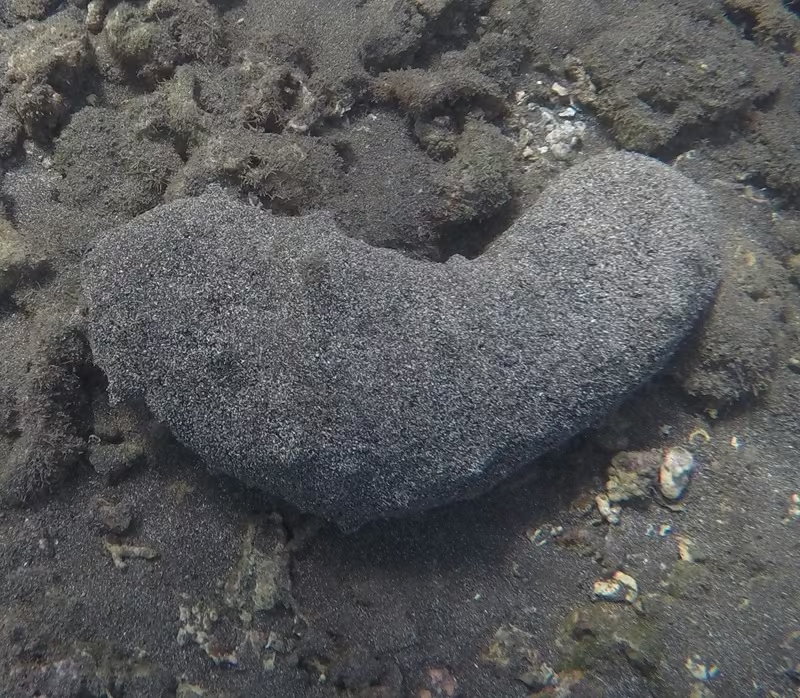
The black sea cucumber has a dark, cylindrical body that is often coated with sand grains. You may see it on sandy reef areas and in shallow pools, where it gathers sediment and organic particles with feeding tentacles around its mouth. After digestion, it leaves behind strands of processed sand that can resemble a string of beads.
Useful clue: A mostly black body with sand adhering to the surface can suggest this species, but color alone isn’t enough for a confident identification.
Ashy Sea Cucumber
Scientific Name: (Holothuria cinerascens)
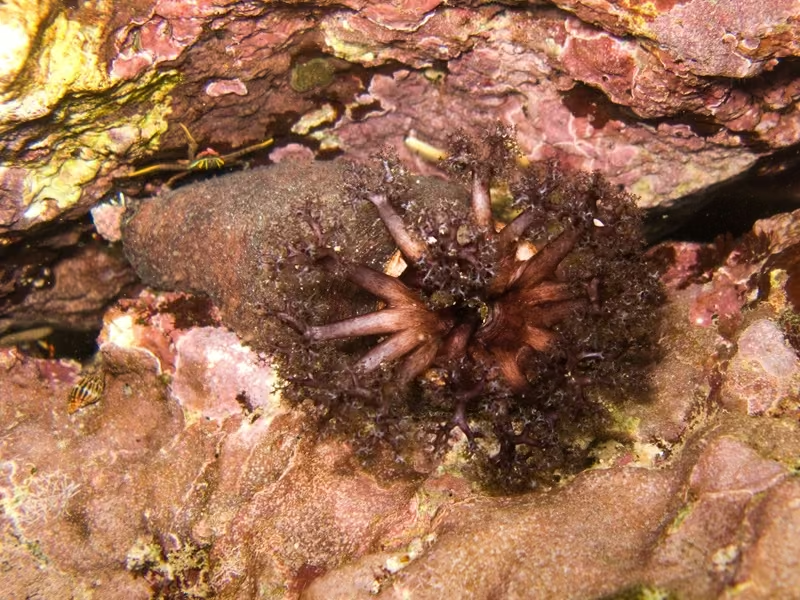
This species has a dark body with a thin gray covering that gives it an ash-dusted appearance. It often stays wedged in cracks or beneath rocks in protected reef flats and tide pools. Unlike sea cucumbers that gather food from sediment, it collects drifting particles with branched feeding tentacles.
Useful clue: When extended, its dark feeding tentacles resemble small branching plants. Watch without disturbing the animal or moving its shelter.
Banded or Stubborn Sea Cucumber
Scientific Name: (Holothuria pervicax)
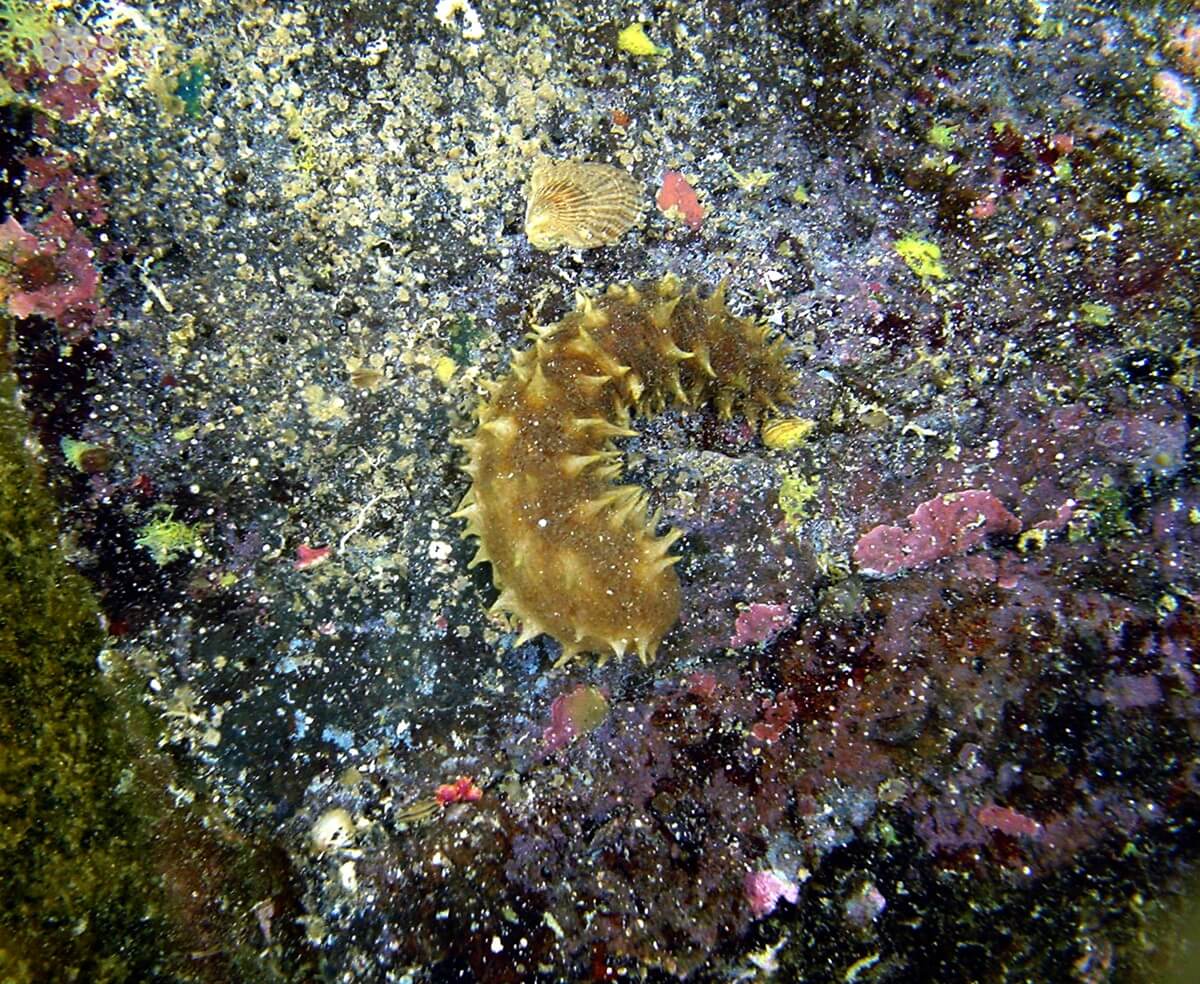
Often called the banded sea cucumber in Hawaiian guides, this species is also known as the stubborn sea cucumber. Its coloration varies, and its body has a coarse texture with blunt, dark-tipped projections. It commonly shelters beneath rocks, so it may be less obvious than species resting in the open.
Useful clue: Compare the body texture and markings rather than relying on a clear banding pattern. Leave rocks in place instead of searching underneath them.
White-Spotted Sea Cucumber
Scientific Name: (Actinopyga varians)
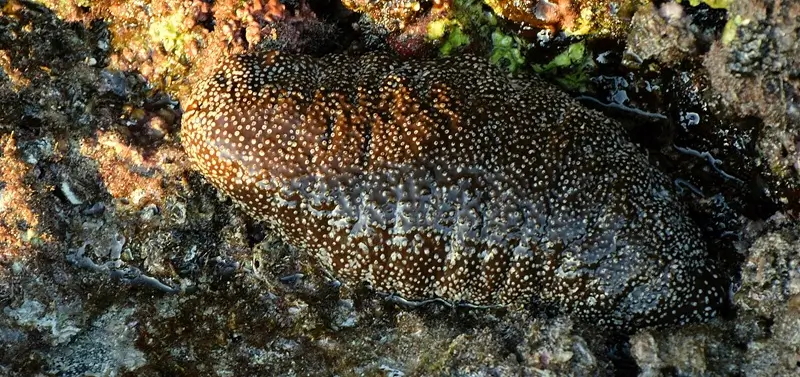
Also called the white-speckled or rump-toothed sea cucumber, this species has a thick brown body marked with pale spots. Strong tube feet help it cling to reef surfaces in areas exposed to wave action. It uses feeding tentacles to gather sediment and organic material from the bottom.
Useful clue: Look for pale spotting on a sturdy brown body. Older Hawaiian guides may list this Pacific species as Actinopyga mauritiana, a name now applied to its Indian Ocean counterpart.
Identification note: Sand, lighting, body contraction, and partly hidden features can make sea cucumbers difficult to identify. Observe visible details without handling the animal, and don’t assume every dark or spotted loli belongs to one of these four species.
Why Reefs Need Them
Sea cucumbers help keep materials moving through reef ecosystems. Many species feed on detritus, the small bits of organic matter that settle onto sand and other reef surfaces. By digesting this material and passing sediment back out, they contribute to nutrient cycling and sediment turnover.
They Help Recycle Nutrients
Organic material contains nutrients that other organisms can use. As sea cucumbers feed and digest, they help return some of those nutrients to the surrounding ecosystem, where they can support organisms such as seaweeds. Their feeding is part of the reef’s natural recycling process.
They Rework Reef Sediment
Sediment-feeding loli gather sand along with their food, digest the organic material, and release the remaining sediment. The bead-like strands you sometimes see behind a sea cucumber are evidence of that process. Over time, this feeding helps turn over sediment rather than leaving it undisturbed.
They May Help Limit Some Coral Diseases
A 2024 study in French Polynesia and Palmyra Atoll found that removing sediment-feeding sea cucumbers increased disease-related damage in the corals studied. The findings suggest that sea cucumber feeding can help reduce harmful effects associated with contact between coral and sediment. That doesn’t mean loli prevent every coral disease or that the results apply equally to every Maui reef.
Sea cucumbers don’t remove every pollutant or make unsafe water safe. Their value comes from their daily feeding and their role in a functioning reef ecosystem.
Where You Might See Sea Cucumbers In Maui
Look for sea cucumbers in sandy patches beside reef structure, across reef flats, and around rocky crevices. Some species rest in the open, while others remain partly concealed beneath ledges or inside cracks.
Rather than swimming farther to find one, slow down and observe the bottom from the surface. An exposed body, a patch of branching feeding tentacles, or strands of processed sand may help you notice an animal you would otherwise miss.
Choose your snorkeling location based on current conditions, not the chance of seeing loli. Don’t turn rocks, reach into holes, or enter rough water to search for them. Sightings are never guaranteed.
Are Sea Cucumbers Dangerous to Snorkelers?
Sea cucumbers generally aren’t a threat to snorkelers who leave them undisturbed. Handling, squeezing, or poking them can cause injury or trigger species-specific defensive responses.
Observe them where they are, keep your hands out of crevices, and don’t move an animal for a photograph. A sea cucumber resting in the open doesn’t need help returning to a hiding place.
How Sea Cucumbers Live and Protect Themselves
Sea cucumbers may look simple from above, but their bodies work very differently from those of fish. Their movement, breathing, reproduction, and defenses reveal how they survive on the seafloor.
How They Move
Many sea cucumbers use rows of tiny tube feet to grip surfaces and move slowly across the bottom. Body-wall muscles also help them change shape and crawl. Some species stay firmly attached inside crevices while extending their feeding tentacles into the surrounding water.
Not every sea cucumber has tube feet. Some move using waves of muscular contractions along the body.
How They Breathe
Many species draw seawater through the anus into branching internal structures called respiratory trees. These structures absorb oxygen from the water before expelling it again.
Although the respiratory trees connect to the rear of the digestive tract, their job is breathing, not processing food.
How They Reproduce
Many sea cucumbers reproduce by releasing eggs and sperm into the water, where fertilization takes place. The resulting larvae drift in the plankton before settling onto the seafloor and developing into bottom-dwelling juveniles.
Reproduction varies by species. Some brood their young, while others can also reproduce asexually by dividing into two individuals.
How They Defend Themselves
Sea cucumber defenses differ between species. Some rely on hiding places or chemicals that discourage predators. Others can release sticky threads called Cuvierian tubules, which may entangle an attacker.
Evisceration is a separate response in which some species expel internal organs under severe stress. They can regenerate lost organs, but recovery takes time and may interrupt feeding. Not every species shares either response, and trying to trigger a defense can harm the animal.
How to Snorkel Responsibly Around Loli
Watching sea cucumbers doesn’t require touching or moving them. A few simple habits protect both the animal and its habitat:
- Leave loli in place: Don’t pick them up, reposition them, or handle them for photographs.
- Keep clear of the bottom: Give your fins room so they don’t strike animals, stir sediment, or damage coral.
- Leave hiding places undisturbed: Don’t lift rocks or reach into crevices to expose an animal.
For broader reef etiquette and trip-planning advice, see our guide to visiting Maui responsibly.
A Closer Look at Maui’s Loli
Sea cucumbers are more than unusual shapes on the seafloor. Their feeding helps move organic material and nutrients through reef ecosystems, while their different habitats and behaviors reward patient observation.
If you spot loli while snorkeling in Maui, watch how they feed or move without disturbing them. Understanding what they’re doing makes the encounter more meaningful than simply checking another animal off a list.