Hana Maui Guide: Things to Do, Beaches, Food & Places to Stay
July 14th, 2026
| Areas & Town Guides
Written by Maui Snorkeling, operating tours to Molokini Crater, Turtle Town, and Coral Gardens from Māʻalaea Harbor since 1985. Tours are led by USCG-licensed captains aboard a USCG-inspected passenger vessel.
Last updated September 25, 2026
Quick Answer
Hana Maui is worth treating as a destination, not just the turnaround point at the end of the Road to Hāna. The area offers local food, Hāna Bay, Hāmoa Beach, Waiʻānapanapa State Park, Kahanu Garden, and access to Kīpahulu. A full day works for a first visit, but staying overnight gives you a much more relaxed experience.
Main takeaways:
Best Visit Length: Plan a full day at minimum, or stay overnight if you want beaches, town, and Kīpahulu without rushing
Book Ahead: Nonresidents need advance entry and parking reservations for Waiʻānapanapa State Park and should check current construction notices before driving
Best Easy Town Stop: Hāna Bay has picnic space, restrooms, showers, shoreline access, and a central location
Best Scenic Beach: Hāmoa Beach is beautiful, but open-ocean conditions mean you should only enter when the water is calm
Most Important Tip: Park legally, avoid private property, support local businesses, and don’t try to squeeze every East Maui stop into one day
This guide focuses on Hāna town and the nearby East Maui coastline after you arrive. For waterfalls, mile markers, roadside stops, and driving directions along the highway, use our complete Road to Hāna guide.
The drive to Hāna is memorable, but there’s plenty to enjoy once you arrive. Local food, tropical gardens, cultural sites, and dramatic coastal scenery make this East Maui community worth a little extra time.
Many Road to Hāna itineraries race into town, grab lunch, take one photo, and immediately turn around. That works when time is limited, but it doesn’t leave much room to experience Hāna itself.
A better plan is to choose a short list of meaningful stops, reserve Waiʻānapanapa in advance, leave room for a local meal, and consider spending the night.
Why Hāna Is Worth More Than A Turnaround Stop
Hāna feels different from Maui’s larger resort areas. There aren’t rows of shopping centers, giant parking lots, or endless restaurant choices. Instead, you’ll find local stores, roadside food, green pastures, community parks, historic places, and a coastline shaped by lava, wind, rain, and powerful East Maui surf.
Hāna’s slower pace is part of its charm. Leave room for a local lunch, a walk by the bay, and a few places you’re genuinely excited to explore. Supporting local businesses and giving yourself an unhurried schedule are lovely ways to experience this East Maui community.
Spend time at Hāna Bay. Eat something made locally. Visit a managed cultural or natural attraction. Buy snacks or souvenirs from a Hāna business. Watch the ocean before entering. Most importantly, leave enough time in the schedule to enjoy the day rather than constantly checking the clock.
Hāna Maui At A Glance
Use this table to choose the Hāna stops that best fit your schedule instead of trying to visit everything in one day.
Hāna Stop
Best For
Planning Note
Hāna BayEasy town stop
Picnics, restrooms, showers, shoreline views, and a break close to food and local businesses.
No advance reservation is normally needed. County hours are currently listed as 7:00 a.m. to 8:00 p.m.
WaiʻānapanapaBlack-sand coastline
Volcanic scenery, coastal trails, sea stacks, hala forest, photography, and black sand.
Nonresidents need advance entry and parking reservations. Same-day reservations are not available.
Hāmoa BeachScenic beach stop
Beach scenery, relaxing on the sand, and water activities only when the ocean is calm.
Parking is limited and the beach is exposed to open-ocean surf. Don’t count on guaranteed snorkeling.
Kahanu GardenCulture and plants
Piʻilanihale Heiau, tropical plants, Hawaiian history, and a deeper understanding of East Maui.
Advance reservations are encouraged. Check the current operating schedule before your drive.
Hāna Town FoodLunch and supplies
Farm food, pizza, local plates, food trucks, groceries, cold drinks, and picnic supplies.
Hours can change and popular food can sell out. Keep snacks and water in the car as a backup.
KīpahuluHiking beyond Hāna
The Pīpīwai Trail, bamboo forest, Waimoku Falls views, and the Kūloa Point Trail.
Allow several additional hours. The Pools of ʻOheʻo are not open for swimming, and current park conditions should be checked first.
Note: Hours, fees, reservation systems, business schedules, weather, road access, and park conditions can change. Confirm official updates before leaving for East Maui.
Where Is Hāna Maui?
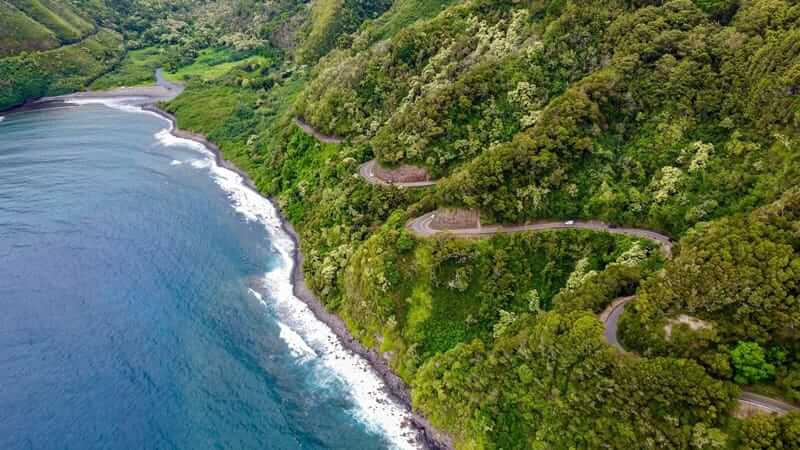
Hāna sits on Maui’s remote eastern coast, about 52 miles from Kahului. The distance doesn’t look intimidating on a map, but the Hāna Highway is narrow, winding, and filled with bridges, curves, waterfalls, viewpoints, farms, and roadside stops.
The drive can take two to four hours without a long stop list. Once you add breakfast, waterfalls, photos, gardens, Waiʻānapanapa, and lunch, it becomes a full-day adventure.
Download your directions before leaving Pāʻia because mobile service can be inconsistent. Start with a full tank of gas, enough water, and realistic expectations. Hāna isn’t the place to discover that everyone in the car thought someone else packed the snacks.
Use our Pāʻia Maui guide to plan breakfast, coffee, supplies, and a final restroom break before continuing east.
Hāna Bay is one of the easiest places to begin exploring the town. Hāna Beach Park sits along the bay and offers open lawn, picnic tables, restrooms, showers, shoreline access, and convenient proximity to local food and businesses.
The dark sand, working harbor, canoes, green hills, and view toward Kauiki create a setting that feels distinctly Hāna. It’s a practical place to eat lunch, stretch your legs, reorganize the car, and decide what your group has time and energy for next.
The county currently lists Hāna Beach Park hours as 7:00 a.m. to 8:00 p.m. Ocean access is available when conditions permit, but a protected-looking bay can still have waves, current, murky water, or debris after rain. Watch the water before entering and follow any posted warnings.
Visit Waiʻānapanapa State Park With A Reservation
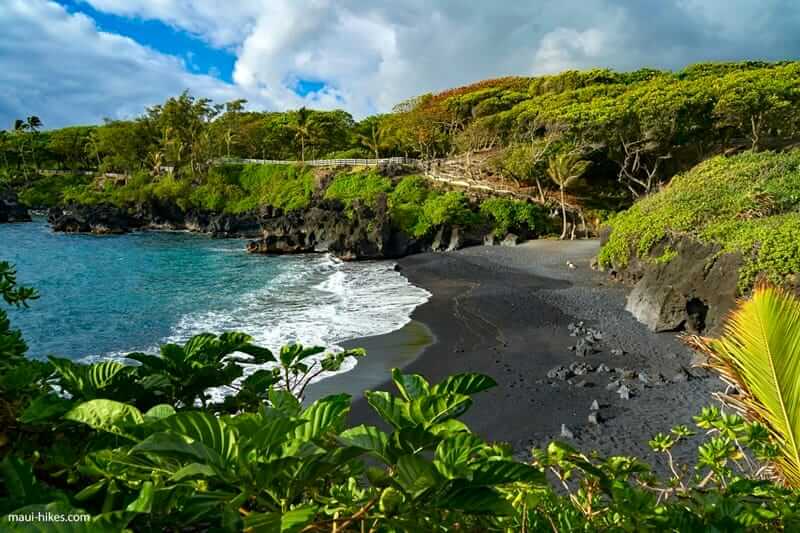
Waiʻānapanapa State Park is one of East Maui’s most memorable coastal places. Its volcanic landscape includes a small black-sand beach, sea stacks, native hala forest, coastal trails, a natural arch, blowholes, and broad ocean views.
This is not a spontaneous roadside stop for most visitors. Nonresidents need to reserve entry and parking in advance. The park does not sell same-day reservations, and visitors without a parking voucher have no legal backup parking outside the entrance.
The official park page currently lists daily hours from 7:00 a.m. to 6:00 p.m. Nonresident admission is $5 per person, plus $10 per noncommercial vehicle. Children ages 3 and younger are free. Reservations generally become available 30 days in advance and must be booked at least one day before the visit. During the current improvement project, the eastern day-use and tour-bus parking area is closed, beach access is routed through the park's western end, and road work may require temporary park closures.
Your reservation covers a specific time slot, so build the rest of your Hāna itinerary around it. Don’t arrive hours early expecting entry, and don’t plan to stay after your reserved period ends.
Swimming conditions vary. The shoreline can be rough, and waves can surge against rocks and through narrow coastal areas. Follow park signs and don’t enter caves, blowholes, or water features that are closed or unsafe.
Relax At Hāmoa Beach When Conditions Are Calm
Hāmoa Beach is the classic tropical beach many visitors picture when they imagine East Maui. It has a curved shoreline, soft sand, lush surroundings, and beautiful blue water when the weather cooperates.
It’s also exposed to the open ocean. Waves, shore break, and currents can make the beach unsuitable for swimming or snorkeling, even when the sand looks inviting. Treat Hāmoa as a scenic beach first and a water stop only when conditions are genuinely calm and appropriate for your experience level.
Parking near Hāmoa is limited, so use legal spaces and keep your vehicle completely out of the roadway. Don’t block driveways or create your own parking area along the shoulder.
Explore Kahanu Garden And Piʻilanihale Heiau
Kahanu Garden combines tropical plants, Hawaiian history, cultural learning, and one of the Hāna region's most significant places. The garden is home to Piʻilanihale Heiau, a massive traditional Hawaiian structure within the Honomāʻele ahupuaʻa.
This is a strong choice for travelers who want something more meaningful than a sequence of photo stops. The garden’s plant collections and cultural interpretation help explain how food, land, ocean, voyaging, and community connect across the Pacific.
The official garden site currently lists self-guided visits Monday through Friday from 9:00 a.m. to 3:00 p.m., and encourages advance reservations. Guided experiences can sell out, so check availability before building the garden into your itinerary.
Continue To Kīpahulu Only If Your Schedule Allows
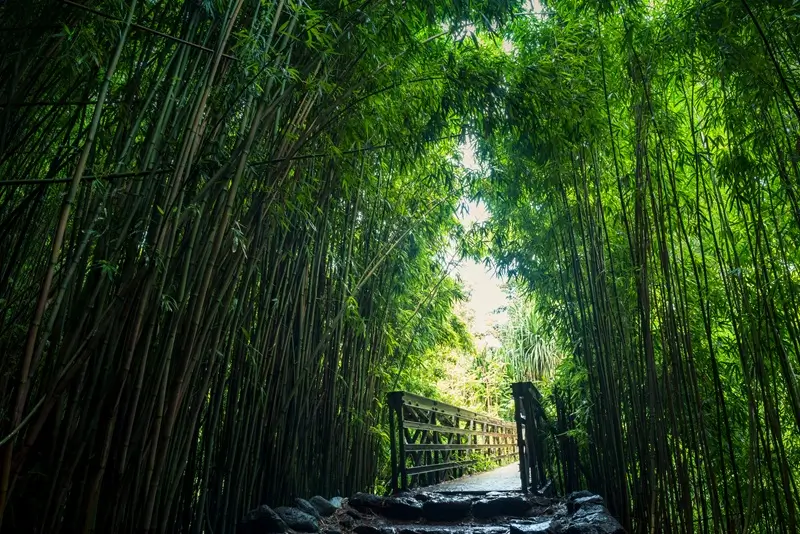
The Kīpahulu District of Haleakalā National Park lies beyond Hāna. It offers coastal scenery, cultural landscapes, the short Kūloa Point Trail, and the longer Pīpīwai Trail, which winds through rainforest and bamboo toward Waimoku Falls.
The Pīpīwai Trail is about four miles round trip and gains approximately 800 feet. It deserves real hiking time, not a rushed final stop before driving several hours back in the dark.
The Pools of ʻOheʻo are not open for swimming. They can be viewed from the Kūloa Point Trail, but visitors must obey the posted barriers and restrictions. Flash flooding, falling rocks, slippery trails, and changing weather are real concerns in Kīpahulu.
If Kīpahulu is one of your main priorities, staying overnight in Hāna makes the day much more manageable. Check the current Haleakalā National Park conditions before driving beyond town.
If you’re ready for a break from the winding drive, Hāna Bay is an easy place to pause near the heart of town. Pick up lunch from a local business, find a picnic spot, and enjoy the dark-sand shoreline and ocean views. With open lawn, picnic tables, restrooms, and showers nearby, it’s a practical choice for a relaxed stop that doesn’t need a long detour.
Hāmoa Beach For Classic East Maui Scenery
Hāmoa’s curved shoreline and lush tropical backdrop make it a lovely place to pause when you’d like a beach break beyond town. Bring a towel, settle on the sand well back from the waves, and enjoy the coastal scenery without feeling you need to fit in another attraction. Parking is limited, so use legal spaces and keep driveways clear. Ocean conditions can be rough, so a visit here doesn’t have to include a swim.
Waiʻānapanapa For Black Sand And Coastal Walking
Waiʻānapanapa offers one of Hāna’s most striking coastal scenes, with a small black-sand beach, volcanic rock, sea stacks, and native hala trees. It’s a great pick if you enjoy photography and exploring on foot as much as relaxing by the ocean. Within your reserved time slot, leave room for whichever coastal paths and viewpoints are open instead of making the beach your only stop. Wear shoes with good traction for uneven lava, and follow the park’s current access signs.
Koki Beach For Shoreline Views
Koki Beach has dramatic East Maui scenery, views of the offshore islet ʻAlau, and a shoreline that can change significantly with surf and season.
It’s better treated as a scenic or picnic stop than a guaranteed swimming beach. Strong waves and currents may be present, so stay out of the water when conditions look rough or warning signs are posted.
A Note About Red Sand Beach
Kaihalulu, often called Red Sand Beach, is visually striking, but it isn’t a simple public beach-park stop. Access concerns, a narrow and unstable trail, cultural sensitivity, limited emergency response, and changing restrictions make it a poor fit for many visitors.
Read our Red Sand Beach safety and access guide before considering it. Don’t cross private property, ignore signs, or follow an old social media route simply because someone posted dramatic photos.
Where To Eat In Hāna Maui
There’s no single perfect Hāna lunch because the best choice depends on your timing, reservation schedule, group size, and whether you want to sit down or get back on the road.
For Local Produce And Farm Food:Hāna Farms offers a farm stand, bakery items, local products, produce, and farm-focused food. Its Bamboo Hale restaurant is known for wood-fired pizza, salads, and a relaxed tropical setting near the entrance to Hāna.
For A Sit-Down Meal:Hāna Ranch Restaurant serves sit-down lunch and dinner from 11 a.m. to 9 p.m., with local ingredients, sandwiches, fish, salads, and other island-style dishes. Heading out early? Its breakfast takeout window offers sandwiches, pastries, fruit, and drinks from 7 a.m. to 11 a.m.
For Groceries And Supplies:Hasegawa General Store is a long-running Hāna business where you can pick up groceries, drinks, snacks, practical supplies, gifts, and local merchandise.
For A Quick Local Meal: Look for operating food trucks and smaller roadside stands around Hāna. Availability can vary by day, weather, season, and how quickly popular dishes sell out.
For A Beach Picnic: Pick up food before heading to Hāna Bay, then use the park’s tables and open lawn.
Options are more limited than in Kīhei or Wailea, so check current hours and bring a backup snack. Small businesses may close early, sell out, adjust hours, or pause service during severe weather.
Where To Stay In Hāna Maui
Staying overnight gives you more time to explore Hāna, nearby beaches, cultural attractions, and Kīpahulu without combining everything with the return drive.
Full-Service Resort Lodging
Hāna-Maui Resort is the main full-service lodging option in Hāna. The property offers hotel rooms, suites, and bungalows across a large tropical setting, along with dining, pools, wellness amenities, and convenient access to Hāna town.
This option may work best for couples, families, and travelers who want resort-style amenities without having to drive back to another part of Maui at the end of the day. Rates, resort fees, dining schedules, included amenities, and room availability can change, so review the current policies before booking.
Smaller Vacation Accommodations
Hāna and the surrounding East Maui area also have smaller guest accommodations, cottages, vacation rentals, and locally operated lodging. These properties can provide more privacy, kitchen access, extra space, or a quieter setting than a traditional hotel.
Availability is limited, and not every online listing is necessarily authorized for short-term stays. Before booking, confirm that the property is legally permitted, review its cancellation and check-in policies, and verify the exact location. A listing described as being “near Hāna” may still require additional driving on narrow or rural roads.
You can review current short-term rental information through the County of Maui. Travelers should also confirm that taxes, cleaning charges, parking rules, and other fees are clearly explained before making a reservation.
Camping Near Hāna
Permitted camping may be available at Waiʻānapanapa State Park, which currently offers tent camping and cabins; camper van camping is temporarily unavailable. Advance reservations and permits are required, and visitors should never camp overnight at beaches, roadside pullouts, or other areas where camping is not specifically allowed.
Camping options can be affected by construction, maintenance, weather, and park closures. Camper van camping reservations at Waiʻānapanapa remain temporarily unavailable through March 2027 while a new comfort station is under construction. Check the official Hawaiʻi State Parks website before making plans because availability and permitted camping types may change.
Who Should Stay Overnight In Hāna?
An overnight stay is especially helpful for visitors who want to hike the Pīpīwai Trail, visit Waiʻānapanapa State Park, explore Hāna beaches, spend time at Kahanu Garden, or enjoy Hāna without constantly watching the clock. It can also be a better choice for families with children, photographers, hikers, and travelers who prefer a slower itinerary.
One night gives you additional time in Hāna and can make the return trip feel less rushed. Two nights offer more flexibility for nearby beaches, cultural attractions, Kīpahulu, changing weather, and a quieter day that is not entirely centered on driving.
Why You Should Book Early
Hāna has far fewer lodging options than Maui’s larger resort areas, so rooms and permitted campsites can fill well in advance. Holiday periods, summer travel dates, weekends, and popular hiking seasons may be especially competitive.
Reserve lodging as soon as your travel dates are firm, but review the cancellation policy before paying. Weather, road conditions, park access, and local operating schedules can change, so choose accommodations that give you enough flexibility for East Maui’s remote setting.
Planning tip: Confirm the property’s legal rental status, address, parking arrangements, check-in instructions, taxes, fees, and current policies directly with the lodging provider. Don’t rely only on an outdated blog post, map listing, or third-party booking description.
Best Time To Visit Hāna Maui
The best time to visit Hāna depends less on finding one perfect month and more on how much time you have, when you arrive, and the conditions that day. For most day visitors, arriving in Hāna during the morning provides the most flexibility. An afternoon arrival works better when you are staying overnight or planning only one or two nearby activities.
Morning Arrival Vs. Afternoon Arrival
A morning arrival gives you more daylight for Hāna Bay, Waiʻānapanapa State Park, Hāmoa Beach, Kahanu Garden, local food, and attractions near Kīpahulu. It also gives you more room for traffic delays, changing weather, limited parking, and longer-than-expected stops.
If you have a timed reservation for Waiʻānapanapa State Park, build the rest of your Hāna itinerary around that reservation window. Don’t schedule several activities too close together because parking, meals, weather, and drive times can quickly change your plans.
An afternoon arrival can still work well if you are spending the night in Hāna. You might check into your lodging, pick up dinner, enjoy the scenery at Hāna Bay, and save longer attractions for the next morning. Arriving late is less practical for a same-day visit because parks, gardens, restaurants, and other attractions may have limited operating hours.
Are Weekdays Better For Visiting Hāna?
A weekday visit may feel less pressured than a weekend, holiday, or busy school-break period, particularly at small parking areas and popular attractions. However, visiting on a weekday doesn’t guarantee empty beaches, open parking spaces, or lighter traffic.
Some Hāna restaurants, food stands, shops, and attractions have limited or changing schedules. Confirm current hours before leaving, but also bring water, snacks, and a backup plan in case a business is closed or sells out earlier than expected.
Plan For Rain And Changing Conditions
East Maui is known for rapidly changing weather. One part of Hāna may be sunny while another area experiences clouds, rain, stronger winds, or rougher ocean conditions. Even a favorable morning forecast can change during the day.
Rain can make trails slippery, increase stream and waterfall flows, reduce visibility, and affect access to parks and other outdoor attractions. Bring light rain protection, wear shoes with dependable traction, and check current road, park, and weather alerts before leaving.
Don’t enter a stream, pool, trail, or shoreline area simply because other visitors are doing it. Follow posted closures and warnings, and be prepared to replace an outdoor activity when conditions become unsafe.
Hāna Town Logistics
Hāna has essential services, but options are more limited than in Central, South, and West Maui. Review these practical details before leaving for East Maui.
Planning Question
What Visitors Should Know
Can You Buy Gas In Hāna?
Yes, fuel is available in Hāna, but options are limited and operating hours or fuel availability can change. Start the drive with a full tank in Kahului or Pāʻia instead of depending on Hāna for your first fill-up. There is no fuel available after Hāna in the Kīpahulu District of Haleakalā National Park.
Where Can You Buy Groceries And Supplies?
Hasegawa General Store and Hāna Ranch Store carry groceries, drinks, snacks, and basic supplies. Selection may be smaller and prices may be higher than in Kahului, so bring important food, water, medications, and personal items with you.
Are Public Restrooms Available?
Yes. Hāna Bay Beach Park has a public restroom, water tap, and outdoor showers. Restrooms may also be available at certain county parks, Waiʻānapanapa State Park, and the Kīpahulu District during operating hours. Don’t assume restaurants or private businesses will provide public restroom access.
Is Cell Service Reliable?
Don’t count on consistent cell service. Coverage varies by carrier and can become spotty or unavailable along Hāna Highway and outside Hāna town. Service is especially unreliable as you continue toward Kīpahulu.
Should You Download Offline Directions?
Yes. Download offline maps, driving directions, reservation confirmations, lodging instructions, and important phone numbers before leaving an area with reliable service. Save screenshots of anything you may need during the drive.
Where Can Visitors Legally Park?
Use designated public parking areas and follow all posted signs. Hāna Bay has parking primarily along its access road, while Waiʻānapanapa requires an advance parking and entry reservation for nonresidents. Never block a travel lane, bridge, driveway, gate, emergency access point, or private property. Don’t stop on a roadside shoulder unless signs or an established parking area clearly allow it.
What Should You Know About Emergency Response?
Hāna and the surrounding East Maui coastline are remote, so emergency response and medical transportation can take longer than in Maui’s main resort areas. Call 911 for an emergency when service is available. Hāna Health provides urgent and emergent care 24 hours a day in cooperation with American Medical Response and Maui Memorial Medical Center. In Kīpahulu, the National Park Service warns that emergency medical assistance may be at least one hour away.
Planning tip: Carry water, snacks, necessary medications, a basic first-aid kit, and a charged phone or portable battery. Tell someone where you are going and when you expect to return, especially if you plan to hike or continue beyond Hāna.
Simple Hāna Maui Itineraries
One-Day Hāna Town Plan
Start Early in Pāʻia: Get fuel, breakfast, water, and snacks before the scenic section of the highway.
Choose Two or Three Road Stops: Don’t stop at every waterfall and pullout before reaching East Maui.
Use Waiʻānapanapa as Your Anchor: Schedule the day around your reserved entry period.
Eat in Hāna: Choose a food truck, farm stop, general store picnic, or sit-down restaurant.
Visit Hāna Bay: Walk, use the facilities, and enjoy a break outside the car.
Enjoy One More Nearby Stop: Spend some time at Hāmoa Beach before heading back. If Kahanu Garden is on your wish list, plan it around the garden’s weekday visiting hours. Make Kīpahulu a main part of your itinerary, especially if you’d like to hike the Pīpīwai Trail, rather than squeezing it in at the end.
Return Before Dark: Leave enough daylight for the winding drive back.
Overnight Hāna Plan
Day One: Drive from Pāʻia with a short list of scenic stops. Visit Waiʻānapanapa during your reserved period, eat in Hāna, walk around Hāna Bay, and enjoy a quiet evening.
Day Two: Choose Kahanu Garden, Hāmoa Beach, or Kīpahulu. Travelers planning the full Pīpīwai Trail should begin with enough time for the hike, weather delays, and the drive out of East Maui.
Keep checking conditions. An overnight stay gives you flexibility, but it doesn’t make rough surf, flash flooding, or road closures disappear.
Hāna Driving And Parking Tips
Start With A Full Tank: Don’t depend on every small fuel or service stop being open when you arrive.
Download an Offline Map: Mobile coverage can be inconsistent along the Hāna Highway and beyond town.
Park Only In Legal Spaces: Don’t stop on bridges, block driveways, protrude into the highway, or park beside no-parking signs.
Use Managed Stops: State parks, county parks, farms, gardens, and clearly marked visitor businesses are better choices than unmarked trails.
Let Faster Traffic Pass Safely: Use a legal pullout when one is available instead of speeding through unfamiliar curves.
Don’t Trespass: A waterfall, beach trail, or social media pin isn’t permission to cross private land.
Avoid Driving Tired: Share driving duties when possible and leave enough daylight for the return trip.
Check Your Rental Agreement: Don’t assume the road beyond Kīpahulu is open, safe, or covered by your vehicle contract.
Most first-time visitors should plan to return along the same Hāna Highway route unless current road conditions, official guidance, and their rental agreement clearly support another option.
How To Visit Hāna Respectfully
Hāna is home to families, farms, schools, cultural places, fishing areas, and businesses that support the East Maui community. Respectful travel isn’t complicated.
Use designated parking and public facilities.
Stay off private roads, private trails, farms, and residential property.
Support locally owned food stands, farms, stores, and guides.
Keep voices and music low near homes and cultural places.
Pack out trash when bins are full or unavailable.
Stay on marked paths and don’t remove rocks, plants, fruit, or cultural objects.
Don’t enter streams during heavy rain or flash-flood conditions.
Follow closures even when an old blog, app, or guidebook says a place is open.
The goal isn’t to collect the greatest possible number of stops. It’s to enjoy East Maui without creating extra traffic, damage, danger, or stress for the people who live there.
Hāna Ocean And Waterfall Safety
East Maui receives frequent rain, and the weather can change quickly. A clear sky over Hāna town doesn’t guarantee that it isn’t raining heavily in the mountains above a stream or waterfall.
Stay out of streams when water is rising, brown, fast-moving, or carrying leaves and branches. Never jump from waterfall cliffs or walk around barriers to reach a pool. Review our Maui waterfalls guide for safer planning and current source links.
Don’t assume that a lifeguard will be present, and don’t enter the water based only on an older travel guide, social media video, or yesterday’s conditions. At the beach, watch the ocean before entering. Look for shore break, current, whitewater, floating debris, poor visibility, and waves pushing people toward rocks. Don’t snorkel alone, and don’t enter just because other visitors are already in the water.
Hāna’s beaches aren’t consistently calm snorkeling locations. Check our Maui snorkel conditions guide and choose a different activity when the water doesn’t look right.
What To Pack For Hāna Maui
Water: Bring enough for the drive, beach stops, and any planned hike.
Food and Snacks: Keep backup food in case a restaurant is closed or your timing changes.
Rain Layer: East Maui weather can change quickly, even when the day begins sunny.
Sun Protection: Pack a hat, sunglasses, UPF clothing, and mineral sunscreen.
Walking Shoes: Trails, gardens, lava coastlines, and wet paths require better footing than flip-flops.
Dry Clothes: Rain, waterfalls, muddy trails, and beaches can leave everyone damp for the drive home.
Offline Directions: Download maps and reservation confirmations before losing service.
Battery Pack: Navigation, photos, and reservation screens can drain a phone quickly.
Motion-Sickness Supplies: The highway’s curves can be challenging for sensitive passengers.
Small Trash Bag: Pack out your waste when bins aren’t available.
FAQs
Yes. Hāna is worth visiting for Hāna Bay, local food, Hāmoa Beach, Waiʻānapanapa State Park, Kahanu Garden, East Maui scenery, and access to Kīpahulu. It’s much more rewarding when you treat the town as a destination instead of only a turnaround point.
Plan at least one full day for the drive and a few Hāna stops. Staying overnight is better if you also want to visit Hāmoa Beach, Kahanu Garden, Kīpahulu, or hike the Pīpīwai Trail without rushing.
You don’t need a reservation to drive to Hāna or visit the town. However, nonresidents need advance entry and parking reservations for Waiʻānapanapa State Park, and attractions such as Kahanu Garden may recommend or require advance booking.
Yes, but keep your stop list short. Plan around your Waiʻānapanapa reservation, enjoy lunch in town, and leave time for Hāna Bay or Hāmoa Beach. Fit Kahanu Garden around its weekday hours. If you’d like to explore Kīpahulu or hike Pīpīwai, plan the day around it instead of making it a last-minute stop. Leave enough daylight for the return drive.
Hāna Bay is convenient and has useful facilities, Hāmoa Beach offers classic East Maui scenery, and Waiʻānapanapa is best for its black-sand coastline and volcanic features. Koki Beach is better treated as a scenic stop when the ocean is rough.
Hāna isn’t a consistently calm snorkeling destination. East Maui beaches can have waves, currents, runoff, and poor visibility. Hāna Bay or Hāmoa may occasionally be suitable when conditions are calm, but you should check the water carefully and never snorkel alone.
Popular choices include Hāna Farms for farm products, baked goods, pizza, and salads; Hāna Ranch Restaurant for a sit-down meal; Hasegawa General Store for groceries and picnic supplies; and operating local food trucks for casual plates. Check current hours before relying on one location.
Most first-time visitors should return along the same Hāna Highway route they used to reach town. The road beyond Kīpahulu can be narrow, rough, affected by closures, and excluded by some rental-car agreements. Check current road notices and your rental contract before considering the back road, and never continue simply because a navigation app suggests the route.
Final Thoughts On Hāna Maui
Hāna Maui is worth more than a lunch stop and a quick turnaround. It’s a place to slow down, support local businesses, visit managed parks and cultural sites, enjoy East Maui’s coastline, and remember that the destination matters just as much as the famous road leading to it.
Keep the itinerary simple. Reserve Waiʻānapanapa, choose a few meaningful stops, use legal parking, stay out of private areas, and don’t force a swim or hike when conditions look wrong.
Whether you visit for one carefully planned day or spend the night, Hāna is best when you leave room for the unexpected. That might be a rain shower, a plate of local food, a quiet moment at the bay, or the sudden realization that nobody in the car has asked, “Are we there yet?” for at least ten whole minutes.
Sources & Updates
Use these trusted resources to confirm Hāna travel guidance, Waiʻānapanapa reservations, beach-park facilities, garden schedules, national-park conditions, ocean safety, and changing access information before your trip.