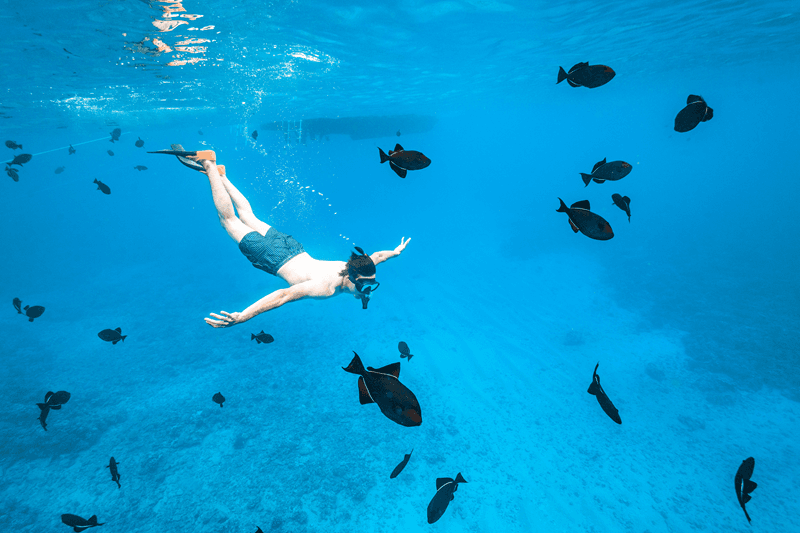
Verfasst vom Maui Snorkeling Team, das seit 1985 Molokini- und Turtle Town-Touren vom Hafen Maʻalaea aus anbietet. Wir verbringen mehr Tage in diesen Gewässern als an Land!
Letzte Aktualisierung: Januar 2026
Maui ist einer der besten Orte in Hawaii, um die Tierwelt zu erleben. im Ozean und an Land. Vom Schnorcheln mit farbenprächtigen Rifffischen bis zum Beobachten von Meeresschildkröten an der Küste – oder dem Anblick einheimischer Vögel im Landesinneren – Begegnungen mit Wildtieren sind ein wichtiger Bestandteil dessen, was eine Reise nach Maui zu etwas Besonderem macht.
Allerdings sind Wildtiersichtungen auf Maui Niemals garantiert. Was man sieht, hängt vom Ort, der Jahreszeit, der Tageszeit, den Meeresbedingungen und ein bisschen Glück ab! An manchen Tagen wimmelt es im Meer von Leben; an anderen Tagen halten sich die Tiere fern.
Dieser Leitfaden erklärt Folgendes: Welche Wildtiere man auf Maui beobachten kann, wo man sie sehen kann, die beste Reisezeit und wie man Tiere verantwortungsvoll beobachtet—damit Sie realistische Erwartungen haben und die Tierwelt von Maui auf die richtige Weise genießen können.
Kurzübersicht der Tierwelt Mauis (Land + Meer)
Wenn Sie wenig Zeit haben, bietet Ihnen diese scannbare Liste einen schnellen Überblick über die Tiere, die die meisten Menschen mit Maui in Verbindung bringen.
Meerestiere, die Sie auf Maui sehen könnten
- Hawaiianische Grüne Meeresschildkröten (Honu)
- Rifffische (Drückerfische, Papageifische, Falterfische, Doktorfische und mehr)
- Rochen (gefleckte Adlerrochen, Mantarochen)
- Delfine (Spinnerdelfine, Große Tümmler)
- Hawaiianische Mönchsrobben (selten, aber möglich)
- Buckelwale (saisonal, Wintermonate)
- Oktopus (heʻe)
- Seevögel (vom Ufer oder von Booten aus gesehen)
Landtiere, die Sie auf Maui sehen könnten
- Nēnē (Hawaii-Gans)
- Tropische Vögel (variieren je nach Höhenlage und Lebensraum)
- Axishirsche (eingeführte Art)
- Mangusten (eingeführte Art)
- Geckos und kleine Eidechsen
Einheimische vs. eingeführte Arten
Einige Tiere auf Maui haben sich über Jahrtausende hier entwickelt (wie der Nēnē), während andere vom Menschen eingeführt wurden (wie Axishirsche und Mangusten). Beide Arten sind heute häufig anzutreffen, doch die einheimischen Arten benötigen zusätzlichen Schutz und Pflege, um zu überleben.
Meerestiere von Maui
Die Meeresfauna Mauis ist es, die viele Besucher auf die Insel lockt. Ruhige Buchten, intakte Riffe und saisonale Wanderungen machen Maui zu einem der besten Orte in Hawaii, um die Meeresfauna vom Ufer und vom Wasser aus zu beobachten.
Manche Tiere – wie Rifffische und Meeresschildkröten – sieht man täglich. Andere, wie Rochen, Delfine, Mönchsrobben und Wale, sind stark von Zeitpunkt, Ort und Meeresbedingungen abhängig. Die folgenden Abschnitte helfen Ihnen dabei, zu wissen, worauf Sie achten sollten und wie Sie verantwortungsvoll beobachten können.
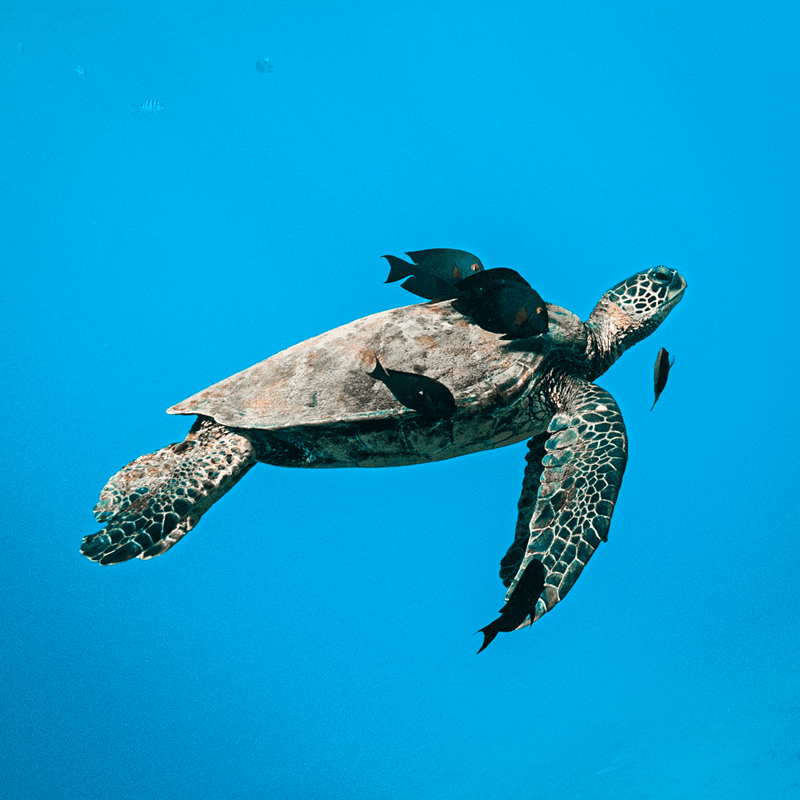
Hawaiianische Grüne Meeresschildkröte (Honu)
Honu sind die bekanntesten Meerestiere Mauis. Diese uralten Meeresschildkröten bewegen sich langsam und anmutig durch flache Riffe und tauchen alle paar Minuten auf, um zu atmen, bevor sie ihre Suche nach Algen fortsetzen.
- Halten Sie Ausschau nach einer glatten, ovalen Muschel, die knapp über dem Riff gleitet.
- Beobachten Sie, ob Schildkröten kurz zum Atmen auftauchen.
- Ruhige Buchten und flache Riffgebiete
- Schnorchelplätze mit dem Boot wie Molokini Und Schildkrötenstadt
- Bleiben Sie mindestens 10 Fuß weg.
- Man sollte niemals den Weg einer Schildkröte berühren oder versperren.
- Wenn sich Ihnen eine Schildkröte nähert, bleiben Sie stehen und lassen Sie sie vorbeiziehen.
Tropische Rifffische
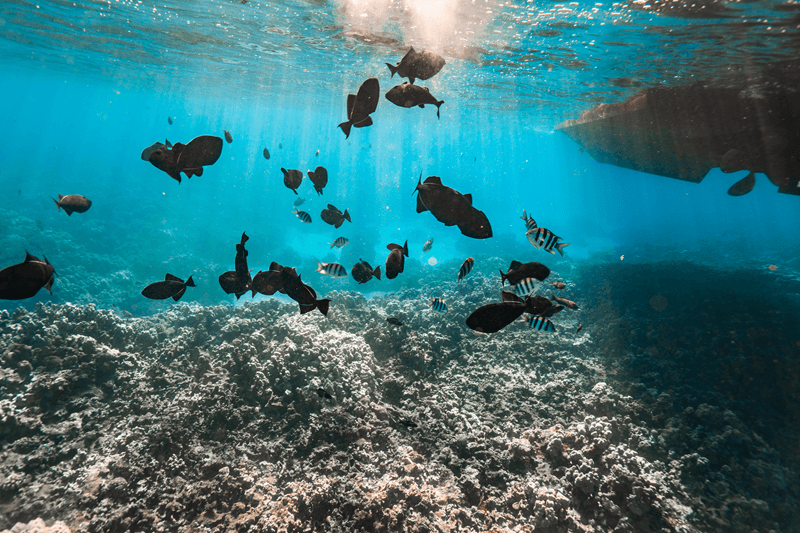
Riffische sind die am häufigsten anzutreffenden Meeresbewohner beim Schnorcheln in Maui. Leuchtende Farben, Streifen und Fischschwärme ziehen zwischen Korallenriffen und Lavaformationen rund um die Insel hindurch.
- Betrachten Sie Korallenstöcke und Felsspalten genau.
- Langsam angehen lassen – Fische tauchen überall auf, wenn man aufhört zu hetzen.
- Flache Riffe im gesamten Süden und Westen von Maui
- Molokini-Krater Und Korallengärten
- Fische niemals berühren oder füttern.
- Vermeiden Sie es, Korallen zu berühren oder auf dem Riff zu stehen.
Rochen (Adlerrochen & Mantarochen)
Rochen sind ein besonderes Erlebnis, das nur durch das richtige Timing am richtigen Ort möglich ist. Wenn sie auftauchen, gleiten sie mühelos über sandige Kanäle und tiefere Riffkanten und verschwinden oft so lautlos, wie sie gekommen sind.
- Tiefere Riffkanten und sandige Kanäle
- Gelegentlich während Bootsfahrten und Überfahrten
- Tauche nicht in Richtung der Strahlen.
- Bleiben Sie ruhig und lassen Sie sie von selbst vorübergehen.
Delfine (Spinner- und Große Tümmler)
Delfine gibt es rund um Maui, die meisten Sichtungen erfolgen jedoch vom Boot aus und nicht vom Ufer. Sie stehen unter Bundesschutz, und respektvolles Beobachten ist unerlässlich – insbesondere in der Nähe ruhender Delfingruppen.
- Jage keine Delfine und schwimme nicht auf sie zu.
- Umzingelt oder blockiert niemals ihren Weg.
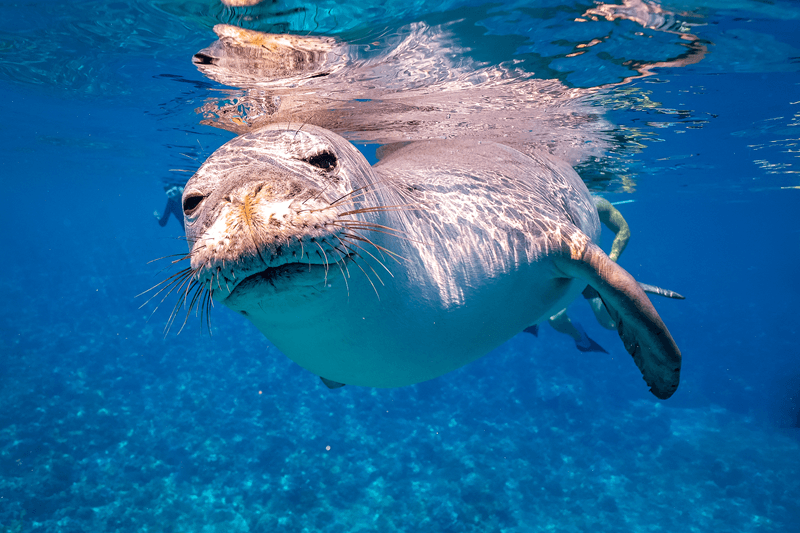
Hawaiianische Mönchsrobbe
Hawaii-Mönchsrobben gehören zu den seltensten Meeressäugetieren der Welt. Auf Maui sind Sichtungen zwar selten, aber unvergesslich; oft sieht man eine Robbe, die ruhig am Strand ruht.
- Sorgen Sie für viel Platz und halten Sie Hunde fern.
- Bitte nicht drängen oder für Fotos ansprechen.
Buckelwale (saisonal)
Jeden Winter wandern Buckelwale in die Gewässer Hawaiis, um sich fortzupflanzen und ihre Jungen zur Welt zu bringen. Maui wird dann zu einem der besten Orte weltweit, um Wale zu beobachten – manchmal sogar vom Ufer aus.
- Halten Sie am Horizont Ausschau nach hohen weißen Fontänen (“Blows”).
- Achten Sie auf Sprünge, Flossenschläge und Flossenwellen.
- Nähern Sie sich Walen niemals schwimmend.
- Die Beobachtung ist nur vom Land oder von zugelassenen Schiffen aus gestattet.

Maui Land Wildlife
Maui’s land wildlife is quieter than the ocean, but it’s still full of memorable sightings—especially if you explore upcountry, park areas, and more natural open spaces. Some animals are native and protected, while others were introduced and are now commonly seen across the island.
The cards below cover the land animals visitors most often notice on Maui, plus simple tips to spot them safely and respectfully.
Nēnē (Hawaiian Goose)
Nēnē are Hawaiʻi’s state bird and one of the most meaningful wildlife sightings you can have on Maui. They often graze in small groups in open grassy areas, and it’s not unusual to see them near roads in upcountry zones.
- Goose-like shape with a darker face and patterned neck.
- Often grazing slowly in open grass, sometimes with goslings.
- Upcountry parks and cooler elevation areas
- Roadside grass zones (especially early/late in the day)
- Give them space—don’t approach for selfies.
- Never feed wildlife.
- Drive slowly if you see them near the road.
Axis Deer
Axis deer were introduced to Hawaiʻi and are now common in parts of Maui. They’re beautiful animals, but they can also be a real driving hazard—especially at dawn and dusk when they’re more active and visibility is lower.
- Slender deer with white spots (often visible even on adults).
- Seen in open fields, brush edges, and sometimes near road shoulders.
- Rural areas and open grassy zones
- Along roads in less-developed areas
- Slow down at dawn and dusk—deer can dart into the road quickly.
Mongooses
Mongooses are small, fast mammals that you’ll sometimes see darting across parking lots, roadside areas, and landscaped walkways. Most sightings are quick—blink and they’re gone.
- Parking lots and roadside pull-offs
- Near trash bins and food areas
- Never feed wildlife—human food changes behavior and creates problems.
- Secure snacks and dispose of trash properly.
Geckos & Small Lizards
Geckos are everywhere on Maui—hotel walkways, patios, gardens, and especially near outdoor lights at night. They’re harmless, and they’re one of the easiest “wildlife wins” you’ll notice without even trying.
- Check near outdoor lights after sunset—bugs attract geckos.
- Look on warm walls and garden edges during sunny parts of the day.
Maui Birds
Many visitors mean “birds too” when they search for Maui wildlife. The good news: you don’t need to be an experienced birder to enjoy Maui’s bird life. A little patience—and a good lookout point—goes a long way.
Seabirds (From Shore Or Boats)
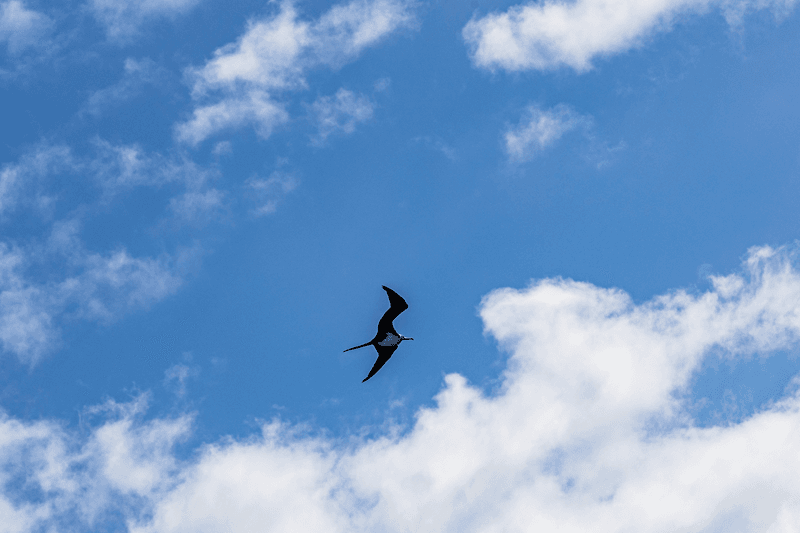
Even if you never “go birding,” you’ll likely spot seabirds on Maui. Watch for smooth gliding above cliffs, quick dives offshore, and birds cruising just above the surf line—especially on windy days.
- Coastal cliffs and rocky points
- Offshore waters during boat rides
Upcountry & Forest Birds
Bird species change a lot as you climb in elevation. Cooler upcountry zones and forested areas can reveal very different birds than the beach. The best approach is simple: go slow, stay on trails, and listen before you look.
- Bring binoculars (even compact ones).
- Wear neutral colors and avoid sudden movements.
- Stay on trails to protect habitat.
Best Places To See Wildlife On Maui
If you’re trying to plan the “best chance” spots, think in terms of habitat + conditions. Calm reefs tend to produce the most consistent marine sightings, while upcountry and forested areas are better for birds and native land wildlife. Below is a practical, by-area guide you can actually use while you’re here.
South Maui (Wailea & Kihei)
South Maui is one of the most reliable areas for shallow reef snorkeling and turtle sightings. On calm mornings, visibility is often better and the reef tends to feel more active.
- Best Time Of Day: Morning
- What To Bring: Reef-safe sunscreen, snorkel gear, water shoes (if shoreline is rocky)
West Maui (Kāʻanapali & Kapalua)
West Maui offers excellent shore snorkeling opportunities and frequent turtle sightings, but conditions can change fast. Always check ocean conditions before entering, especially if there’s swell or strong current.
- Best Time Of Day: Morning (calmest water)
- What To Bring: Snorkel float, fins, and a backup “calm bay” option
Central Maui (Maʻalaea)
Maʻalaea is a major harbor for snorkel and whale-watching departures, so it’s a strong area for boat-based sightings—especially dolphins and whales (in season).
- Best Time Of Day: Morning departures often have calmer conditions
- What To Bring: Light jacket (breezy on the water), motion-sickness prevention if needed
Upcountry & Haleakalā Area
Upcountry is your best bet for native land wildlife like nēnē and a wider range of birds. The cooler climate changes what you’ll see, and the scenery alone makes this area worth exploring.
- Best Time Of Day: Morning or late afternoon
- What To Bring: Light layers, binoculars, water
- Driving Note: Watch for wildlife near roads and drive cautiously
North Shore
The North Shore is often windier and rougher, but in winter it can be a great area for whale watching from shore. When conditions cooperate, you may spot spouts and breaches offshore.
- Best Time Of Day: Morning (less wind)
- What To Bring: Binoculars, hat, light wind layer
East Maui & Hāna
East Maui’s lush landscape supports different birds and plant life than the dry leeward side. The drive is part of the experience—just remember to use pull-offs safely and respect private property and local communities.
- Best Time Of Day: Earlier is better for safer driving and fewer crowds
- What To Bring: Rain jacket, snacks, water, patience
Maui Wildlife By Season
Maui wildlife is here year-round, but what you’re most likely to see changes with the seasons. Use this as a practical “what’s most likely” guide—without expecting guarantees.
Winter (Dec–Mar)
Best chance for humpback whale sightings from shore and boat. Ocean conditions can be more variable, so always choose protected spots and check conditions.
Spring (Apr–May)
A quieter shoulder season with fewer crowds. Many days offer excellent snorkeling, especially when trade winds are light.
Summer (Jun–Aug)
Peak snorkeling demand with warm water and consistent reef life. Whales are typically gone, but turtles and reef fish remain active.
Fall (Sep–Nov)
Great snorkeling continues with fewer crowds. Late fall can bring the first early whale sightings as the season begins to ramp up.
Wildlife Viewing Rules + Safety
This section is the difference between a great wildlife encounter and an accidental “bad moment.” These simple rules protect animals, keep you safe, and help preserve Maui’s wildlife for future visitors.
General Wildlife Etiquette
- Don’t touch, chase, surround, or feed wildlife.
- Keep voices low and movements slow.
- Give animals an “exit route.”
- Stay off dunes and sensitive areas.
Ocean-Specific Safety
- Don’t corner turtles or free-dive at animals.
- Avoid flash photography up close.
- Stay aware of currents, waves, and your surroundings.
Land & Road Safety
- Slow down in areas where animals cross.
- Don’t stop in unsafe spots to take photos.
- Don’t approach nēnē or deer for selfies.
What To Do If You Encounter Wildlife
If You See A Monk Seal On The Beach
- Give lots of space and keep dogs away.
- Don’t crowd or approach for photos.
- If volunteers rope off an area, stay outside it.
If A Turtle Swims Toward You While Snorkeling
- Stay still, give it room, and let it pass.
- Don’t dive down or try to “follow” it.
If You See Nēnē Near The Road
- Slow down and don’t honk.
- Never try to shoo them across the road.
If You Spot Whales From Shore
- Watch from land and never attempt to approach by swimming.
- Use binoculars and be patient—spouts can be brief.
Maui Wildlife FAQ
What Wildlife Can You See On Maui?
Maui wildlife includes sea turtles, reef fish, rays, dolphins, monk seals (rare), humpback whales in winter, native birds like nēnē, and introduced animals like axis deer.
What Is The Best Time Of Year To See Whales On Maui?
Winter whale season (late fall through early spring) offers the best chance, with peak sightings in mid-winter.
Where Is The Best Place To See Sea Turtles On Maui?
Calm bays and shallow reef areas are most reliable—especially in the morning when visibility is often best.
Are Monk Seals Common On Maui?
No. Monk seals are rare. If you see one resting on the beach, give lots of space and avoid crowds and pets near the animal.
Can You Swim With Dolphins In Maui?
No. Dolphins are protected and should never be chased, surrounded, or disturbed—especially when they’re resting.
Are There Dangerous Animals On Maui?
Most Maui wildlife is not dangerous when given space. The bigger risks are ocean conditions (currents/swell) and getting too close to animals on land or in the water.
What Land Animals Live On Maui?
You may see nēnē (native), birds, and introduced animals like axis deer and mongooses, plus common geckos and small lizards.
What’s The Best Way To See Maui Wildlife Responsibly?
Observe quietly, keep your distance, never feed wildlife, and choose safe conditions—especially for snorkeling and ocean viewing.
Conclusion: Experience Maui Wildlife The Right Way
Maui wildlife is unforgettable when viewed respectfully. Give animals space, respect ocean conditions, and let encounters happen naturally—those are the moments you’ll remember most.