Written by the Maui Snorkeling Team Molokini Tour Operator since 1985 | Maʻalaea Harbor | USCG-licensed captains
Last updated June 2, 2026
Quick answer: Molokini Crater is a protected, boat-access-only volcanic islet about 3 miles off South Maui. Visitors cannot land on the islet, and snorkel tours use established moorings to protect the reef. Most visitors see Molokini from the boat and snorkel inside the crater when ocean conditions allow.
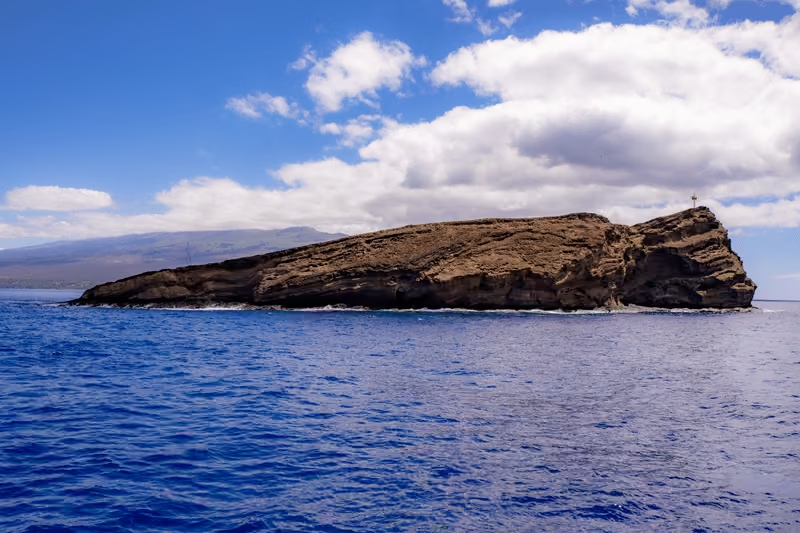
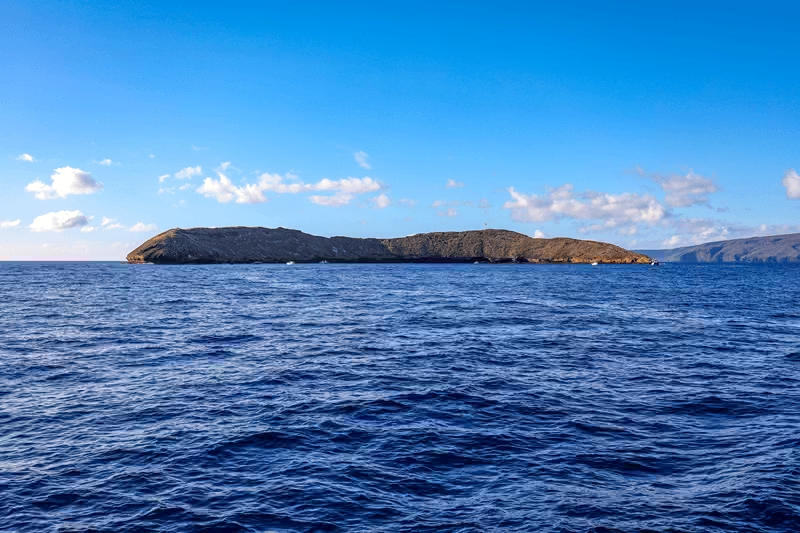
Molokini Crater at a Glance: Molokini is a crescent-shaped volcanic islet (the rim of an extinct crater) in the ‘Alalākeiki Channel between Maui and Kahoʻolawe. It’s protected as a Marine Life Conservation District and a State Seabird Sanctuary, which is why boats use established moorings (no anchoring) and entry onto the islet is prohibited.
Location: About 3 miles offshore of South Maui
Access:Boat only (no shore entry)
Protection: MLCD + Seabird Sanctuary (DLNR)
On-islet entry:Prohibited
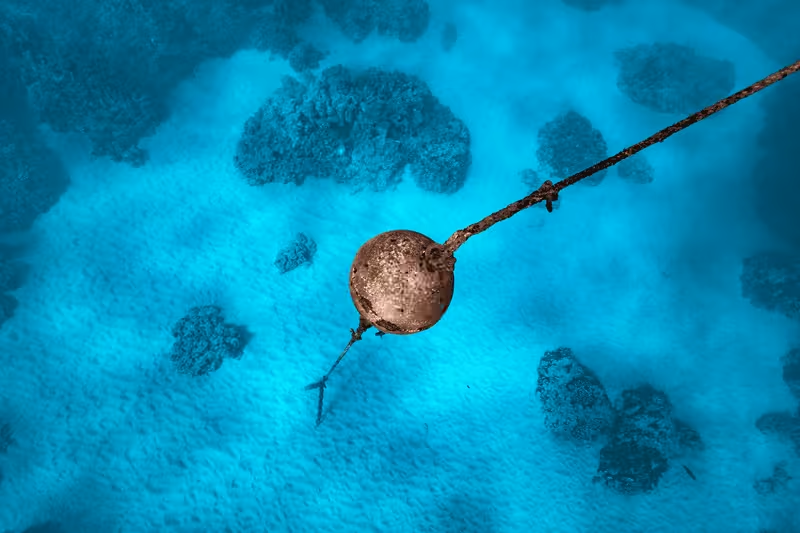
Moorings: Day-use moorings; no anchoring when moorings are established
Molokini is often called a crater, but it’s actually a rare geological formation known as a tuff cone, a type of volcanic vent formed by explosive interactions between magma and seawater. Rising hundreds of feet from the ocean floor, Molokini’s unique shape creates a variety of microclimates within a small stretch of reef. These diverse conditions support an impressive ecosystem, home to dozens of hard coral species and a high diversity of tropical reef fish within its sheltered crescent.
Where Is Molokini Located?
Molokini Crater is a crescent-shaped volcanic islet located about three miles off Maui’s southwest coast, between Māʻalaea Harbor and the island of Kahoʻolawe. Accessible only by boat, this partially submerged crater rises from the ocean floor to form a natural marine sanctuary. Most snorkeling and diving tours to Molokini depart from Māʻalaea Harbor or Kihei Boat Ramp, making it an easy half-day adventure for South and Central Maui visitors. The crater’s curved shape creates a protected inner lagoon ideal for snorkeling, while its outer “back wall” drops steeply into deep blue water popular with scuba divers.
Why Molokini Can Be So Clear
Molokini’s offshore location and protected inner crescent can create excellent visibility when ocean conditions cooperate. Because it’s still open ocean, wind and swell can change the surface quickly, so comfort and clarity vary day to day.
For the best time of day, trade winds, wind/swell patterns, marine forecast tips, what to bring, and beginner guidance, read our Molokini Snorkeling Guide.
Only permitted commercial operators may use established moorings
Stay at least 10 feet from sea turtles
Stay at least 50 feet from Hawaiian monk seals and 150 feet from mother seals with pups
Stay at least 50 yards from dolphins and small whales, and 100 yards from humpback whales
Use reef-safe sunscreen and avoid standing on coral or stirring up sediment
These guidelines help keep Molokini Crater pristine for future generations of snorkelers and divers.
History And Conservation
Molokini is the rim of an ancient volcanic cone formed when magma met seawater, and it also holds cultural significance in Hawaiian tradition.
Modern protection is a major part of Molokini’s story. Today, Molokini is managed as a Marine Life Conservation District and a State Seabird Sanctuary to help protect reef life and seabirds, with managed visitation and established moorings.
Molokini Wildlife You May See Above and Below Water
Molokini Crater is protected as both a Marine Life Conservation District and a State Seabird Sanctuary, so wildlife viewing can happen in two places: below the surface while snorkeling and above the water from the boat.
Wildlife Type
Below Water at Molokini
Above Water at Molokini
Common reef fish
Butterflyfish, parrotfish, surgeonfish, and triggerfish are some of the colorful reef fish snorkelers may see around the coral and rocky reef structure.
From the boat, you may notice fish activity near the surface when birds are feeding or when small baitfish gather near the crater.
Hawaiʻi state fish
The humuhumunukunukuāpuaʻa, Hawaiʻi’s state fish, is a type of triggerfish and may be seen around reef areas inside the crater.
This fish is usually seen while snorkeling, not from above the water.
Coral reef life
Hard corals, reef ledges, sand patches, and basalt boulders create habitat for many fish and small marine animals.
The crater’s crescent shape and rocky rim are visible from the boat and help protect the reef area when conditions are calm.
Lucky sightings
Spotted eagle rays, green sea turtles, and rare Hawaiian monk seals are possible but never guaranteed.
You may spot seabirds circling, gliding, or resting near the islet. Wildlife sightings vary by season, weather, and ocean conditions.
Winter wildlife
During whale season, snorkelers may sometimes hear humpback whale songs underwater, even when whales are not visible nearby.
Humpback whales are often spotted from the boat during winter trips to and from offshore snorkel sites.
Seabirds
Seabirds are best viewed above the surface, although some may feed over the water when fish are active near the surface.
Look for ʻiwa, also called great frigatebirds, ʻuaʻu kani, also called wedge-tailed shearwaters, ʻou, also called Bulwer’s petrels, and noio, also called noddies.
Best viewing tip
Float calmly, move slowly, and avoid chasing fish or blocking an animal’s path. The quieter you are, the more natural behavior you may see.
Scan the crater rim and open sky from the boat, especially during calm moments before or after snorkeling.
Protection reminder
Never touch coral, feed fish, chase wildlife, or stand on the reef. Give turtles and other marine animals plenty of space.
Molokini is a protected seabird sanctuary, and landing on the islet is prohibited. Enjoy the birds and crater views from the boat.
Note: Wildlife at Molokini is wild and never guaranteed. The best sightings usually happen when ocean conditions are calm, visibility is good, and snorkelers give animals plenty of space.
Absolutely fantastic experience! Yes, it's an early morning but totally worth it! Our voyage went on the reverse of most other companies; we went to Turtle Town first. We basically had it to ourselves and saw many turtles, and the boat has a 25-ft waterslide that kids and grown-ups loved.
In the second part of the trip, we went to the Molokini Crater. Again, this was great because most boats were there first and thus leaving. The snorkeling was phenomenal. They also had an onboard photographer to capture shots if you don't have a GoPro. The boat was spacious and comfortable, with plenty of room, but the total group was limited to 65, so it was not jam-packed, sitting on top of each other like some other boats.
The trip included breakfast, lunch, drinks, and snacks, so great value. The crew was phenomenal! Everyone was very friendly, and the vibe was great. They were all great with children, and you can tell they really love their job. I would do this again many times and can't recommend them highly enough!
Rebecca G.
★★★★★
The crew, boat, water slide, and snorkeling were amazing! We super enjoyed the afternoon trip to the Coral Gardens. The crew was friendly, attentive, and knowledgeable. Snorkel gear and the boat were very clean and well-maintained. We will back again every Maui trip for sure!
Kyle C.
★★★★★
This was an amazing trip! The crew worked like a well oiled machine. Fruit, pastries and coffee for breakfast, sandwiches chips and pasta salad for lunch. The Mokolini crater was amazing and the slide the deployed from the top deck was so much fun! There was even a professional photographer on board who captured amazing photos of the family! All around very professional tour! Highly recommend Captain Greg and his crew!
Albert D.
★★★★★
Went on vacation in Maui and had to do a snorkel tour. Came across Maui Snorkeling and booked it (waterslide had me sold). “Boat Driver” Greg and his crew were amazing. They provided food, snacks, sunscreen and the snorkeling equipment. Seen the fishes and turtles and cherry on top, came across some spinner dolphins. Boat Driver Greg must of paid these dolphins off because they followed the boat and put on an amazing show for everyone. Turtle town and Molokini crater was awesome and my young daughter still remembers Dani for how nice she was. Definitely recommend Maui Snorkeling.
The Official Critic
★★★★★
What an incredible experience aboard the Lani Kai II! We visited both Molokini Crater and Turtle Town, and both locations exceeded our expectations.
The snorkeling at Molokini Crater was absolutely amazing, with crystal-clear water, excellent visibility, and an incredible variety of fish and marine life. Turtle Town was equally unforgettable. We were fortunate enough to see several sea turtles up close in their natural habitat, which was one of the highlights of our trip to Maui. Do not skip Turtle Town!!
The crew was outstanding from start to finish. They were professional, friendly, knowledgeable, and made everyone feel safe and comfortable in the water while creating a fun, and relaxed atmosphere. The boat was clean, comfortable, well-maintained, and the entire excursion was organized flawlessly.
If you’re visiting Maui and looking for a world-class snorkeling adventure, I highly recommend the Lanikai II. Between the breathtaking snorkeling at Molokini Crater, the unforgettable sea turtle encounters at Turtle Town, and the fantastic crew, this was easily one of the best experiences of our vacation. Mahalo to the entire team for an unforgettable day on the water!
Zachary P.
★★★★★
PLEASE READ (Certified Scuba Diver)
My wife and I decided on this charter for our honeymoon and could not have been more happy with our decision!!!!
What stood out to me most with this was the crew. Captain Greg is most comparable to a modern day Jack Sparrow, and his crew (Walker, Dani, Sarah, and Emily) were so fantastic. You can tell they work together day after day and have become what is best described as family. They welcomed us aboard and showed us a fantastic time. They also shared with us the spots around Maui the locals visit and how to get the most out of your time on the island. Not only were we provided with a great dive, but also new friends.
I understand this may sound cheesy and sappy, but check my profile and you will see I almost never leave reviews. This experience was so fantastic I had to get on and do my part because it was such a fantastic experience. Thank you Captain Greg, Walker, Dani, Sarah, and Emily! If ever in Chicago you have two people who would buy a beer and return the favor!
No, Molokini Islet is a state seabird sanctuary. Activities on the islet require a DLNR permit, so tours snorkel from the boat in the surrounding waters.
Molokini is protected as a State Marine Life Conservation District and State Seabird Sanctuary. Boats use established moorings, and anchoring on coral is prohibited. Never touch coral or wildlife. Stay at least 10 feet from sea turtles, 50 feet from Hawaiian monk seals, 150 feet from mother seals with pups, 50 yards from dolphins and small whales, and 100 yards from humpback whales.
Expect colorful reef fish and coral gardens inside the crater. Green sea turtles may cruise through, and you might spot eagle rays on lucky days (wildlife is never guaranteed). In winter, you may even hear humpback whales offshore.
Molokini is boat-only access—there’s no beach or shoreline entry and no public facilities on the islet. Visitors typically go with a licensed, permitted commercial operator that uses established moorings.
Molokini is a crescent-shaped volcanic islet about 3 miles off South Maui, in the ‘Alalākeiki Channel between Maui and Kahoʻolawe. It’s offshore and only accessible by boat.
Molokini is the rim of an extinct volcanic crater (a rare formation often described as a tuff cone). Its crescent shape creates a more sheltered inner cove and a much deeper outer “back wall,” which is why conditions and activities can differ depending on where you are in the crater.
No. There are no restrooms, food stands, or facilities on the islet. Any bathrooms, shade, drinks, or snacks are provided by your boat/operator, so check what’s included on your tour.
Molokini sits offshore in open-ocean channel conditions, which can involve wind, current, and swell. For most visitors, the safe and standard way to go is by boat with an experienced operator—and remember that landing on the islet is prohibited.