
Nakalele Blowhole offers a striking look at northwest Maui’s coastline, with ocean spray, lava rock, and sweeping Pacific views. This guide covers the drive, parking, uneven walking route, and what to consider before deciding whether to stop.
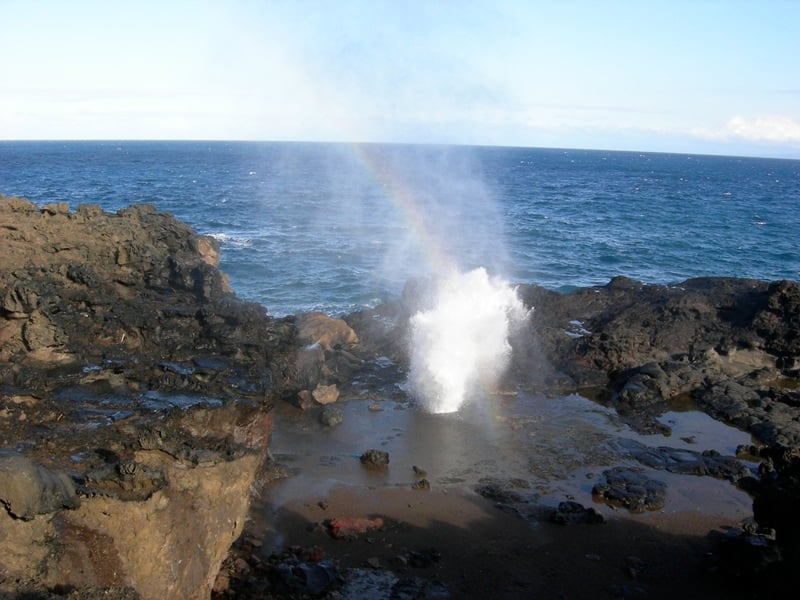
Nakalele Blowhole is a dramatic natural blowhole on Maui’s rugged northwest coast near Nakalele Point. It’s worth visiting for ocean spray, lava rock, cliffs, and wide Pacific views, but it’s not a swimming area and visitors should stay far back from the blowhole opening, wet rocks, and crashing waves.
Main Takeaways:
Nakalele Blowhole offers a striking look at northwest Maui’s coastline, with ocean spray, lava rock, and sweeping Pacific views. This guide covers the drive, parking, uneven walking route, and what to consider before deciding whether to stop.
Here’s a quick look at the walking route, parking, and viewing considerations to help you decide whether Nakalele Blowhole fits your Maui plans.
| Detail | What To Know | Planning Tip |
|---|---|---|
| Best For | Coastal scenery, photography, and a short outdoor stop | Consider whether rocky, uneven walking suits everyone in your group |
| Not Suitable For | Swimming, close-up blowhole photos, or exploring during rough surf | Skip the descent if wind, waves, or footing make the outing unsuitable |
| Time Needed | Allow about 45 to 75 minutes for the walk, viewing, and return, depending on your pace and conditions | Add driving time separately and leave plenty of daylight for your return |
| Walking Route | Short but rocky, uneven, unpaved, and exposed, with limited shade | Wear sturdy shoes with good grip, bring water, and take your time |
| Parking | Limited space at the dirt pullout near mile marker 38.5 | Follow posted parking instructions. The lighthouse parking area near mile 38 is a separate location; don’t assume its facilities are available at the blowhole pullout |
| Viewing Approach | Stay well back on higher, stable ground, away from the opening, cliff edges, and wave-washed shoreline | Use your camera’s zoom rather than moving closer. Dry rocks don’t guarantee that waves can’t reach you |
| Best Time To Visit | Daylight, with suitable weather and enough time for your return walk and drive | Check the surf and weather forecast, then reassess when you arrive. Don’t plan around the biggest spray |
| Main Hazards | Unexpected waves, slippery or uneven rock, strong wind, cliff edges, and the blowhole opening | Follow posted warnings and barriers. Choose another stop if conditions aren’t suitable |
| Bottom Line | Nakalele can be a memorable coastal stop when the drive, footing, and conditions fit your plans. Enjoy the scenery from well back, and keep another West Maui activity in mind if the outing doesn’t feel right that day. | |
Note: Conditions can change quickly. Never stand near, over, or beside the blowhole opening, and don’t turn your back on the ocean. You don’t need to complete the descent or approach the shoreline to make the stop worthwhile.
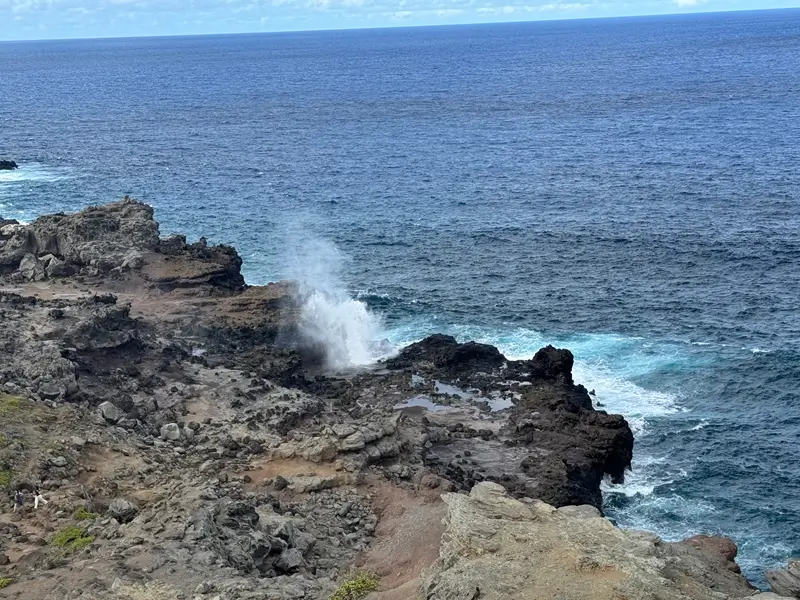
Nakalele Blowhole is located at Nakalele Point on Maui’s rugged northwest coast. Most visitors drive north from Lahaina, Kaanapali, or Kapalua along Highway 30, then continue toward the Kahekili Highway area near mile marker 38.5. The drive is scenic, with ocean views, cliffs, winding roads, and a quieter side of Maui that feels very different from the resort areas.
From Lahaina, the drive usually takes about 45 minutes, depending on traffic, weather, and how often you stop for views. From Kapalua, it’s much closer and makes for a short scenic outing. The road becomes more remote as you head north, so drive slowly, watch for narrow sections, and don’t park along the highway if the main parking area is full.
The main parking area for Nakalele Blowhole is a small dirt lot near mile marker 38.5. It’s not a large paved beach park, so expect limited parking, uneven ground, and few facilities. If the lot is full, keep driving and come back later rather than stopping in a narrow or unsafe roadside spot.
There may be vendors or temporary facilities nearby at times, but visitors shouldn’t count on full amenities. Bring water, wear sturdy shoes, and use the restroom before you arrive. Nakalele Blowhole is a natural coastal stop, not a developed attraction.
The walk to Nakalele Blowhole is short, but it’s rocky, uneven, and not a formal paved trail. Most visitors need about 15 to 25 minutes each way, depending on the route they take, how comfortable they are on rough ground, and how often they stop for photos. Wear hiking shoes or sturdy sneakers with good grip. Flip-flops and loose sandals aren’t a good choice because the lava rock can be sharp, loose, and slippery, especially after rain or when ocean spray reaches the trail.
Take your time, keep both hands free, and avoid walking too close to wet rocks near the ocean. As you walk toward Nakalele Point, the landscape shifts from roadside greenery to exposed lava rock, coastal cliffs, and open ocean views. It’s a beautiful place for photos, but safety should come first. You don’t need to stand close to the blowhole to enjoy it. You don’t need to go all the way down. Choose a viewing position well away from the opening, cliff edges, and wave-washed shoreline, and follow posted warnings.
When you arrive at Nakalele Point, you’ll hear waves crashing against the lava rock before you even reach the main viewing area. The blowhole's height and force change throughout the day.
Tide, swell, wind, and wave direction all affect how active it looks. Some days bring tall, powerful bursts of water, while calmer days may have smaller sprays. Either way, it’s best to watch from a safe distance because the same ocean conditions that make the blowhole impressive can also make the area dangerous.
The surrounding coastline is part of the experience, with dark rock, windswept cliffs, and wide ocean views. Use your camera’s zoom rather than moving closer for a photo, and choose your viewing position based on posted warnings and that day's conditions.
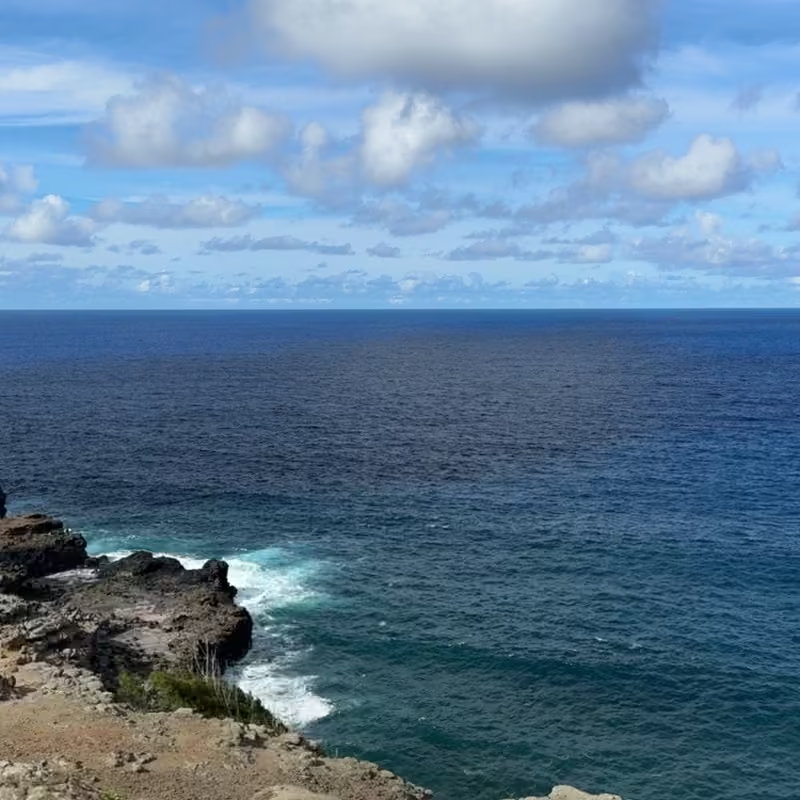
Yes, Nakalele Blowhole can be dangerous if visitors get too close to the opening, walk on wet rocks, or underestimate the ocean. This wild coastal area has strong waves, slippery lava rock, uneven ground, and changing conditions. Stay well back from the opening and shoreline. Dry ground alone doesn’t guarantee that an unexpected wave can’t reach you.
You shouldn’t stand next to, over, or directly beside Nakalele Blowhole. The water pressure can change quickly, and waves can surge across the rocks without warning. You can still get great views and photos from farther back, especially from higher ground.
Choose a daylight visit with enough time to walk back and make the drive back. Morning can offer gentler light for photos, but neither the clock nor the season guarantees suitable conditions.
Check the surf and weather forecast before leaving, then reassess when you arrive. Don’t plan your visit around the biggest spray. If strong wind, heavy rain, or high surf makes the outing uncomfortable, enjoy a different West Maui stop instead.
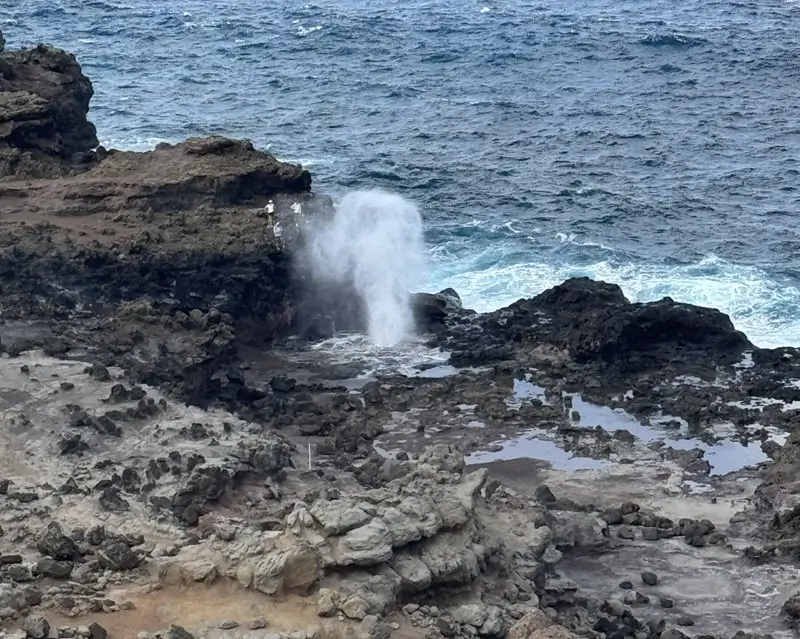
Nakalele Blowhole is the main highlight in this part of northwest Maui, but there are a few nearby stops that can make the drive even more memorable. These places are scenic and rugged, and you should exercise extra caution, especially when the surf is high or the roads are wet.
Olivine Pools lie farther along the northwest coast beyond Nakalele. Although the lava pools can look inviting, unexpected waves can wash across the shoreline. We don’t recommend descending to the pools or swimming here. If you stop, keep your visit to a distant view from higher ground and follow all posted warnings.
This stop also means continuing farther along the coastal road, so it isn’t an essential addition to your Nakalele visit. You can enjoy a memorable West Maui outing without trying to include every viewpoint.
Our Maui tide pools guide explains shoreline hazards and how to enjoy these coastal environments without entering wave-washed pools.
Honolua Bay offers coastal views and a leafy walk toward the shoreline. It’s part of a protected marine area, so leave coral and wildlife undisturbed. If snorkeling is part of your plans, it’s for experienced ocean swimmers when conditions are suitable, not an automatic addition to a sightseeing stop. Our Honolua Bay guide covers access, facilities, and what to check before visiting.
You don’t need to complete the northwest Maui loop to visit Nakalele. Before choosing your route, review current road conditions and your rental agreement. The Maui Visitors and Convention Bureau advises against driving the Route 30 and 340 corridor between Honolua Bay and Waiheʻe because portions have narrow roads, steep drops, and limited shoulders.
If you decide to visit Nakalele, plan your return route in advance rather than continuing around the island simply because your map suggests it. Leave plenty of daylight and keep your plans flexible.
Help care for this coastline by following posted access instructions, packing out everything you bring, and leaving rocks and natural features undisturbed. Respect nearby residents and other visitors, and don’t block the road while parking or taking photos. A thoughtful visit leaves the landscape as you found it.
Nakalele can be a memorable coastal stop when the drive, footing, and conditions fit your plans. Leave yourself time to enjoy the scenery without rushing, and remember that you don’t need a close-up photograph to appreciate the ocean’s power. If the outing doesn’t feel right that day, West Maui has plenty of other views worth enjoying.
Before you visit Nakalele Blowhole, check current surf, weather, trail, and safety updates. Conditions can change quickly along Maui’s northwest coast.
© 2026 Maui Snorkeling | Sitemap | Disclaimer | Privacy Statement | Cookie Policy