Great Frigatebird In Maui: ʻIwa Bird Guide For Snorkelers
April 9th, 2025
| Marine Life
Written by Maui Snorkeling, operating tours to Molokini Crater, Turtle Town, and Coral Gardens from Māʻalaea Harbor since 1985. Tours are led by USCG-licensed captains aboard a USCG-inspected passenger vessel.
Last updated October 16, 2026
Quick Answer
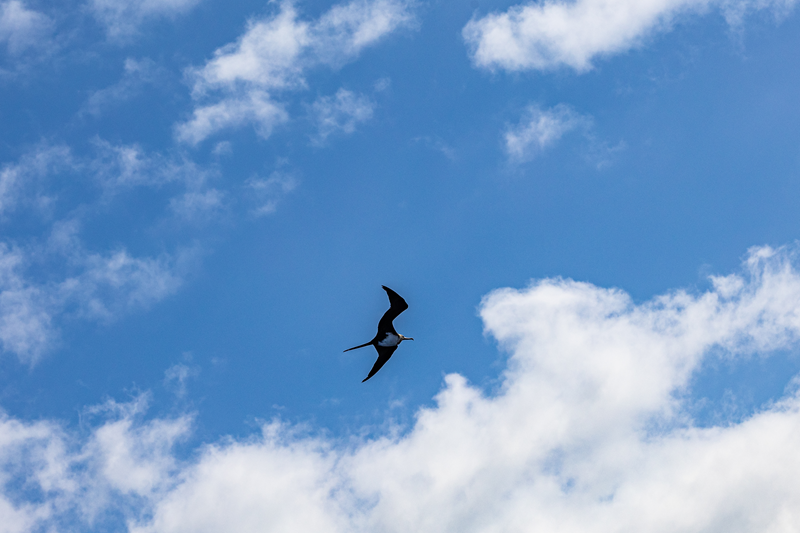
The great frigatebird in Maui, called ʻiwa in Hawaiʻi, is a large seabird with long, narrow wings, a hooked bill, and a deeply forked tail. You may spot one soaring over Molokini, Maui’s coastline, or coastal wetlands. Its silhouette is the quickest identification clue, while head and chest markings help distinguish adults from young birds.
Main takeaways:
Hawaiian name: ʻIwa means “thief,” referring to its food-stealing behavior, although it catches most of its own prey
Best ID clues: Long, narrow wings, a hooked bill, and a forked tail that can look pointed when folded
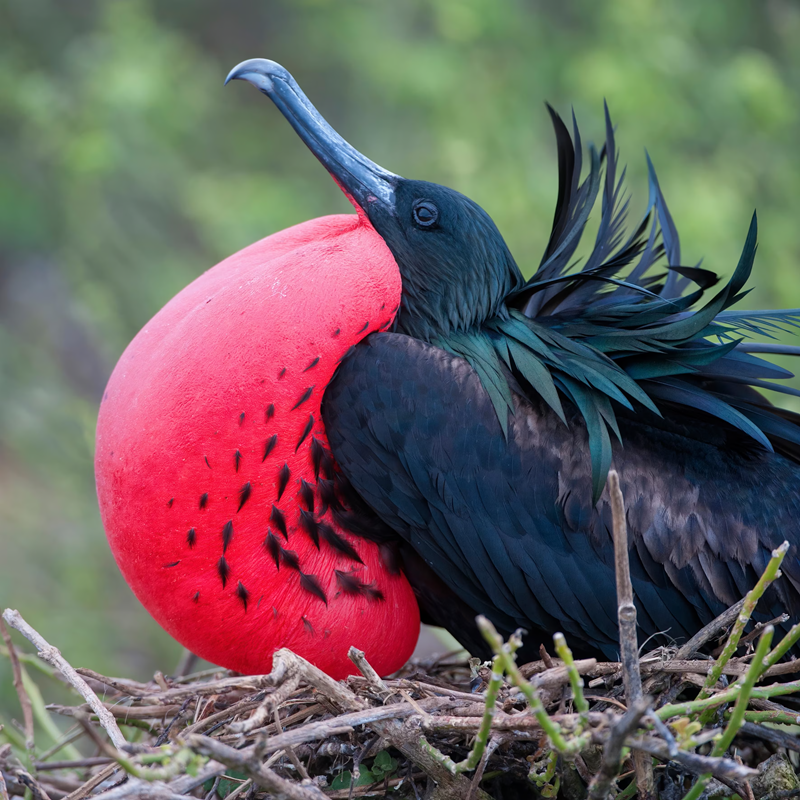
Male markings: Adult males are mostly black and can inflate a bright red throat pouch during courtship
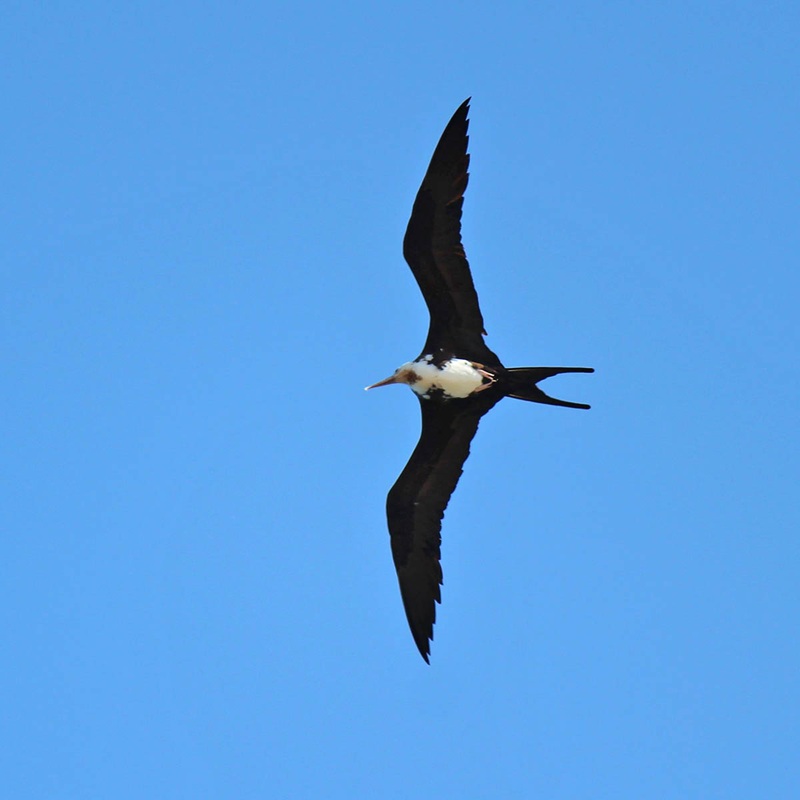
Female and young-bird markings: Adult females have a white breast patch; immature birds often have a pale head and chest
Where to look: Scan the sky over Molokini, open ocean areas, Maui’s coastline, and coastal wetlands
Viewing tip: Watch from the boat during the ride and between snorkel stops. Give birds space and remember that sightings aren’t guaranteed.
Great frigatebirds in Maui, also called ʻiwa in Hawaiʻi, are large seabirds known for long pointed wings, a deeply forked tail, and smooth soaring flight above the ocean. If you’re heading out with Maui Snorkeling to Molokini Crater, it’s worth looking up between snorkel stops. You may see one of these impressive birds gliding high above the water.
These seabirds are part of the open-ocean world that surrounds Maui. While guests often focus on tropical fish, coral, and sea turtles below the surface, birds like ʻiwa add another layer to the Molokini experience. They’re a reminder that Maui’s marine ecosystem includes the reef, the sky, and the wide Pacific around it.
What is the Great Frigatebird?
The great frigatebird (Fregata minor), called ʻiwa in Hawaiʻi, is a tropical seabird built for soaring over the ocean. Its long, narrow wings, hooked bill, and forked tail give it a distinctive silhouette.
ʻIwa means “thief,” referring to its habit of taking food from other seabirds. The English name frigatebird also refers to piracy. Despite that reputation, these birds catch most of their own food.
Great Frigatebird Quick Facts
Get to know the great frigatebird, called ʻiwa in Hawaiʻi, including its size, markings, feeding habits, and distinctive flight.
Topic
Details
Common name
Great frigatebird
Hawaiian name
ʻIwa
Scientific name
Fregata minor
Body length
About 33.5–41.3 inches (85–105 cm), measured from bill to tail
Best ID clues
Long, narrow, pointed wings, a hooked bill, and a deeply forked tail that can look like a single long point when folded
Male markings
Adult males are almost entirely black and can inflate a bright red throat pouch during courtship
Female markings
Adult females are larger than males, with dark plumage, a white breast patch, and a gray throat
Young birds
Immature birds often have a pale head, neck, and chest. Juveniles may show cinnamon-colored head and chest feathers.
Where to look
Scan the sky over Maui’s coastline, coastal wetlands, and open ocean, including waters around Molokini.
How they fly
They use wind and rising air to soar for long periods with relatively little flapping.
What they eat
Mainly fish and squid caught near the ocean surface. They catch most of their own food but sometimes steal prey from other seabirds.
Name meaning
ʻIwa means “thief,” referring to the bird’s food-stealing behavior.
Viewing tip
While aboard the boat between snorkel stops, watch for soaring silhouettes. Use head and chest markings to help distinguish adults from young birds.
Note: Great frigatebird sightings aren’t guaranteed. Tail shape can change as the bird spreads or folds its feathers, and plumage varies with age and sex, so use several identification clues together.
How to Identify a Great Frigatebird
The great frigatebird, or ʻiwa, has a shape that’s easy to recognize once you know what to look for. It has long, pointed wings, a deeply forked tail, a hooked bill, and a smooth, soaring style that helps it glide over the ocean with very little wing flapping.
Most adults look dark from a distance, but males and females have different markings. Males are mostly black and may show a bright red throat pouch during courtship. Females are larger and often have a white chest patch. Young birds can show lighter coloring on the head, chest, or belly.
One of the best identification clues is how this seabird flies. It often rides wind currents high above the water, using its long wings and forked tail to steer. Because frigatebirds don’t spend much time on the ocean surface, they rely on strong flight skills to travel, feed, and rest in the air.
Key identification tips
Wing shape: Long, narrow, and pointed
Tail shape: Deeply forked when spread, but it can look like a single long point when folded
Bill: Long with a hooked tip for grabbing food
Male markings: Mostly black with a red throat pouch during courtship
Female markings: Dark body with a white chest patch
Flight style: Slow, graceful soaring with very little flapping
Young birds: A pale head and chest can indicate an immature bird, rather than an adult female
Why Male ʻiwa Have a Red Throat Pouch
One of the male ʻiwa's most memorable features is the bright red pouch under his throat. During courtship, he can inflate this pouch to attract a mate. From a distance, it may look like a red balloon against the bird’s dark body.
You usually see this feature during breeding behavior, so visitors won’t always spot it on every bird. Even without the red pouch, the long wings, forked tail, and soaring flight style are still strong identification clues.
Where to See Frigatebirds in Maui
Frigatebirds are found in warm ocean regions, including Hawaiʻi. Around Maui, you may see them over open water, near offshore areas, along coastlines, and around seabird and fish activity. Sightings aren’t guaranteed, but they’re exciting when they happen.
ʻIwa are one part of Maui's varied birdlife. Our Maui bird identification guide compares frigatebirds, boobies, shearwaters, and other birds you may notice along the coast or farther inland.
Molokini is one area where guests may want to watch both the sky and the reef. While the crater is best known for clear water, tropical fish, and snorkeling, the open-ocean setting can also make it a good place to notice seabirds gliding above the water.
If you’re joining our Molokini Crater Snorkeling Tour, keep an eye out during the boat ride and between snorkel stops. You may see ʻiwa soaring overhead, following wind currents, or scanning the ocean surface for food.
You don’t need to be on a boat to watch for ʻiwa. Hawaiʻi Birding Trails lists Keālia Pond National Wildlife Refuge, Kanahā Pond State Wildlife Sanctuary, and Waiʻānapanapa State Park among Maui locations associated with the species. Scan the sky from designated public viewing areas and check each location’s access requirements before visiting.
How Great Frigatebirds Fly and Feed
Great frigatebirds use long wings and lightweight bodies to soar over the ocean with relatively little flapping. They scan the surface for prey and can snatch fish or squid without landing on the water.
Although famous for stealing food, ʻiwa catch most of their own meals. They sometimes chase other seabirds until those birds drop or regurgitate prey, then swoop in to collect it. This behavior is called kleptoparasitism.
From the boat, watch for a frigatebird descending toward the surface or following a feeding flock. Those movements reveal more about its behavior than soaring alone.
During breeding season, ʻiwa gather in colonies where males display for females. One of the most striking courtship behaviors is the male’s bright red throat pouch, which can inflate like a balloon. He may also call, spread his wings, and move his bill to get attention.
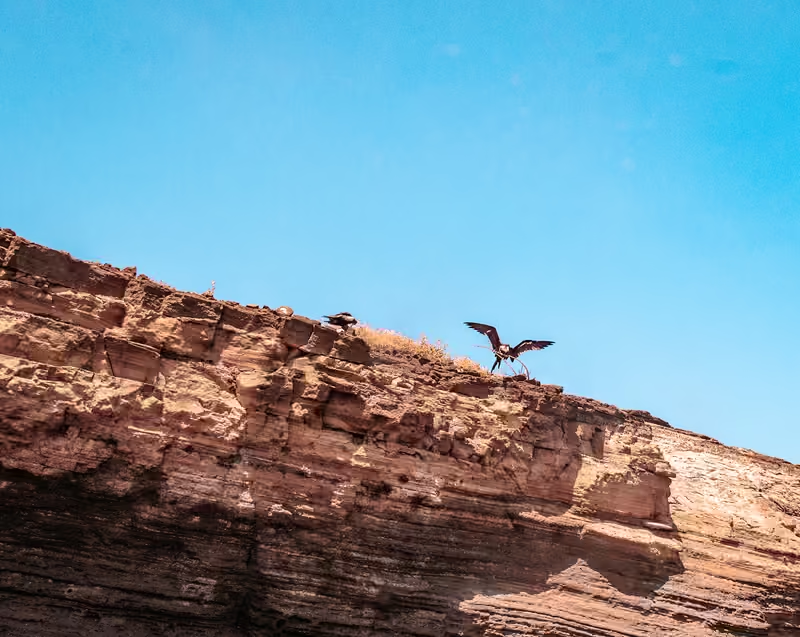
In Hawaiʻi, great frigatebirds breed in the Northwestern Hawaiian Islands and also use offshore islets in the main islands for roosting. A bird perched on a cliff may simply be resting; its presence doesn’t establish that it is nesting there.
These seabirds don’t raise large broods. A female usually lays one egg, and both parents help care for the chick. This slower life cycle means each nesting attempt matters, so safe nesting areas are important for the species.
Where ʻiwa Nest
ʻIwa usually build simple platform nests in shrubs, bushes, or low trees on islands and coastal areas. They often build nests with sticks and other natural materials. Because nests can be sensitive to disturbance, it’s important to give seabirds plenty of space and avoid walking into nesting areas.
How Chicks Grow
Young ʻiwa develop slowly. Both parents initially help raise the chick, which spends several months in the nest before its first flight. Parental feeding can continue for more than a year after fledging, making their extended family care one of the species’ most remarkable traits.
How to Respect Seabirds in Maui
Seeing an ʻiwa above Maui’s ocean is exciting, but the best wildlife experiences happen when people watch without interfering. These birds are part of a larger marine ecosystem that includes fish, coral reefs, sea turtles, and other seabirds.
Like many ocean animals, seabirds can be affected by habitat loss, pollution, marine debris, changing food sources, and human disturbance. Visitors can help by keeping beaches clean, staying out of restricted nesting areas, and never feeding or chasing wildlife.
Responsible wildlife viewing tips
Watch from a distance: Enjoy seabirds without trying to approach, touch, or disturb them.
Don’t feed wildlife: Feeding birds can change their natural behavior and harm their health.
Keep trash secure: Food wrappers, fishing line, and plastic can injure seabirds and marine life.
Respect posted signs: Some coastal and nesting areas may be protected or restricted.
Ask your crew: If you spot a seabird during a tour, ask the crew if they can help identify it.
Do not land on Molokini: The islet is a protected seabird sanctuary closed to ordinary public entry. Observe birds from the boat without approaching their resting areas.
Ready to Explore Maui’s Underwater World?
Experience Maui’s ocean environment aboard the Lani Kai II. We’ll provide snorkel gear, food, and friendly crew support, so you can focus on the adventure!
Tours depart from Maʻalaea Harbor. Routes, snorkel sites, and marine life sightings vary with ocean conditions.
FAQs
The great frigatebird is called ʻiwa in Hawaiʻi. ʻIwa means “thief,” referring to its habit of stealing food from other seabirds. Despite that reputation, it catches most of its own food.
Yes, ʻiwa may be seen soaring near Molokini and over the ocean around Maui. Watch from the boat during the ride and between snorkel stops. Seeing a bird flying or resting nearby does not necessarily mean it is nesting there.
Look for long, narrow wings, a hooked bill, and a deeply forked tail that may look pointed when folded. Adult males are mostly black and can display a red throat pouch. Adult females have a white breast patch, while immature birds often have a pale head and chest.
Male ʻiwa inflate their red throat pouch during courtship to attract a mate. The pouch is not always inflated or easy to see, so its absence does not mean you are looking at a female or a different bird.
ʻIwa mainly eat fish and squid, which they can snatch near the ocean surface without landing. They catch most of their own prey but sometimes chase other seabirds until those birds release food. This food-stealing behavior is called kleptoparasitism.
No. Frigatebirds are wild seabirds, and sightings depend on their movements and feeding activity. You may notice them during a boat trip, but no particular tour, destination, or departure time guarantees an encounter.
Watch from a distance, do not feed or approach birds, and keep food and trash secure. Respect protected habitats and posted restrictions. Molokini’s land is a seabird sanctuary closed to ordinary public entry, so observe its birds from the boat rather than attempting to land.
Final Thoughts on Spotting ʻiwa in Maui
The great frigatebird is one of those Maui wildlife sightings that can make an ocean day feel even more special. With long pointed wings, a forked tail, and graceful soaring flight, ʻiwa are easy to admire once you know what to look for.
As you explore Maui’s ocean, remember to look above the water as well as below it. Reef fish, coral, sea turtles, and seabirds are all connected to the same marine environment. Watching an ʻiwa glide over Molokini or the open ocean is a beautiful reminder of how much life surrounds these waters.
Wildlife sightings are never guaranteed, but curiosity makes every trip better. Keep your eyes open, respect animals from a distance, and enjoy the natural surprises that make snorkeling in Maui so memorable.
Sources & Updates
Use these resources to learn about ʻiwa identification, feeding and nesting behavior, Maui birding locations, and seabird habitat protections. Before a snorkeling trip, check current safety guidance and marine forecasts.