
Escrito por el equipo de Maui Snorkeling, que opera tours a Molokini y Turtle Town desde el puerto de Maʻalaea desde 1985. ¡Pasamos más días en estas aguas que en tierra!
Última actualización: enero de 2026
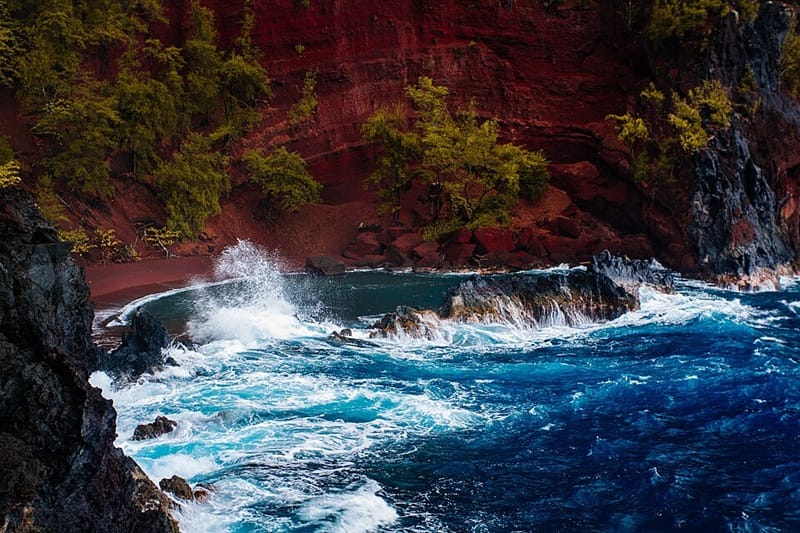
If you’ve ever seen photos of a deep crimson shoreline set against bright blue ocean and lush green cliffs, chances are you were looking at Red Sand Beach Maui—officially known as Kaihalulu Beach. This striking spot is one of the most photographed — and talked-about — beaches on the island.
Ubicada a las afueras del tranquilo pueblo de Hana, esta playa se siente salvaje, espectacular y completamente diferente a las famosas playas de arena blanca y dorada de Maui. En esta guía, te explicaremos todo lo que necesitas saber antes de visitarla: desde cómo se formó y cómo llegar hasta qué esperar y consejos esenciales de seguridad, ¡todo de forma amena y fácil de leer!
Red Sand Beach Maui (Kaihalulu) – Quick Facts
- Location: Near Hāna (East Maui)
- Alternate Name: Kaihalulu Beach
- Access: Unofficial trail; access can be controversial; respect signage
- Hike: Short, narrow, exposed (conditions vary)
- Lifeguards: None
- Facilities: None
- Best Time: Early morning for fewer crowds/light
- Swimming/Snorkeling: Often not recommended; conditions can change fast
Where Is Red Sand Beach (Kaihalulu) in Hāna?
The Red Sand Beach in Hana, Maui, is officially called Kaihalulu Beach and is located just south of Hana on Maui’s eastern side, near the coastline that borders Hāna Bay.
Despite being close to Hana town, the beach feels secluded and remote. Steep cliffs surround the cove, creating a dramatic natural amphitheater that helps protect the shoreline from strong winds and waves — at least on calm days.
Why Is The Sand Red?
The color of Maui Red Sand Beach is derived from volcanic cinder. Over thousands of years, iron-rich lava rock from nearby volcanic activity broke down into fine grains. This area is associated with volcanic formations, including a nearby cinder cone, which contributed to the cinder deposits that make the beach so unique. When exposed to air and water, the iron oxidized — essentially rusting — which gives the sand its signature deep red hue.
This natural process makes Red Sand Beach, Maui incredibly rare. There are only a handful of true red sand beaches in the world, and this one is easily the most famous in Hawaii!

Foto cortesía de Paradise Found in Maui
Infórmate antes de ir
- Sin socorristas
- Review Seguridad Oceánica del Condado de Maui tips before any swim/snorkel decision
- Trail is narrow/exposed; conditions change after rain
- Respect signage + local community
- Local advisory context: East Maui Ready issued a standing advisory asking visitors to avoid Kaihalulu due to frequent emergency responses and impacts on local resources.
- No dedicated parking + private land: The advisory explicitly notes the route crosses private land and there’s no dedicated parking.
How To Get To Kaihalulu Beach
Getting to Red Sand Beach Maui is part of the adventure — but it’s important to know what you’re getting into.
Driving To Hana
Most visitors reach Hana via the legendary Camino a Hana. The drive itself is an experience, filled with waterfalls, jungle scenery, and winding coastal views. Plan to spend the entire day, drive slowly, and stop often.
The Trail To The Beach
Getting to Kaihalulu is not like walking down to a typical Maui beach. The route people use is an unofficial coastal trail that can be narrow, slippery, and exposed, and it may pass through or alongside private land.
⚠️ Safety + respect first: Access here can be controversial, and conditions/signage can change. If you see “Kapu,” “No Trespassing,” “Closed,” or any other posted restrictions, respect them and turn back. Even when the hike is “short,” the consequences of a slip can be serious.
Access + Trail Overview
Most visitors describe the walk as short — but not easy. Be prepared for:
- Uneven footing (loose dirt, volcanic cinder, rocks)
- Slippery sections, especially after rain
- Narrow stretches with steep drop-offs
- No railings, no maintenance, and no official safety support
- No lifeguards at the beach once you arrive
If you’re not fully comfortable with exposed trails, heights, or unstable footing, this is a spot you’re better off skipping.
Parking/Trailhead
There is no official parking lot for Kaihalulu/Red Sand Beach, and Hāna is a small residential community with limited parking.
If you choose to visit the area:
- Only park where it is clearly legal (and safe).
- Do not block driveways, gates, lanes, or access roads.
- Do not park on private property or in lots that require guest/customer permission.
- If you can’t find a clearly legal spot, skip this stop and choose a safer, officially managed option nearby.
Consejo: If you need a last stop before continuing your day, Hana has a few public areas near town—many visitors plan to pick up essentials (water, snacks, and restrooms) before heading out from the community center or other nearby public spots.
Hike Time + Risk Level
The walk is often around 10–15 minutes each way, but it’s best thought of as “short distance / high consequence.”
Risk level: Moderate-to-high depending on conditions (and your comfort level). The trail can feel very different:
- after rain (more mud + slick footing),
- when it’s crowded (less room to pass safely),
- or when erosion has narrowed sections.
Not recommended for young kids, anyone unsteady on their feet, or anyone uncomfortable with heights. If anything feels off, the safest move is to turn around early.
Looking for other hiking options? Check out our Maui Hiking Trails guide!
Landslide/Erosion
This coastline is changing rapidly, and the trail has been affected by erosion and landslides.
In a March 3, 2024, advisory, Hoʻomakaukau Maui Hikina (“East Maui Ready”) warned that landslides following recent rains and earthquakes made the Kaihalulu “trail” extremely dangerous, describing slippery conditions and an unstable shoreline. Their advisory also notes the area has no dedicated parking and that the route crosses private lands.
En resumen: Treat this trail as dynamic and unpredictable. If it’s wet, visibly eroded, crowded, or restricted by signage/advisories, choose a safer alternative.
Is Red Sand Beach Safe?
This is one of the most important questions — and the honest answer is: it depends.
Condiciones del océano
- There is no lifeguard
- Strong currents and sudden shore breaks are common
- Waves can look calm but change quickly
Swimming is not recommended unless ocean conditions are exceptionally calm and you’re an experienced ocean swimmer. Some days, the cove can look peaceful at first glance — but if you hear the roaring sea and see a heavy surge, that’s your cue to keep it a “look, don’t leap” kind of stop.
Cliff Safety
The surrounding cliffs are unstable. Rockfall does happen, especially after heavy rain. Always keep a safe distance from cliff faces and avoid climbing.

Foto cortesía de Experimente Hawái
Best Time To Visit
Time Of Day
Early morning is the best time to visit Red Sand Beach in Hana, Maui. You’ll avoid crowds, enjoy cooler temperatures, and get softer lighting for photos.
Late afternoon can also be beautiful, but allow enough daylight for the hike back.
Time Of Year
- Spring and summer generally offer calmer ocean conditions
- Winter months often bring larger swells and rougher seas
Rain can make the trail slippery at any time of year, so check the forecast Antes de irte.
What To Bring With You
There are no facilities at Kaihalulu Red Sand Beach, so come prepared:
- Good walking shoes or trail sandals
- Water and snacks
- Protector solar seguro para los arrecifes
- Toalla
- Phone or camera (secure it — the trail can be slick)
Leave large bags and valuables behind, and always pack out what you bring in.
Can You Swim Or Snorkel At Red Sand Beach?
While the cove shape sometimes creates calmer water, snorkeling and swimming here are unpredictable.
- Visibility changes quickly
- Currents can pull outward
- Entry and exit over rocks can be tricky
For most visitors, the beach is better enjoyed for sightseeing and photography than for water activities.
If you encounter wildlife, follow NOAA’s viewing distances.

Foto cortesía de Guía turística de Maui
Respecting The Area And Hawaiian Culture
Red Sand Beach sits near culturally significant land and local neighborhoods.
Please remember to:
- Keep noise levels low
- Respect private property
- Leave no trash behind
- Avoid disturbing natural features
Being a respectful visitor helps preserve this special place for future generations. Check out our Visit Maui Responsibly for more tips!
Is Red Sand Beach Hāna Worth Visiting?
For many travelers, yes — with realistic expectations.
It’s Perfect If You:
- Love unique landscapes
- Enjoy photography
- Are already visiting Hana
- Appreciate off-the-beaten-path spots
It May Not Be Ideal If You:
- Want easy beach access
- Plan to swim or snorkel extensively
- Are traveling with young children
- Prefer lifeguarded beaches
Safer Alternatives Near Hāna
- Waiʻānapanapa (black sand + caves)
- Hamoa Beach (when calm)
- Koki Beach (red-sand tones, scenic stop)
Echa un vistazo a nuestro Maui Beaches guide to learn more about the beaches we recommend on the island!
Reflexiones finales
Red Sand Beach, Maui, is one of those places that feels almost unreal. The contrast of red sand, green cliffs, and blue ocean is unforgettable, and it’s easy to see why it’s become such an iconic Maui destination.
That said, it’s not a typical beach day spot. Think of Red Sand Beach Hana Maui as a scenic stop — a place to slow down, admire nature’s artistry, snap a few photos, and move on respectfully.
Pair it with a full Road to Hana adventure, then save your swimming and snorkeling for safer locations around the island or with experienced local guides.
If you visit with care and awareness, Kaihalulu Beach can be one of the most memorable highlights of your trip. 🌋🌴
Want the Ocean Beauty Without Cliff/Trail Risk?
Snorkel en el cráter Molokini – Runs daily from 7 AM – 12 PM with stops at Molokini Crater & Turtle Town!
Snorkel por la tarde – Runs daily from 1 – 4 PM. Slide and snorkel at Coral Gardens!
Preguntas frecuentes
Is Red Sand Beach The Same As Kaihalulu Beach?
Yes, Red Sand Beach is the same beach as Kaihalulu Beach. Kaihalulu is the official name, while “Red Sand Beach Maui” is a common visitor nickname for the beach’s distinctive red volcanic sand and dramatic appearance.
Is Red Sand Beach Open Right Now?
Red Sand Beach has no official hours or a managed entrance. Access may be affected by weather, trail safety, or private property concerns. Always check posted signage in Hāna, local updates, and trail conditions before attempting the hike. Local advisories and posted signs take precedence, and if it has rained recently, treat the trail as high-risk.
Is The Trail To Red Sand Beach On Private Property?
Yes, the trail to Red Sand Beach crosses privately owned land. While visitors have accessed it for years, legal access has been disputed at times. Respect all posted signs, avoid trespassing, and understand that access rules can change without warning.
How Long Is The Hike To Red Sand Beach?
The hike to Red Sand Beach is short, usually 10 to 15 minutes each way. Despite the short distance, the trail is narrow, uneven, and often slippery after rain. Proper footwear and caution are essential, especially near cliff edges.
Is Red Sand Beach Safe For Kids?
Red Sand Beach is not considered safe for young children. The trail has exposed drop-offs, and the beach has no lifeguards and unpredictable ocean conditions. Families with kids are generally better off visiting calmer, lifeguarded beaches elsewhere on Maui.
Can You Snorkel At Red Sand Beach?
Snorkeling at Red Sand Beach is not recommended for most visitors. Currents can be strong, water conditions change quickly, and rocky entry points pose a risk. Visibility is inconsistent, making this beach better suited for sightseeing and photography than snorkeling.
What Should I Do If Conditions Look Rough?
If conditions look rough, the safest option is to stay out of the water entirely. Waves and currents can become dangerous very quickly. Enjoy the beach from shore, and choose a safer, calmer location for swimming or snorkeling.
What Are Safer Alternatives Near Hāna?
Safer alternatives near Hāna include Hamoa Beach and Koki Beach when ocean conditions are calm. These beaches offer easier access and more space. For the safest snorkeling experience, guided snorkel tours elsewhere on Maui provide controlled conditions and professional oversight.
Is There An Official Parking Lot Or Restroom?
No, there is no official parking lot or restroom at Red Sand Beach. Visitors typically park along nearby residential roads in Hana and walk to the trail entrance. Facilities are not available at the beach, so plan ahead and use restrooms in town before visiting.
What Should I Check Before Going (Rain, Surf, Advisories)?
You should check rainfall, surf height, and local advisories before going to Red Sand Beach. Rain can make the trail extremely slippery, and elevated surf can create dangerous ocean conditions. Always review weather forecasts, surf reports, and any posted warnings before attempting the hike. Check out our Condiciones para hacer snorkel en Maui blog to learn more tips!
What Does “Kapu” Mean?
Kapu means “forbidden” or “restricted” in Hawaiian culture. Kapu signs indicate areas that should not be entered due to cultural significance, safety concerns, or private property. Kapu is taken seriously, and visitors should always respect these signs without exception.
Cover photo courtesy of Wikipedia.


