Verfasst von
Schnorcheln auf Maui, Seit 1985 bietet das Unternehmen Touren zum Molokini-Krater, nach Turtle Town und zu den Korallengärten ab dem Hafen von Māʻalaea an. Die Touren werden von Kapitänen mit USCG-Lizenz an Bord eines Schiffes geleitet.
von der US-Küstenwache inspiziertes Passagierschiff.
Kurzantwort
Hawaiis Staatsfisch ist die
Humuhumunukunukuāpuaʻa, also called the reef or rectangular
triggerfish. Its scientific name is Rhinecanthus rectangulus.
Look for an angular body, bold markings, and a pointed snout.
On Maui, watch around reef structure, rocky crevices, and nearby sandy
patches when snorkeling conditions are suitable. Sightings aren’t guaranteed.
Wichtigste Erkenntnisse:
-
Common names: Reef triggerfish and rectangular
triggerfish. Humuhumu is a shortened name that can also refer to
other triggerfish.
-
Hawaiianischer Name: Humuhumunukunukuāpuaʻa, also typed
as humuhumunukunukuapuaa without Hawaiian marks.
-
Identification clues: An angular body, distinctive
color pattern, pointed snout, and a dorsal spine that can lock
into place.
-
Similar species: The lagoon triggerfish
(Rhinecanthus aculeatus) shares the Hawaiian name, but
Hawaiʻi’s state-fish designation specifically names
Rhinecanthus rectangulus.
-
Wo man auf Maui suchen sollte: Reef habitat at Molokini,
Turtle Town, Coral Gardens, and suitable shore-snorkeling locations.
Access and visibility depend on current conditions.
-
Watching respectfully: Move slowly, give fish space,
and don’t follow them into crevices. Never touch coral, stand on
reef, or feed marine life.
The Hawaiian state fish is the humuhumunukunukuāpuaʻa, also called the reef triggerfish. It’s one of Hawaiʻi's most recognizable reef fish, thanks to its bold markings, pointed snout, and unforgettable Hawaiian name. In this guide, you’ll learn what its name means, how to pronounce it, how to identify it underwater, and where to look for it while snorkeling on Maui.
Hawaii State Fish At A Glance
Here’s a quick reference to the humuhumunukunukuāpuaʻa, including its
names, size, reef habitat, diet, and identification clues.
| Thema |
Einzelheiten |
| Common and Hawaiian names |
Reef triggerfish or rectangular triggerfish.
Hawaiian name: humuhumunukunukuāpuaʻa.
Humuhumu is a shortened name also used for other triggerfish.
|
| Wissenschaftlicher Name |
Rhinecanthus rectangulus, the species designated
as Hawaiʻi’s official state fish.
|
| Größe |
Can reach about 10 inches, or 25 centimeters, in length,
according to Waikīkī Aquarium.
|
| Geographic range |
Found across the tropical Indo-Pacific, including Hawaiʻi.
It is not endemic to the Hawaiian Islands.
|
| Reef habitat |
Shallow reef flats and outer reefs, including rocky areas
affected by surge. Its presence doesn’t indicate that
conditions are suitable for snorkeling.
|
| Diät |
Algae and reef invertebrates, including small crustaceans,
worms, snails, brittlestars, and sea urchins.
|
| Identification clues |
Angular body, pointed snout, a diagonal black band from the
eye toward the anal fin, and a black wedge-shaped marking
near the tail. A blue bar crosses the upper lip.
|
| Ähnliche Arten |
The lagoon triggerfish, Rhinecanthus aculeatus,
shares the Hawaiian name humuhumunukunukuāpuaʻa but is a
different species. Check the scientific name when comparing
fish guides or photographs.
|
Quellen
Waikīkī Aquarium,
Fische Australiens,
and
Hawaiʻi Act 67 (PDF).
Watch fish without touching, feeding, chasing, or disturbing the reef.
Warum ist der Humuhumunukunukuāpuaʻa Hawaiis Staatsfisch?
The reef triggerfish first became Hawaiʻi’s official state fish in 1985 under a law that expired after five years. That designation ended in 1990. On May 2, 2006, Act 67 permanently restored the title to the humuhumunukunukuāpuaʻa, specifically the species Rhinecanthus rectangulus.
Its status as a state fish is a legal designation. Its Hawaiian name has its own story.
What does Humuhumunukunukuāpuaʻa mean?
Der Humuhumunukunukuāpuaʻa ist einer der bekanntesten Rifffische Hawaiis, und sein Name verrät viel über ihn. Laut Waikīkī Aquarium, Humuhumu ist der hawaiianische Begriff für Drückerfisch, während Nukuāpuaʻa “Schnauze wie ein Schwein” bedeutet. Das passt gut zu diesem Fisch: Er wühlt im Riff nach Nahrung und kann sogar grunzen, wenn er gestresst oder angefasst wird.
Dieser Fisch hat auch einen kleinen, aber wichtigen Platz in der Geschichte Hawaiis. Waikīkī Aquarium notes that triggerfish known by this name were sometimes used as substitutes for pigs in certain religious ceremonies.
Über Rechtschreibung
This guide uses Humuhumunukunukuāpuaʻa, including the Hawaiian kahakō and ʻokina. You’ll also see humuhumunukunukuapuaa typed without those marks in searches and travel information. Humuhumu is a convenient shortened name, but it can refer to triggerfish more generally.
Wie man Humuhumunukunukuāpuaʻa ausspricht
(Es ist einfacher, als du denkst.) Teile es in kleine Teile auf:
humu-humu-nuku-nuku-ā-puaʻa
Practice one part at a time, then join the parts together.
Spitznamen
Die Einheimischen nennen es oft nur Humuhumu. Das lässt sich viel leichter aussprechen, wenn man bei einer Schnorcheltour auf einen solchen Fisch zeigt!
So identifizieren Sie einen Humuhumunukunukuāpuaʻa
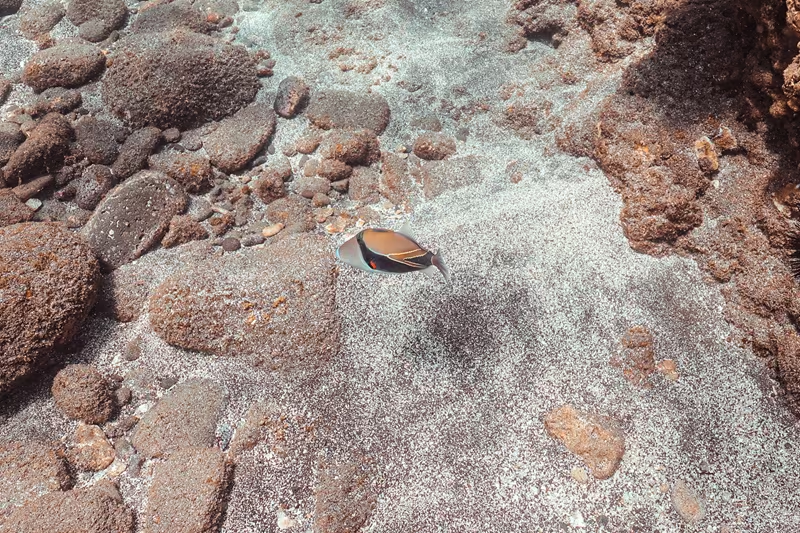
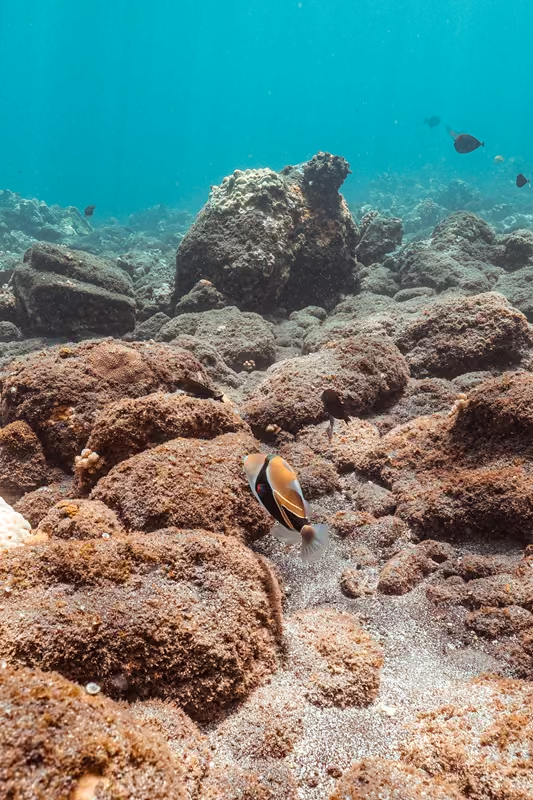
Schnellidentifizierung: Look for an angular body, a pointed, pig-like snout, a dark mask across the face, blue lines near the mouth, and a stop-and-go swimming style near the reef.
The reef triggerfish can reach about 10 inches, or 25 centimeters, in length. However, its bold colors and markings make it stand out.
- Körperform: Flach und oval geformt, mit einer spitzen Schnauze.
- Farben: Cremefarbener, beiger Körper mit auffälligen schwarzen, blauen und gelben Streifen.
- Augen: Hoch oben auf dem Kopf positioniert, hilft es ihm, beim Fressen Wache zu halten.
Wo man den Staatsfisch von Hawaii auf Maui sehen kann
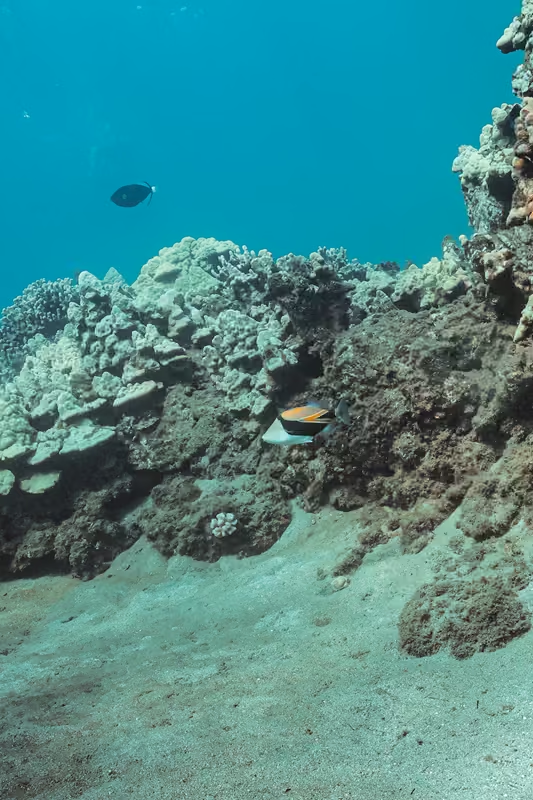
Der Humuhumunukunukuapuaʻa loves the warm, shallow reefs of Hawaii. You'll commonly find it around coral heads, rocky crevices, and sandy lagoon bottoms.
Die besten Schnorchelplätze mit dem Boot auf Maui
- Molokini-Krater: Look around coral patches and rocky reef structure when conditions allow a visit.
- Schildkrötenstadt: Watch the boundaries between lava reef, crevices, and sandy openings.
- Korallengärten: Scan reef structure slowly and watch for the fish’s distinctive markings.
Die besten Schnorchelplätze an der Küste von Maui
Reef habitat near Kapalua Bay, Napili Bay, Black Rock, Ulua Beach, and Keawakapu can provide opportunities to look for humuhumu. Choose a location that suits your ocean experience and the day’s conditions rather than following a fixed route along rocks or around a point. Keep clear of coral and leave room for the fish to move naturally.
Beste Zeit, um nach Humuhumu zu suchen
Plan your search for daylight hours when conditions are suitable. Morning often brings lighter winds, but visibility and surf still vary. Watch reef structure and nearby sandy patches without chasing fish. If conditions aren’t appropriate, save snorkeling for another day.
Wie sich der Humuhumunukunukuāpuaʻa am Riff verhält
- Alltag: Diese Fische sind tagaktiv und verstecken sich nachts. Sie ernähren sich von Algen, Schnecken und kleinen Krebstieren.
- Abwehrmechanismus: Sie verkeilen sich in Felsen und verhaken sich mit einem dorsalen Stachel, der als “Auslöser” dient. Daher stammt auch ihr Name.
- Territoriales Verhalten: Don’t be fooled by their cute looks! They’re feisty! These little guys defend their territory, especially against other fish.
So sehen Sie Humuhumunukunukuāpuaʻa beim Schnorcheln auf Maui
A boat tour provides gear, crew guidance, and a planned outing while you look for Maui’s reef fish.
Unser 5-hour morning tour runs from 7 a.m. to about noon, with planned stops at Molokini and Turtle Town or another reef. Our 3-hour afternoon tour runs from 1 p.m. to about 4 p.m. and typically visits Coral Gardens or another nearby reef.
Destinations and wildlife sightings depend on conditions. Anyone entering the water should be able to swim independently, stay calm face-down in deep water, and follow the crew's instructions.
Verhaltensregeln beim Schnorcheln am Riff
- Gebt den Fischen Platz: Riff-Drückerfische können territorial werden, besonders wenn sie ein Nest bewachen. Spreizt er seine Flossen, neigt er sich zur Seite oder greift er an, sollten Sie sich langsam zurückziehen. Das ist die Sprache der Riffbewohner und bedeutet so viel wie “zu nah”.”
- Fische niemals füttern: Füttern verändert das natürliche Verhalten und kann Riffbewohnern schaden. Lassen Sie die Tiere selbst fressen, während Sie sie beobachten.
- Use Mineral-only Sunscreen: Wear a rash guard, hat, and other sun-protective clothing. If using sunscreen, choose mineral active ingredients such as zinc oxide and/or titanium dioxide and follow the label instructions.
- Respektiert die Schutzgebiete: Many sites around Maui are special places for marine life. Follow posted signs and your crew's guidance.
Tipps, um sie zu erkennen
- Bleib ruhigDiese Fische sind scheu. Bewegen Sie sich langsam, um sie nicht zu erschrecken.
- Schau nach untenSie ernähren sich oft in der Nähe des Riffgrundes.
- Beobachten Sie den Sand: Manchmal huschen sie über offene Flächen zwischen den Korallen.
- Ask the crew: Crew members can help you recognize fish and point out identification clues.
Humuhumu vs. andere Drückerfische, die Sie vielleicht sehen
Doppelgänger, denen Sie begegnen könnten
The reef triggerfish (Rhinecanthus rectangulus) shares the Hawaiian name humuhumunukunukuāpuaʻa with the lagoon triggerfish (Rhinecanthus aculeatus). They’re different species, and Hawaiʻi’s official state-fish designation specifically names R. rectangulus. When checking a photograph or fish guide, look at the scientific name rather than relying on “humuhumu” alone.
Auf Hawaii gibt es mehrere Drückerfischarten. Zwei davon könnten Sie hier entdecken:
- Schwarzer Drückerfisch: Dunkler Körperbau, oft in Schulen anzutreffen, schlanke Gestalt.
- Rosa Drückerfisch: Leuchtend pinkfarbener Schwanz und grünlicher Körper – kaum zu übersehen!
Diese Arten sind wunderschön, aber der Humuhumu sticht mit seinem lebhaften Gesichtsmuster und den klaren, gemalten Linien besonders hervor.
Wie man den Humuhumu auf einen Blick erkennt
- Ein markanter Schriftzug “Maske” ziert das Gesicht.
- Elektrisch blaue Streifen
- Blockartige, kantige Form
- Selbstbewusster, dynamischer Schwimmstil
A Familiar Face On Maui’s Reefs
Knowing the humuhumunukunukuāpuaʻa’s name, markings, and reef habits gives you more to notice on your next Maui snorkel. Watch from a comfortable distance, leave the reef undisturbed, and enjoy whatever marine life appears. 🐠
👉 For help recognizing other species, explore our Maui-Führer für tropische Fische!
Quellen & Updates
Use these resources to confirm the state-fish designation, species
identification, reef protection, and Maui sunscreen requirements.
Before snorkeling, check current ocean conditions, water-quality
advisories, and posted warnings.