
Written by the Maui Snorkeling team, operating Molokini Crater, Turtle Town, and Coral Gardens tours out of Maʻalaea Harbor since 1985. Tours are led by USCG‑licensed captains aboard a USCG‑inspected passenger vessel. We spend more days in these waters than on land.
Last updated: February 2026
Quick Answer: In Hawaiʻi, Maui box jellyfish are often most likely about 8–10 days after the full moon (often ~9–10 days)—with reports more common along south and leeward shores. Use the official 2026 Box Jellyfish Calendar (PDF) as a planning tool (not a guarantee), and always follow posted warnings and lifeguard guidance.
Main Takeaways:
- Highest‑probability window: Usually ~8–10 days after the full moon (how the calendar works)
- Most affected shores: South + leeward shores are more commonly reported (Hawaiʻi Ocean Safety guidance)
- How long it lasts: Often a few days, but jellyfish can be present any day (treat dates as “higher‑probability,” not certainty)
- Safer choices: Prefer lifeguarded beaches; ask a lifeguard before entering (Maui lifeguarded beach list)
- If stung: Exit the water, get lifeguard help, and follow official guidance (official safety info)
- Tour tip: Guided snorkel tours can often choose the best available location for the day’s conditions
Planning a snorkel trip to Maui in 2026? One of the most common questions travelers ask is: “When are box jellyfish in Maui?”
This guide breaks down the 2026 high-probability dates, explains why they appear after the full moon, and—most importantly—what it actually means for snorkeling in Maui. Read ahead for more information on the Maui box jellyfish.
2026 Maui Jellyfish Calendar (High-Probability Dates)
Hawaiʻi officials publish an annual box jellyfish calendar showing estimated higher-risk windows. Download the official 2026 Box Jellyfish Calendar PDF here: 2026 Box Jellyfish Calendar (PDF). These are based on the statewide pattern of the lunar cycle.
📅 2026 High-Probability Windows
| Month | High-Probability Dates |
|---|---|
| January | 11–13 |
| February | 9–11 |
| March | 11–13 |
| April | 9–11 |
| May | 9–11 |
| June | 7–9 |
| July | 7–9 |
| August | 6–8 |
| September | 4–6 |
| October | 4–6 |
| November | 2–4 |
| December | 2–4 and Dec 31 (continues into Jan 1–2, 2027) |
These dates reflect a higher probability, not guaranteed presence. Jellyfish can appear outside these windows—and sometimes not appear at all during them.
Prefer Pros To Choose The Day’s Best Snorkel Spot?
If your trip falls during a higher-probability window, a guided boat tour can help reduce uncertainty. Crews monitor daily conditions and choose the safest, clearest snorkel locations available that day.
👉 Book A Maui Snorkeling Tour And Let The Experts Handle The Conditions
Why Do Box Jellyfish Show Up After The Full Moon?
The timing isn’t random.
Research and long-term observation in Hawaiʻi show that box jellyfish tend to appear about 8–10 days after the full moon. University of Hawaiʻi researchers have studied this lunar timing and found it relates to a predictable “darkness window” that cues Hawaiian box jellyfish to migrate shoreward to spawn.
This is why the calendar works surprisingly well year after year.
However:
- The calendar is informational.
- Weather and currents influence arrival.
- It’s not an exact prediction tool.
That’s why lifeguard guidance and beach warnings always take priority over any calendar. View below the Maui box jellyfish predictions.
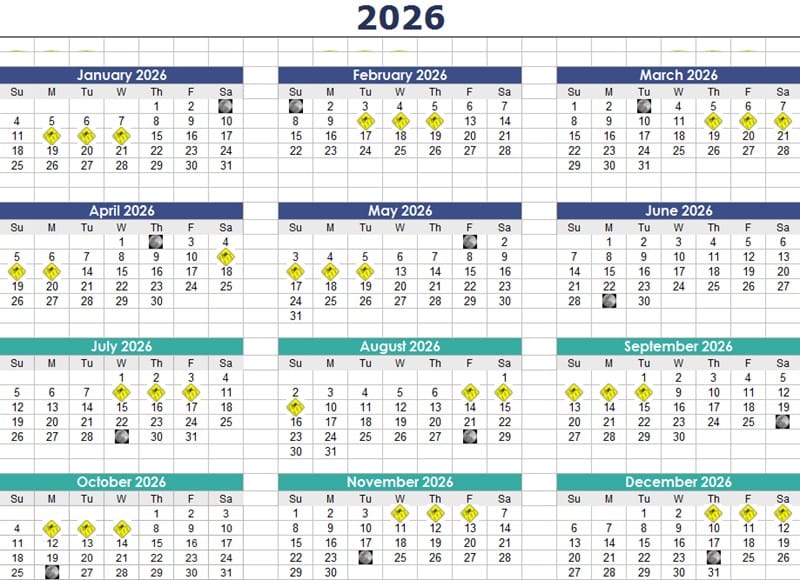
Photo courtesy of to-hawaii.com
Which Maui Shores Are Most Affected?
Box jellyfish are more commonly reported along south and leeward shores.
On Maui, that can include:
- South Maui (Kīhei, Wailea, Mākena)
- Other leeward-facing beaches, depending on currents
They are less frequently reported on exposed north shores during trade wind conditions, but ocean dynamics change daily.
If you’re shore snorkeling in South Maui:
- Check if your beach is in a high-probability window.
- Look for posted warning signs.
- Choose beaches with lifeguards when possible.
- Ask a lifeguard before entering the water.
To find lifeguarded beaches on Maui (towers + hours), use Hawaiʻi Ocean Safety’s official list.
If you’re booking a guided snorkel tour, crews evaluate:
- Wind direction
- Currents
- Water clarity
- Marine conditions
That flexibility often allows tours to operate safely—even during jellyfish windows—by choosing the most suitable location.
What This Means For Snorkeling In Maui
Here’s the practical takeaway:
Most visitors snorkel Maui year-round without incident.
During high-probability windows:
- Stay aware.
- Avoid unguarded beaches if conditions seem questionable.
- Follow posted advisories.
- Consider guided boat tours for added safety oversight.
For day‑of updates at lifeguarded beaches (hazard ratings and alerts), check HawaiiBeachSafety.com and still confirm with a lifeguard on arrival.
And remember: jellyfish are a natural part of Hawaiʻi’s ocean ecosystem. Awareness is smart—but panic is unnecessary.
If you want to understand how to evaluate ocean safety in general, check out our Maui Snorkel Conditions 101 guide for wind, waves, and hazard tips.
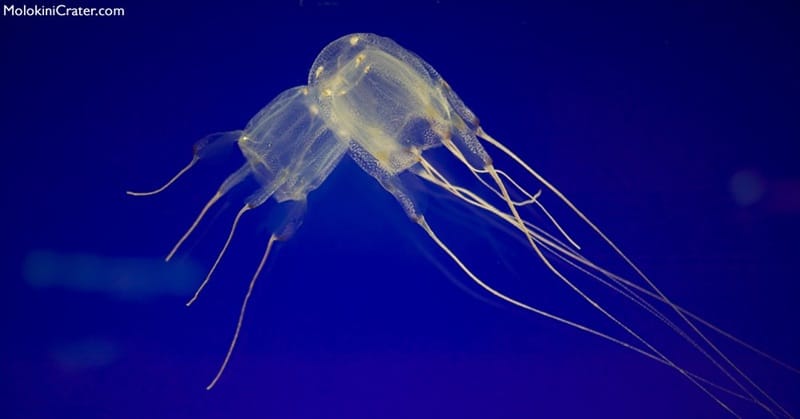
Photo courtesy of molokinicrater.com
What To Do If You Get Stung
If you suspect a box jellyfish sting:
- Exit the water safely.
- Alert a lifeguard immediately (if present).
- Do not rub the area.
- Follow official first-aid guidance.
- Seek medical attention if symptoms are severe.
Note: University of Hawaiʻi researchers have shown that some commonly recommended “home” treatments can make certain box jellyfish stings worse—when in doubt, get help from a lifeguard. Severe reactions are uncommon, but some stings can be painful and require evaluation.
When in doubt, get help from trained professionals.
Don’t Panic: The Calendar Is A Planning Tool
It’s important to understand:
- The calendar shows estimated higher-risk days.
- Jellyfish can appear outside the listed dates.
- Many high-probability days pass with little or no activity.
- Local conditions matter more than the calendar alone.
Thousands of people snorkel safely in Maui every week—even during higher-probability windows.
Awareness + flexibility = smart planning.
Plan Smart. Snorkel Confidently.
Understanding the Maui Box Jellyfish Calendar 2026 gives you a helpful planning advantage—but it shouldn’t stop you from enjoying the ocean.
If you’d rather let experienced captains choose the day’s best conditions:
Join Our Molokini Crater Snorkeling Tour (7 AM – 12 PM)
- Snorkel Molokini Crater and Turtle Town
- Breakfast, lunch, and gear included
- Swim with tropical fish and sea turtles
Or Our Afternoon Snorkeling Tour (1 PM – 4 PM)
- Snorkel Coral Gardens
- Lunch and snorkeling gear included
- Relaxed afternoon adventure
👉 Reserve Your Maui Snorkeling Tour Today And Let Us Monitor The Ocean For You
Maui Box Jellyfish FAQs (2026)
When are box jellyfish most likely in Maui in 2026?
The highest‑probability windows are typically about 8–10 days after the full moon. For the official dates, use the 2026 Box Jellyfish Calendar (PDF) (published by Waikīkī Aquarium and shared via Hawaiʻi Ocean Safety).
Is the “box jellyfish calendar” guaranteed?
No—treat it as a planning tool, not a promise. Waikīkī Aquarium notes the calendar is informational and jellyfish can appear outside the predicted windows. Read the explanation here: Waikīkī Aquarium Box Jellyfish Calendar. Always follow posted warnings and check with a lifeguard.
Which Maui shores are most affected?
Reports are more common along south and leeward shores. Hawaiʻi Ocean Safety explains this pattern and also hosts the calendar PDFs here: Understanding Beach Warning Signs (Jellyfish & Man‑O‑War). For day‑to‑day planning, also see our guide: Maui Snorkel Conditions 101.
Should I cancel snorkeling during “jellyfish week”?
Not necessarily. Many visitors still snorkel safely by choosing smarter options: prefer lifeguarded beaches, avoid entering the water if warnings are posted, and consider a guided tour (crews can often choose the best available location for conditions). You can check lifeguarded locations here: Hawaiʻi Ocean Safety — Lifeguarded Beaches. If you’d rather snorkel with a crew, see our Molokini tour or Afternoon tour.
How long do box jellyfish “swarms” last?
The calendar highlights 3‑day high‑probability windows each month, but conditions can vary and jellyfish may be present outside those dates. If you’re planning shore snorkeling, use the calendar plus real‑time beach information and posted signage before you go.
Where can I check real-time Maui beach warnings and conditions?
For day‑of updates at lifeguarded beaches (hazard ratings and alerts), use HawaiiBeachSafety.com, and then confirm conditions with a lifeguard when you arrive. For additional context on warnings and signage, see Hawaiʻi Ocean Safety’s beach warning signs guide.
What should I do if I get stung while snorkeling?
Get out of the water immediately, notify a lifeguard (or your boat crew), and follow official guidance rather than random “home remedies.” Start here: Hawaiʻi Ocean Safety — Jellyfish & Man‑O‑War. Also note: University of Hawaiʻi researchers have found that some commonly recommended treatments can worsen certain box jellyfish stings: UH sting treatment evidence review. If symptoms are severe (trouble breathing, chest pain, widespread reaction), seek medical help immediately.
Why do box jellyfish show up after the full moon?
Long‑term observations and research suggest Hawaiian box jellyfish synchronize their monthly shoreward migration with a predictable “darkness window” tied to the lunar cycle. Read an overview from the University of Hawaiʻi here: UH News — lunar cycle and box jellyfish spawning. For the calendar explanation and disclaimer, see Waikīkī Aquarium.
Are box jellyfish the same as Portuguese man‑o‑war?
No—these are different ocean hazards, and the risk patterns can differ. Hawaiʻi Ocean Safety covers both on its beach warning signs page (including what the posted signs mean): Jellyfish & Man‑O‑War warning signs. If either warning is posted, choose a safer beach or skip the water.
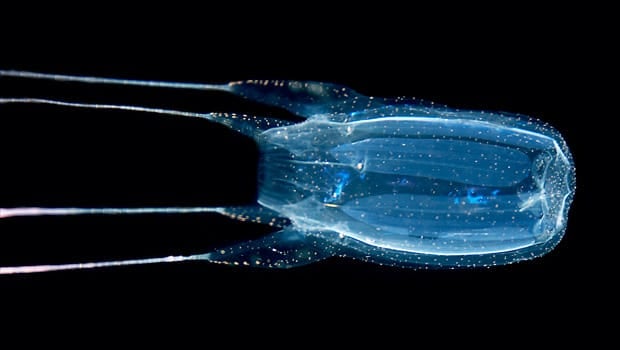
Photo courtesy of Waikiki Aquarium
Sources & Updates: We keep this guide updated, but jellyfish activity and beach conditions can change quickly. Before you snorkel, confirm any warnings with a lifeguard and review the official resources below.
- Official guidance + calendar hub: Hawaiʻi Ocean Safety — Beach warning signs (includes Box Jellyfish Calendars)
- Official 2026 calendar (PDF): Waikīkī Aquarium Box Jellyfish Calendar 2026 (PDF)
- Lifeguarded beaches (Maui list + hours): Hawaiʻi Ocean Safety — List of lifeguarded beaches
- Day-of beach hazard updates: HawaiiBeachSafety.com — current conditions & alerts
- Cover photo: Maui Ocean Center
Further Reading: If you want more context on “why these dates” and what the calendar does (and does not) mean, these references explain the full‑moon timing and safety caveats.
- How the calendar works + disclaimer: Waikīkī Aquarium — Box Jellyfish Calendar
- Why the lunar cycle matters (University of Hawaiʻi): UH News — Lunar cycle cues box jellyfish spawning
- Sting-treatment evidence review (University of Hawaiʻi): UH News — Some common jellyfish sting recommendations can worsen stings
- Peer-reviewed paper (NOAA-hosted): NOAA Repository — Hawaiian box jellyfish (Alatina alata) monthly migrations


