執筆者
マウイ シュノーケリング, 1985年以来、マアラエア港からモロキニ・クレーター、タートル・タウン、コーラル・ガーデンへのツアーを運航しています。ツアーは、米国沿岸警備隊の免許を持つ船長が乗船し、
米国沿岸警備隊の検査を受けた旅客船.
簡単な回答
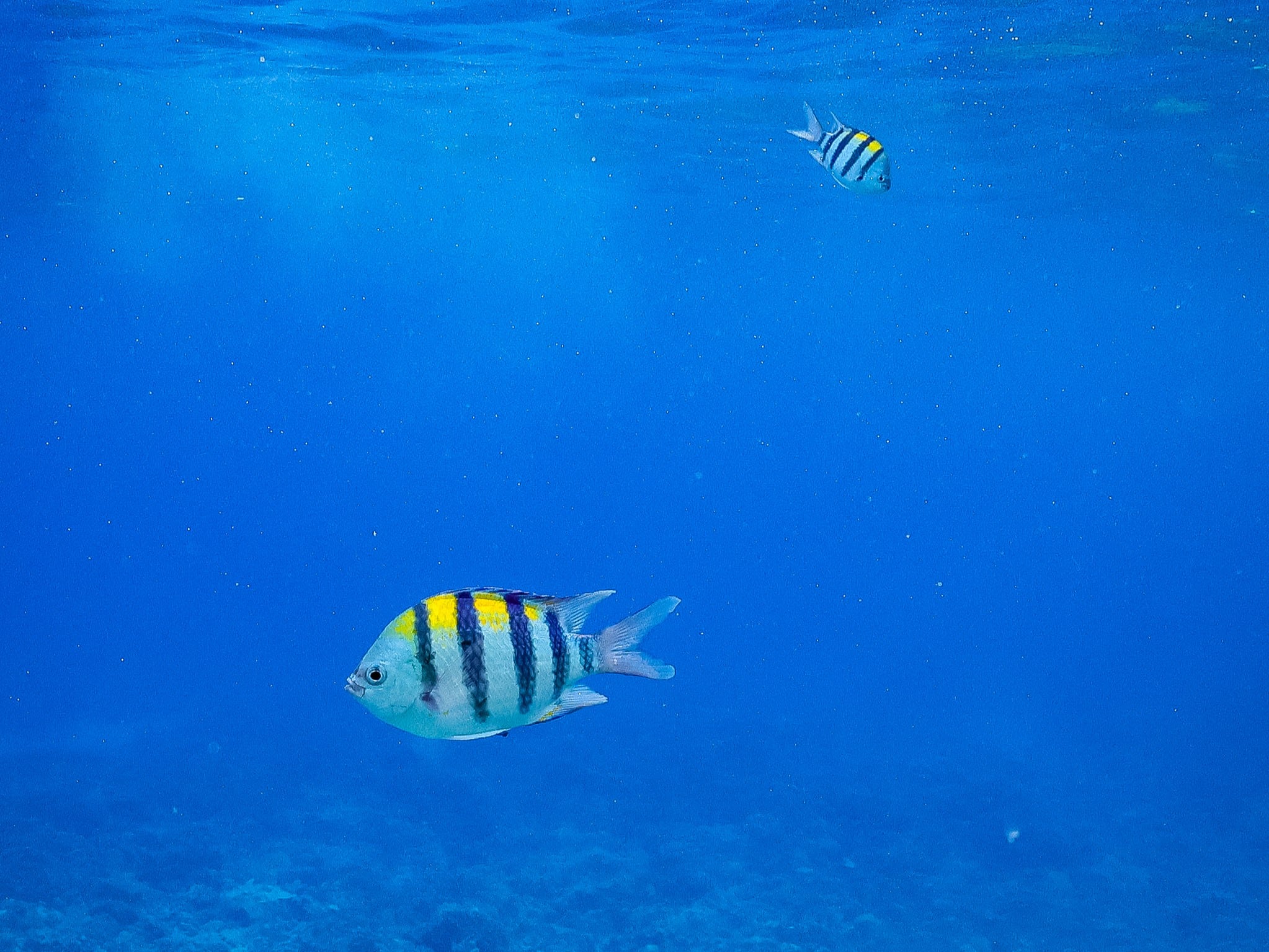
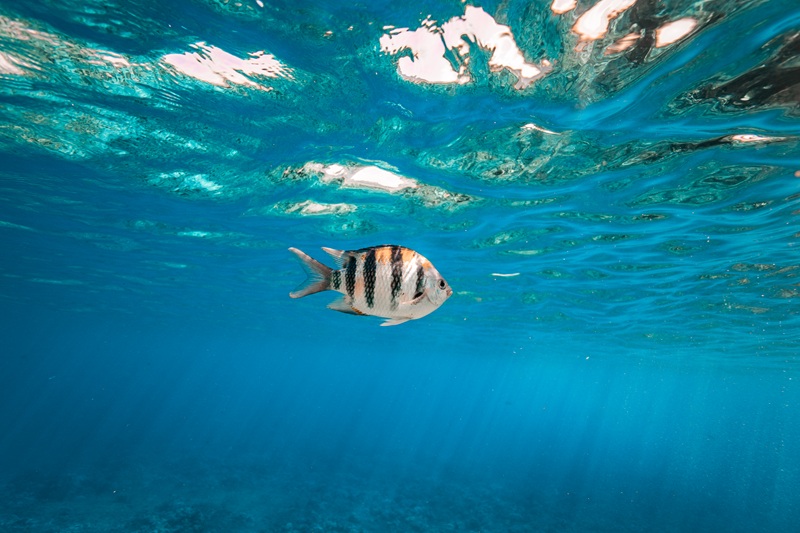
マウイ島のハワイアンサージェントフィッシュ, と呼ばれる マモ ハワイに生息するこの魚は、銀緑色の体、5本の暗い縦縞、そして黄色っぽい腹部が特徴で、容易に見分けることができます。水が穏やかで澄んでいるときは、シュノーケリングをする人は、サンゴ礁の棚、溶岩岩、波の通り道、浅瀬のサンゴ礁構造物の近くでこの魚を見かけるかもしれません。.
主な要点:
- ハワイ語名: ハワイの軍曹はハワイではマモと呼ばれる。
- 最も有力な識別手がかり: 深く楕円形のボディに、5本の暗い縦縞模様があることを確認してください。
- どこを探せばよいか: 岩礁の棚、溶岩岩、波の押し寄せる水路、潮だまり、浅瀬の岩礁地帯を確認してください。
- 最適な条件: 穏やかな朝と澄んだ水は、サンゴ礁の魚を見つけやすくする。
- シュノーケリングのヒント: 魚を追いかけないでください。ゆっくりと浮かび、サンゴ礁の生き物があなたの周りを自然に動き回るのを見守りましょう。
Spotting a striped fish is only the beginning. Watch a group of Hawaiian sergeants for a moment, and you may notice them picking food from the water above the reef. Learning their markings and behavior will make these familiar Maui fish easier to spot on your next snorkel.
Hawaiian Sergeant Fish: Size, Diet, And Reef Life
How Big Do Hawaiian Sergeants Get?
Hawaiian sergeants can reach about 10 inches (25 centimeters), making them relatively large damselfish. Juveniles may live in tide pools before moving into deeper reef habitats as they grow.
What Do Hawaiian Sergeant Fish Eat?
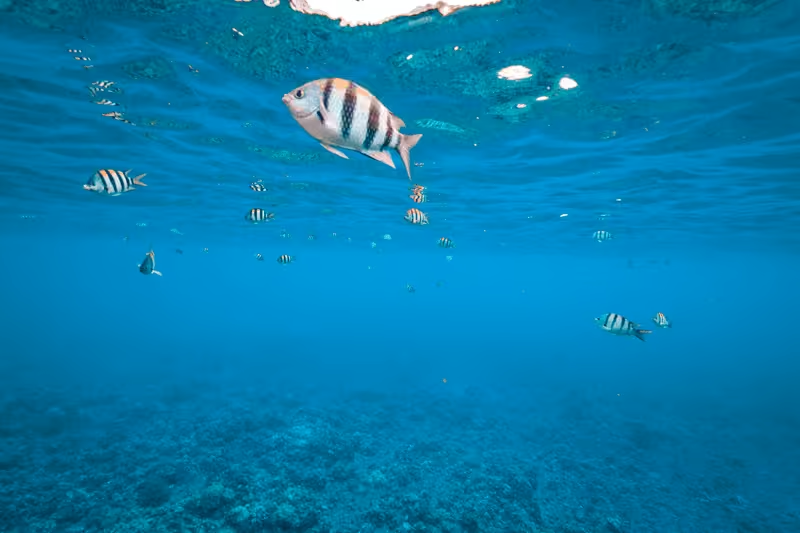
Mamo eat plankton, algae, and other small marine organisms. Adults often gather above the reef during daylight to pick food from the water. That hovering behavior is worth watching, even after you’ve identified the fish.
マウイ島で彼らに会える場所
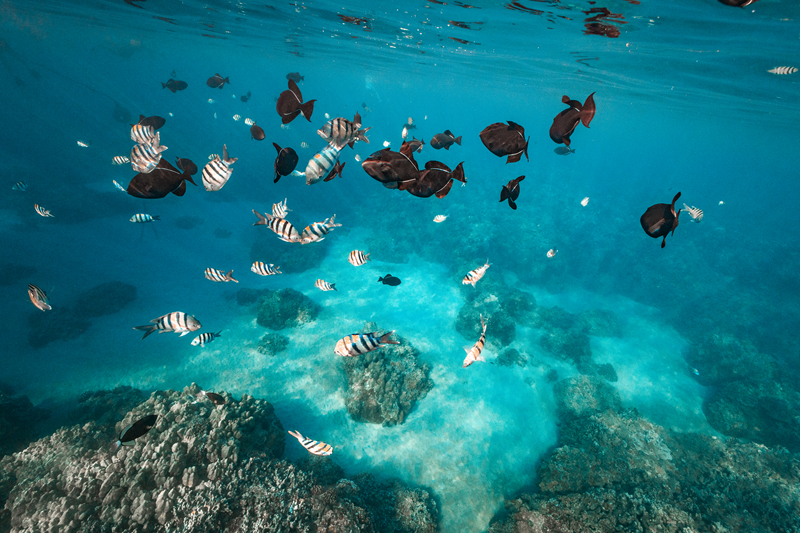
Hawaiian sergeants occur around Maui’s rocky reefs. These locations offer reef habitat where you may encounter them, but choose your snorkeling spot based on conditions and your experience.
- モロキニクレーター Look for groups above the reef during a boat-based snorkeling visit.
- サンゴ園 This boat-accessed reef along the Pali coastline offers coral formations and tropical fish habitat.
- ブラックロック: Watch reef areas only when conditions are suitable. Don’t approach rocky points or surge zones just to find fish.
- ʻĀhihi-Kīnaʻu: Explore only the reserve’s open visitor areas and follow posted access and conservation rules.
視聴のヒント: Look at the water above the reef as well as the reef itself. Don’t follow fish into waves, strong water movement, or areas beyond your ability.
How Hawaiian Sergeant Fish Nest And Guard Their Eggs
Male Hawaiian sergeants prepare nesting surfaces on rock, attract females through courtship displays, and guard the eggs after spawning. Their colors can also change during courtship and nest defense, so a nesting fish may look different from the striped fish feeding nearby.
Spawning can occur year-round, with research reporting a peak in late spring and early summer. If you notice a fish repeatedly defending one patch of reef, give it room rather than moving closer for a photograph. Disturbing a guarding male can leave its eggs exposed to other fish.
豆知識: Researchers have recorded Hawaiian sergeants producing short, pulsed sounds during courtship and territorial interactions.
Why Some Sergeant Fish Are Hard To Identify
Hawaiian and Indo-Pacific sergeants can hybridize, making some individuals harder to identify from appearance alone. Use several clues together, including the body bars, tail-base markings, and overall coloring. If the markings don’t fit neatly, it’s fine to leave the identification uncertain.
注意 こちらをチェックしてください 熱帯魚 ガイド!
How To Watch Hawaiian Sergeant Fish Without Disturbing Them
- Don’t feed them: Let fish find their own food and behave naturally.
- Give nesting fish room: Back away from a fish defending a patch of reef.
- Watch without following: Observe from your existing position rather than pursuing fish toward rocks or moving water.
- サンゴ礁を守ろう: Keep your hands and fins clear of coral, and don’t stand on reef-covered surfaces.
地元の人々が彼らをマモと呼ぶ理由
The Hawaiian name mamo is described by Papahānaumokuākea as a shortened form of maʻomaʻo, meaning green, referring to the fish’s greenish coloring. You may also encounter the name Hawaiian sergeant major in fish guides.
次のシュノーケリングアドベンチャーのための写真アイデア
📸 撮影に挑戦してみましょう:
- 5本の縞模様と黄金色の腹部の輝きがはっきりと見える、鮮明な横顔。.
- サンゴ礁の岩棚の上に浮かぶ小さな群れ。.
- A male guarding a purple egg patch (shoot from a distance, no flash).
マウイ島で獲れるハワイアン・サージェントフィッシュについての最終的な考察
Hawaiian sergeants reward a closer look, without a closer approach. Their changing markings, feeding groups, and nest-guarding behavior make them more than another striped fish on the reef. Learn a few identification clues, give them space, and enjoy noticing a little more on your next Maui snorkel.
ソースと更新情報
Use these resources to check Hawaiian sergeant identification, native range, diet, nesting behavior, and snorkeling conditions before your Maui reef day.